
Reviewed · CHICAGO TV AND MOVIE TOURS
Chicago Fire TV Show Set Tour
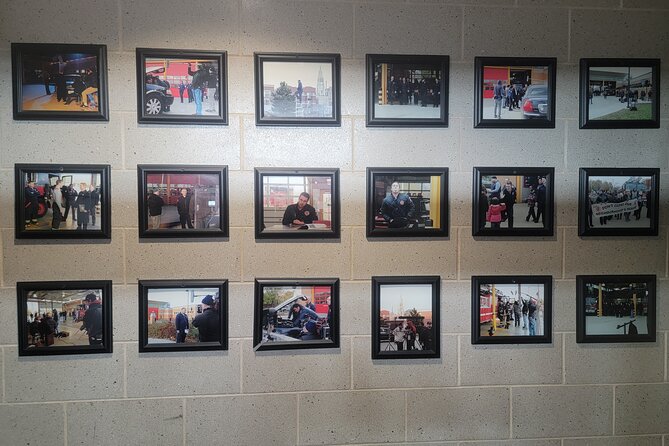
The main draw here is simple: you get to see the real Chicago places that give Chicago Fire its working-city feel. The tour combines Firehouse 51, the Chicago Fire Academy, Molly’s filming location, and downtown sights such as the Bean and the Chicago Cultural Center.
I like the private vehicle and pickup service, especially when you want to cover filming locations scattered around Chicago without piecing together buses and trains. I also like the flexible guiding style. Deen has been praised for giving people time at each stop and adding extra city sights when schedules allow. The main catch is that this is an active firehouse, not a theme park. Access can change without warning, and the guide does not accompany you inside every downtown stop.
Key points to know
- Firehouse 51 is an active fire station: Follow instructions, keep clear of operations, and understand that entry depends on the day’s activity.
- Chicago Fire Academy adds real context: You can see a working training facility, not just a TV backdrop.
- Molly’s is a real Chicago location: The show’s fictional bar is connected with a real pub location, often identified as Lottie’s in Chicago.
- The tour includes major downtown sights: The Bean at Millennium Park and the Chicago Cultural Center broaden this beyond a single TV show.
- Private pickup keeps the route practical: Pickup and drop-off are included within five miles of downtown Chicago.
- The schedule can change: Filming may block access, but you might catch a scene being shot or receive alternate stops.
What this Chicago Fire tour really offers
This is best understood as a private Chicago sightseeing drive built around Chicago Fire. You are not spending two hours inside a studio or walking through a preserved television set. You are visiting real city locations used by the production, along with working fire facilities and famous downtown landmarks.
That distinction matters. Television locations are often ordinary buildings transformed by camera angles, signs, and editing. Seeing the exterior of Firehouse 51 gives you the satisfying real-world connection, but it may not look exactly as it does on screen from every angle. The value comes from standing in the actual setting and hearing how the location fits into the show.
The experience is priced at $315 per group of up to three people, not per person. For a couple or small family, that can be fair if you want private transportation, hotel pickup, and a guide who can shape the outing around your interests. For one person, the cost is harder to justify unless the convenience and personal attention matter a great deal.
You get a two-hour outing, bottled water, a driver-guide, and English or Yoruba guiding. Pickup is available from a hotel or other location no more than five miles from the Chicago Marriott Downtown Magnificent Mile at 540 North Michigan Avenue. That keeps the service aimed at central Chicago rather than the wider suburbs.
More TV and movie tours in Chicago:
- Chicago Fire TV Show Set Tour
★ 5.0 · 68 reviews - Ferris Bueller Movie Tour at the Art Institute of Chicago
★ 5.0 · 26 reviews - Downtown Chicago TV and Movie Sites Guided Walking Tour
★ 4.5 · 23 reviews
Firehouse 51 and the limits of a working station
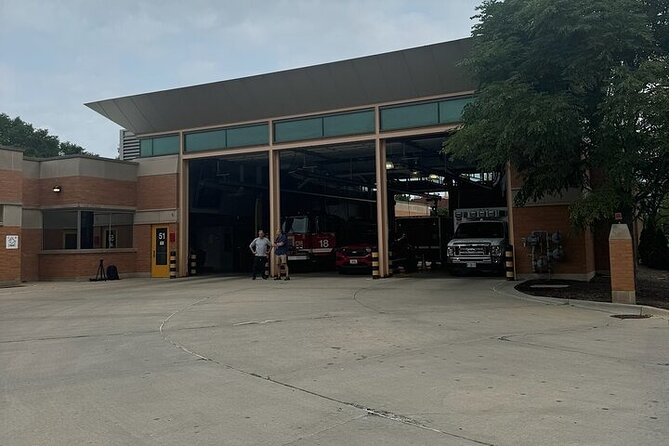
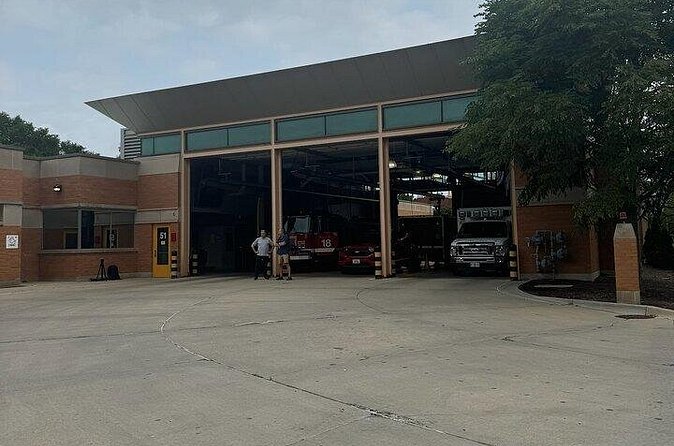
Firehouse 51 is the heart of the experience. This is the exterior associated with the show, and for many fans it will be the moment the tour earns its price. You can connect scenes, characters, and storylines with a real Chicago firehouse instead of a set built for television.
But keep your expectations sensible. The station is active, and the Chicago Fire Department is not affiliated with this independently operated tour. Firefighters have work to do. Emergency calls, training, filming, or privacy concerns can limit what you see.
The supplied information says the guide provides detailed instructions for Firehouse 51 but does not accompany you inside. That arrangement may feel unusual, yet it reflects the practical limits of visiting a working station. You need to follow the directions carefully and avoid treating the firehouse like a museum.
On some days, access has been very good. Visitors have described going inside, walking around, and even sitting in a fire truck. On other days, filming has prevented entry, though it was still possible to watch actors shooting a scene outside. That uncertainty is not a flaw unique to this tour. It is part of visiting a live production site and an operating fire station at the same time.
If you are lucky enough to see filming, respect the crew’s space. Photography is allowed, but you should not photograph private activity or interrupt a take. The best attitude is to treat access as a bonus, not a promise.
The Chicago Fire Academy adds something real
The Chicago Fire Academy is an especially useful stop because it gives the show a real working setting behind the drama. You can see where firefighters train and gain a better sense of the physical demands that the series turns into weekly television.
The academy is also a good fallback if Firehouse 51 is closed to visitors. One reported outing could not enter the station because filming was underway, but still included a visit to the academy. That made the tour feel worthwhile rather than reduced to an exterior photograph.
The information provided does not promise a fixed list of academy rooms or demonstrations, so you should not expect a formal museum tour or a guaranteed hands-on session. What you get depends on the day and the operating rules. Still, this stop adds substance. You are seeing an actual public safety facility, not only a screen location.
Molly’s, Lottie’s, and the bar you recognize
Molly’s is the fictional bar where characters from the show gather after shifts. In Chicago, the filming connection is associated with a real pub, commonly identified in the tour details and recent outings as Lottie’s. This is one of the more enjoyable stops because it connects a familiar piece of the show with an ordinary Chicago drinking spot.
The bar is worth seeing even if you do not plan to eat or drink. It gives you a chance to compare the television version with the real place. The production may use different angles, signs, or interior shots, so do not expect every detail to match perfectly.
The tour information also lists White Palace Grill, a retro-style diner and a favorite local hangout connected with the itinerary. Since food and drinks are not included, budget separately if you want to stop for a meal. The short duration means you should confirm with the guide how much time is available for eating, rather than assuming a full diner visit.
This is where the private format helps. If you care more about a quick photograph than a meal, you can keep moving. If Molly’s or the diner is a personal priority, tell the guide early so the route can be adjusted when possible.
A few more Chicago tours to compare
- Trickery Chicago Magic Show
★ 5.0 · 91 reviews - Chicago P.D. TV Show Set Tour
★ 5.0 · 16 reviews - Chicago’s Fireworks Show aboard Tall Ship Windy!
★ 5.0 · 14 reviews - Peep Show Ticket in Chicago
★ 5.0 · 9 reviews
Millennium Park and the Bean
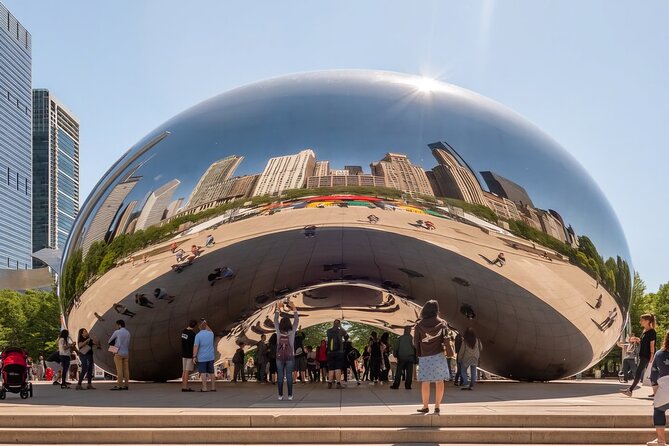
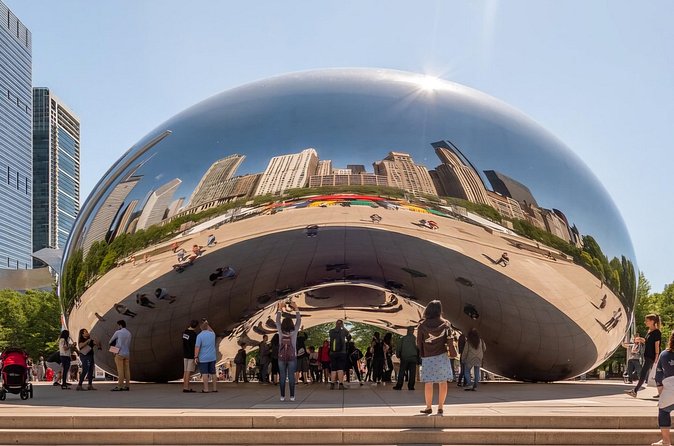
The tour also reaches Millennium Park, home of Cloud Gate, better known as the Bean. This is not a Chicago Fire location in the same direct way as Firehouse 51 or Molly’s, but it gives the outing a stronger sense of place.
The Bean is one of Chicago’s most recognizable landmarks. Its mirrored surface reflects the skyline, park, and people around it, making it an easy stop for photographs. It also provides a useful break from the television theme. You get a quick look at one of the city’s central public spaces instead of spending the whole outing moving between production sites.
The guide does not accompany you at the Bean. You receive detailed instructions and visit it on your own. That means you should pay close attention to the meeting point and timing. If you wander off for photographs, you can create a problem for a private two-hour route.
Millennium Park can be busy, and the weather is fully exposed. Comfortable shoes help, and a jacket or umbrella is sensible if the forecast looks uncertain. The tour is not a long walking expedition, but you will be on your feet at several points.
The Chicago Cultural Center and its Tiffany dome
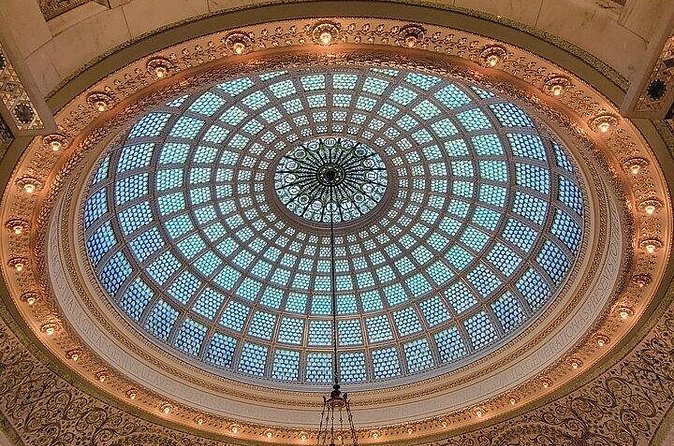
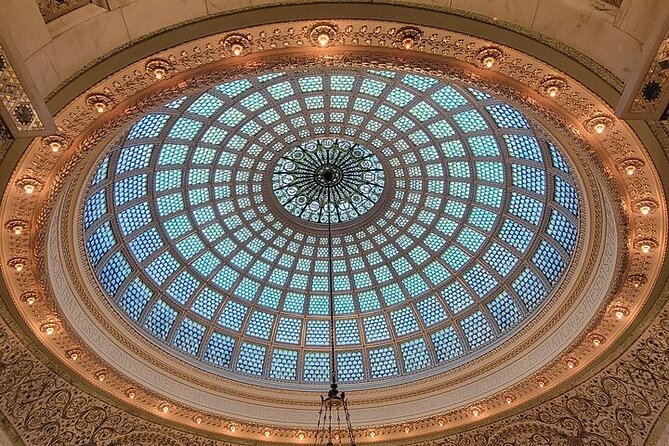
The Chicago Cultural Center is another downtown stop that adds genuine architectural interest. It is known for its elaborate design and the world’s largest Tiffany stained-glass dome. For a visitor who has come mainly for television locations, this may be the most pleasant surprise of the route.
The building gives you an indoor sight in case the weather turns poor. Its decorative interior also shows a different side of Chicago, away from firehouses, pubs, and the modern steel-and-glass skyline.
As with Millennium Park, the guide does not accompany you inside. You are given instructions and explore on your own. This keeps the private vehicle moving efficiently, but it also means you should not expect a guided architectural talk at the dome.
I would treat the Cultural Center as a short self-guided stop rather than the main reason to book. It works well as an addition, especially for first-time visitors who want a few classic Chicago sights folded into their Chicago Fire outing.
The guide makes the private format worthwhile
The guide’s role is a major part of the experience. Deen is the name most often associated with the tour, though one recent outing identifies the driver as Dwayne. The important point is that the driver-guide is not simply dropping you at a series of addresses.
Deen has been praised for his friendly manner, city commentary, photography help, and willingness to spend extra time when the schedule permits. He has also added locations connected with the wider One Chicago world, including the Chicago Police Department headquarters, and pointed out other city sights along the drive.
That flexibility is useful because television tours can be uneven. One location may be open and another closed. A good guide can explain the change, suggest another stop, and keep the outing from feeling like a missed appointment.
Still, you should remember that the advertised duration is two hours. Some outings have run longer when time allowed, but you should not book with the assumption that an extended tour is guaranteed. Ask at the start what the current filming situation is and which stops are most important to you.
Is $315 good value for up to three people?
At $315 per group, the math looks much better for three people than for one. Three friends or family members are paying about $105 each before any food or drinks. Two people pay about $157.50 each, while a solo visitor covers the full group price alone.
The cost includes private pickup and drop-off within the central service area, bottled water, and a driver-guide. You are paying for convenience and a tailored route, not only for entry to attractions. That matters in Chicago, where the firehouse, academy, bar, Millennium Park, and Cultural Center do not form one compact walking circuit.
I see the strongest value for:
- A small group of Chicago Fire fans
- Visitors who want hotel pickup and private transport
- People who want television locations mixed with standard Chicago sights
- Visitors who appreciate a flexible guide rather than a fixed coach itinerary
The value is weaker if you only want a photograph of Firehouse 51. In that case, a full private tour may be more than you need. It is also less appealing if your main goal is a formal behind-the-scenes studio visit, because that is not what this experience provides.
Practical advice before you go
Wear comfortable shoes. You will walk at several stops, even though the vehicle handles much of the movement between locations.
Check the weather and dress for it. Millennium Park is outdoors, and the tour continues in ordinary Chicago conditions. Bring a jacket or umbrella if needed.
Arrive 15 minutes before the start time. Pickup is included only within five miles of the specified downtown reference point, so confirm your address before booking.
Keep your schedule flexible. Filming can change access at Firehouse 51, and the fire station’s normal operations come first. You may see actors working outside, visit the academy instead, or receive instructions for a shorter exterior stop.
Food and drinks are not included. If White Palace Grill or the pub associated with Molly’s matters to you as a dining stop, set aside extra money and confirm how much time you can use.
The tour is offered in English and Yoruba. It is a private group experience, which makes it easier to ask questions and request reasonable changes.
Cancellation is free up to 24 hours before departure, and you can reserve now and pay later. Those terms are useful when filming schedules and Chicago weather are hard to predict.
Who should book this Chicago Fire experience?
Book it if you are a serious Chicago Fire fan and want to connect the show with real Chicago places. The combination of Firehouse 51, the academy, Molly’s location, and city landmarks gives you more than a single photo stop.
It is also a good fit for first-time visitors who want a compact private introduction to Chicago. The guide can point out places beyond the show, and the route includes two major downtown sights.
I would hesitate if you need guaranteed interior access to Firehouse 51, a fully guided visit inside every landmark, or a set studio tour. None of those is promised. The firehouse is active, the downtown stops are partly self-guided, and filming can alter the plan.
Should you book it?
For a group of up to three Chicago Fire fans, I think this is a worthwhile private outing, especially if you value personal service and easy transportation. The strongest parts are the chance to visit a real working fire setting, the possibility of seeing filming, and the guide’s willingness to add useful Chicago stops.
Book with realistic expectations. Firehouse 51 may be closed to visitors, Molly’s is a real pub rather than a preserved fictional bar, and the Bean and Cultural Center are self-guided stops. If those limits make sense to you, this is a friendly, flexible way to connect the series with the city that gives it its character.
FAQ
How long does the Chicago Fire TV Show Set Tour last?
The tour lasts two hours. Availability depends on the starting time selected when you book.
How much does the private tour cost?
The price is $315 per group of up to three people.
Is hotel pickup included?
Yes. Pickup and drop-off are included for hotels or other locations within five miles of the Chicago Marriott Downtown Magnificent Mile, located at 540 N Michigan Avenue.
Can I enter Firehouse 51?
Entry can depend on firehouse operations and filming schedules. You will receive detailed instructions, but the guide does not accompany you inside. The firehouse is active, and this independently operated tour has no affiliation with the Chicago Fire Department.
Will I visit Molly’s Bar?
The tour visits the real Chicago pub location connected with Molly’s, the fictional bar in the show. The location is also identified as Lottie’s in the tour information.
Are food and drinks included?
No. Food and drinks are not included in the tour price.
What languages are available?
The live tour guide is available in English and Yoruba.
Recently added around Chicago
- Travel between Chicago O’Hare and Madison★ 4.5 · 4 reviews
- Volo Auto Museum: Admission Ticket★ 4.5 · 55 reviews
- Holiday Walking Tour: Underground Chicago via the Pedway★ 5.0 · 27 reviews
- Workers Cottages of Oldtown Triangle Walking Tour★ 5.0 · 45 reviews
- Verse Immersive Holographic Theater in Chicago★ 4.5 · 28 reviews
- Vito’s Vault Chicago finest dinner theatre speakeasy★ 5.0 · 14 reviews
- Delicious Donuts & Sweet Treats: West Loop Walking Tour★ 5.0 · 47 reviews
- Traveling Spoon Chicago-Style Deep Dish Pizza Private Online Cooking Class★ 5.0 · 4 reviews
Chicago TV and Movie Tours, compared.
Ferris Bueller Movie Tour at the Art Institute of Chicago
Read our review →
Downtown Chicago TV and Movie Sites Guided Walking Tour
Read our review →
Downtown Chicago TV & Movie Filming Locations Walking Tour
Read our review →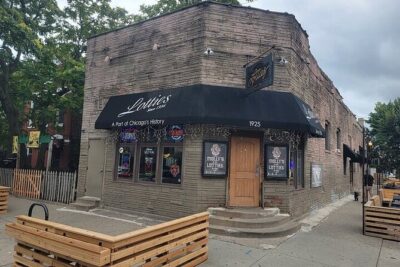
Private Downtown Chicago TV and Movie Sites Guided Walking Tour
Read our review →Browse the lists this tour appears in