
Reviewed · CHICAGO ARCHITECTURE RIVER CRUISES
Chicago River: 1.5-Hour Guided Architecture Cruise
Chicago’s skyline makes the most sense from the water. On this 90-minute Wendella cruise, you glide beneath bridges and past more than a century of buildings, from the Wrigley Building and Tribune Tower to Marina City, Willis Tower, and Aqua. The route covers the main river plus its north and south branches, giving you a fuller view than a short downtown boat ride.
I like two things right away: the live storytelling turns a wall of skyscrapers into a readable story, and the boat gives you a choice between fresh air and a climate-controlled interior. Guides including John, Sarah, Alex, and Scotty D have been praised for mixing facts with jokes. The main catch is first-come, first-served seating, and the guide can be hard to hear from the front at times.
Key points to know before you board
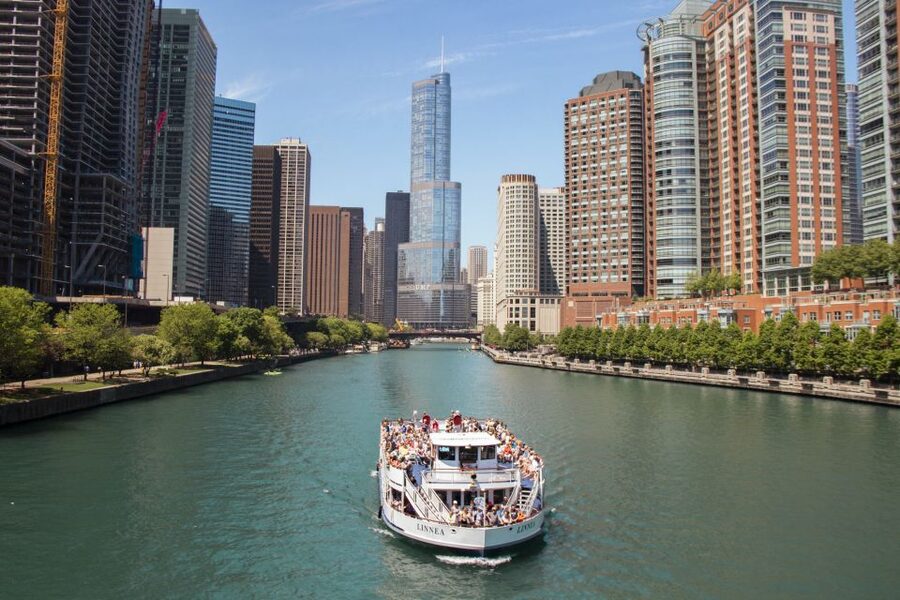
- The route goes beyond the downtown canyon: You cruise the main river, continue toward Wolf Point, travel along both branches, and return past the Chicago Riverwalk toward Lake Michigan.
- The buildings cover 130 years of design: Expect early skyscrapers, Art Deco, mid-century modernism, and newer towers in one moving lesson.
- The guide makes or breaks the hour and a half: Commentary is in English, with guides such as John, Sarah, Alex, Jack, Bobby, and Scotty D praised for humor and strong delivery.
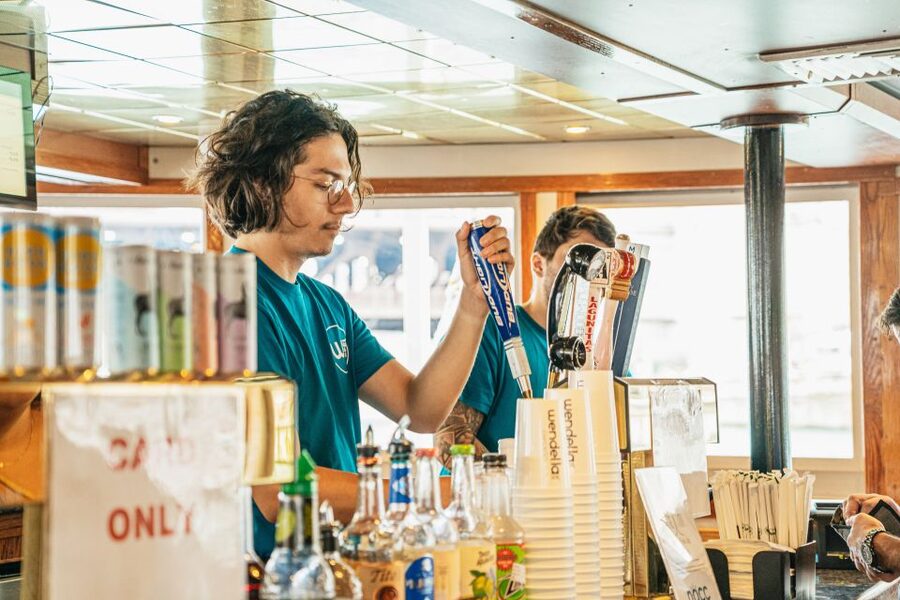
- You can warm up or cool down: The boat has open decks, climate-controlled indoor seating, restrooms, diaper-changing tables, and a full-service cash bar.
- $44 is fair if you want context, not just views: You are paying for a long route, a live guide, and access to both river branches, not simply a skyline photo ride.
- Arrive ready to choose your seat: Deck seating is not assigned, so early boarding matters if you want a particular angle or a comfortable place near the guide.
Why Chicago’s architecture works best from the river
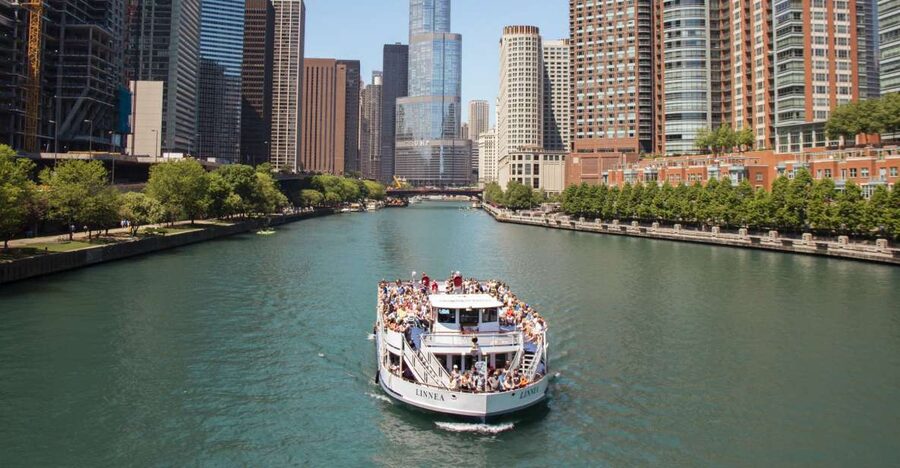
From street level, Chicago’s tall buildings can feel like separate objects competing for attention. From the river, you see how they line up, how their shapes respond to the narrow waterway, and how each period of building changed the city’s profile.
That is the real strength of this cruise. It is not just a ride past famous facades. The guide explains how Chicago’s skyline developed over roughly 130 years, using the buildings around you as a timeline.
The trip began in 1935, so there is a long tradition behind the format. That does not mean the cruise feels old-fashioned. The appeal is simple and still works: put you on the water, point you toward the architecture, and give you enough background to understand what you are seeing.
I would book this early in your Chicago visit. Afterward, a walk through the Loop or along the Riverwalk becomes more rewarding because you recognize the names and design ideas. A tower that looked like a glass slab may suddenly have a reason for its shape.
More architecture river cruises in Chicago:
- Chicago Architecture River Cruise
★ 5.0 · 15,756 reviews - Chicago River 90-Minute Architecture Tour
★ 4.5 · 9,629 reviews - Chicago Architecture Center River Cruise aboard First Lady
★ 5.0 · 5,536 reviews
Starting near the Michigan Avenue bridge
The closest address to most docks is 400 North Michigan Avenue, near the Wrigley Building. Check in with a dock employee, who can direct you to the correct boarding area. Allow enough time to find the dock and settle in, especially if you want a good seat.
The cruise begins near the Michigan Avenue, or DuSable, Bridge. This is a useful place to start because the bridge puts you right among some of central Chicago’s best-known buildings.
Seats on the decks are first come, first served. If you care about being outside, sitting near the guide, or getting an unobstructed view, do not treat boarding as a last-minute task. You can also move between the open deck and the interior, which matters on cold, windy, or rainy days.
The vessel has a front grand staircase, plus photo spots at the bow and stern. Those areas are good for pictures, but they may not be the best place to hear every word. One passenger specifically found the commentary difficult to hear from the front, so I would favor a central seat if the guide’s explanation matters more than the perfect selfie.
Wrigley Building and Tribune Tower: Chicago’s early skyline
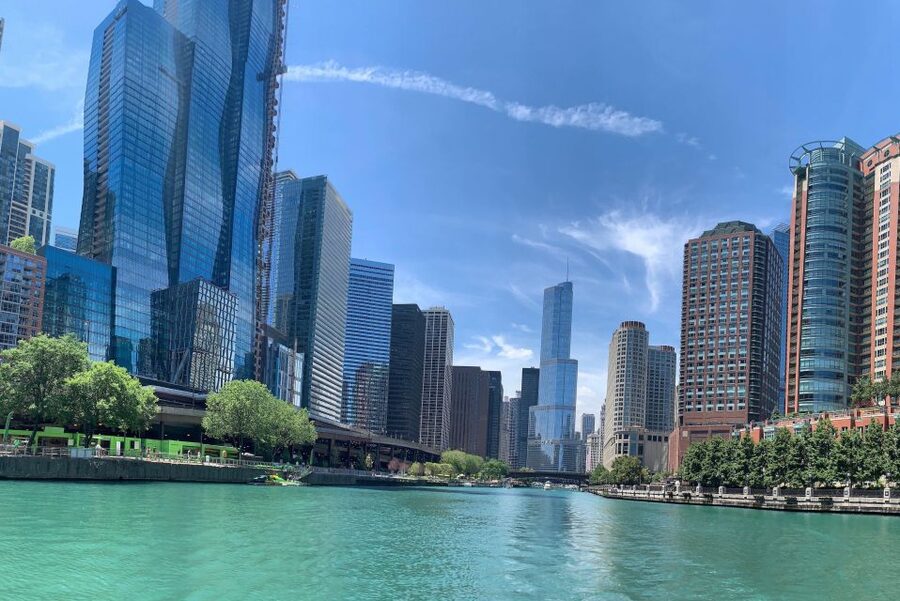
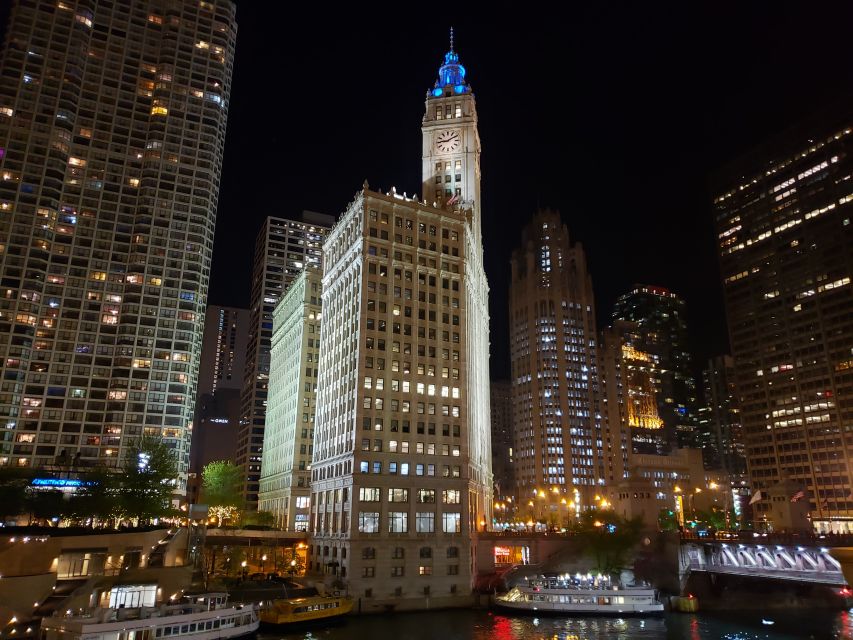
As the boat leaves the Michigan Avenue area, the Wrigley Building and Tribune Tower help introduce Chicago’s older architectural language.
The Wrigley Building is known for its ornate exterior and prominent position beside the river. Its bright, detailed design feels very different from the plain glass towers that came later. Across the river, Tribune Tower adds another layer of historic character and shows how much personality early skyscrapers could carry.
This is where the guide’s role becomes important. You are not simply looking at attractive buildings. You are learning why certain towers look decorated, why others emphasize structure, and how the city’s early skyscrapers helped create a new urban form.
The river gives you a better angle than a sidewalk. You can look upward without standing in traffic or squeezing between tall buildings. Keep your camera ready, but listen first. The most useful details are easy to miss if you spend the whole opening stretch framing photos.
Marina City and Merchandise Mart: two very different ideas
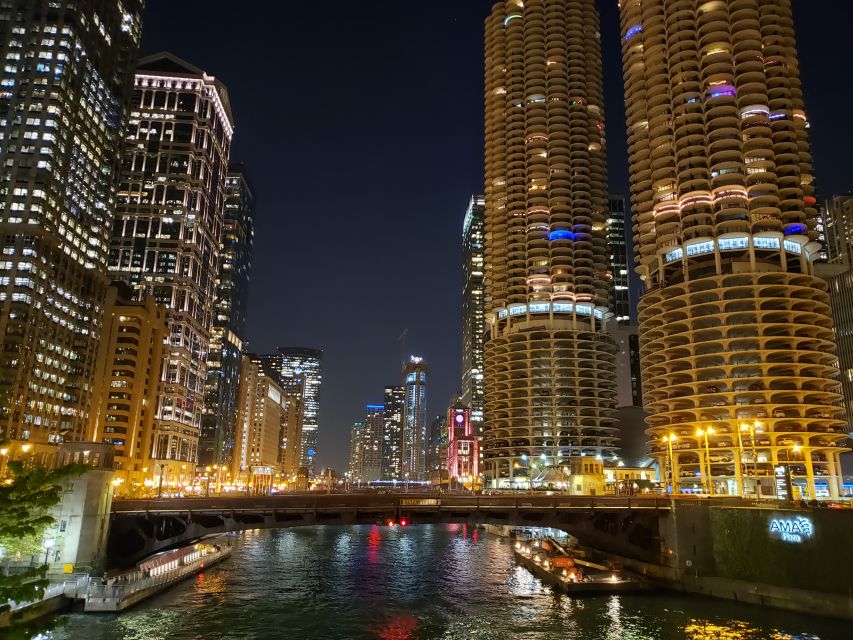
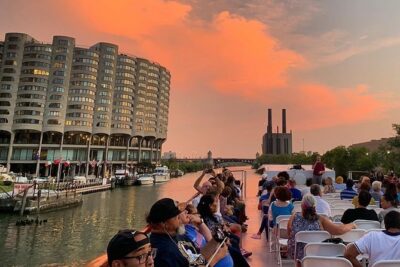
The circular Marina City Towers are among the most memorable buildings on the route. Their rounded balconies make them easy to recognize, and their shape breaks up the usual boxy skyscraper pattern.
Marina City is also a good reminder that Chicago’s architectural story is not only about height. The design changes the relationship between a building and the city around it. From the boat, you can take in the repeated curves and see how unusual the towers look beside the straighter buildings nearby.
The Merchandise Mart offers a sharp contrast. This imposing Art Deco building has a broad, powerful presence rather than Marina City’s vertical repetition. The guide uses buildings like these to show how design moved from ornate early towers to bold geometric forms and then to simpler modern structures.
I like this part of the route because the comparison is easy to see from the water. You do not need an architecture degree. One building is circular and rhythmic, another is broad and monumental. The river puts them in the same frame and lets you judge the difference for yourself.
More architecture tours in Chicago:
- Chicago: Architecture River Cruise Skip-the-Ticket Line
★ 4.8 · 4,325 reviews - Chicago River 45-Minute Architecture Tour from Magnificent Mile
★ 4.5 · 2,924 reviews - Chicago Lake and River Architecture Tour
★ 4.5 · 2,308 reviews - Chicago: 45-Minute Family-Friendly Architecture River Cruise
★ 4.7 · 2,304 reviews
Wolf Point and the north and south branches
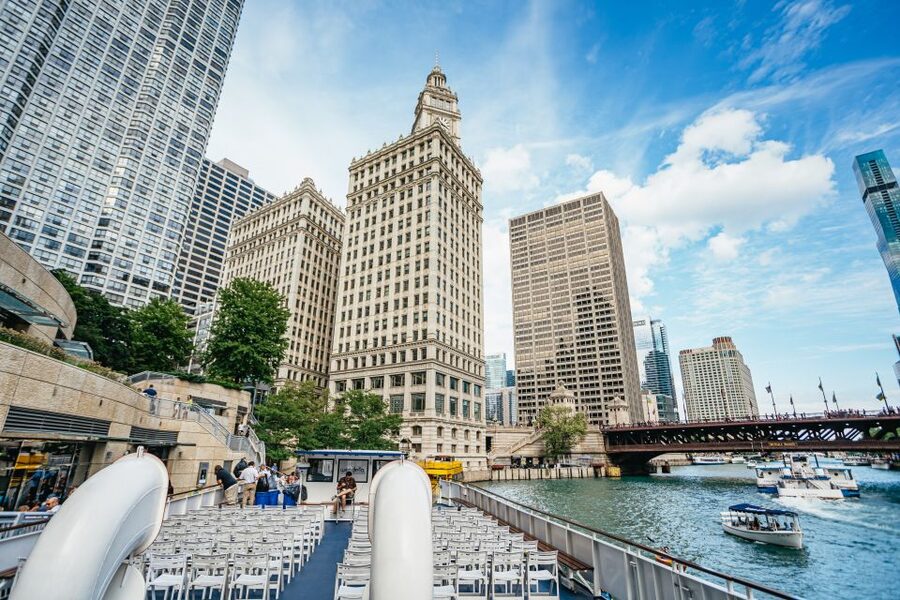
The boat travels up the main branch toward Wolf Point before continuing along the north and south branches. This longer route is one of the main reasons the cruise offers good value at $44.
Shorter boat rides can give you a fine view of the central skyline, but this trip shows more of the river system and more types of development. You get a sense of how the waterway moves through the city rather than seeing only the most photographed stretch.
The north and south branches also change the pace of the ride. The central section feels packed with major towers. Farther along, you get different angles, wider gaps, and a clearer sense of how the skyline fits together.
The commentary remains central here. Some buildings will be famous, while others may be less familiar. A strong guide connects them to Chicago’s building traditions instead of simply announcing names. The best guide moments are often the small stories, engineering details, and bits of city history that make an otherwise ordinary-looking facade worth noticing.
Willis Tower, the Board of Trade, and modern Chicago
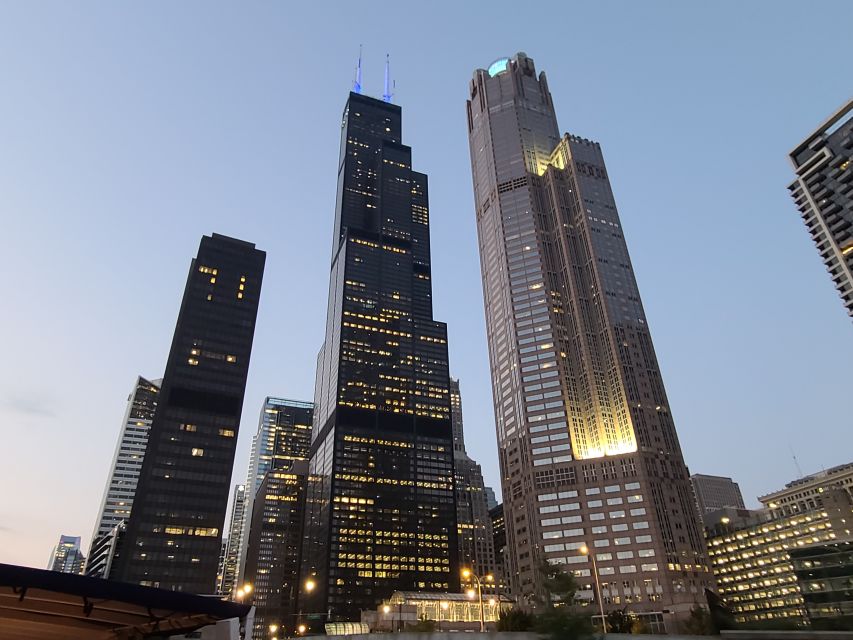
Willis Tower, once called the Sears Tower, remains one of the city’s defining structures. Its height and bundled form are hard to miss, and the river view lets you see it as part of the wider skyline rather than as an isolated observation-deck attraction.
You will also pass the Chicago Board of Trade Building, another important piece of the city’s architectural identity. Its strong profile adds a formal, historic counterpoint to the taller towers around it.
The Aon Center takes you into a later period of high-rise design. Its clean vertical form feels more restrained than the decorative buildings near Michigan Avenue. NBC Tower adds another recognizable piece of the central skyline, with a design that fits into the river corridor while still holding its own among taller neighbors.
This sequence works as a quick lesson in changing taste. Early skyscrapers used ornament and strong visual detail. Later towers often relied on proportion, materials, and structure. Your guide will explain those shifts in plain language, and the views give you time to compare them without rushing from one building to another on foot.
Aqua, Lake Point Tower, and the view toward Lake Michigan
Aqua at Lakeshore East is one of the route’s more recent architectural highlights. Its rippling balconies give the tower a changing outline, especially when viewed from the river. It looks nothing like the rigid early skyscrapers, and that contrast helps show how far Chicago’s design language has moved.
Lake Point Tower brings another distinctive shape into view. Its rounded form and position near the lake make it particularly photogenic from the water. As the boat heads back toward Lake Michigan, the city begins to open up, and the skyline takes on a different scale.
This outward-looking view is one of the cruise’s strongest photo moments. Instead of looking up from between towers, you see the city from a wider vantage point. The skyline becomes a single composition, with historic buildings, modern towers, the river, and the lake all working together.
If you can choose your timing, an evening departure can be especially attractive. The 6:30 p.m. trip has been praised for showing the city at dusk and after dark, while another passenger noted that sunset was an ideal time. The tradeoff is visibility: daytime is better if your main goal is to study building details.
The guide matters more than the boat
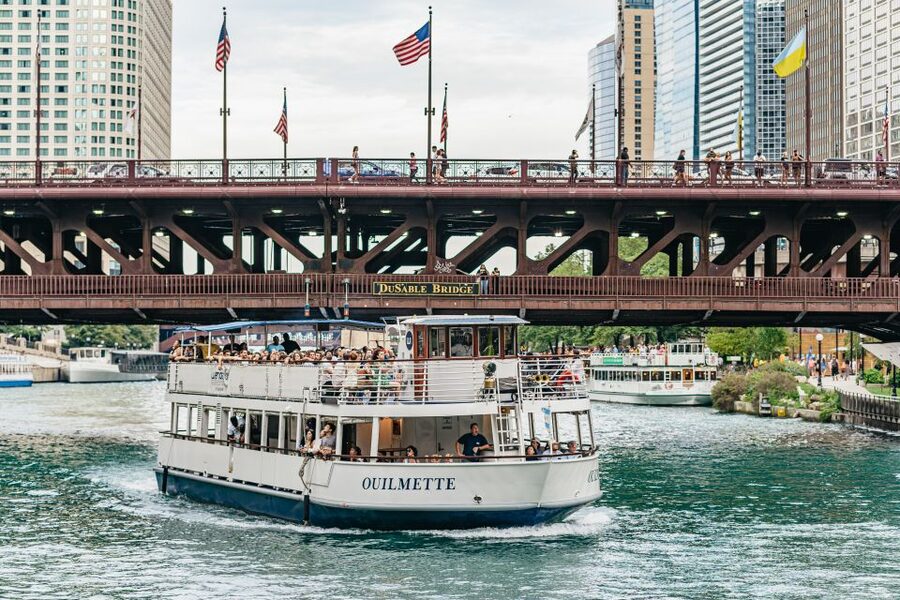
The vessel provides the setting, but the guide shapes the experience. Names that have received especially strong praise include John, Sarah, Alex, Jack, Bobby, Lucas, Scotty D, Spearo, and Elisa. You may not get one of those specific guides, but the pattern is clear: the tour depends on a lively, well-prepared person at the microphone.
The strongest commentary combines architecture, engineering, city history, and humor. John has been described as funny and informative. Sarah is praised for flowing commentary. Alex is noted for humor and insight, while Spearo mixes older stories with comedy and detailed explanations.
That humor matters during a 90-minute lesson. Chicago architecture can become a lot of dates and building names if presented too stiffly. A guide who asks questions, adds a joke, or points out an unexpected detail helps you stay with the story.
You should still set your expectations correctly. This is a live English-language tour, not a private lecture tailored to your interests. If you sit too far forward or near a noisy section, you may miss parts of the commentary. A central seat and attentive listening will give you the best chance of hearing the full presentation.
Open air, indoor comfort, and onboard food
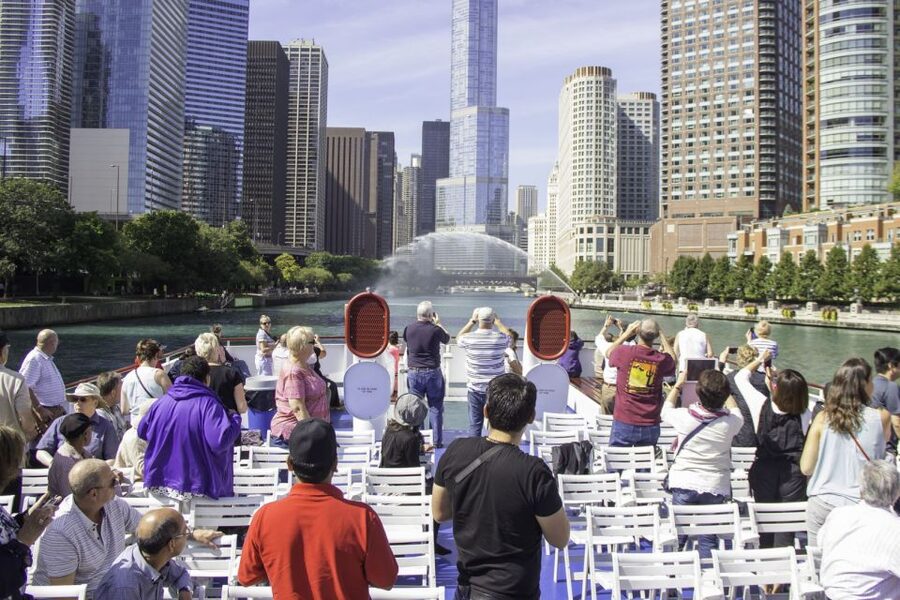
The cruise runs throughout the year and offers both open-air deck space and climate-controlled interior seating. That flexibility is more than a small convenience. Chicago weather can change quickly, and a river ride can feel colder than a walk along the street.
Winter passengers have appreciated being able to warm up inside between sections of the commentary. In summer, the open deck gives you fresh air and a better sense of the river corridor. You are not locked into one seating style for the full 90 minutes.
There is a full-service cash bar onboard, with local beer and spirits, along with Chicago products such as Garrett’s Popcorn. Drinks and snacks cost extra, so include that in your budget. You may bring your own non-alcoholic drinks and food, which helps keep the $44 ticket from growing if you do not need the bar.
Restrooms and diaper-changing tables are available. Pets are not allowed, except assistance dogs. Bags may be searched, and weapons, sharp objects, alcohol, and drugs are not permitted.
Is the $44 ticket good value?
At $44 per person, this is not the cheapest way to see the skyline. You can walk beside the river for free, and you can photograph many buildings from city streets without buying a ticket.
But the comparison is not quite fair. The cruise gives you a 90-minute route through the main river and both branches, open deck access, indoor seating, and a live guide who explains what you are seeing. You also avoid spending time planning a walking route that could never give you the same river-level angles.
I think the ticket is good value for first-time visitors, architecture fans, families, and anyone who wants a clear introduction to Chicago. It is less useful if you have already taken several architecture tours and prefer exploring at your own pace.
Children under three ride free. You can also reserve now and pay later, and cancellation is allowed up to 24 hours before departure for a full refund. Those policies make it easier to fit the cruise into a changing Chicago schedule.
Who should book this Chicago River cruise?
I would recommend it to anyone visiting Chicago for the first time, especially if you want one activity that combines sightseeing, local history, and a practical orientation to downtown.
It also suits repeat visitors who have walked the Loop but have not seen the city from the water. The north and south branches add variety, while the return toward Lake Michigan gives you a fresh skyline view even if you already know the central buildings.
Families should appreciate the mix of movement, open space, and short bursts of explanation. Older children can follow the building comparisons, while younger ones can focus on the unusual shapes and boat ride. The indoor area is useful for anyone sensitive to cold or heat.
I would be more cautious if you need assigned seating, a quiet environment, or commentary in a language other than English. The boat can be busy, seating is first come, first served, and the live narration may be harder to hear from some spots.
My recommendation
Book this cruise if you want Chicago’s skyline explained rather than simply photographed. The route is long enough to cover the city’s main architectural eras, the guides bring enough humor to keep the lesson moving, and the indoor and outdoor options make the ride workable in every season.
Choose a daytime departure for the clearest building details, or an evening trip for sunset and city lights. Arrive early, aim for a central seat, and bring a layer even on a mild day. For $44, you get one of the clearest introductions to Chicago’s architecture from the place where the skyline makes the most sense, the river.
FAQ
How long is the Chicago River architecture cruise?
The cruise lasts 90 minutes.
What parts of the Chicago River does the boat visit?
The route follows the main river toward Wolf Point, then travels along the north and south branches before returning past the Chicago Riverwalk toward Lake Michigan.
Where is the meeting point?
The closest address to most docks is 400 North Michigan Avenue, near the Wrigley Building. A dock employee can direct you to the correct boarding area.
Is the cruise available all year?
Yes. The vessels offer open-air decks as well as climate-controlled interior seating for year-round cruising.
Is there a live tour guide?
Yes. The tour includes a live English-speaking guide.
Are seats assigned?
No. Deck seating is chosen on a first-come, first-served basis.
Can I buy food and drinks onboard?
Yes. There is a full-service cash bar with local beer, spirits, and food such as Garrett’s Popcorn. Beverages and snacks are not included in the ticket price.
Can I cancel my booking?
You can cancel up to 24 hours in advance for a full refund. The reserve-now, pay-later option is also available.
Recently added around Chicago
- Travel between Chicago O’Hare and Madison★ 4.5 · 4 reviews
- Volo Auto Museum: Admission Ticket★ 4.5 · 55 reviews
- Holiday Walking Tour: Underground Chicago via the Pedway★ 5.0 · 27 reviews
- Workers Cottages of Oldtown Triangle Walking Tour★ 5.0 · 45 reviews
- Vito’s Vault Chicago finest dinner theatre speakeasy★ 5.0 · 14 reviews
- Verse Immersive Holographic Theater in Chicago★ 4.5 · 28 reviews
- Delicious Donuts & Sweet Treats: West Loop Walking Tour★ 5.0 · 47 reviews
- Traveling Spoon Chicago-Style Deep Dish Pizza Private Online Cooking Class★ 5.0 · 4 reviews
Chicago Architecture River Cruises, compared.
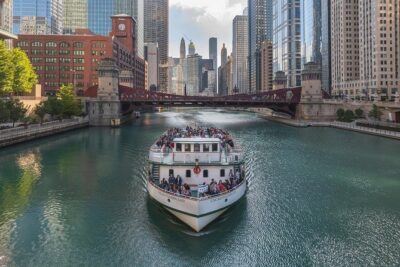
Chicago Architecture Center River Cruise aboard First Lady
Read our review →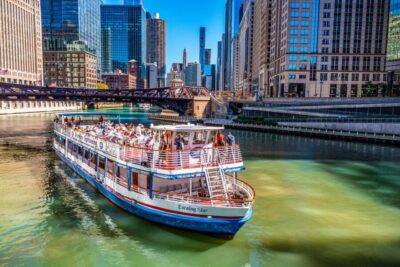
Architecture River Cruise Skip-the-Ticket Line
Read our review →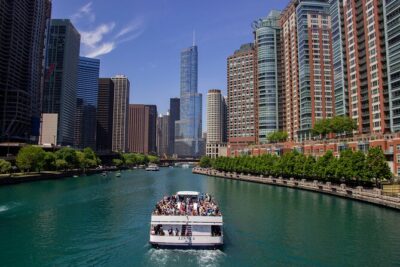
Chicago River 45-Minute Architecture Tour from Magnificent Mile
Read our review →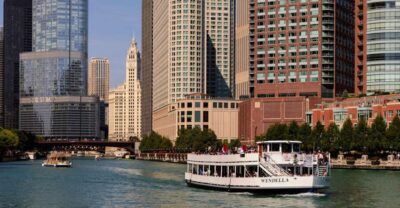
45-Minute Family-Friendly Architecture River Cruise
Read our review →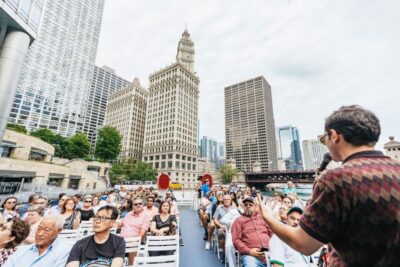
Chicago River 90-Minute Architecture Boat Tour
Read our review →Browse the lists this tour appears in