
Reviewed · CHICAGO ARCHITECTURE RIVER CRUISES
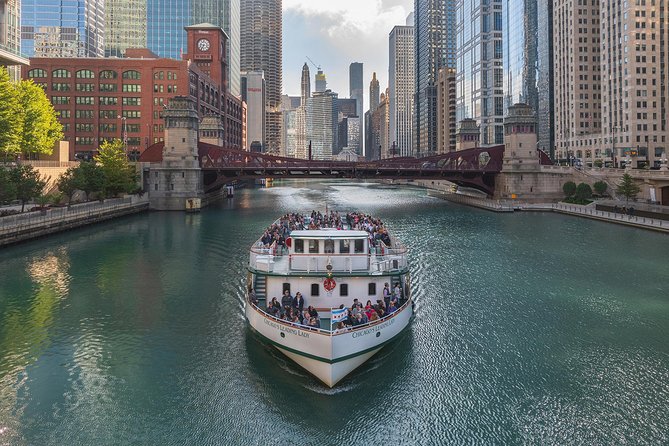
Chicago Architecture Center River Cruise aboard First Lady
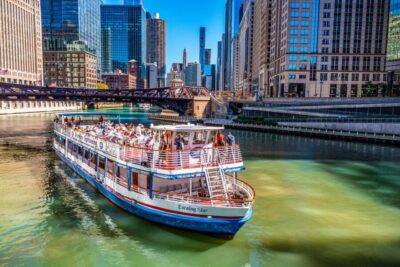
Chicago’s best skyline tour is not really about the skyline. It is about learning why the buildings are there, how the river shaped the city, and why a pair of round towers, a glass skyscraper, or a giant warehouse matters. This 90-minute Chicago River cruise gives you that story from a fine viewing spot.
I like the rotating team of Chicago Architecture Center docents, who bring real subject knowledge and personality to the ride. I also like the practical comfort: an open upper deck, a climate-controlled lower salon, restrooms, and a bar that serves drinks and hot chocolate. The main drawback is the open seating. If you want a prime seat or the best photo angle, arrive early and board promptly.
Key things to know
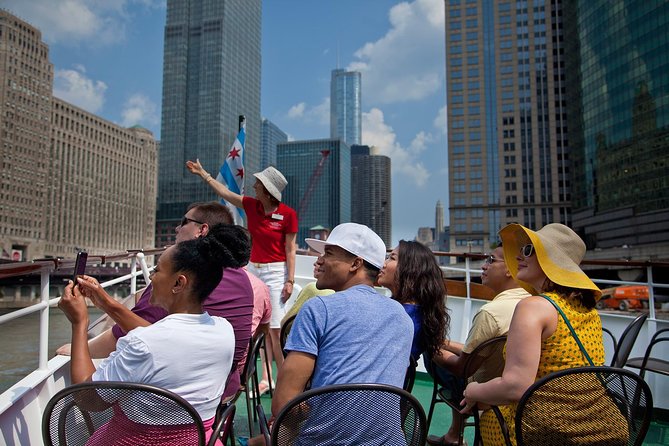
- The Chicago River is the main attraction: You see how industry, shipping, bridges, and city renewal shaped Chicago.
- The guides make the difference: Docents including Cynthia, Laura, Amy, Russell, Nick, and Mark have delivered lively talks on architecture, engineering, and local history.
- You choose your setting: Sit outside for the clearest photos, or retreat to the heated lower salon when the wind turns cold.
- It is a useful first-day tour: The buildings and stories help you make sense of Chicago for the rest of your visit.
- Boarding takes planning: Seating is first come, first served, and the dock has no elevator access.
- The $57 price buys context, not just a boat ride: It is strongest for visitors who want the why behind the famous buildings.
Why this Chicago river cruise works so well
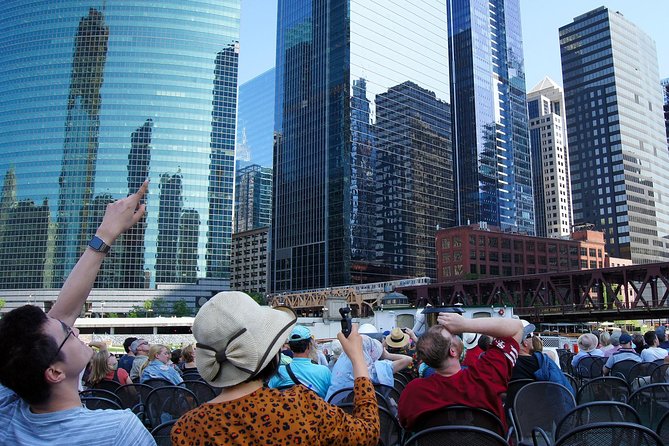
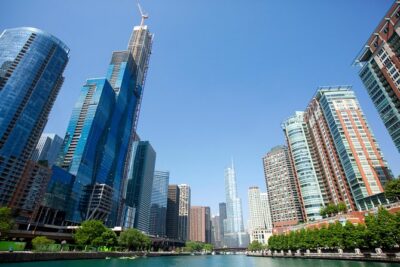
The Chicago Architecture Center River Cruise aboard Chicago’s First Lady is one of those city tours that earns its place early in a trip. Chicago’s buildings can look like a wall of glass and steel from street level. From the river, you see them in sequence, with space between them and a guide explaining how each one fits into the city’s story.
That setting matters. The Chicago River runs through the center of the Loop and past some of the city’s most important buildings. The boat gives you a moving viewpoint, but the docent keeps the experience from turning into a simple parade of tall structures.
You will hear about architecture, but also about trade, transportation, migration, engineering, and the city’s changing relationship with the river. The talk covers both celebrated landmarks and less famous buildings that help explain how Chicago grew.
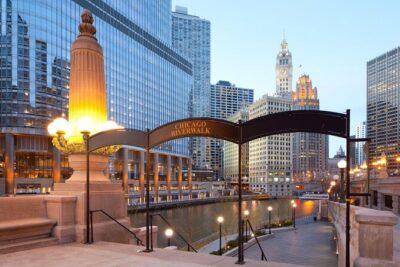
The experience lasts about an hour and a half. That is long enough for a serious introduction without taking up your whole afternoon. The boat returns to the same dock, so you can continue on foot along the Riverwalk, head toward Millennium Park, or visit the Chicago Architecture Center across Wacker Drive.
More architecture river cruises in Chicago:
- Chicago Architecture River Cruise
★ 5.0 · 15,756 reviews - Chicago River 90-Minute Architecture Tour
★ 4.5 · 9,629 reviews - Chicago River: 1.5-Hour Guided Architecture Cruise
★ 4.8 · 8,046 reviews
Boarding at 112 East Wacker Drive
The departure point is along the Chicago Riverwalk at 112 E Wacker Drive. The entrance is at street level near the northeast corner of Michigan Avenue and Wacker Drive, roughly three blocks north of Millennium Park and close to the Magnificent Mile.
Give yourself at least 30 minutes before departure. That extra time matters in summer, when the area can be busy and the boarding process may take longer. The cruise uses general admission seating, so early arrival also improves your choice of seats.
One practical wrinkle deserves attention. The phone confirmation may not be the final boarding ticket. Allow time to visit the ticket office and obtain the ticket needed to board. The ticket office is on the Riverwalk level of Wacker Drive, across from the dock area. Do not arrive at the last minute and assume your phone screen will take you straight onto the boat.
There is no elevator access to the dock. You should be comfortable using the route down to the boarding area. A stroller can come aboard, but children must be removed while boarding, and the stroller will be folded and stored in the salon.
The nearest listed parking option is the LAZ Parking garage at 111 E Wacker Drive. It is directly across from the stairway to the dock, but parking costs extra. Public transportation is nearby, and most people will find the cruise easiest to reach without a car.
Choosing the right seat and deck
All seating is general admission. Seat numbers printed on tickets are not valid, so pick your place once you board. The upper deck gives you the best chance at unobstructed photographs and a full view upward toward the towers. It is also where you feel the wind and sun most strongly.
The lower salon is enclosed and climate controlled, with large windows. This is the sensible choice on a wet day, a cold evening, or whenever the wind becomes tiring. The boat operates in all weather, so do not treat rain as a reason to expect a cancellation.
Even in pleasant weather, shade can make the ride feel cold. Bring a jacket in cooler months, and consider a cap, visor, or sunglasses because sunlight can interfere with your view of the buildings. The lower level provides a useful refuge, but sitting inside may make photography harder through the windows.
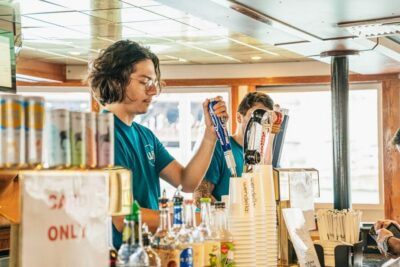
There is a full bar onboard, with drinks and light snacks available for purchase. Hot chocolate can be especially welcome on a chilly sailing. Restrooms are available, though they close 15 minutes before the end of the tour.
The vessel is clean and spacious, according to the supplied details, but space can still feel different depending on the sailing. The maximum group size is 250 people. That is large enough to create a crowd at popular photo spots, so early boarding is worth the effort.
The Chicago River, where the city’s story begins
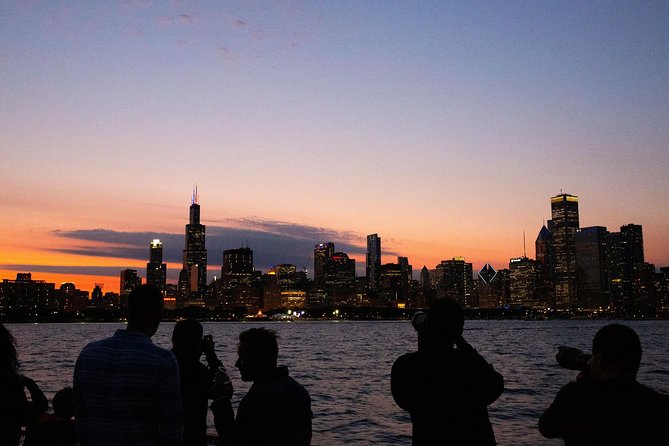
The cruise treats the river as more than a channel between buildings. Its story follows Chicago’s growth from an industrial and shipping center to a city that now uses the waterway for recreation, tourism, and public space.
As the boat moves along the river, the docent explains how the river has changed with the city. You get a clearer sense of why Chicago became such a major commercial center and why the river remains central to its identity.
Bridges, river traffic, and the buildings along the banks all become part of the lesson. This is where the guide’s role matters most. A photograph can show you a bridge or a tower, but it cannot explain how the river affected the city’s economy or why these buildings rose where they did.
The route is not a long voyage through every part of Chicago. One useful expectation to set is that the cruise focuses on the central river corridor. A comment in the supplied material notes that the distance was not as far as hoped, but that is part of the tradeoff: the tour stays focused on the most important architectural stretch rather than becoming a longer, less concentrated boat trip.
More architecture tours in Chicago:
- Chicago: Architecture River Cruise Skip-the-Ticket Line
★ 4.8 · 4,325 reviews - Chicago River 45-Minute Architecture Tour from Magnificent Mile
★ 4.5 · 2,924 reviews - Chicago Lake and River Architecture Tour
★ 4.5 · 2,308 reviews - Chicago: 45-Minute Family-Friendly Architecture River Cruise
★ 4.7 · 2,304 reviews
Navy Pier and Chicago’s habit of reuse
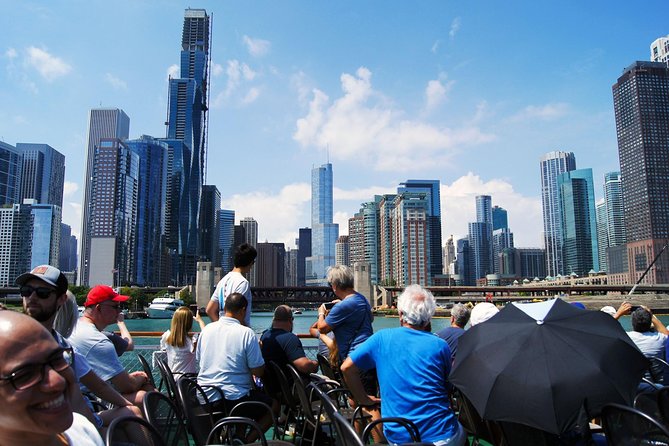
Navy Pier appears as an example of how Chicago keeps giving old places new jobs. It has served as a naval base, university campus, shipping hub, and entertainment destination.
Seen from the river, Navy Pier helps broaden the tour beyond skyscrapers. You are not only looking at new towers and famous architects. You are also seeing how a large civic structure can change purpose as the city changes around it.
This is one of the more useful themes of the cruise: Chicago architecture is not frozen in one period. The city keeps adapting older buildings and sites, often in ways that reveal changing economic and social needs.
Marina City’s round towers
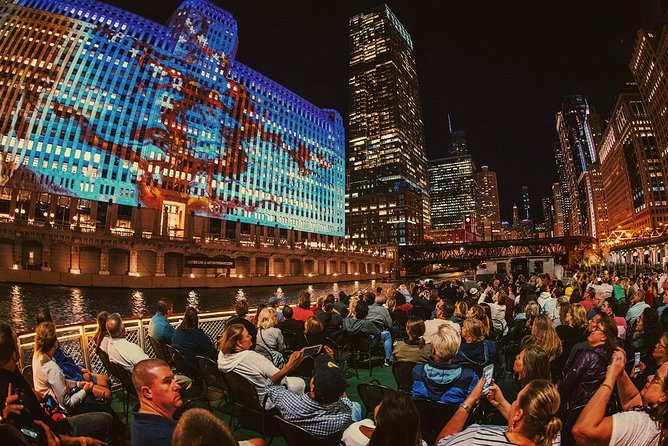
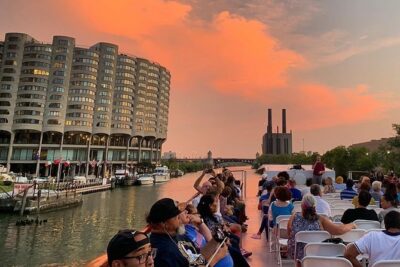
Marina City is among the most memorable sights on the route. Bertrand Goldberg designed the pair as an urban experiment meant to bring middle-class Chicagoans back into the city after years of suburban migration.
The distinctive round towers are easy to recognize, but the story makes them more interesting. Their form was not simply a decorative choice. The project tried to combine housing and city life in a period when many people were leaving central neighborhoods.
From the water, the towers also show how strongly Chicago architects have used unusual shapes to solve practical problems and make bold civic statements. This is a good example of why the cruise is more useful than a skyline photo. You learn what the building attempted to do.
Trump Tower and Mies van der Rohe’s modernism
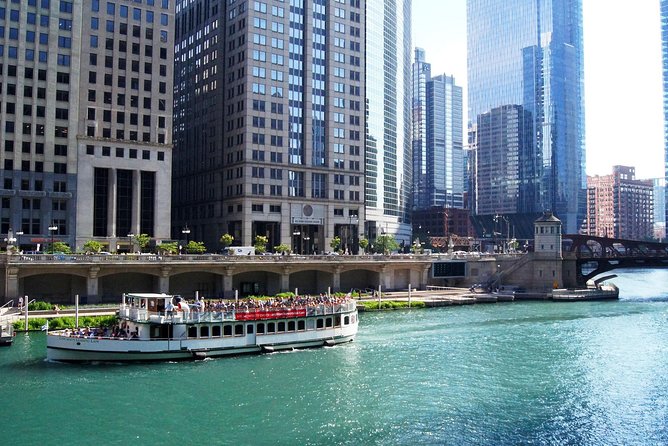
The Trump International Hotel & Tower gives the docent a chance to discuss how a building responds to its setting. Its reflective glass and steel exterior mirror the river and nearby structures, but the guide’s explanation goes beyond surface appearance.
The cruise then brings you near one of the last American projects designed by Ludwig Mies van der Rohe. This powerful Modernist building occupies an important place along the river and helps you compare different ideas about height, structure, simplicity, and urban space.
The value here is in the comparison. Chicago’s riverfront is not one clean architectural period. You see new towers beside buildings shaped by earlier Modernist principles. A good docent connects those differences instead of treating each structure as an isolated object.
150 North Riverside and Boeing’s headquarters
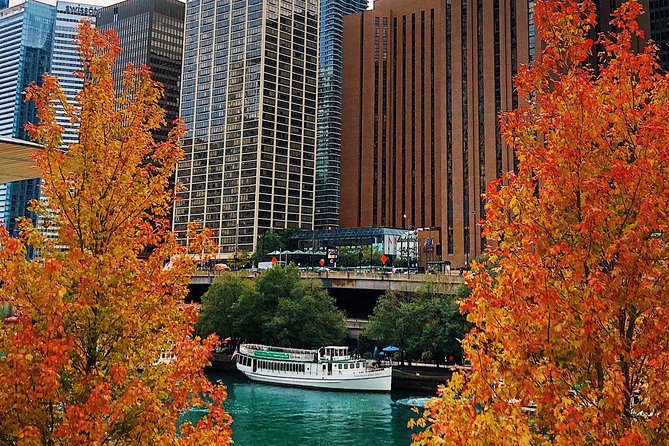
150 North Riverside is a dramatic engineering sight. Its narrow base and broad upper structure create the impression that the building is balancing above the ground.
The design gives the guide a chance to explain how structural engineering shapes architecture. You do not need a technical background to appreciate the building. The river view makes its unusual proportions especially clear.
The boat also passes Boeing International Headquarters at 100 N Riverside Plaza. The cruise does not treat every building as a famous landmark with a long stop. Some are part of the broader riverfront sequence, giving you a chance to compare materials, scale, and placement as the boat moves along.
Willis Tower and the old scale of Chicago
Willis Tower, formerly the Sears Tower, held the title of the world’s tallest building for nearly 25 years. From the river, it remains one of Chicago’s strongest visual anchors.
The guide places the tower within Chicago’s long race to build higher and work on a larger scale. That context helps you understand why the building mattered when it opened, not just how tall it is today.
Another stop recalls a different kind of giant. The building completed in 1930 was the world’s largest at the time and served as Marshall Field’s wholesale warehouse, where retailers bought stock. That detail offers a useful glimpse of Chicago as a national center of commerce, not just a city of office towers.
The Mercantile Exchange Building at 20 S Wacker Drive continues that commercial theme. You see how finance, wholesale trade, and business shaped the riverfront alongside residential and cultural projects.
Chicago Tribune Freedom Center and the final stretch
The Chicago Tribune Freedom Center adds another layer to the route. It connects the river corridor with the city’s newspaper and publishing history, showing that the buildings along the water have served many kinds of work.
By the later part of the cruise, the tour has moved well beyond a list of famous names. You have seen residential experiments, corporate towers, Modernist structures, engineering showpieces, warehouses, and commercial institutions.
The strongest docents make these buildings talk to one another. The supplied material highlights that approach, with the guide explaining how one structure reflects or responds to its surroundings. That is the kind of connection you should listen for. It turns a sightseeing ride into a short lesson in how cities are built over time.
How good are the docents?
The guides are volunteers and docents associated with the Chicago Architecture Center. Names vary by departure, but the supplied experiences specifically praise Cynthia, Laura, Amy, Russell, Nick, and Mark.
The delivery style can differ from one sailing to another. The common strength is the depth of information about Chicago’s history, architects, buildings, and engineering. Strong guides also add humor and personality, keeping the talk lively for the full 90 minutes.
This tour depends heavily on the person holding the microphone. That is not a warning so much as a fact about docent-led experiences. The repeated high ratings, including a 4.9 score from 5,536 ratings and recommendation by 98 percent of people who rated it, point to a consistently strong experience, but no live talk is identical.
If you enjoy learning while you sightsee, this is a major reason to book. If you prefer a quiet cruise with little narration, the steady commentary may feel like too much.
Is $57 a fair price?
At $57 per person, this is not the cheapest way to get on the Chicago River. You are paying for more than transportation, though. The price includes the sightseeing cruise, live commentary, a local docent, restroom access, and the option of an enclosed climate-controlled level.
I think the value is strongest when you use the cruise as your Chicago orientation. In 90 minutes, you cover a wide range of buildings and get the basic vocabulary to understand what you see later from the street.
The value is weaker if you only want a short boat ride or if you will spend most of the cruise indoors without looking closely at the buildings. The bar is convenient, but drinks and snacks cost extra, and WiFi is not provided.
A useful bonus sits across Wacker Drive. Showing your river cruise ticket at the Chicago Architecture Center provides discounted admission of $5 per person. That can make the cruise more worthwhile if you plan to visit the center as well.
Who should book this cruise?
I would book it near the start of a Chicago visit. The orientation helps you recognize buildings later, and the river gives you a quick sense of how the Loop connects with nearby districts.
It suits couples, solo visitors, friends, and families with older children. The experience is family-friendly, but it is not recommended for children younger than 12. Children must be accompanied by an adult.
It is also a good choice for anyone interested in architecture, city planning, engineering, or Chicago history. You do not need prior knowledge. The docent explains the main ideas while you look at the actual buildings.
You should think twice if you dislike scheduled departures, shared seating, or weather exposure. The cruise runs in rain and cold, and seating is not reserved. Pets are not allowed, though service animals are permitted.
FAQ
Where does the cruise depart?
It departs from the Chicago Riverwalk at 112 E Wacker Drive. The street-level entrance is near the northeast corner of Michigan Avenue and Wacker Drive.
How early should I arrive?
Arrive 30 minutes before departure. Allow additional time during summer, when the boarding area may be busier.
Is seating assigned?
No. Seating is general admission and boarding is first come, first served. Any seat numbers printed on the tickets can be ignored.
What happens if it rains?
The cruise operates in all weather. The boat has an open-air upper deck and an enclosed, climate-controlled lower salon with large windows.
Are food and drinks available?
Yes. A full bar is available onboard, and drinks and light snacks can be purchased.
Can I bring luggage?
No. Luggage cannot be brought onboard, and there is no dockside luggage storage. Leave your bags at your hotel.
Is the boat accessible by elevator?
No. There is no elevator access to the boat dock. Service animals are allowed, and strollers can be brought onboard after children are removed during boarding.
Can I cancel or change my ticket?
No. Tickets are non-refundable and cannot be transferred to another departure. The route, vessel, and schedule can also change without notice.
Should you book the Chicago Architecture Center river cruise?
Yes, if you want Chicago’s buildings explained rather than simply photographed. The combination of river views, strong docents, and a heated lower salon makes this one of the city’s most useful introductions, especially on your first day.
Arrive early for the best seat, dress for wind and shade, and treat the $57 cost as payment for the guide’s interpretation as much as for the boat. If that sounds worthwhile, book it. If you want a quiet ride with no fixed commentary, choose another way to see the river.
Recently added around Chicago
- Travel between Chicago O’Hare and Madison★ 4.5 · 4 reviews
- Volo Auto Museum: Admission Ticket★ 4.5 · 55 reviews
- Holiday Walking Tour: Underground Chicago via the Pedway★ 5.0 · 27 reviews
- Workers Cottages of Oldtown Triangle Walking Tour★ 5.0 · 45 reviews
- Verse Immersive Holographic Theater in Chicago★ 4.5 · 28 reviews
- Vito’s Vault Chicago finest dinner theatre speakeasy★ 5.0 · 14 reviews
- Delicious Donuts & Sweet Treats: West Loop Walking Tour★ 5.0 · 47 reviews
- Traveling Spoon Chicago-Style Deep Dish Pizza Private Online Cooking Class★ 5.0 · 4 reviews
Chicago Architecture River Cruises, compared.
Architecture River Cruise Skip-the-Ticket Line
Read our review →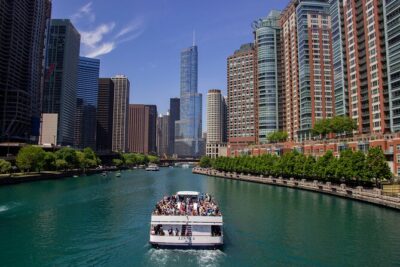
Chicago River 45-Minute Architecture Tour from Magnificent Mile
Read our review →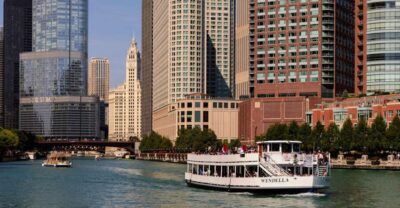
45-Minute Family-Friendly Architecture River Cruise
Read our review →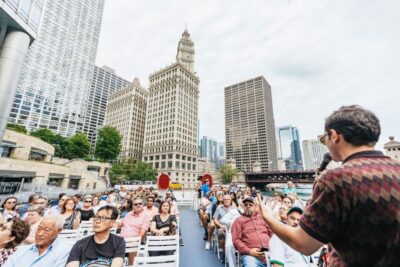
Chicago River 90-Minute Architecture Boat Tour
Read our review →Browse the lists this tour appears in