
Reviewed · CHICAGO ARCHITECTURE TOURS
Best of Chicago: Architecture & Highlights City Private Tour
Chicago’s architecture is best understood on foot, with your eyes tilted up and a guide filling in the stories between the famous sights. This two-hour private walk links the Chicago Theatre, Pedway, Picasso Statue, Riverwalk, Magnificent Mile, and Millennium Park, giving you a quick but useful first look at downtown.
I like the private format, which lets your guide adjust the pace and answer your questions instead of following a fixed crowd. I also like the small local touches: Garrett popcorn, Frango chocolate, and a look inside buildings you might otherwise pass without noticing.
The main drawback is time. Two hours goes fast, and the Riverwalk is skipped in winter. You will see many landmarks, but this is an orientation walk rather than a full architectural study.
Key points to know before booking
- Start beneath the Chicago Theatre sign: The tour begins at 175 N State Street, an easy central meeting point.
- The Pedway adds a local angle: You see how Chicagoans use underground passages and bridges during cold weather.
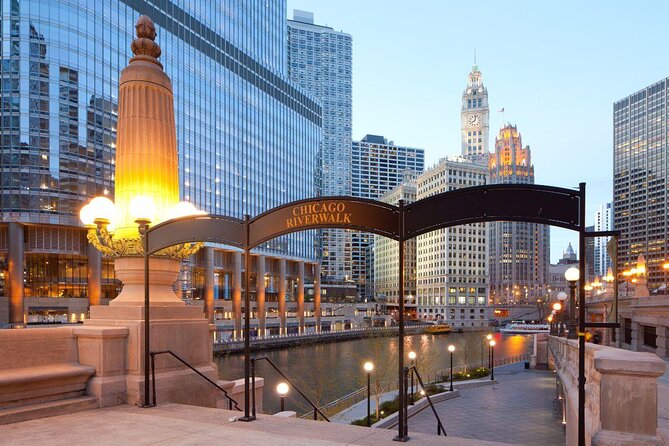
- Architecture comes with stories: Look up at buildings such as the Wrigley Building and Tribune Tower while your guide explains their past.
- Small tastings are included: Garrett popcorn and Frango chocolate add a pleasant Chicago flavor without turning the tour into a full food walk.
- The route ends at Cloud Gate: Millennium Park puts you in a useful spot for lunch, museums, shopping, or more sightseeing.
- The Riverwalk depends on the season: It is included when weather allows, but not during winter months.
Why this is a useful first walk in Chicago
I like tours that give you a mental map before you tackle a large city on your own. This one does that well. You begin in the Loop, pass through several major downtown districts, and finish at Millennium Park, where it is easy to continue exploring.
The route also mixes grand public sights with details you could miss alone. The Chicago Theatre sign is obvious, but the Pedway is less so. The lower-level network shows a practical side of the city, while the buildings above ground tell the bigger story of commerce, journalism, government, and public art.
You are not sitting on a bus watching Chicago slide past a window. You walk through it. That means you can pause to look up, step into certain public buildings when the route allows, and hear the guide point out details that are easy to miss from street level.
The tour is private for your group, with a maximum of 12 people. That is a useful middle ground. You get personal attention without needing to organize a completely private guide at a much higher price.
More architecture tours in Chicago:
- Chicago Architecture River Cruise
★ 5.0 · 15,756 reviews - Chicago River 90-Minute Architecture Tour
★ 4.5 · 9,629 reviews - Chicago River: 1.5-Hour Guided Architecture Cruise
★ 4.8 · 8,046 reviews
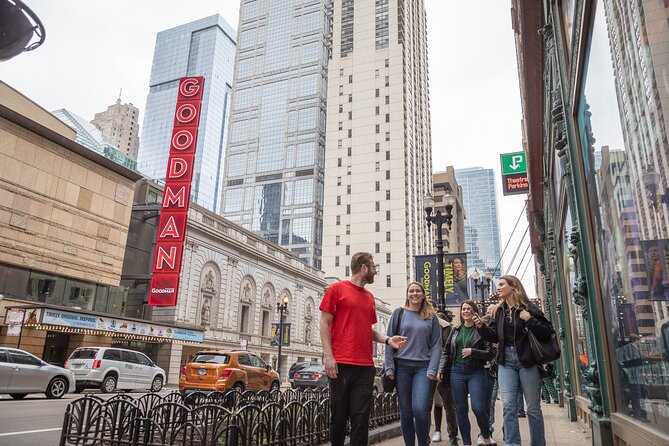
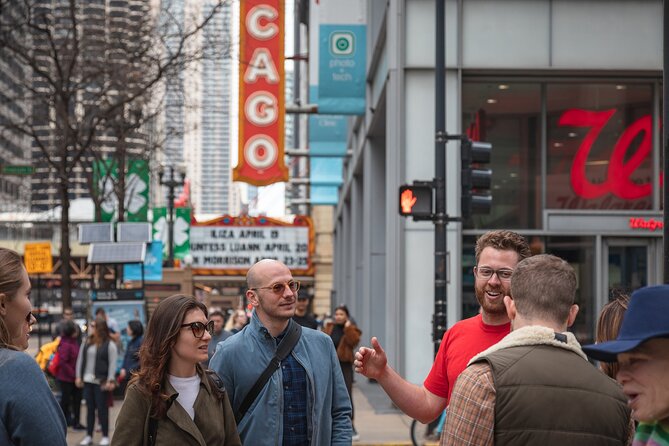
Meeting the guide under the Chicago Theatre
The Chicago Theatre is a smart starting point. Its bright sign is easy to recognize, and the address, 175 N State Street, places you right in the middle of downtown.
Your guide meets you beneath the sign, then uses the theater as the first lesson in Chicago’s love of architecture and entertainment. The listed time here is about 15 minutes, with admission inside the theater not included.
That last detail matters. This is not a theater tour, and you should not expect a backstage visit or a ticketed interior program. The value comes from seeing the building as part of the downtown streetscape and hearing how it fits into the city’s story.
The meeting area is near public transportation, and pickup is offered. Still, confirm the exact pickup arrangement when booking, since the stated start point is the Chicago Theatre. A mobile ticket makes the arrival process simple.
The Chicago Pedway, where locals escape the weather
The Chicago Pedway gives the walk a useful change of pace. Instead of staying on the sidewalks, you head into the network of tunnels and bridges that connect office towers, stores, and other downtown buildings.
This is one of the tour’s more practical stops. Chicago winters can be severe, and the Pedway shows how the city functions below street level when wind and snow make walking outdoors unpleasant.
Do not expect a polished attraction with a single grand entrance. The Pedway is a working urban network, and part of its appeal is seeing how ordinary city movement happens away from the main streets. Your guide helps make sense of a system that can feel confusing if you wander into it alone.
The route also gives you a chance to understand the contrast between Chicago’s monumental buildings and the less visible systems that support them. That balance makes the tour feel more grounded than a simple parade of famous facades.
Government, Picasso, and the details above eye level
After the Pedway, the walk brings you past the 10-story building used for Chicago city government offices. The stop is brief, but it gives your guide a chance to explain the building’s history and point out its older architectural features.
Then comes the Picasso Statue, one of downtown Chicago’s most distinctive pieces of public art. You get an up-close look rather than a distant view from a passing vehicle. Your guide explains how the work came to Chicago and how people first responded to it.
That context helps. Public art can seem puzzling when you encounter it without background, especially when it does not look like a conventional statue. Here, the story of the artwork becomes part of the city’s changing ideas about modern design and public space.
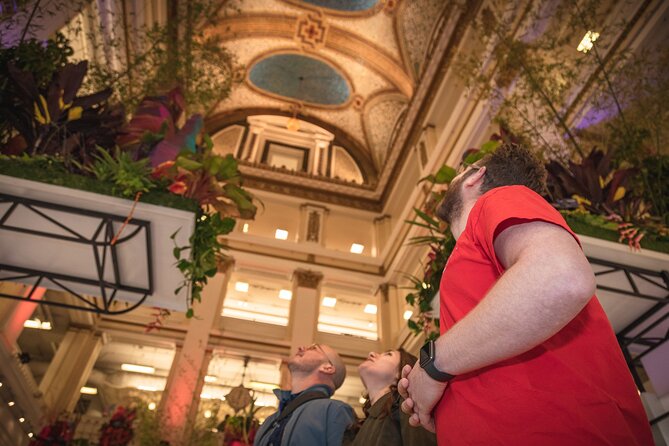
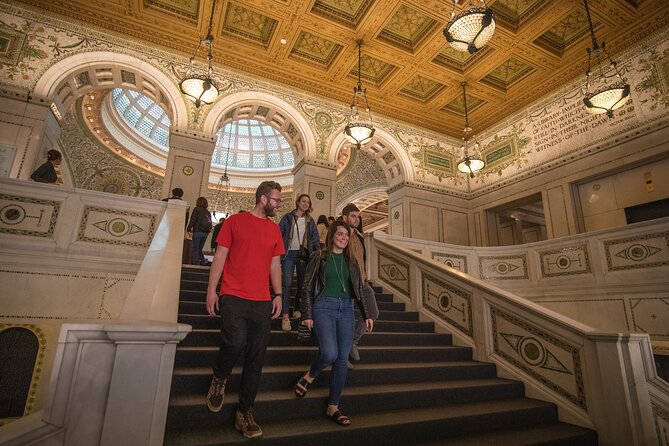
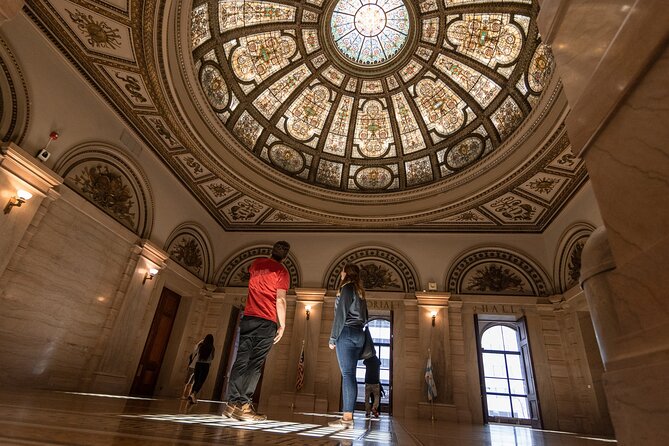
One useful theme from the walk is the reminder to look up. Details at Macy’s are easy to miss if you focus only on storefronts, and the interiors of historic buildings can offer surprises. The route may include access to public interior spaces, but exact entry depends on conditions and the day’s flow.
A few more Chicago tours to compare
- Private Art Institute of Chicago Skip-the-Line Guided Tour
★ 5.0 · 275 reviews - Chicago Private Custom City Tour with Hotel Pick Up
★ 5.0 · 201 reviews - Private Arrival Transfer from Chicago Airports (ORD) (MDW)
★ 3.5 · 196 reviews - Skip the Line Art Institute of Chicago Tour Semi-Private 8ppl Max
★ 5.0 · 157 reviews
The Chicago Riverwalk and its changing skyline
When weather allows, the group heads toward the Chicago Riverwalk. The listed stop takes about 15 minutes, enough for views and a short walk beside the water.
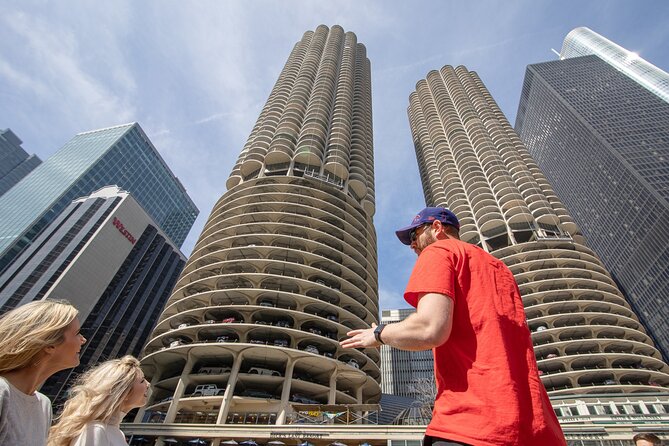
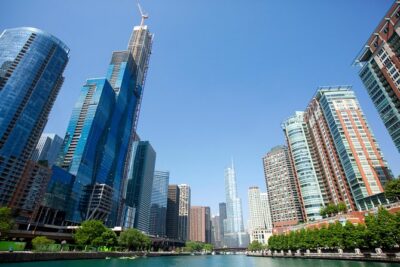
From here, you can see landmarks such as Marina Towers and the Britannica Building. The river gives you a different angle on Chicago’s architecture. Buildings that seem flat and separate from the sidewalk become part of one connected wall of towers along the water.
This is also the tour’s clearest seasonal limitation. The Riverwalk is not part of the route during winter months. If the river is a major reason you want this experience, check the date and weather expectations before booking.
The stop is short, so you will not get an extended river cruise or a long architectural lecture at the water. Think of it as a well-placed city view that helps connect the downtown streets to the river that shaped Chicago’s growth.
The Wrigley Building and Tribune Tower
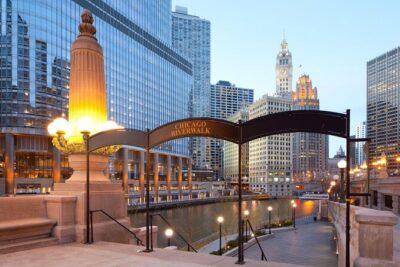
The Wrigley Building is easy to recognize by its central clocktower. Built in the early 1900s, it was once linked directly with the Wrigley Company. Today, the building houses other businesses and consulates, but its identity remains tied to the company that made the name famous.
This is a good place to notice how Chicago’s buildings can carry old identities even after their business use changes. The guide can give you the short version of that story while directing your attention to the building’s form and position near the river.
The Tribune Tower adds another layer. It represents Chicago journalism and is home to the Chicago Tribune. Its design connects two important city traditions: newspapers and architecture.
You may already know both buildings from photographs, but the street-level view is more useful. You can compare their shapes, understand where they sit in relation to the river, and hear why they matter instead of simply collecting another picture.
Walking the Magnificent Mile toward the parks
The route continues along the Magnificent Mile, one of Chicago’s best-known shopping streets. The walk is not limited to stores. You also reach lakefront parks and open views, which bring a quieter feel after the dense center of the Loop.
The listed time here is about 15 minutes, so do not treat this as a shopping excursion. It is a connecting section of the tour, taking you toward Millennium Park while giving you a look at one of the city’s most recognizable commercial areas.
I like this part because it shows the range of downtown Chicago in a small amount of time. You move from government buildings and office towers to luxury shops, lakefront space, and public art.
If shopping matters to you, the guide may be able to point out useful areas for later. The tour itself does not include shopping time, purchases, or souvenirs, so plan to return after the walk if you want to browse.
Finishing at Millennium Park and Cloud Gate
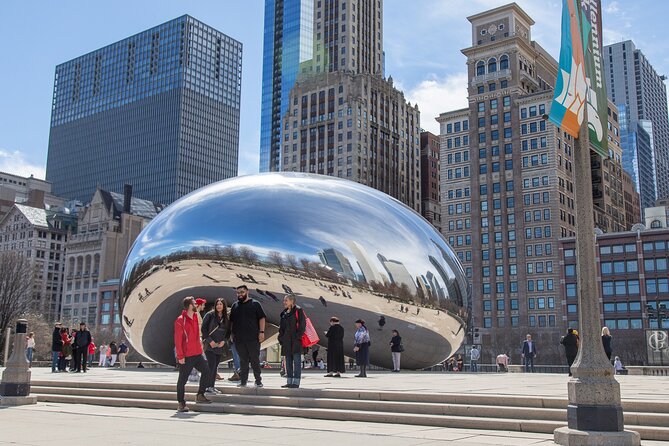
The final stop is Millennium Park, where you find Cloud Gate, better known by its informal nickname, the Bean. The tour allows about 25 minutes here, giving you time to look at the sculpture and take photographs.
Ending here is practical. You finish in one of Chicago’s most visited public spaces, with restaurants, bars, attractions, and transport nearby. Your guide can also suggest places to continue, which is especially useful if this is your first day in the city.
Cloud Gate is the headline sight, but do not rush straight to the sculpture. Millennium Park works best when you take in the surrounding public space as well. The contrast between reflective steel, surrounding buildings, and open park area is part of the appeal.
The tour ends here rather than returning you to the Chicago Theatre. Keep that in mind when planning the next part of your day. The one-way route is efficient for sightseeing, but you need to organize your own return trip if you left belongings near the starting point.
What the snacks and train pass really add
The included snacks are popcorn tasting and chocolate tasting, commonly associated with Garrett popcorn and Frango chocolate. These are small portions, not a meal, but they make the walk feel more connected to Chicago’s local food traditions.
Past feedback also points to the snacks as a favorite part of the experience. I would treat them as a bonus rather than a reason to book on their own. If you expect a full food tour, this is not it. Additional food and drinks are not included.
A train pass is also included. That can help you continue sightseeing after the tour, though the supplied details do not specify the pass type or duration. Check the practical terms when you book, especially if you plan to rely on it for a particular journey.
The tour does not include gratuities, souvenirs, or personal shopping. Set aside extra money if you want to thank the guide or stop for food afterward.
The guides and the private-tour advantage
The strongest praise centers on the guides. Dash, Dave, Rich, and David are names associated with especially positive tour experiences, and the common thread is clear: the best guides bring energy, city pride, and useful detail to the walk.
One guide has been praised for tailoring the route to personal interests when possible. Another added music and even a few songs while leading the group through the Pedway. Those touches will not suit everyone, but they show how much the guide shapes a private experience.
A private tour also gives you room to ask basic questions without feeling rushed. You can ask why a building matters, how the Pedway works, or where to return for a meal. That flexibility is harder to get in a large scheduled group.
The private format does not mean you control every minute. The route remains about two hours, and the main sights are fixed. Still, a family, couple, or small group can get more from the walk than from a generic sightseeing loop.
Is $245 good value for up to 12 people?
At $245 per group, the price is not cheap for a two-hour walk, but the calculation changes if you have several people sharing the cost. With 12 participants, it works out to just over $20 per person. For two people, it is a much larger per-person expense.
I see the value in the private guide, the central route, the train pass, and the included tastings. You are also paying for a guide who can explain details and respond to your group rather than delivering a fixed script to a large crowd.
The main question is group size. A couple seeking the lowest-cost introduction to Chicago can find cheaper shared walks. A family or group of friends may find the private price reasonable, especially if personal attention and flexible conversation matter.
The tour also saves planning time. In two hours, you connect several central sights that could take longer to organize on your own. You will not see every major Chicago landmark, but you will leave with a workable downtown plan.
Who should book this walk?
This experience fits first-time Chicago visitors who want an introduction before exploring museums, neighborhoods, restaurants, and the lakefront on their own. It also suits people who like architecture but do not want a long specialist lecture.
I would recommend it to families and small groups that value a private guide, particularly if some people in your party are unsure how much walking they want to do. Most people can participate, and the route is near public transportation.
You should be comfortable walking outdoors for much of the tour. The Pedway provides an indoor section, but the Chicago Theatre, Riverwalk, Magnificent Mile, and Millennium Park all involve moving through downtown on foot.
Book with care if your main goal is the Riverwalk. That section is weather-dependent and is not offered during winter. Also remember that the Chicago Theatre interior is not included, and the tastings are snacks rather than a full meal.
Final call: a strong orientation walk with seasonal limits
I would book this tour if you want a compact, personal introduction to central Chicago and plan to keep sightseeing afterward. The route brings together architecture, public art, local food samples, the Pedway, and useful city advice without requiring a full day.
The best reason to choose it is the guide. Dash, Dave, Rich, and David have each been singled out for warmth, city knowledge, enthusiasm, and the ability to make the walk feel personal. The private setup gives that human element room to work.
I would choose another experience if you want a long architecture lecture, a full food tour, or guaranteed Riverwalk time in winter. For most first visits, though, this is a smart way to get your bearings fast, learn why downtown looks the way it does, and finish beside Cloud Gate with the rest of Chicago still open to you.
FAQ
Where does the tour begin?
The tour begins outside the Chicago Theatre at 175 N State Street, Chicago, Illinois 60601.
Where does the tour end?
The tour ends at Millennium Park in Chicago, near Cloud Gate, also known as the Bean.
How long is the tour?
The experience lasts approximately two hours.
Is this a private tour?
Yes. Only your group participates, with up to 12 people per group.
Is a guide included?
Yes. A local English-speaking guide leads the tour.
Is the Chicago Riverwalk included?
The Riverwalk is included when weather allows. It is not part of the tour during winter months.
Are food and drinks included?
Small tastings of popcorn and chocolate are included. Additional food and drinks are not included.
Is transportation included?
A train pass is included, and the tour operates near public transportation. Pickup is offered.
Can I cancel for a refund?
You can cancel at least 24 hours before the experience start time for a full refund. Cancellations or changes made less than 24 hours before the start time are not accepted for a refund.
Recently added around Chicago
- Travel between Chicago O’Hare and Madison★ 4.5 · 4 reviews
- Volo Auto Museum: Admission Ticket★ 4.5 · 55 reviews
- Holiday Walking Tour: Underground Chicago via the Pedway★ 5.0 · 27 reviews
- Workers Cottages of Oldtown Triangle Walking Tour★ 5.0 · 45 reviews
- Verse Immersive Holographic Theater in Chicago★ 4.5 · 28 reviews
- Vito’s Vault Chicago finest dinner theatre speakeasy★ 5.0 · 14 reviews
- Delicious Donuts & Sweet Treats: West Loop Walking Tour★ 5.0 · 47 reviews
- Traveling Spoon Chicago-Style Deep Dish Pizza Private Online Cooking Class★ 5.0 · 4 reviews
Chicago Architecture Tours, compared.

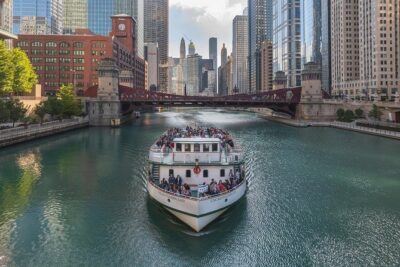
Chicago Architecture Center River Cruise aboard First Lady
Read our review →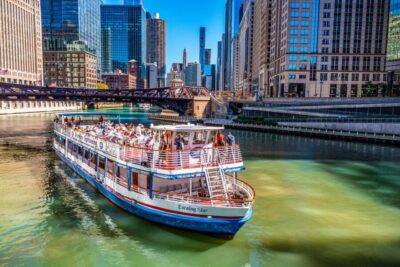
Architecture River Cruise Skip-the-Ticket Line
Read our review →
Chicago River 45-Minute Architecture Tour from Magnificent Mile
Read our review →
45-Minute Family-Friendly Architecture River Cruise
Read our review →Browse the lists this tour appears in