
Reviewed · MUSEUMS
Chicago: Griffin Museum of Science and Industry Ticket
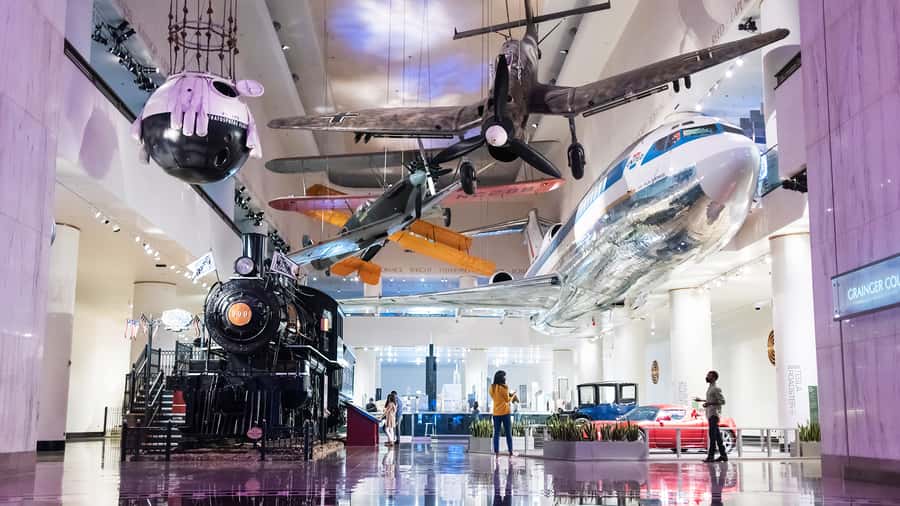
Chicago’s Griffin Museum of Science and Industry puts a 40-foot tornado, a 1.2-million-volt Tesla coil, Apollo 8, and a captured German submarine under one roof. The museum fills the only remaining building from the 1893 World’s Fair, but its exhibits look toward the future rather than dwelling on the past.
I like the way you learn here by doing, not just by reading labels. I also like the sheer range: young children can turn a giant hamster wheel while older visitors study atoms, spaceflight, engineering, and wartime technology. The drawback is simple: $25 covers general admission, but the U-505, Coal Mine, movies, and Marvel’s Spider-Man exhibition cost extra.
Key points

- Control a 40-foot tornado: Work with the weather displays and see how air and water behave under powerful conditions.
- See Apollo 8: Stand near the capsule that circled the moon in 1968 at the Henry Crown Space Center.
- Tour the U-505 submarine: This captured German World War II submarine requires an additional fee.
- Expect a full day: More than 400,000 square feet and hundreds of exhibits make a half-day visit feel rushed.
- Plan your route early: The museum is a few miles south of downtown, and some timed activities fill part of your day.
- Add Spider-Man carefully: Marvel’s Spider-Man: Beyond Amazing runs through February 8, 2026, but it needs a separate ticket.
Why Griffin Museum of Science and Industry is worth your day
I would set aside the better part of a day for this museum. It is not a quick stop where you glance at a few displays and leave. With hundreds of exhibits spread across more than 400,000 square feet, the building gives you plenty to do, but that size also means you need to choose your priorities.
The museum works especially well for families with children and teenagers. You can touch, turn, test, steer, and watch. A child may come for the tornado and spend the next hour asking how lightning works. A teenager may ignore the space exhibits at first, then pause at Apollo 8 or the submarine because the objects are real, large, and difficult to grasp from a textbook.
I also like the museum for adults who enjoy science but do not want a lecture. The activities explain basic ideas through physical action. You see cause and effect quickly, which makes the displays easy to share with someone who claims not to like museums.
The general admission price is $25 per person. That is a fair price if you use the ticket for several hours, especially since the museum is large enough to occupy a full day. It is less attractive if you arrive late or plan to see only one exhibit. One visitor arrived around 11:30 and found the day too short, so my advice is to arrive near opening time.
More museums in Chicago:
- Medieval Torture Museum Ticket with Audio Guide and Ghost Hunting
★ 5.0 · 962 reviews - Chicago: Field Museum of Natural History Ticket or VIP Tour
★ 4.7 · 717 reviews - Field Museum of Natural History Admission Tickets
★ 4.5 · 489 reviews
Begin with the weather: tornadoes, lightning, and avalanches
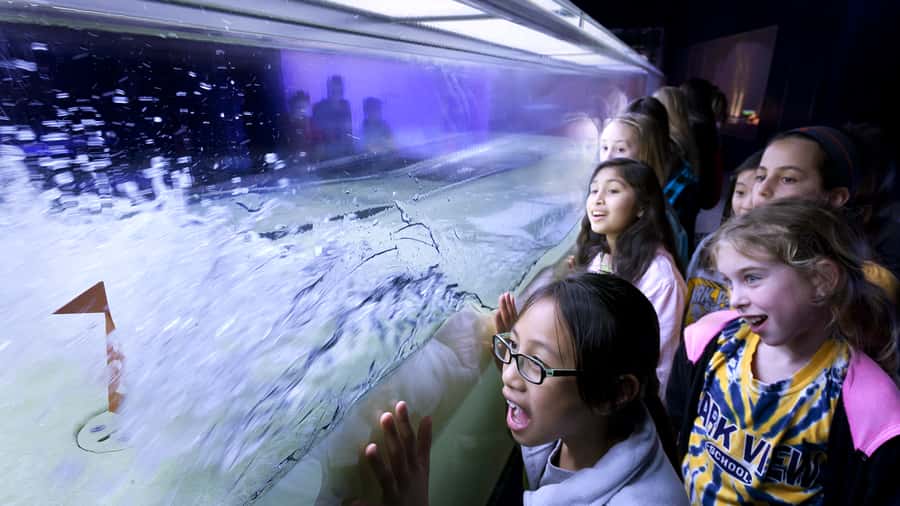
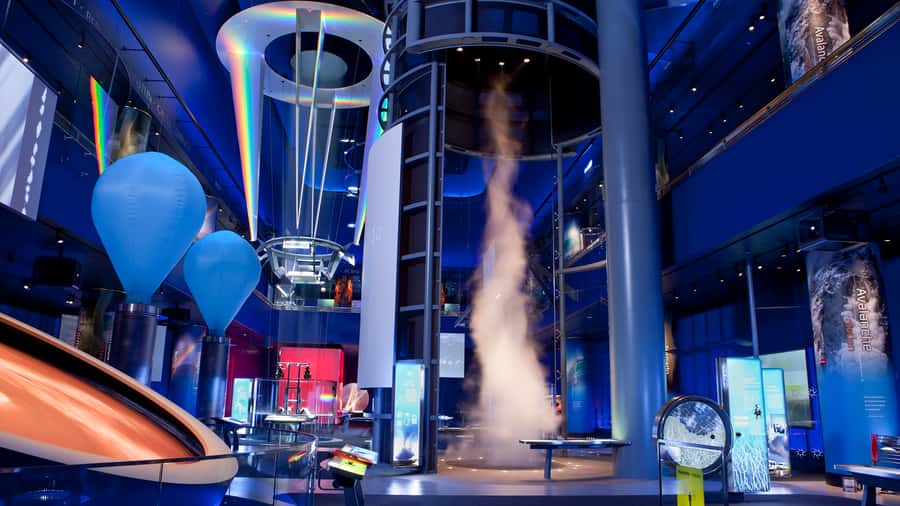
The weather section gives you an immediate sense of the museum’s style. Instead of simply showing a film about extreme weather, it lets you see recreated forces at close range and take part in controlled demonstrations.
The 40-foot tornado is the headline attraction. You can help control it, which turns a distant natural disaster into a physical lesson about moving air. It is one of the better first stops because it gives children a clear reason to ask questions, and it gives adults something more useful than a photo opportunity.
Other displays cover lightning, fire, tsunamis, sunlight, avalanches, and atoms. The range matters because it connects huge natural forces with tiny building blocks. You can move from a storm-sized event to the behavior of matter without leaving the same broad subject area.
The Tesla coil is another memorable stop. It sends 1.2 million volts of lightning above your head. The effect is dramatic, but the real value is that the display makes electricity visible. If you have young children with you, this is the kind of exhibit that can hold their attention long enough for you to explain what they are seeing.
Plan for crowds around the most active displays. The museum limits daily capacity, and popular hands-on areas can take time. You do not need to rush, but you should avoid spending your first hour at one exhibit if you also want the submarine, Coal Mine, space center, and Spider-Man exhibition.
Apollo 8 and the story of reaching the moon

The Henry Crown Space Center provides a welcome change of pace from the louder, more physical exhibits. Here, you can look at the history and future of space travel, including the Apollo 8 capsule that circled the moon in 1968.
Apollo 8 matters because the capsule is not just a model or a picture. It gives you a direct sense of the compact machinery used for a mission far beyond Earth. The object is small compared with the idea behind it, and that contrast makes the display worth your time.
I would place the space center high on your list even if you are not a space enthusiast. It adds context to the museum’s larger message: science is not only about experiments in front of you. It is also about engineering, risk, teamwork, and reaching a place humans had never visited.
The space exhibits also suit older children and teenagers who may be ready for more than buttons and moving parts. Younger children can still enjoy the hardware and visuals, but the section has enough historical weight to reward a slower visit.
Inside the U-505, a powerful extra-cost tour
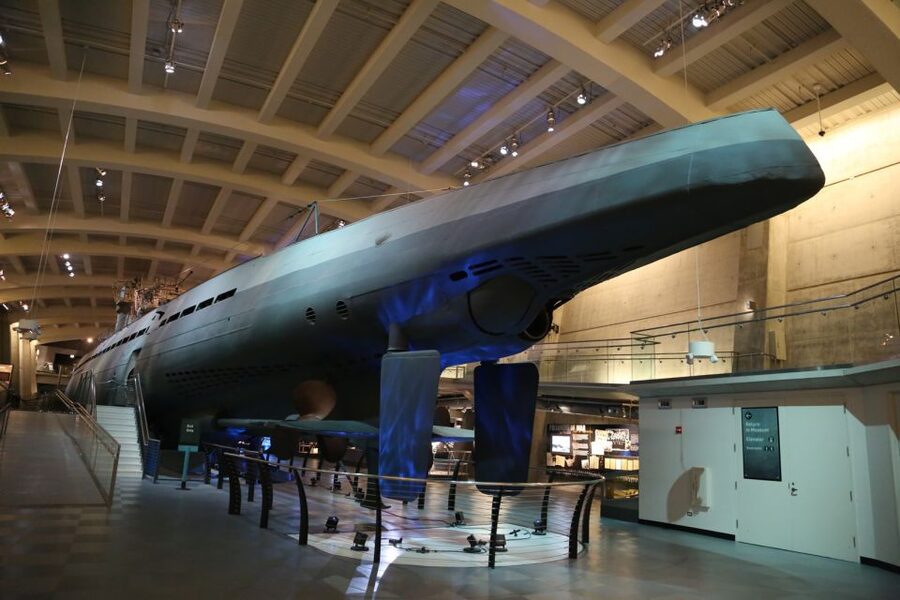
The U-505 is the museum’s most unusual large object. It is the only captured German World War II submarine in the United States, and you can tour it for an additional fee.
The submarine adds something the hands-on displays cannot: a strong sense of scale and confinement. A real vessel lets you think about how people worked, slept, and operated equipment in a narrow metal space. It is also a useful counterpoint to Apollo 8. One object shows how humans traveled beneath the sea, the other how they reached the moon.
The main caution is cost. General admission does not include the U-505 tour. The same applies to the Coal Mine tour. You should check the full price before buying, since the additional charges are not always obvious at first glance.
If you book either extra, try to enter the museum at least one hour before the tour time. That gives you room for security, orientation, and a few nearby displays without turning the day into a race. You will also want to protect the tour time when planning the rest of your visit.
More tickets in Chicago:
- Chicago: Willis Tower Skydeck and The Ledge Ticket
★ 4.6 · 4,350 reviews - Chicago: Architecture River Cruise Skip-the-Ticket Line
★ 4.8 · 4,325 reviews - Chicago: 360 CHICAGO Observation Deck Ticket
★ 4.5 · 3,173 reviews - Museum of Ice Cream Chicago Admission Ticket
★ 3.5 · 396 reviews
Descend into the Coal Mine and explore human biology
The Coal Mine is another separately priced attraction. It takes you into a working-style mine setting and adds an industrial side to the museum’s science story. If you have children interested in machines, tunnels, or how resources are extracted, this can be a strong choice.
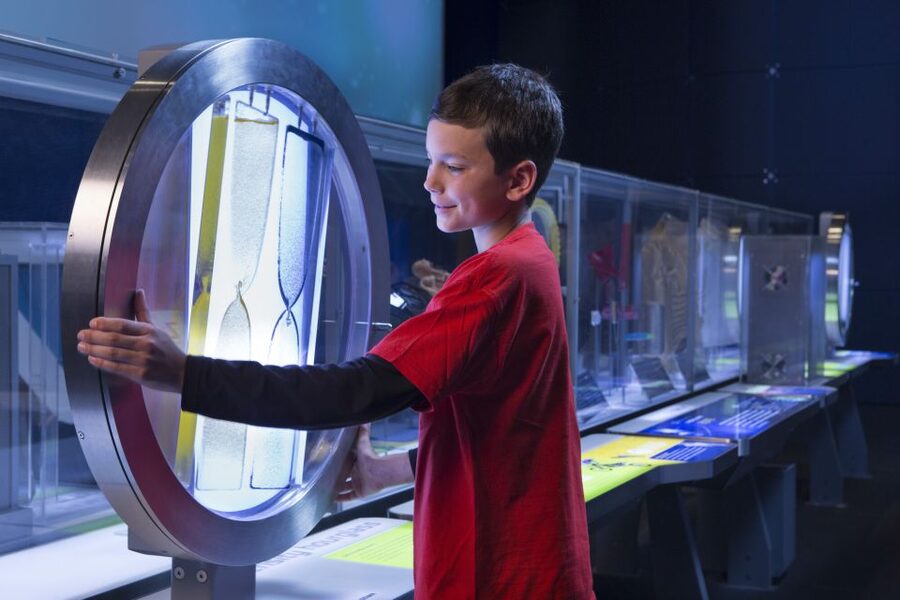
The museum’s biology exhibits are more playful. You can take a tour of the human digestive system, then run in a human-sized hamster wheel. These displays are useful because they explain the body through movement and scale rather than a wall of anatomy diagrams.
You might find that the biology section works best with children who need to move. The museum has enough active exhibits to keep them involved, while the subject matter gives the activity a clear purpose. It is fun, but it is not empty fun.
I would not try to see every display in detail. The museum rewards selective planning. Choose two or three must-sees, then let the nearby exhibits fill the gaps.
Aircraft, engineering, and the pleasure of large objects
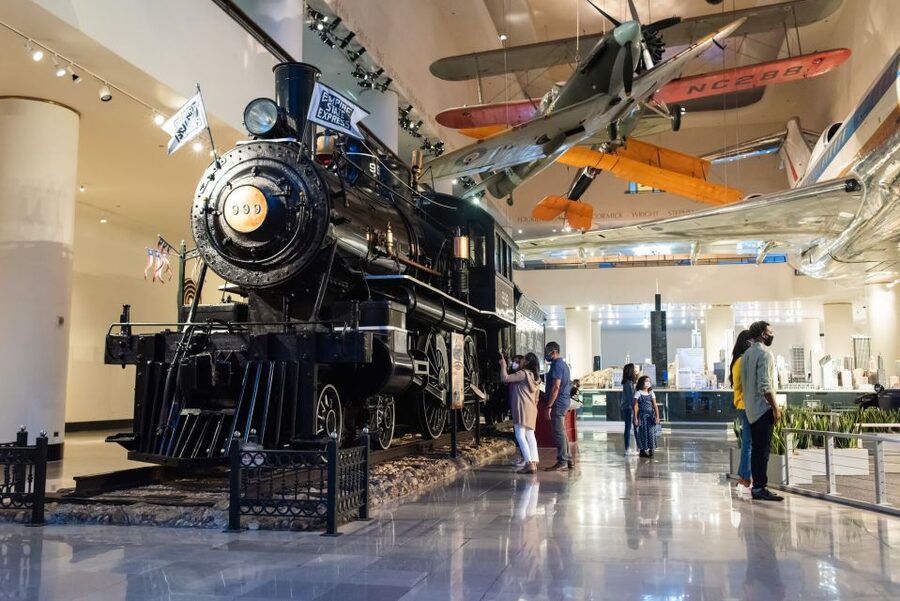
A 727 hanging from the ceiling gives the museum another strong visual moment. You can board the aircraft, which changes the way you experience it. Instead of seeing a plane as a distant object in a gallery, you can enter it and think about its design from the inside.
Large objects help this museum succeed. A capsule, submarine, aircraft, Tesla coil, and mine are easier to remember than a row of small panels. The scale also keeps the visit varied. You are not doing the same type of activity all day.
The museum is clean and well organized, which matters more than it may sound. In a building this size, clear movement between sections can make the difference between a relaxed visit and a tiring one. Still, you may have trouble seeing everything. One full day is helpful, but even several hours may not cover the whole museum.
The building itself deserves a glance. It is the only remaining building from Chicago’s 1893 World’s Fair. You are visiting a working museum inside a piece of fair history, even though the main focus today is science and technology.
Marvel’s Spider-Man: Beyond Amazing
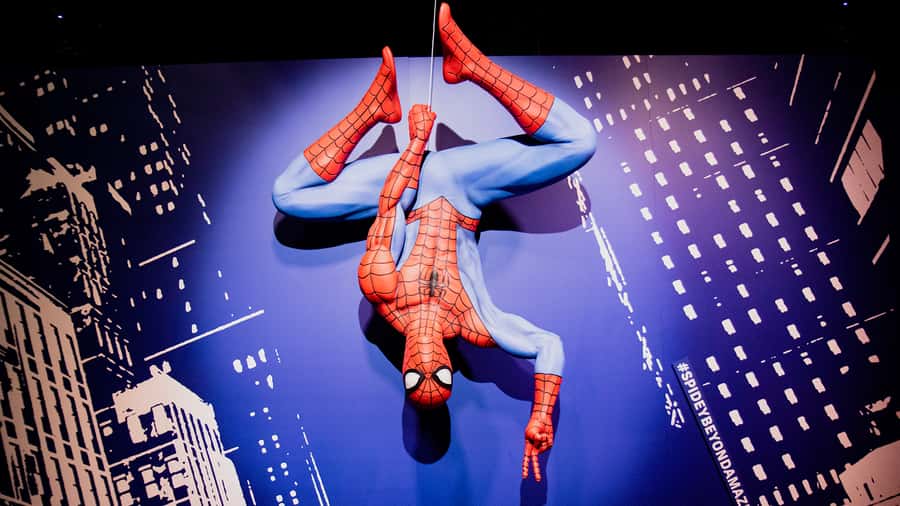
Marvel’s Spider-Man: Beyond Amazing adds a pop-culture stop to the museum’s science-heavy program. The exhibition includes rare comic books, props and costumes from Spider-Man films, interactive installations, and life-size figures of Spider-Man, Miles Morales, and Ghost-Spider.
This is a good choice if your group includes comic-book fans or children who might not get excited about a traditional science display. It also gives you easy photo opportunities and a change of tone after the weather, space, and industrial exhibits.
The exhibition runs through February 8, 2026. It is not included in general admission, so you need an additional ticket. Check the price and available time before committing, especially if you are also planning the U-505 or Coal Mine.
I would treat Spider-Man as an optional add-on, not the reason to buy the museum ticket by itself. The main museum has enough material for a full visit, while the Marvel exhibition works best as a bonus for fans.
Food, timing, and getting there

The museum is a few miles south of downtown Chicago. Underground parking is available, and one visitor reached it by taking bus number 10 from near a downtown hotel in about 30 minutes. That route also gave a useful look at the city on the way.
Give yourself more time than you think you need for transport and entry. Your ticket is timed, so arrive in time for the stated entry slot. The timed ticket lets you skip the ticket line, but it does not make a late arrival a good plan.
You can bring your own lunch. If you prefer to buy food, the Museum Kitchen and Stan’s Donuts offer meals, snacks, and drinks, including healthy choices. That makes it easier to stay for the afternoon instead of leaving because everyone is hungry.
I would arrive near opening time, especially if you want a paid tour or the Spider-Man exhibition. A late start is the biggest threat to value here. The museum is simply too large for a short visit if you want to take part in the exhibits rather than hurry past them.
The building is wheelchair accessible. Tripods are not allowed, and minors cannot enter unaccompanied.
Who will enjoy this museum most
This is a strong pick for families with children from early school age through the teen years. The museum offers enough movement for younger children and enough serious technology for older ones. The hands-on format also helps when attention spans begin to fade.
It suits adults who want a varied indoor activity in Chicago. You can spend time with spaceflight, engineering, biology, weather, transport, and military technology in one place. The experience is not dependent on good weather, so it can rescue a rainy or very cold day.
It is less suitable if you want a quiet, small museum where every object receives a long explanation. The Griffin Museum asks you to make choices. Some displays can be busy, and the scale may feel overwhelming if you arrive without a plan.
The museum’s average rating is 4.6 from 294 reviews, and the most praised points are consistent: the exhibits are fun, clean, well organized, and large enough to occupy hours. The most useful criticism is also clear: extra fees need careful attention, and a short visit will leave too much unseen.
Is the $25 ticket good value?
At $25, general admission offers good value when you arrive early and stay for at least half a day. You get access to a wide mix of hands-on exhibits, live science demonstrations, the space center, the aircraft, biology displays, and weather attractions.
The value drops if you add several paid attractions without checking the final total. U-505, Coal Mine, and Spider-Man are separate purchases. These extras may be worthwhile for your group, but they should be treated as planned upgrades, not surprises at the door.
You also need to count transport and food. The museum is not in the center of downtown, though bus number 10 and underground parking make access practical. Bringing lunch can keep the day’s cost under control.
Should you book the Griffin Museum of Science and Industry?
Book it if you want an active, flexible museum day and your group enjoys trying things rather than only looking at objects. The tornado, Tesla coil, Apollo 8 capsule, 727, human biology displays, and huge science galleries give you plenty for the admission price.
Plan ahead if the U-505, Coal Mine, or Spider-Man exhibition matters to you. Check those extra costs, arrive early, and protect enough time for the activities you most want to see. If you can spare only an hour or two, choose a smaller attraction instead. If you have most of a day, this is one of Chicago’s better-value indoor stops.
FAQ
How much does general admission cost?
General admission costs $25 per person.
How long is the ticket valid?
The ticket is valid for one day.
Is entry timed?
Yes. You receive a timed ticket and should arrive in time for the entry period shown on it.
Is the U-505 submarine included?
No. The U-505 tour costs an additional fee.
Is the Coal Mine tour included?
No. The Coal Mine tour requires an additional fee.
Is Marvel’s Spider-Man: Beyond Amazing included?
No. The exhibition requires a separate ticket and runs through February 8, 2026.
Can I bring food into the museum?
Yes. You may bring your own lunch, or buy food and drinks at the Museum Kitchen or Stan’s Donuts.
Is the museum wheelchair accessible?
Yes. The museum is wheelchair accessible. Tripods are not allowed, and minors cannot enter unaccompanied.
Recently added around Chicago
- Travel between Chicago O’Hare and Madison★ 4.5 · 4 reviews
- Volo Auto Museum: Admission Ticket★ 4.5 · 55 reviews
- Holiday Walking Tour: Underground Chicago via the Pedway★ 5.0 · 27 reviews
- Workers Cottages of Oldtown Triangle Walking Tour★ 5.0 · 45 reviews
- Verse Immersive Holographic Theater in Chicago★ 4.5 · 28 reviews
- Vito’s Vault Chicago finest dinner theatre speakeasy★ 5.0 · 14 reviews
- Delicious Donuts & Sweet Treats: West Loop Walking Tour★ 5.0 · 47 reviews
- Traveling Spoon Chicago-Style Deep Dish Pizza Private Online Cooking Class★ 5.0 · 4 reviews
Museums, compared.

Medieval Torture Museum Ticket with Audio Guide and Ghost Hunting
Read our review →
Field Museum of Natural History Ticket or VIP Tour
Read our review →
Field Museum of Natural History Admission Tickets
Read our review →

2-Hour Chicago Lakefront & Museum Campus Segway Tour
Read our review →

Chicago Landmarks & Museum Campus Small Group Segway Tour
Read our review →
Field Museum of Natural History All-Access Pass
Read our review →Browse the lists this tour appears in