
Reviewed · CHICAGO ARCHITECTURE TOURS
Private Chicago Architecture Walking Tour
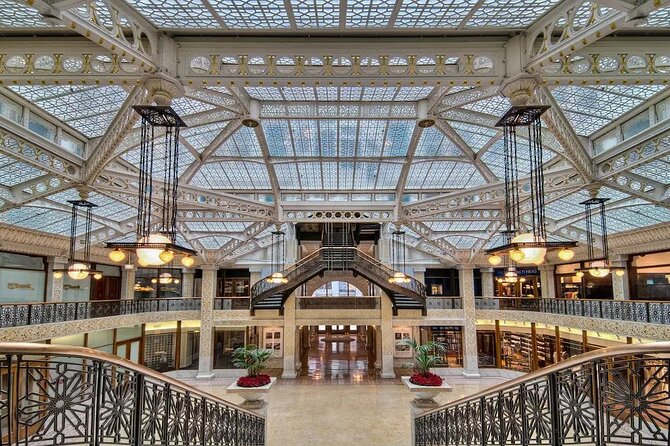
Chicago’s best architectural lesson unfolds on foot, from the speculative office towers of the 1890s to the grand Gothic and French Renaissance buildings along Michigan Avenue. This private walk links the Marquette Building, Rookery, Sullivan Center, and Chicago Cultural Center in one well-planned route.
I like the private format, since your guide can focus on your group rather than follow a fixed speech. I also like the mix of working commercial buildings, hotel interiors, a former private club, and public cultural spaces. The main caution is building access: weekend hours can limit interiors, and lunch was not received as included by at least one person despite separate confirmation.
Key points at a glance
- Eight major stops in about three hours: The route covers the Loop, LaSalle Street, Millennium Park, and Michigan Avenue.
- Private group format: Only your party participates, which allows for a more personal pace and questions.
- Rare interior details: The Rookery, Sullivan Center, and Chicago Cultural Center offer some of the most rewarding architectural views.
- Weekend access can change: You may not enter every building, especially when offices or public interiors are closed.
- Lunch needs confirmation: It is listed as included, but the actual arrangement has caused confusion.
- Easy central route: The walk begins near the Fine Arts Building and finishes at the Wrigley Building.
Why this three-hour walk works
Chicago can feel like an open-air architecture textbook, but the lesson is easier to follow when someone connects the buildings. This route gives you a clear story: commercial ambition after the Great Chicago Fire, the birth of modern tall buildings, ornate hotel design, and the public spaces that helped make downtown Chicago famous.
The route lasts about three hours and includes eight stops. That sounds brisk, but several locations are close together. You are not crossing the entire city. The walk begins at the Fine Arts Building at 410 South Michigan Avenue and ends at the Wrigley Building at 400 to 410 North Michigan Avenue.
The private setup is important here. Architecture tours can become dull when you are standing at the back of a large group, trying to hear a guide over traffic. With only your party participating, you can ask about a building that catches your eye or spend a little less time at a stop that does not interest you as much.
The tour is offered in English. A guide, bottled water, and fees are included. Lunch is also listed as included, but I would confirm exactly what that means before booking because one person reported that lunch was not provided despite a separate confirmation.
More architecture tours in Chicago:
- Chicago Architecture River Cruise
★ 5.0 · 15,756 reviews - Chicago River 90-Minute Architecture Tour
★ 4.5 · 9,629 reviews - Chicago River: 1.5-Hour Guided Architecture Cruise
★ 4.8 · 8,046 reviews
The Marquette Building begins the story
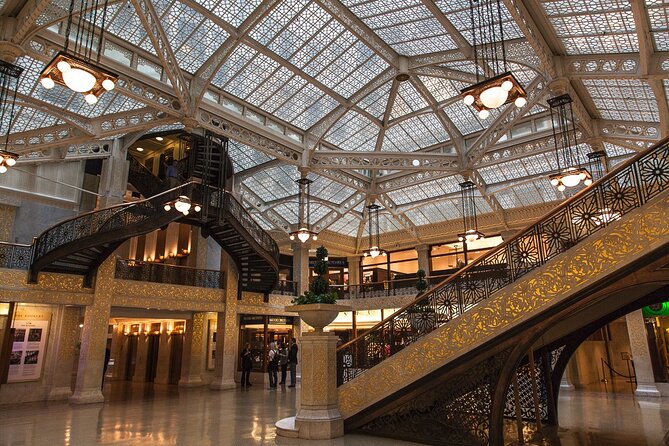
The first stop is the Marquette Building, with about 20 minutes scheduled inside. It is a strong place to begin because it explains the business motive behind Chicago’s early skyscrapers.
This was a speculative office building. Investors were betting that Chicago would grow, and they wanted a large collection of first-class offices that could produce steady income. The building was not designed as a palace for one company. It was designed to make money by renting space to many businesses.
That idea helps you read the rest of the tour. Chicago’s early tall buildings were practical commercial machines, even when their entrances and lobbies were lavish. Look for the details that made an office building feel prestigious to tenants and clients.
Admission is listed as included. Since access can change by operating hours, your guide may need to adjust the interior portion. Still, the Marquette is an excellent opening chapter.
The Rookery shows Chicago at its grandest
The Rookery Building receives another 20 minutes. Located at LaSalle and Adams, it was once considered the largest and finest office building in the United States.
The Rookery is one of the tour’s most important stops because it combines financial power with careful ornament. LaSalle Street became Chicago’s financial corridor, and the Rookery helped give that district its formal, imposing character.
I would pay close attention to the entrance and central interior spaces. The building’s reputation comes not only from its size, but from the way architects made a commercial office building feel ceremonial. This is the point where the tour moves beyond tall buildings are useful and shows how business architecture became civic theater.
About 20 minutes is enough for a guided introduction, though you will not have unlimited time to inspect every detail. Admission is listed as included.
The Palmer House adds a hotel chapter
The Palmer House Hilton takes about 10 minutes and does not require an admission ticket. It offers a different view of Chicago’s past. Instead of examining an office building built for investors and tenants, you are looking at a hotel built around service, comfort, and new technology.
The Palmer House is the longest continuously operating hotel in North America. It was also the city’s first hotel with elevators, and the first hotel with electric light bulbs and telephones in guest rooms.
Those details matter because they show how quickly urban life was changing. An elevator altered how hotels used their upper floors. Electric lighting and telephones changed what a hotel room could offer. The building is not just a place to admire. It records a shift in how people expected to live and do business in a growing city.
The stop is short, so think of it as a focused lobby visit rather than a full hotel tour. The public interior may also depend on hotel operations at the time of your visit.
More walking tours in Chicago:
- Chicago: Gangsters and Ghosts Walking Tour
★ 5.0 · 7,155 reviews - Chicago Favorites Ultimate Food and Walking Tour
★ 5.0 · 1,962 reviews - Chicago: Gangsters and Ghosts Guided Walking Tour
★ 4.7 · 1,697 reviews - Chicago in a Day: Food, History & Architecture Walking Tour
★ 5.0 · 1,153 reviews
Sullivan Center reveals the Chicago School
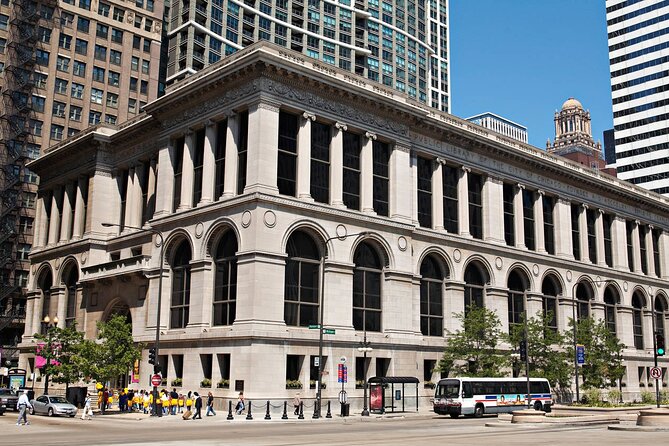
The Sullivan Center, formerly the Carson Pirie Scott department store, gets about 20 minutes. Built between 1899 and 1903, it is one of the clearest examples of the Chicago School of architecture and an important building in the story of tall structures.
Its original retail purpose makes it especially useful for understanding downtown life. This was not merely an office block. It was designed to draw shoppers, display goods, and give a major department store a memorable public face.
The building is also a good reminder that architecture works at street level. You can study how the lower floors address pedestrians, while the upper sections handle the practical needs of a tall commercial building. That contrast is one of the pleasures of Chicago architecture: the most interesting details are often near the sidewalk.
The Sullivan Center was declared a Chicago landmark in 1975. Admission is listed as included, but interior access may depend on the day and current building conditions.
The Chicago Athletic Association mixes old and new
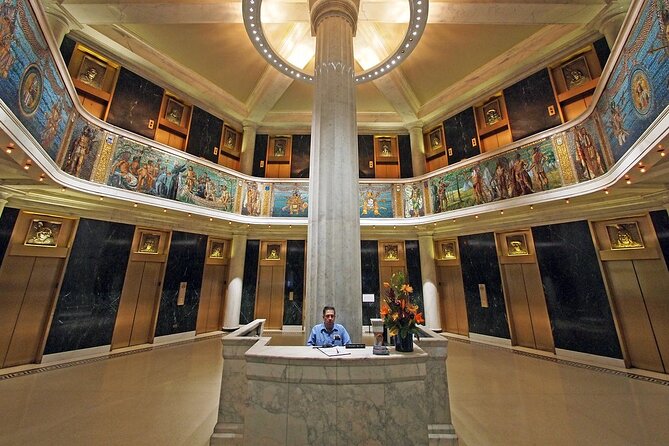
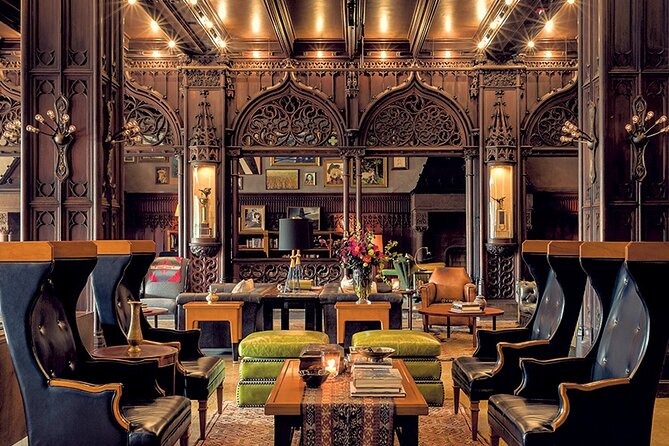
The Chicago Athletic Association receives the longest scheduled stop, about 30 minutes. This 11-story Venetian Gothic building was designed by Henry Ives Cobb and completed in 1893.
From its opening until 2007, it operated as a private club for wealthy Chicagoans. The later hotel conversion kept much of its decorative character, including ornate paneling, elaborate molding, and detailed trim.
This is a worthwhile contrast with the commercial buildings earlier in the walk. The Athletic Association was built around social status and leisure, not office rent or retail sales. Its current hotel use adds another layer, since historic club rooms now serve modern visitors.
The building sits across from Millennium Park and includes restaurants, ballrooms with Lake Michigan views, and pubs. The tour does not promise a full meal or an extended visit to every facility, but you should have time to appreciate the interior details.
This stop also helps explain why a private architecture walk can be more useful than a simple exterior photo route. The outside tells you the building is Gothic. The interior shows how that style shaped the mood of an exclusive club.
The Chicago Cultural Center is the tour’s visual high point
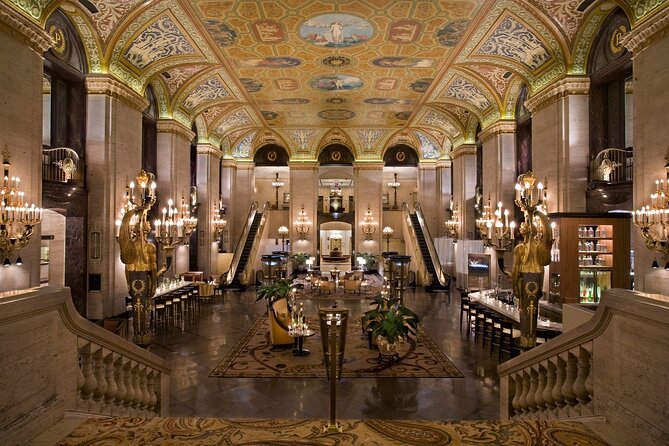
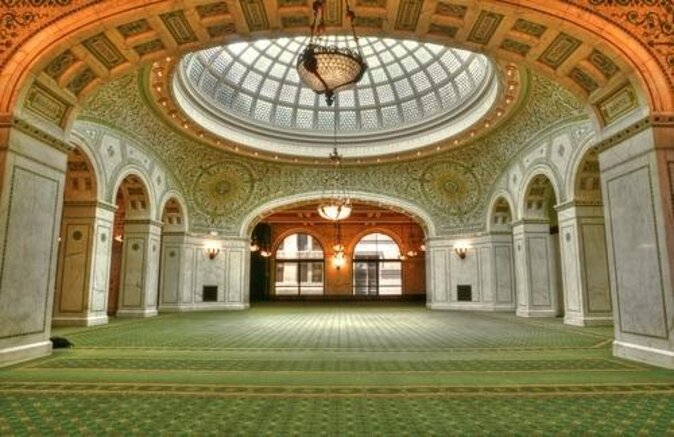
The Chicago Cultural Center gets about 30 minutes and is one of the most rewarding stops on the route. The building occupies an entire city block and serves as a major cultural center for the Loop.
Its signature feature is the world’s largest Tiffany stained glass dome. You do not need to be an architecture specialist to appreciate it. Give yourself time to look upward, then study the surrounding stonework and interior proportions.
The building also presents more than 700 humanities programs each year, many of them free and open to the public. That public role matters. You are not simply visiting a grand old building that has been preserved behind ropes. You are seeing a historic space still used for talks, programs, and cultural events.
About 30 minutes works well here, though this is the one stop where you may wish for extra time. If the building is open, you can take in the dome and broader interior without paying admission. The schedule is helpful, but it may also feel short if you are taking photographs or reading architectural details.
Tribune Tower marks the shift to Gothic skyscrapers
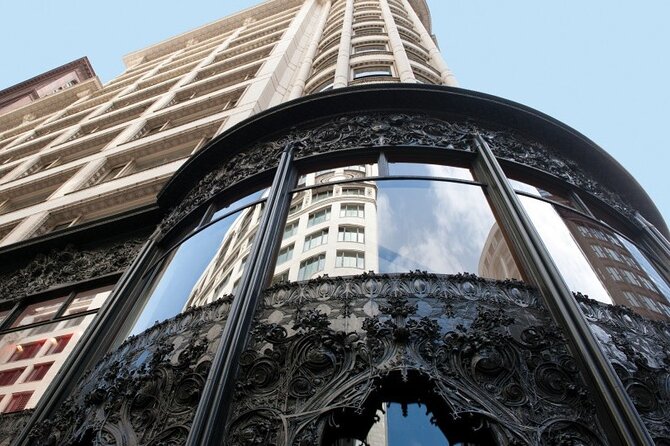
The Tribune Tower receives about 15 minutes. It rises only 36 stories, yet its Gothic spires have made it one of Chicago’s most recognizable buildings.
The lobby is shrine-like, with inspirational quotes that add to the building’s strong visual identity. This is a useful moment to consider how skyscrapers became symbols, not just containers for offices. The Tribune Tower looks upward in a way that recalls medieval church architecture, even though its purpose was thoroughly modern.
Fifteen minutes is enough for a concise explanation and photographs. It is not enough for a long interior exploration, and access can vary. Treat this as a focused stop rather than a full building visit.
The Wrigley Building finishes on Michigan Avenue
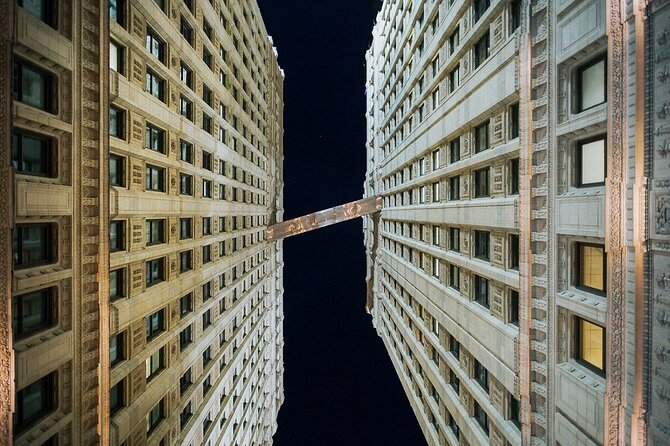
The final stop is the Wrigley Building, with about 15 minutes scheduled. It is one of downtown Chicago’s most familiar landmarks and dates from the 1920s.
Its decoration uses French Renaissance elements, but the clock tower is the feature most likely to catch your eye. The tower reaches 425 feet, or about 130 meters, giving the building a strong vertical presence along Michigan Avenue.
Ending here makes practical sense. The tour finishes at 400 to 410 North Michigan Avenue, a central location near other downtown sights and public transportation. You can continue toward the river, Millennium Park, or the Magnificent Mile after the walk.
The route’s final stretch also shows how Chicago’s architectural style changed over time. You begin with 19th-century commercial buildings and finish with a 1920s landmark that uses historical decoration in a more polished, corporate way.
What $211 means for value
The listed price is $211 per person. That is a serious price for a three-hour walking tour, so the value depends on what you want from the experience.
You are paying for a private English-speaking guide, a carefully arranged route, bottled water, and listed fees. The private format is the main value. If you have a small group that wants to ask questions and avoid a large public tour, the cost can make sense. It is less compelling if you only want to see the exteriors, since many of these buildings can be viewed independently.
The admission fees are listed as included, which removes some uncertainty. Lunch is listed as included too, but the conflicting experience reported about it is a real concern. Ask before booking what lunch includes, where it will be served, and whether it is offered on your selected day.
The tour is booked, on average, about 30 days ahead. That suggests planning early is sensible, especially if your schedule is fixed. Free cancellation is available until 24 hours before the start time. Within 24 hours, you receive no refund, and changes are not accepted.
Access, timing, and who should book
Most people can take part, and service animals are allowed. The route is near public transportation, but transportation between stops is not listed because this is a walking experience.
The largest practical issue is access inside the buildings. You will not necessarily enter every location. Weekend tours can be more limited because some interiors may be closed or operating under different rules. If going inside matters to you, choose a weekday when possible and confirm the expected access before you pay.
I would recommend this tour to:
- First-time Chicago visitors who want a clear introduction to the Loop
- Architecture fans who prefer context over a simple sightseeing walk
- Small groups willing to pay more for a private guide
- People who want both famous exteriors and selected interiors
- Visitors who enjoy historic hotels, office buildings, and public cultural spaces
I would think twice if you want a low-cost tour, a leisurely pace, or guaranteed entry to every building. The schedule is well planned, but it is still a city walk with fixed time limits and changing access.
Should you book the Chicago architecture walk?
Book it if you want a private introduction to Chicago’s architectural development and value having one guide connect eight major sites. The strongest parts are the variety of buildings, the Rookery and Marquette interiors, the Sullivan Center, and the Tiffany dome at the Cultural Center.
Before booking, confirm two things in writing: the exact lunch arrangement and which buildings should be open on your date. If those points are clear, the tour can be a useful, efficient way to understand downtown Chicago without spending your first day guessing which doors are worth entering.
FAQ
How long is the Private Chicago Architecture Walking Tour?
The tour lasts approximately three hours.
Where does the tour begin?
It begins at the Fine Arts Building, 410 South Michigan Avenue, Chicago, Illinois 60605.
Where does the tour end?
The tour ends at the Wrigley Building, 400 to 410 North Michigan Avenue, Chicago, Illinois 60611.
Is this a private tour?
Yes. Only your group participates in the activity.
What language is the tour offered in?
The tour is offered in English.
Which buildings are included?
The route includes the Marquette Building, Rookery Building, Palmer House Hilton, Sullivan Center, Chicago Athletic Association, Chicago Cultural Center, Tribune Tower, and Wrigley Building.
Are admission fees included?
Admission tickets and all fees and taxes are listed as included. Access inside each building can vary, especially on weekends.
Is lunch included?
Lunch is listed as included, but one person reported that it was not provided despite receiving separate confirmation. Confirm the lunch details before booking.
Is bottled water provided?
Yes. Bottled water is included.
Can I cancel for a full refund?
You can cancel at least 24 hours before the experience start time for a full refund. Cancellations within 24 hours are not refunded, and changes within that period are not accepted.
Is the tour near public transportation?
Yes. The meeting area and route are near public transportation.
Recently added around Chicago
- Travel between Chicago O’Hare and Madison★ 4.5 · 4 reviews
- Volo Auto Museum: Admission Ticket★ 4.5 · 55 reviews
- Holiday Walking Tour: Underground Chicago via the Pedway★ 5.0 · 27 reviews
- Workers Cottages of Oldtown Triangle Walking Tour★ 5.0 · 45 reviews
- Vito’s Vault Chicago finest dinner theatre speakeasy★ 5.0 · 14 reviews
- Verse Immersive Holographic Theater in Chicago★ 4.5 · 28 reviews
- Delicious Donuts & Sweet Treats: West Loop Walking Tour★ 5.0 · 47 reviews
- Traveling Spoon Chicago-Style Deep Dish Pizza Private Online Cooking Class★ 5.0 · 4 reviews
Chicago Architecture Tours, compared.

Chicago Architecture Center River Cruise aboard First Lady
Read our review →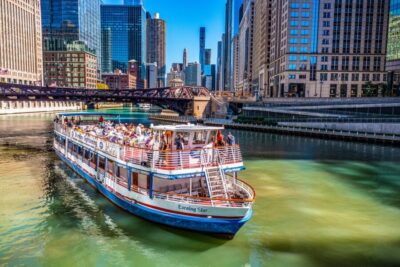
Architecture River Cruise Skip-the-Ticket Line
Read our review →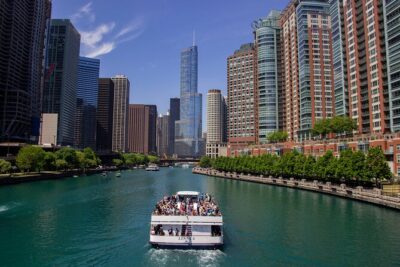
Chicago River 45-Minute Architecture Tour from Magnificent Mile
Read our review →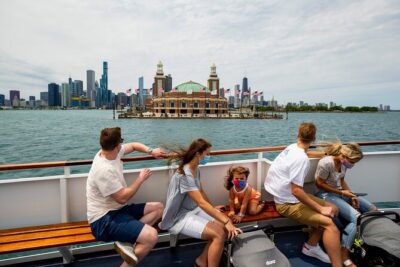
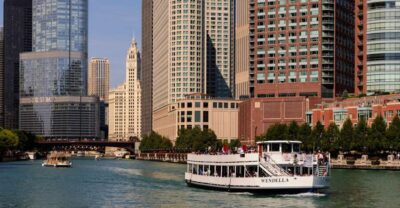
45-Minute Family-Friendly Architecture River Cruise
Read our review →Browse the lists this tour appears in