
Reviewed · CHICAGO ARCHITECTURE TOURS
Explore Chicago’s Hidden Past: Prohibition Culture & Architecture
Chicago’s Prohibition story is only part of the fun here. The real draw is the way this 2.5-hour walk links hidden city details with major sights, from the Chicago Theatre and underground Pedway to the Chicago River and Cloud Gate.
I like the small-group format, which gives you room to ask questions and hear personal stories from guides such as Rich, Dave, Dash, or Kevin. I also like the useful food and sightseeing tips at the end, plus the simple pleasures of Chicago-style popcorn and surprise local treats along the way.
The main thing to consider is the tour’s focus. It covers Prohibition, but it is also a broad downtown orientation walk with architecture, public art, local history, and city trivia. If you want a technical study of architects and design decisions, some parts may feel too light.
Key things to know before you book
- The route covers about 4.8 kilometers: You will walk for roughly three miles, with stops along the way and some possible time underground in the Pedway.
- The finish is at Cloud Gate: You end at Millennium Park, right by the Bean, with advice on nearby sights, lunch, and drinks.
- The guides shape the experience: Rich, Dave, Dash, and Kevin are praised for warmth, clear storytelling, and adapting to questions.
- Architecture gets the most attention: Expect the Wrigley Building, Tribune Tower, Marina Towers, Jewelers Building, London House, and the Cultural Center.
- Weather matters: The tour runs in rain, snow, or sunshine. The Riverwalk and Pedway portions depend on conditions.
- It is good for a first Chicago day: You see many central landmarks quickly and can use the guide’s suggestions to plan the rest of your stay.
Starting under the Chicago Theatre marquee
The tour begins at the Chicago Theatre, 175 North State Street. Its famous marquee gives you an easy meeting point and a fine first photograph, but the more useful part is what comes next: your guide starts placing downtown Chicago into context.
This is not a tour where you simply walk from one famous building to another and collect names. The guide connects the city’s 1920s nightlife, changing social rules, public gathering places, and architectural ambition. Prohibition appears as a thread running through the walk rather than as the sole subject of every stop.
That distinction matters. The title may lead you to expect a tour centered on speakeasies, bootlegging, and crime stories. You will get background on Prohibition’s effect on Chicago, but much of the actual walk deals with the city’s buildings, public art, streets, and riverfront.
Guides such as Rich and Dave are especially good choices if you enjoy an informal style. The strongest moments come when the guide feels like a well-informed local showing you around, not a lecturer reading dates from a script.
More gangster tours in Chicago:
- Chicago: Gangsters and Ghosts Walking Tour
★ 5.0 · 7,155 reviews - Chicago Crime and Mob Bus Tour
★ 4.5 · 3,186 reviews - Chicago: Gangsters and Ghosts Guided Walking Tour
★ 4.7 · 1,697 reviews
The Chicago Pedway: a useful change of level
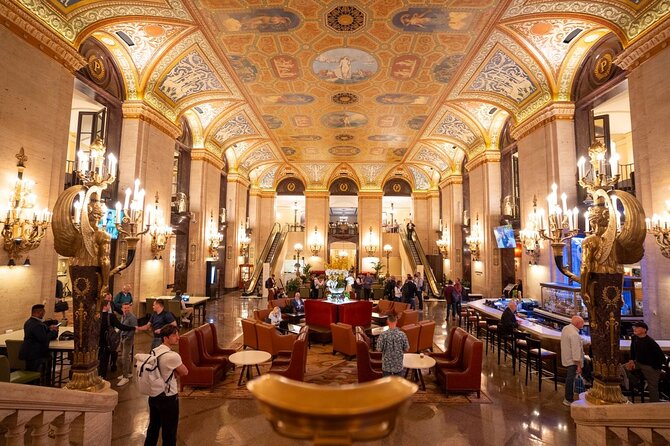
The Chicago Pedway offers one of the tour’s more unusual sections. This underground network links parts of the Loop and is used by commuters and locals. It provides a quick look at how Chicago functions beneath its streets, especially when weather makes outdoor walking less pleasant.
The Pedway portion lasts about 20 minutes when conditions allow. Do not treat it as a major attraction in its own right. Its value is that it breaks up the route and shows a side of downtown you might miss while staying at street level.
The section is weather dependent, as is the Riverwalk. Since the tour runs in rain, snow, and sunshine, wear shoes that can handle wet pavement and bring a coat suitable for the forecast. A mobile ticket is convenient, but practical clothing matters more than anything on your phone.
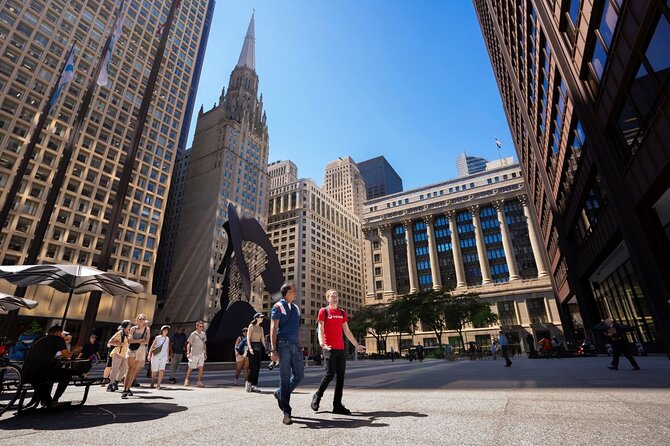
Daley Plaza and the Chicago Picasso
The route passes the City Hall and County Building before reaching Daley Plaza and the Chicago Picasso. The 1967 sculpture changed the feel of the square and helped make public art a central part of Chicago’s civic spaces.
You will have about 10 minutes here. That is enough for photos and a short explanation, not a full public-art seminar. The guide uses the Picasso to show how Chicago’s downtown is not only a collection of office towers. Its plazas, sculptures, and open spaces also shape how people move through the city.
This is one of the points where the tour’s broad approach works well. You get a little architecture, a little civic history, and a look at how a modern artwork can alter an older urban setting.
Walking beside the Chicago River
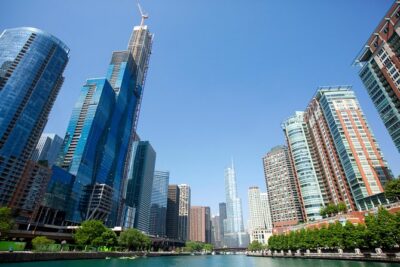
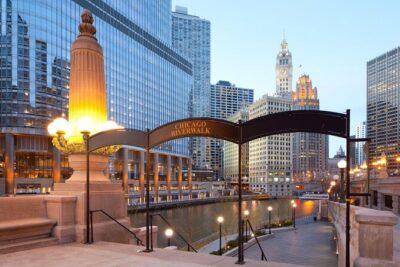
The Chicago River is one of the strongest sections of the route. You walk near the city’s main waterway, with large buildings rising around you and commuters moving through the same downtown corridors.
The route gives you about 20 minutes by the river and another 20 minutes along the Riverwalk when conditions permit. The views help explain why Chicago is such a rewarding city for architecture fans. You can look upward and see different periods of construction stacked together, from early commercial towers to later high-rise designs.
The walk passes major sights including Marina Towers, the Wrigley Building, and Tribune Tower. You also encounter the Jewelers Building and London House, two details that can be easy to miss when you are focused on the biggest names.
The limitation is that the tour usually passes these buildings rather than taking you inside each one. If your priority is close study of every facade, interior, and architect, you may want to add a dedicated architecture cruise or another building-focused tour. Here, the goal is to give you a clear, walkable overview.
More architecture tours in Chicago:
- Chicago Architecture River Cruise
★ 5.0 · 15,756 reviews - Chicago River 90-Minute Architecture Tour
★ 4.5 · 9,629 reviews - Chicago River: 1.5-Hour Guided Architecture Cruise
★ 4.8 · 8,046 reviews - Chicago Architecture Center River Cruise aboard First Lady
★ 5.0 · 5,536 reviews
The Wrigley Building, Tribune Tower, and Magnificent Mile
The Wrigley Building is one of the city’s most recognizable landmarks, with its prominent position at 400 North Michigan Avenue. The guide points it out as part of the larger story of Michigan Avenue and Chicago’s commercial growth.
Tribune Tower follows at 435 North Michigan Avenue. Its neo-Gothic design rises 36 stories and reaches 463 feet, making it a sharp contrast to the modern towers around it. You will not spend a long block of time at each building, but the guide can help you compare their style and place in the city.
The walk then moves along the Magnificent Mile, the shopping and dining district on North Michigan Avenue. This section is less about shopping than orientation. You learn how the avenue fits into the 1909 Burnham Plan, a major vision for Chicago’s streets, parks, and public spaces.
I would pay close attention here if you are visiting Chicago for only a few days. The route puts several major sights in one continuous walk, which helps you understand where the Loop ends, where Michigan Avenue begins, and how the river connects the two areas.
Inside the Chicago Cultural Center
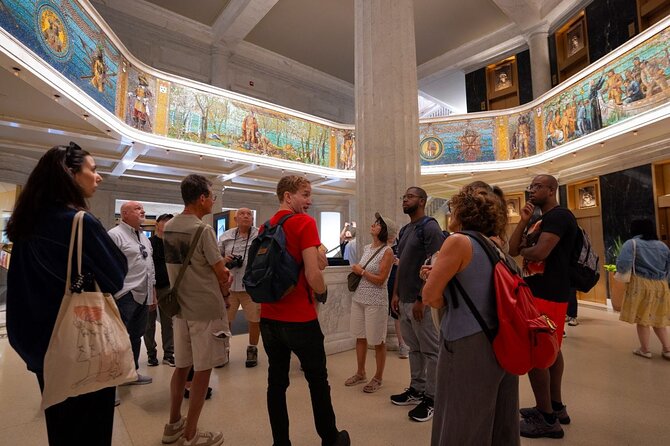
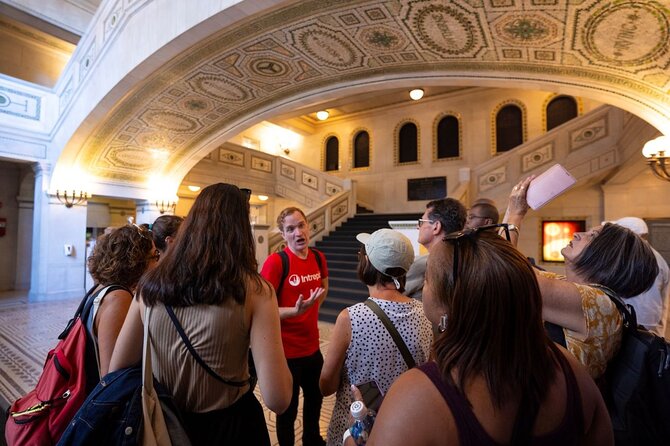
The Chicago Cultural Center is one of the best stops because you go indoors. The building was once a library, and its grand interiors give you a chance to look above street level and see the decorative details that often get ignored on a city walk.
You spend about 15 minutes here. That is not long enough to inspect every room, but it gives you time to appreciate the building and hear about its civic role. The mayor has welcomed presidents, royalty, and other dignitaries here, adding another layer to the building’s public life.
This stop received some of the strongest praise from the people I would trust most on a city walk: those who care about interiors as much as skylines. One private tour even included a return visit to the Art Institute for a guest with a specific interest in Monet and Van Gogh, which shows how a guide such as Kevin may adapt when the group is small. That kind of flexibility is more likely when you have a private tour or a very small group.
Still, do not expect a full art-museum visit as part of this standard route. The Cultural Center is a short stop within a larger downtown walk.
Millennium Park and the Bean
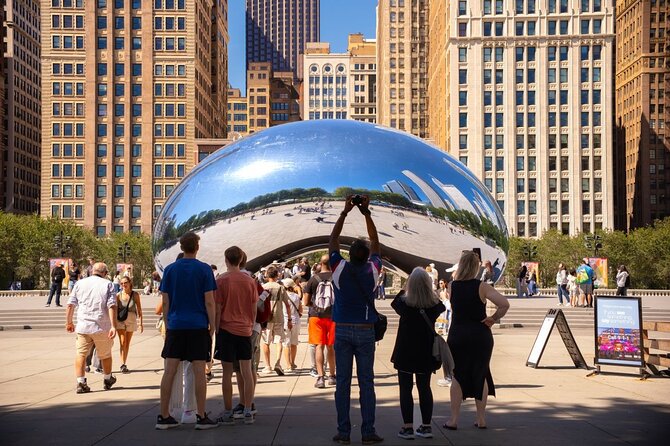
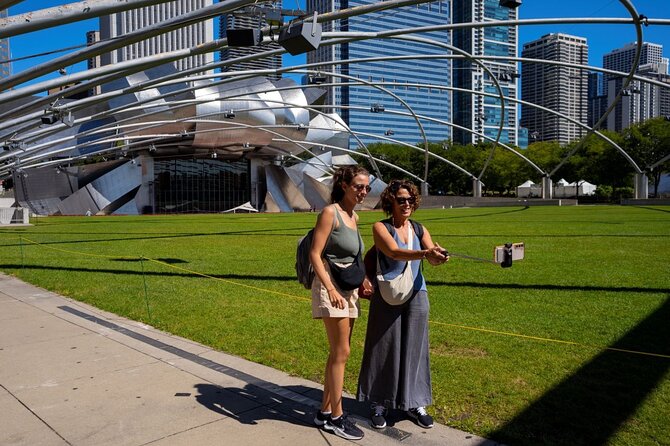
The tour finishes in Millennium Park, with Cloud Gate as the final stop. You know it as the Bean, and this is the place for the classic mirrored skyline photograph.
You have about 20 minutes in Millennium Park and another 10 minutes focused on Cloud Gate. Ending here is smart. The park gives you room to pause after nearly three miles of walking, and the guide can suggest what to do next.
That final advice may be one of the tour’s most useful extras. You can ask about nearby lunch spots, drinks, or other sights for the rest of your day. If you schedule this early in your visit, you leave with a practical sense of where to go next rather than just a handful of disconnected facts.
The Bean can be crowded, so your guide cannot control how much clear space you get for photos. Still, the stop gives you the expected Chicago picture and a clear finish rather than leaving you in the middle of a busy street.
How strong is the Prohibition theme?
The Prohibition angle adds color, but you should set your expectations correctly. The tour explains how the 1920s shaped Chicago’s culture and public life, yet it does not appear to spend the entire 150 minutes on speakeasies, gangsters, or specific illegal bars.
For some people, that broad mix is a strength. You get a fuller picture of the city, with architecture and public spaces showing how Chicago changed across different periods. For others, especially anyone booking specifically for a serious Prohibition study, the subject may feel limited.
I would book this if you want Prohibition as a lively historical thread through a downtown sightseeing walk. I would look elsewhere if you want a tightly focused crime-history tour with long stops at named Prohibition sites.
Popcorn, treats, and the value of the price
At $49.96 per person, the tour sits in a reasonable range for a 2.5-hour guided city walk. You are paying for a local guide, a planned route, small-group attention, architecture commentary, some food sampling, and advice that can improve the rest of your Chicago stay.
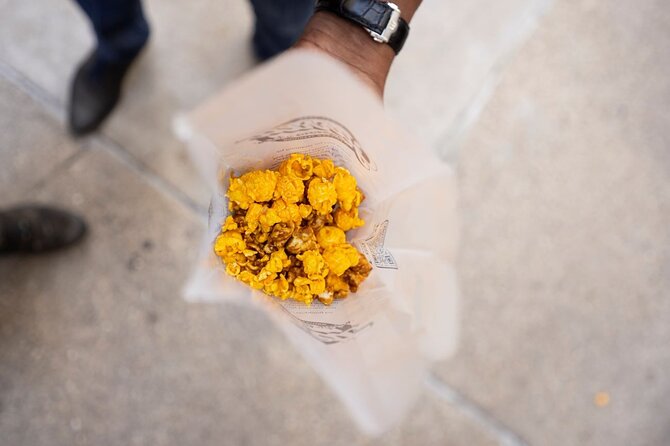
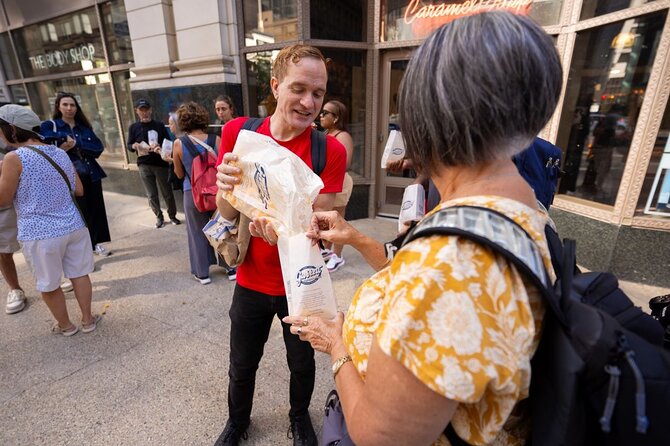
Chicago-style popcorn is included, along with surprise local treats. The food is not meant to replace lunch. Think of it as a pleasant break and a way to connect the walk with local habits.
One caution: allow the guide to keep the route moving. A few parts of the walk can feel rushed if the group stops too long for food or spends extra time in a store. One criticism was that too much time went into Marshall Field’s and buying popcorn, leaving less time for buildings such as the NBC building, the Flamingo sculpture, Wrigley Building, and Tribune Tower.
That is a useful warning. The value is best when the group stays focused on the city rather than turning the snack stop into the main event.
Guide style and group size
The tour has a maximum of 15 people, and the small size is a real advantage. You can ask questions without shouting, stay close to the guide at crossings, and get more personal suggestions at the end.
Rich is described as warm and easy to spend time with. Dave is often praised for clear explanations, enthusiasm, and a relaxed manner. Dash has handled a group through a busy parade while keeping everyone together. Kevin has adjusted the pace for a guest with a sore knee and shaped a private tour around individual interests.
Those details tell you what to expect from the best version of this experience: a friendly guide who can add anecdotes, show photos, answer questions, and adjust the pace when possible.
The quality may still depend on who leads your departure. One person found the pace too quick and wished the guide had addressed everyone by name. That is not a dealbreaker, but it reminds you that a walking tour is a shared experience. If you want total control over stops and pace, choose a private option if available.
Who should book this Chicago walk?
I would recommend it for first-time visitors, couples, families with older children, and anyone with a short stay. It covers a lot of central Chicago without requiring taxis between stops.
Children under six join free, and the tour is child-friendly. Children ages six to eleven are charged the adult rate, so remember to list children when booking. Most fitness levels can manage the route, but three miles is still three miles. Comfortable shoes are essential.
It also suits visitors who want a social experience without joining a huge group. You will get more personal attention than on a large bus tour, but you should be ready to walk at the group’s general pace.
You can bring a service animal, and the route is near public transportation. Since the tour operates in all weather, check the forecast and dress for it. The Riverwalk and Pedway sections may change with conditions, so do not book expecting every outdoor or underground portion to be identical on every departure.
Should you book it?
Book this tour if you want a friendly introduction to central Chicago, enjoy architecture but do not need a technical lecture, and like the idea of mixing famous landmarks with smaller details. It is especially useful on your first day, when the guide’s restaurant and sightseeing tips can shape the rest of your visit.
Skip it if your main goal is an intensive Prohibition tour or a detailed study of architects, materials, and design choices. The route touches many major buildings, but it does not offer long interior visits at each one.
At about $50, the tour offers good value for a small-group walk with food samples, river views, the Cultural Center, the Pedway, and a finish at the Bean. Go early in your Chicago stay, wear sensible shoes, and treat the Prohibition theme as one part of a broader city story.
FAQ
Where does the tour begin?
It begins at the Chicago Theatre, 175 North State Street, Chicago, Illinois 60601.
Where does the tour finish?
The tour ends at Millennium Park near Cloud Gate, also called the Bean, on Michigan Avenue.
How long does the tour last?
The experience lasts approximately 2 hours and 30 minutes.
How far do you walk?
The route covers about 4.8 kilometers, or roughly three miles.
How many people can join the tour?
The tour has a maximum of 15 travelers.
Is the tour suitable for children?
Yes. Children under six join free, while children ages six to eleven are charged the adult rate. You should provide information about children in your booking details.
Does the tour run in bad weather?
Yes. The experience operates in rain, snow, or sunshine, so you should dress for the forecast.
Is food included?
Chicago-style popcorn and surprise local treats are included. Additional food and drinks are not included.
Is the tour accessible by public transportation?
Yes. The meeting area is near public transportation.
Can I cancel for a full refund?
Yes. You can cancel at least 24 hours before the start time for a full refund. Cancellations or changes made within 24 hours are not refunded or accepted.
Recently added around Chicago
- Travel between Chicago O’Hare and Madison★ 4.5 · 4 reviews
- Volo Auto Museum: Admission Ticket★ 4.5 · 55 reviews
- Holiday Walking Tour: Underground Chicago via the Pedway★ 5.0 · 27 reviews
- Workers Cottages of Oldtown Triangle Walking Tour★ 5.0 · 45 reviews
- Verse Immersive Holographic Theater in Chicago★ 4.5 · 28 reviews
- Vito’s Vault Chicago finest dinner theatre speakeasy★ 5.0 · 14 reviews
- Delicious Donuts & Sweet Treats: West Loop Walking Tour★ 5.0 · 47 reviews
- Traveling Spoon Chicago-Style Deep Dish Pizza Private Online Cooking Class★ 5.0 · 4 reviews
Chicago Architecture Tours, compared.

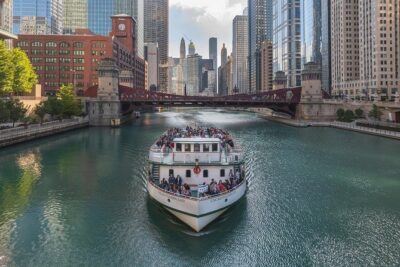
Chicago Architecture Center River Cruise aboard First Lady
Read our review →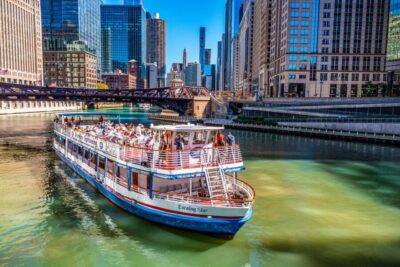
Architecture River Cruise Skip-the-Ticket Line
Read our review →
Chicago River 45-Minute Architecture Tour from Magnificent Mile
Read our review →
45-Minute Family-Friendly Architecture River Cruise
Read our review →Browse the lists this tour appears in