
Reviewed · CHICAGO ARCHITECTURE TOURS
Frank Lloyd Wright Robie House Admission
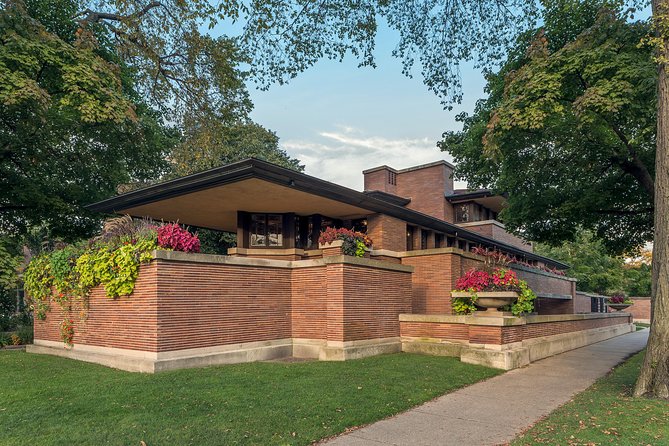
Frank Lloyd Wright’s Frederick C. Robie House is not a grand mansion built to impress from a distance. It is a carefully controlled work of architecture, with long horizontal lines, warm wood, brick, and rooms designed to unfold in sequence. The house is a UNESCO World Heritage Site, and you can examine its details at close range rather than simply snapping a photo from the sidewalk.
I like two things here: the tour connects Wright’s ideas to the actual rooms, and the one-hour visit fits neatly into a Chicago sightseeing day. I also like the small group limit of 14 people, which gives you a better chance to hear the guide and ask questions.
The main drawback is booking confusion. A paid reservation may not automatically give you a confirmed tour time, and several people arrived to find that the venue could not locate the booking or had no open places. Treat the time reservation as essential, not optional.
Key points to know before you go
- A UNESCO-listed Wright house: Robie House is part of the 20th Century Architecture of Frank Lloyd Wright World Heritage listing.
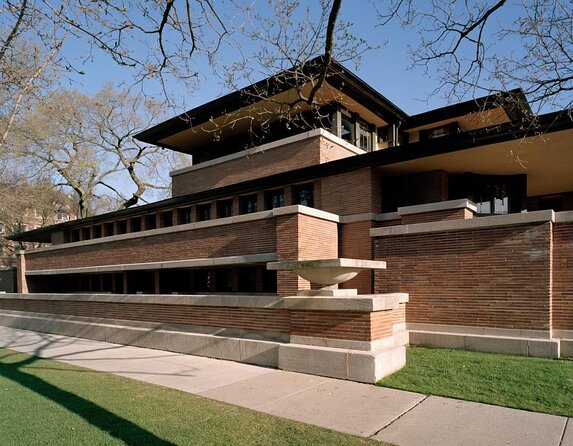
- Prairie design up close: Look for the low, horizontal form, connected rooms, woodwork, brick, and strong links between inside and outside.
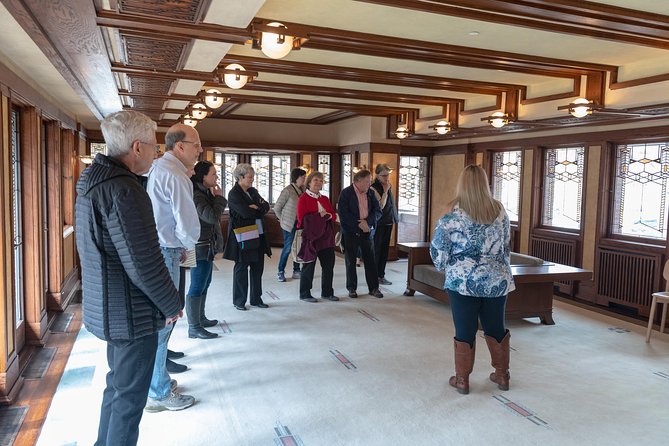
- About one hour on site: The visit covers both the outside and inside of the house.
- Small groups: Tours are limited to a maximum of 14 people.
- Reserve a time directly with the venue: Buying admission alone may not secure a place on a scheduled tour.
- A useful Hyde Park pairing: You can combine the house with the University of Chicago area or the Museum of Science and Industry.
Why Robie House matters in Chicago architecture
Robie House is considered one of the most important buildings in American architecture. It was built around 1910, when Wright was developing the Prairie style, an approach shaped by the broad, flat character of the Midwestern prairie.
You do not need a degree in architecture to appreciate what makes the house important. Wright reduced the emphasis on vertical towers and formal European decoration. Instead, he used long lines, sheltering roofs, horizontal brickwork, and connected interior spaces to create a home that feels tied to its setting.
That idea becomes clearer inside. The house is not arranged as a string of isolated rooms with doors separating everything. Wright worked to make the spaces feel related, with views and design details carrying your eye from one area to the next.
The effect is easy to miss from a quick exterior photo. A guided visit gives you time to notice how the parts work together. You are not simply looking at an old house. You are seeing a design argument about how people might live in a modern home.
Robie House is also part of the UNESCO World Heritage listing for the 20th Century Architecture of Frank Lloyd Wright. That gives the visit extra weight, but the designation is not the main reason to go. The best reason is that this is one of Wright’s clearest Prairie-style houses, and you can see its design at very close range.
More architecture tours in Chicago:
- Chicago Architecture River Cruise
★ 5.0 · 15,756 reviews - Chicago River 90-Minute Architecture Tour
★ 4.5 · 9,629 reviews - Chicago River: 1.5-Hour Guided Architecture Cruise
★ 4.8 · 8,046 reviews
Arriving at 5757 South Woodlawn Avenue
The house is at 5757 S. Woodlawn Ave. on the University of Chicago campus in Hyde Park. The surrounding area is worth a little of your time, especially if you enjoy walking through neighborhoods shaped by university buildings, historic homes, and mature streets.
The site is near public transportation, but one person found public transport difficult. I would not leave the timing to chance, particularly if you have a scheduled tour. Check your route before setting out and allow room for delays.
The listed operating window is 10 a.m. to 3 p.m., while public tours are offered Thursday through Monday and the museum is closed Tuesday and Wednesday. Those details do not line up perfectly, so check the current schedule and tour availability before you go. The safest plan is to arrange a specific visit time with the Robie House staff.
The entrance process should be straightforward when the reservation is properly recorded. The trouble comes when a third-party booking is treated as payment but not as a confirmed place in a tour. Several people had to ask the front desk to sort out reservations, and some were fortunate that space remained.
If you arrive without a confirmed time, you may find yourself waiting for a later tour or paying again for an available option. That is a poor trade for a one-hour visit, so bring your confirmation details and make sure the venue has your time on its schedule.
The exterior: long lines and prairie ideas
The outside of Robie House gives you the first clue to Wright’s plan. Rather than presenting a tall, upright facade, the building stretches horizontally. Its broad lines recall the flat Midwestern prairie, while the low profile gives the house a sheltered, grounded appearance.
This is a good place to listen closely to the guide. The exterior is not just a shell around the rooms. It sets up the way the building works inside. The horizontal emphasis continues through the brick, rooflines, windows, and projecting forms.
The exterior also helps explain why Robie House became such an important example of modern American architecture. It does not depend on the usual visual language of a formal historic mansion. Its character comes from proportion, materials, geometry, and the way those choices direct your attention.
Photography may be tempting, but the strongest part of the visit is not one perfect angle. Look for the details that repeat across the building. The house makes sense as a whole, and the guide helps connect the small details to Wright’s larger plan.
Inside the house: design you can feel
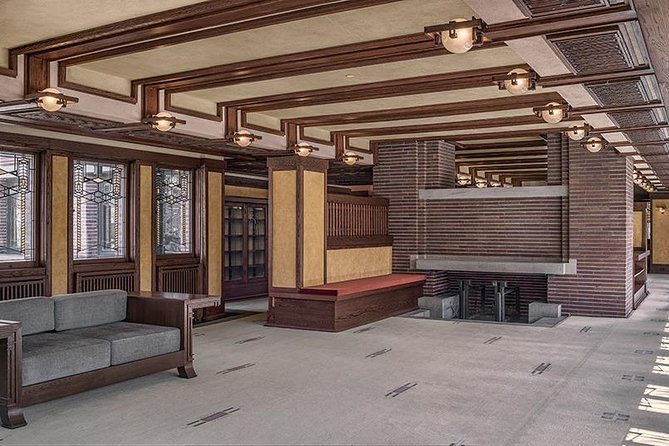
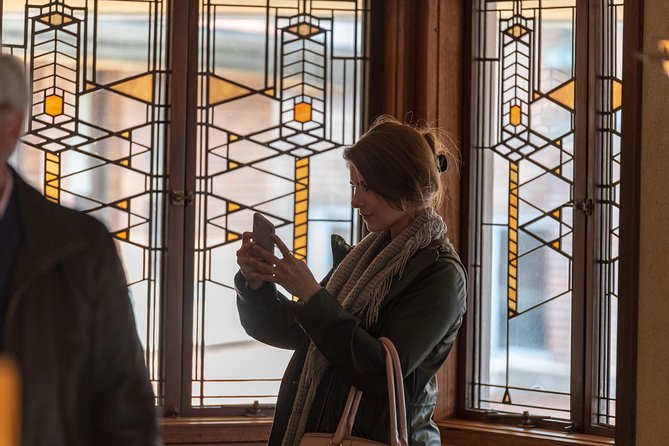
Once inside, the tour becomes more personal. You can see how Wright used wood, brick, built-in elements, and carefully framed openings to create a home that feels planned down to the smallest part.
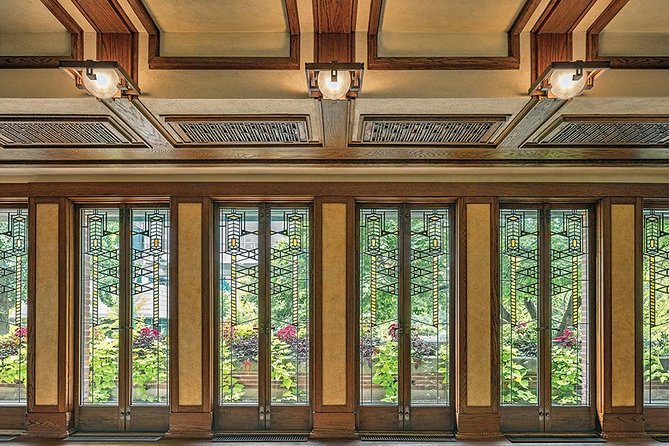
The relationship between indoors and outdoors is one of the main ideas explained on the tour. The design does not treat the exterior and interior as separate worlds. Lines, materials, windows, and sightlines help connect them.
The main fireplace is a detail worth watching for. One visitor with a strong interest in architecture singled out the brickwork there. It is a useful reminder that Wright’s work rewards close attention. The large concept may be Prairie style, but the pleasure often comes from the way a specific material or pattern has been handled.
You will also notice how the house guides movement. Rooms connect visually, and your attention is pulled along the length of the building. The experience is less about standing in one grand room and more about understanding a sequence of spaces.
The tour is guided rather than simply a walk through rooms with labels. That matters here because the house can appear restrained at first glance. A good docent points out the design choices that are easy to miss, explains the original purpose of the spaces, and places the building in Wright’s career.
Guides named in feedback include Mary, Bruce, Preety, and Bryan. Their approach may vary, but the strongest tours are described as clear, lively, and willing to answer questions. The house benefits from that human explanation. Without it, you may notice beautiful wood and brick but miss the thinking behind them.
Different part of the city, different kind of afternoon:
- Chicago: Gangsters and Ghosts Walking Tour
★ 5.0 · 7,155 reviews - Chicago Architecture Center River Cruise aboard First Lady
★ 5.0 · 5,536 reviews - Chicago: Willis Tower Skydeck and The Ledge Ticket
★ 4.6 · 4,350 reviews - Chicago: Architecture River Cruise Skip-the-Ticket Line
★ 4.8 · 4,325 reviews
One hour with a small group

The visit lasts about an hour, which is enough time to see the exterior and interior without turning the house into an all-day commitment. I think that length works well for most people. Architecture enthusiasts may want more time, but the tour gives casual visitors a focused introduction.
A maximum of 14 people is a useful limit. Smaller groups make it easier to hear the guide and see details in rooms where space may be tight. They also make questions more practical. If you want a deeply personal or private visit, this is not that, but it is more manageable than a large group moving through a historic house.
The supplied information also notes an optional guided, small-group tour arranged directly with the venue. That is worth understanding before you buy. The admission process and the guided tour time are not always the same step, so contact the venue or use its own booking system to confirm exactly what you have reserved.
This is particularly important for late arrivals. The listed hours do not mean you can walk in at any point between 10 and 3 and expect an immediate tour. A family arriving around 4 p.m. found the house closed to the kind of visit they expected and had to pay for another option. Plan around the tour schedule, not just the building’s opening hours.
The booking problem deserves attention
The house itself earns strong praise, but the reservation process has been the weakest part of this experience. Several bookings made through a third-party seller were not immediately visible to the Robie House staff. In other cases, the customer had paid online but had not selected a tour time.
That problem can affect the value of the visit. You may have an admission voucher in hand and still lack a place in a specific group. If the tours are full, the voucher does not help much on that day.
I recommend three practical steps:
- Confirm the exact date and time with the venue before you travel.
- Check that your confirmation shows more than payment, it should indicate a scheduled visit or accepted reservation.
- Arrive early enough for the staff to resolve a booking problem without making you miss the tour.
The front desk staff have been described as pleasant and helpful, and they have sometimes managed to fit people into open spaces. But that kindness should not become part of your itinerary. A sold-out tour is still a real possibility.
If you are booking directly with the venue, the process may be clearer. If you use a third-party seller for convenience, double-check the arrangement immediately. The free cancellation rule allows cancellation up to 24 hours before the start time, but it does not solve a same-day reservation problem.
Value for your Chicago day

No price is provided here, so I cannot judge the exact dollar amount. I can still explain what you are paying for. The value is strongest if you want to enter an important Wright building, hear the design explained, and spend about an hour on a focused cultural stop.
It is weaker if you only want a quick exterior photo. You can see the building from outside, but the interior is where the visit earns its place in your schedule. The woodwork, brick, room connections, and indoor-outdoor planning are much easier to understand once you are inside.
The short duration also makes Robie House easy to pair with other Hyde Park sights. A self-guided neighborhood walk can help you get your bearings before the tour. The Museum of Science and Industry is another nearby choice for a full day of learning, though the supplied information does not give a travel time between the sites.
For architecture students, design fans, and anyone already planning to visit Wright’s work, this is a strong use of time. For a family, the tour works best when children can manage a quiet, guided visit through a historic building. The one-hour format helps, but the experience is still about looking carefully and listening.
Accessibility and practical comfort
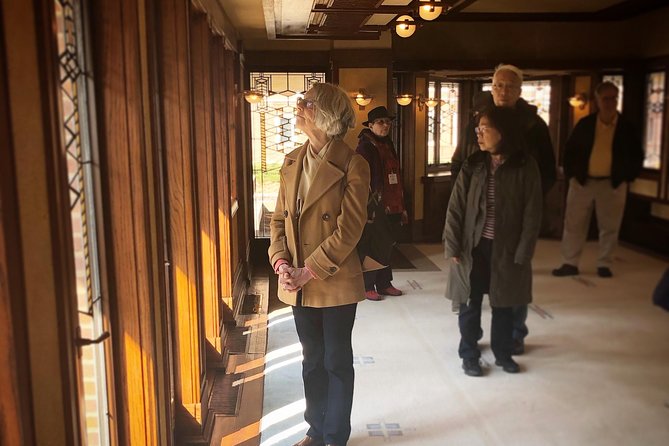
Service animals are allowed, and most people can participate. However, the building is not easily accessible for every disabled visitor, according to one direct account. If stairs, narrow spaces, or mobility limits matter to you, contact the venue before booking and ask for current access details.
There is no need to plan a full day around the house. The tour ends back at the meeting point, and the visit itself lasts about an hour. The front desk and gift shop add a little time if you want to browse, and a coffee shop next door has been noted as a handy stop.
The gift shop may interest Wright fans, since one account describes spending considerable time there. Still, treat it as an optional extra. The central experience is the house and the guide’s explanation.
Who should book Robie House?
I would recommend this visit to:
- People curious about Frank Lloyd Wright beyond famous photographs
- Architecture and interior-design fans
- Visitors staying in or exploring Hyde Park
- Anyone who wants a compact cultural stop in Chicago
- Families with older children who enjoy buildings and stories
- Visitors planning to pair the house with the University of Chicago area or Museum of Science and Industry
I would be more cautious if you have limited mobility, cannot adjust your schedule, or are booking at the last minute through a third party. The access questions and reservation problems are not reasons to skip the house entirely, but they do call for preparation.
Should you book this Robie House visit?
Yes, if you care about architecture and can confirm a tour time directly with the venue. Robie House offers something more substantial than a photo stop: a chance to see how Wright’s Prairie ideas shape an entire home, from its long exterior lines to its interior brickwork and connected rooms.
I would not book it blindly and assume the voucher guarantees entry. Confirm the time, check the operating days, and arrive early. Once that practical piece is handled, the visit offers a clear, compact look at one of Chicago’s most important buildings.
FAQ
Where is the Frederick C. Robie House?
The house is at 5757 S. Woodlawn Ave. in Chicago, Illinois, on the University of Chicago campus.
How long does the visit last?
The tour lasts about one hour and ends back at the meeting point.
What does the tour include?
The guided visit covers both the exterior and interior of Robie House and explains its design, history, and place in Frank Lloyd Wright’s work.
Is Robie House a UNESCO World Heritage Site?
Yes. It is included on the UNESCO World Heritage list for the 20th Century Architecture of Frank Lloyd Wright.
How many people can join a tour?
The activity has a maximum group size of 14 people.
Which days are public tours available?
Public tours are available Thursday through Monday. The museum is closed Tuesday and Wednesday, so confirm the current schedule before visiting.
Recently added around Chicago
- Travel between Chicago O’Hare and Madison★ 4.5 · 4 reviews
- Volo Auto Museum: Admission Ticket★ 4.5 · 55 reviews
- Holiday Walking Tour: Underground Chicago via the Pedway★ 5.0 · 27 reviews
- Workers Cottages of Oldtown Triangle Walking Tour★ 5.0 · 45 reviews
- Verse Immersive Holographic Theater in Chicago★ 4.5 · 28 reviews
- Vito’s Vault Chicago finest dinner theatre speakeasy★ 5.0 · 14 reviews
- Delicious Donuts & Sweet Treats: West Loop Walking Tour★ 5.0 · 47 reviews
- Traveling Spoon Chicago-Style Deep Dish Pizza Private Online Cooking Class★ 5.0 · 4 reviews
Chicago Architecture Tours, compared.
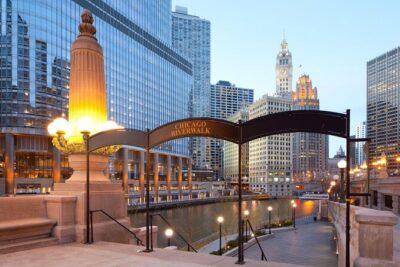

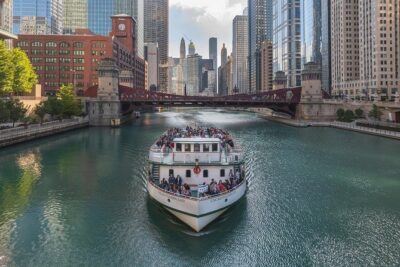
Chicago Architecture Center River Cruise aboard First Lady
Read our review →
Architecture River Cruise Skip-the-Ticket Line
Read our review →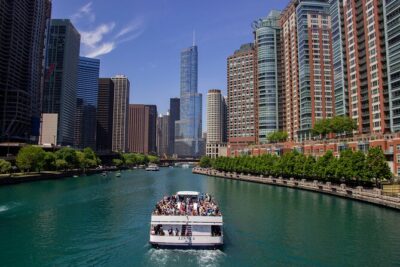
Chicago River 45-Minute Architecture Tour from Magnificent Mile
Read our review →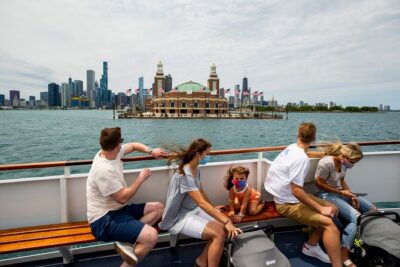
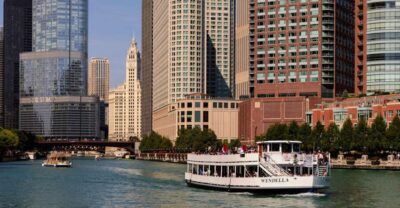
45-Minute Family-Friendly Architecture River Cruise
Read our review →Browse the lists this tour appears in