
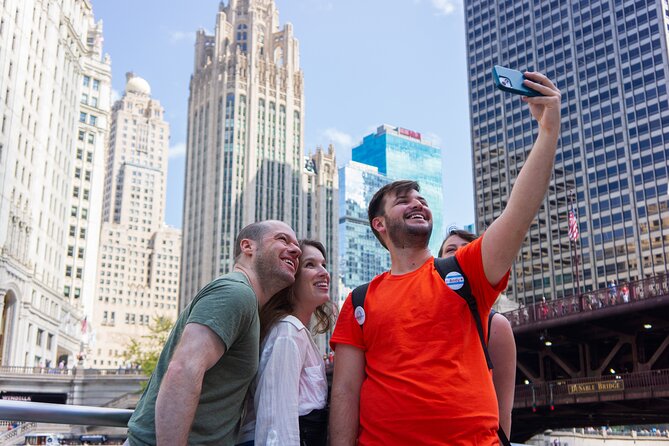
Reviewed · CHICAGO ARCHITECTURE RIVER CRUISES
Architecture & History Guided Tour along the Chicago Riverwalk
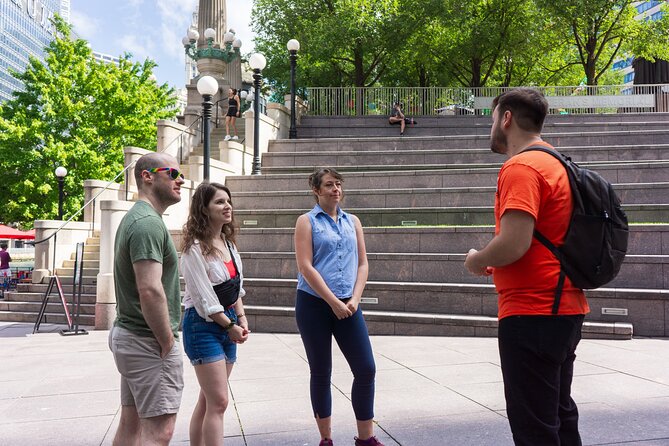
Chicago’s Riverwalk is more than a pretty place for a stroll. It is the thread tying together Chicago’s trading past, military beginnings, newspaper power, and daring modern architecture. This two-hour walk follows that story from 1 W Wacker Drive to Centennial Fountain near Navy Pier.
I like the clear route and the mix of major sights with less obvious details, especially Marina City, Fort Dearborn, and the river itself. I also like that a local guide leads the walk in English, with a group limited to 18 people. The main drawback is the brisk schedule: several stops last only five minutes, so this is an overview rather than a slow architectural study.
Key points to know before you book
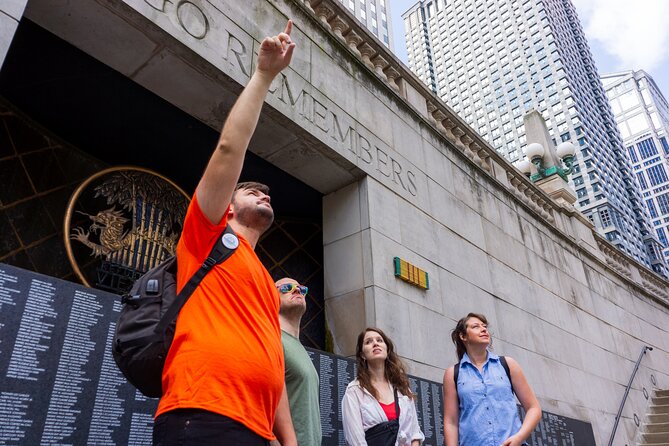
- Chicago’s story unfolds along one compact route, from the Riverwalk and Fort Dearborn to modern riverfront towers.
- Marina City gets two looks, giving you time to appreciate its famous cylindrical residential buildings from different points.
- The group is capped at 18 people, a useful size for hearing a guide in a busy downtown setting.
- Kathryn is one named guide, praised for making Chicago history and architecture informative and engaging.
- The walk ends near Centennial Fountain, not back at the starting point, so plan your next stop from the 400 N McClurg Court area.
- Free cancellation is available up to 24 hours before departure, but changes or cancellations inside that window are not refunded.
Why the Chicago Riverwalk makes a good classroom
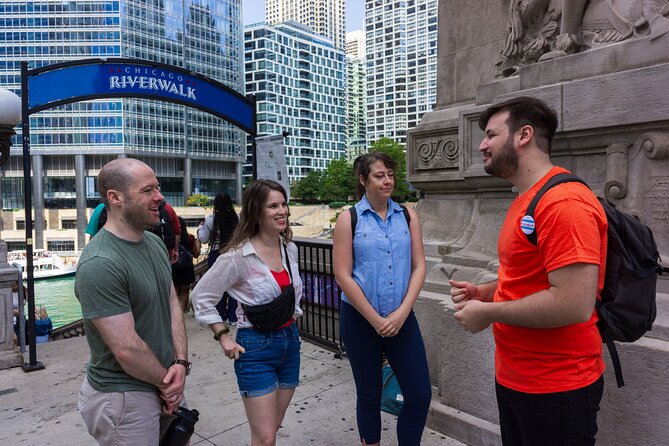
I like this tour because the setting does much of the teaching. The Chicago River is not just background scenery. It has been tied to trade and commerce since the late 1700s, and the route lets you see how that working waterway became a place for public walks, fountains, apartments, offices, and landmark buildings.
The tour begins at 10:00 am at 1 W Wacker Drive. That is a useful starting point for getting your bearings in the central river district. From there, you walk along and around the riverfront, hearing how the city’s past connects to the buildings in front of you.
The guide is the key part of the experience. Kathryn is specifically noted for explaining both Chicago history and architectural details, so you can expect more than a list of building names. The strongest version of this tour will help you notice why a structure matters, what role it played in the city, and how the river shaped development around it.
You should still keep your expectations in check. The itinerary includes 11 stops in about two hours. That works out to a fast-moving introduction, with some stops lasting only five minutes. You will get a broad picture and useful orientation, but not a long interior visit or a technical lecture at every building.
More architecture river cruises in Chicago:
- Chicago Architecture River Cruise
★ 5.0 · 15,756 reviews - Chicago River 90-Minute Architecture Tour
★ 4.5 · 9,629 reviews - Chicago River: 1.5-Hour Guided Architecture Cruise
★ 4.8 · 8,046 reviews
The Riverwalk and Fort Dearborn: Chicago before the skyline
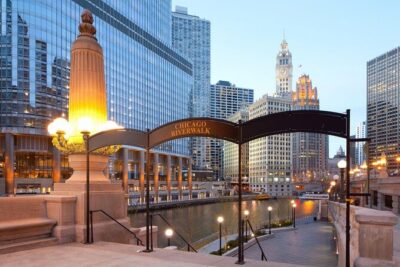
The first stop is the Chicago Riverwalk, with about 20 minutes to consider the river’s long role in the city. This is a good opening because it gives the rest of the walk a clear theme. Chicago’s famous buildings did not appear in isolation. They grew beside a waterway used for commerce and transport.
You will want to listen closely here for the connection between the river and the city’s growth. The Riverwalk also gives you a strong visual start, since the water, paths, and surrounding buildings make the change from working river to public destination easy to see.
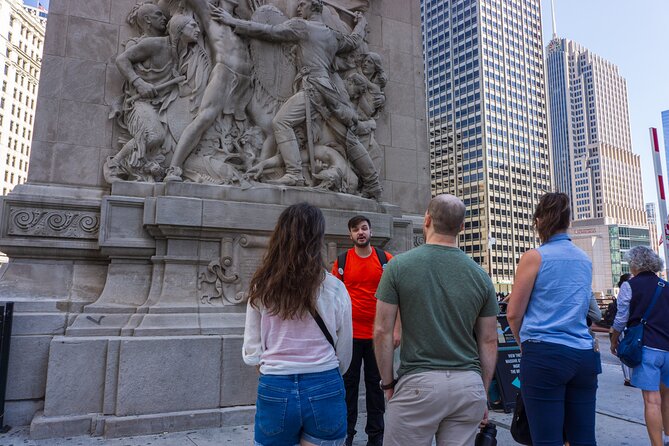
Next comes the Battle of Fort Dearborn, also allotted about 20 minutes. This stop shifts the focus from trade and city building to Chicago’s military past. The grounds provide a place to consider an earlier chapter in the city’s story, before the modern towers and busy riverfront.
I appreciate that Fort Dearborn is given as much time as the opening Riverwalk stop. It prevents the tour from becoming architecture only. If your interest leans toward local history, this part may be one of the most useful sections because it gives the buildings around you a larger time frame.
Marina City and Tribune Tower: two very different Chicago signatures
Marina City receives a 20-minute stop, and it is one of the most distinctive sights on the route. The two cylindrical residential skyscrapers are widely known as the corn cobs. Their unusual shape makes them easy to recognize, but the guide can add the context that a quick photograph cannot provide.
The schedule later returns to Marina City for another five minutes. That second look is practical. It gives you a chance to see the buildings from another point along the route and to notice details you missed during the first explanation. If you enjoy architecture, this is likely the tour’s visual highlight.
The next stop is Tribune Tower, a neo-Gothic landmark that served as a home for the Chicago Tribune newspaper. The scheduled five minutes tells you what to expect: a concise exterior explanation rather than a full building visit.
Even with limited time, the contrast with Marina City is valuable. One is famous for its rounded modern form, the other for its neo-Gothic appearance and connection to newspaper history. You get a quick lesson in how different ideas about architecture can share the same riverfront.
Centennial Fountain and the newer riverfront
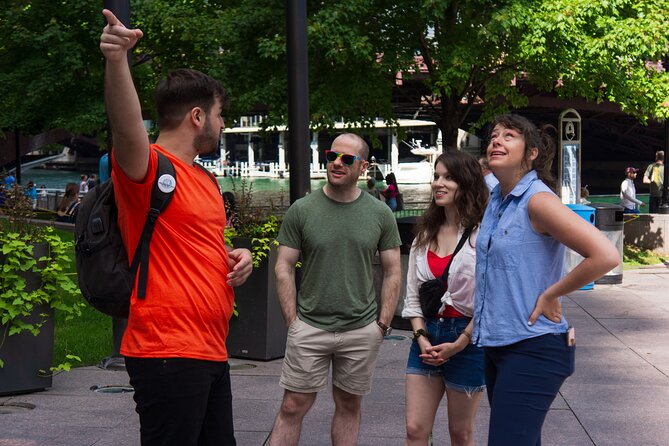
Centennial Fountain receives five minutes. Its cascading water commemorates significant milestones in Chicago’s history, making it more than a decorative stop. It is also a pleasant change of pace after the towers and historical sites.
The St. Regis Chicago follows, with another five-minute look. This building represents one of the city’s newest luxury additions to its architectural scene. The stop helps you see that Chicago’s riverfront story is still being written. Older landmarks do not end the narrative. New buildings continue to change the view.
At 455 Cityfront Plaza Drive, you will see a modern media center with an Art Deco-inspired design. Again, the stop is brief, so expect an exterior view and a focused explanation rather than a long examination of materials or interiors.
I like this part of the route because it puts age and style side by side. You move from a fountain tied to civic milestones to a new luxury building, then to a modern media center with historical design references. The point is not that every building belongs to the same period. The point is that Chicago keeps borrowing from the past while building forward.
More architecture tours in Chicago:
- Chicago Architecture Center River Cruise aboard First Lady
★ 5.0 · 5,536 reviews - Chicago: Architecture River Cruise Skip-the-Ticket Line
★ 4.8 · 4,325 reviews - Chicago River 45-Minute Architecture Tour from Magnificent Mile
★ 4.5 · 2,924 reviews - Chicago Lake and River Architecture Tour
★ 4.5 · 2,308 reviews
A second look at the Chicago River
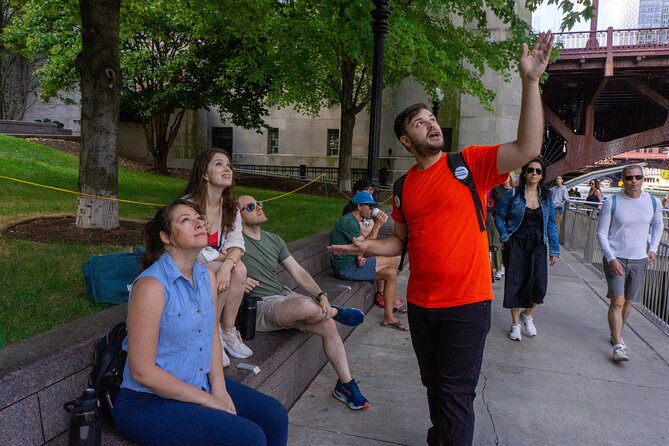
The route includes another 10-minute stop along the Chicago River. This is longer than several of the building stops, and it gives the guide room to return to the river’s role in the city’s development.
That repeated attention matters. If you spend the entire walk looking upward, it is easy to treat the river as scenery. This stop brings you back to the central subject. Trade, commerce, public space, and construction all meet here.
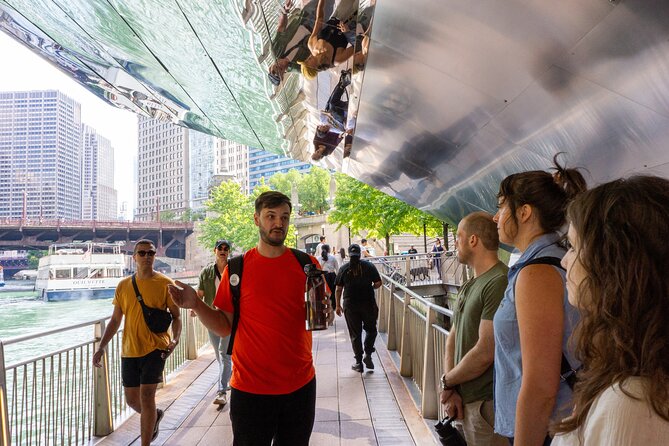
The river also provides some of the best opportunities to pause and take photographs. The activity is described as an entertaining and Instagram-friendly walk, but the photo value comes naturally from the mix of water and architecture. You will not need a separate sightseeing cruise to connect the major views covered on this route.
The Jewelers Building and AMA Plaza
After the second Marina City stop, the walk continues to the Jewelers Building. This structure once housed Chicago’s diamond district, adding another layer to the riverfront’s commercial story.
The five-minute visit will not offer a long exploration, but it should help you understand how different businesses shaped the downtown area. The Jewelers Building is a useful counterpoint to the newspaper history of Tribune Tower and the residential identity of Marina City.
The final stop is AMA Plaza, known for its minimalist beauty and its connection to one of the pioneering masters of modern architecture. The supplied details do not name the architect, so the guide’s explanation will be important if you want more context about the design.
Ending with modern architecture gives the tour a sense of forward motion. You begin with the river’s early commercial role and finish with a building that reflects a cleaner, more restrained approach to design. That arc makes the walk feel planned rather than like a string of unrelated downtown sights.
What the two-hour schedule feels like
A two-hour walking tour can be a good fit for Chicago because it gives you a useful introduction without taking over your whole day. You can follow it with lunch, more Riverwalk time, or another downtown attraction.
The schedule is also demanding. Five-minute stops go quickly, especially if the group needs to gather, cross a street, and find a good viewing point. I would treat the tour as a guided orientation. Make notes of the buildings you want to revisit later rather than expecting to study each one at length.
The maximum group size is 18. That is small enough to make a local guide easier to hear than on a large coach-style outing, while still being large enough that you should stay near the group. Comfortable walking shoes are sensible, though the supplied details do not specify the exact walking distance or surface conditions.
The start and end points are different. You begin at 1 W Wacker Drive and finish at Nicholas J. Melas Centennial Fountain, 400 N McClurg Court. This is helpful if you want to continue along the riverfront afterward, but it also means you should not assume you will return to the starting point.
Who gets the most from this walk
I would recommend this tour to a first-time Chicago visitor who wants the city explained through its riverfront buildings. It suits you especially well if you enjoy architecture but also want military, commercial, and civic history included.
It is also a good choice for someone who prefers a local guide to a self-guided walk. Kathryn is a named guide with a strong note of praise for her history and architecture explanations, and the tour provider is Tours By Foot, Chicago.
You may want something else if you prefer entering buildings, spending 20 minutes at every landmark, or taking your time with photography. Several stops are only five minutes, and admission tickets are not included because the tour is an outdoor guided walk. Each listed stop has free admission, but that should not be read as a promise of interior access.
The activity is offered in English, and confirmation is provided at booking. Service animals are allowed, the route is near public transportation, and most people can participate. Those details make it a practical choice for many visitors, though the information does not specify the route’s full accessibility features.
Value, booking, and cancellation
The price is not provided here, so I cannot judge the exact dollar value. I can judge what you receive: a professional local guide, a two-hour guided walk, a small group capped at 18, and a route linking several major riverfront sights.
That is good value if you would otherwise walk the same area without understanding what you are seeing. The guide’s explanations are the product. The buildings and river views are freely visible, but the historical connections and architectural reading are what turn a stroll into a tour.
Free cancellation is allowed up to 24 hours before the 10:00 am start time for a full refund. Inside 24 hours, the payment is not refunded and changes are not accepted. Keep the separate starting and ending locations in mind when planning the rest of your day.
Should you book the Architecture and History Guided Tour?
Book it if you want a focused introduction to Chicago’s riverfront, especially if Marina City, Tribune Tower, and the connection between architecture and city history appeal to you. The mix of Fort Dearborn, the river’s commercial past, the Jewelers Building, and newer structures gives the walk more range than a simple photo stop.
Skip it if you need long visits inside buildings or a slow, highly technical architecture seminar. The route moves at a steady pace, and the short stops favor breadth over detail.
For most first-time visitors, I like the balance. You get a clear route, a local English-speaking guide, a manageable two-hour commitment, and a useful sense of how Chicago’s riverfront changed over time.
FAQ
How long is the Architecture and History Guided Tour?
The guided walk lasts approximately two hours.
Where does the tour begin?
The tour begins at 1 W Wacker Drive, Chicago, Illinois 60601.
Where does the tour end?
It ends at Nicholas J. Melas Centennial Fountain, 400 N McClurg Court, Chicago, Illinois 60611.
What time does the tour start?
The scheduled start time is 10:00 am.
What language is the tour offered in?
The tour is offered in English.
How many people can join the tour?
The maximum group size is 18 travelers.
Which buildings and sights are included?
The route includes the Chicago Riverwalk, the Battle of Fort Dearborn, Marina City, Tribune Tower, Centennial Fountain, The St. Regis Chicago, 455 Cityfront Plaza Drive, the Chicago River, the Jewelers Building, and AMA Plaza.
Is admission to the stops included?
The listed stops have no admission ticket charge. The experience is a guided walk along the riverfront.
Can I cancel for a full refund?
Yes. You can cancel at least 24 hours before the start time for a full refund. Cancellations or changes made less than 24 hours before the start time are not accepted for a refund.
More History Tours in Chicago
- Chicago in a Day: Food, History & Architecture Walking Tour
★ 5.0 · 1,153 reviews - Chicago: Field Museum of Natural History Ticket or VIP Tour
★ 4.7 · 717 reviews - Field Museum of Natural History Admission Tickets
★ 4.5 · 489 reviews - Chicago Walking Tour: Historic Treasures of Chicago
★ 5.0 · 362 reviews
Recently added around Chicago
- Travel between Chicago O’Hare and Madison★ 4.5 · 4 reviews
- Volo Auto Museum: Admission Ticket★ 4.5 · 55 reviews
- Holiday Walking Tour: Underground Chicago via the Pedway★ 5.0 · 27 reviews
- Workers Cottages of Oldtown Triangle Walking Tour★ 5.0 · 45 reviews
- Verse Immersive Holographic Theater in Chicago★ 4.5 · 28 reviews
- Vito’s Vault Chicago finest dinner theatre speakeasy★ 5.0 · 14 reviews
- Delicious Donuts & Sweet Treats: West Loop Walking Tour★ 5.0 · 47 reviews
- Traveling Spoon Chicago-Style Deep Dish Pizza Private Online Cooking Class★ 5.0 · 4 reviews
Chicago Architecture River Cruises, compared.

Chicago Architecture Center River Cruise aboard First Lady
Read our review →
Architecture River Cruise Skip-the-Ticket Line
Read our review →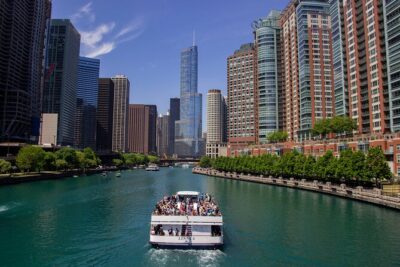
Chicago River 45-Minute Architecture Tour from Magnificent Mile
Read our review →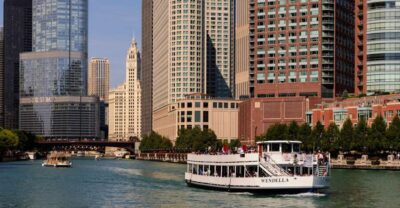
45-Minute Family-Friendly Architecture River Cruise
Read our review →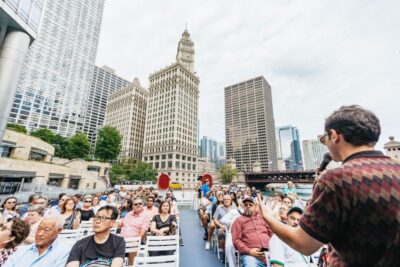
Browse the lists this tour appears in