
Reviewed · CHICAGO BUS TOURS
Big Bus Chicago: Hop-On Hop-Off Sightseeing Tour, 24/48/72hr Pass
Chicago’s best first look may come from the top deck of a Big Bus, where the city’s famous buildings, parks, museums, and riverfront roll past without the work of planning each connection. The full loop takes about two hours, and the route links Millennium Park, Navy Pier, Grant Park, and the Magnificent Mile.
I like the simple choice of a 24-, 48-, or 72-hour pass, and I like having both an enclosed lower deck and an open upper deck. The app’s live bus tracking is useful, too. The catch is timing: buses may run every 30 to 45 minutes, or about hourly according to the operating information, and traffic, weather, parades, or road closures can throw off the plan.
I would use this tour to get my bearings on the first day in Chicago, then return to one or two stops on foot. It is less useful if you expect a constant stream of buses, a live guide on every ride, or guaranteed service during severe weather and major downtown events.
Key points to know before you board
- The two-hour loop covers Chicago’s core sights: You pass the river, Willis Tower, Millennium Park, the Museum Campus, Navy Pier, and the Magnificent Mile.
- The open upper deck gives you the best views: The front and upper seats offer broad views of buildings and parks, while the lower deck provides shelter from wind, rain, and cold.
- The 24-hour pass works best for a quick overview: Choose 48 or 72 hours only if you plan to get off at several stops and return to the bus.
- The app matters: Use it for stop locations, live tracking, route information, and service updates before setting out.
- Commentary quality can vary: The digital narration covers the main sights, but some drivers add much more personality and local detail than others.
- Weather and city events can change the experience: Winter cold, poor heating, parades, protests, and road closures have caused delays or early route changes.
Why this bus makes sense for a first Chicago day
At $45 per person, this is not a cheap way to replace Chicago’s public transportation. It is a sightseeing tool, and its value comes from linking major sights while giving you a running introduction to the city.
I like the tour most when you use it as a moving orientation session. Ride the complete circuit first, note the places you want to visit, then use your pass to return to a museum, park, or neighborhood stop. You can also get off for lunch or a walk and reboard later.
The 24-hour option is enough for a short visit if you mainly want one full ride and a few stops. A 48-hour pass gives you more breathing room, while a 72-hour pass only makes sense if you plan to use the bus as part of your daily sightseeing. Admission to attractions is not included, so your ticket covers transportation and commentary, not the Art Institute, Skydeck, 360 CHICAGO, or museums.
The route is especially handy for families, first-time visitors, and anyone who wants a broad city view without arranging several separate journeys. It also helps if you have limited walking time. Chicago’s major sights spread across the Loop, River North, the lakefront, and the Museum Campus, so the bus saves some backtracking.
More bus tours in Chicago:
- Chicago Crime and Mob Bus Tour
★ 4.5 · 3,186 reviews - Chicago: Hop-on Hop-off Sightseeing Tour by Open-top Bus
★ 4.3 · 1,349 reviews - Chicago: Mob and Crime Bus Tour
★ 4.4 · 859 reviews
Start at the Chicago Riverwalk, then follow the river
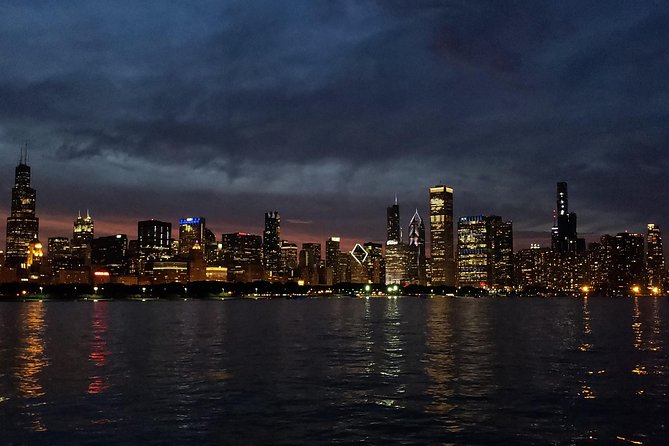
Stop 1 is at 98 East Wacker Drive, across the bridge from Trump Tower and near the corner of Michigan and Wacker. It is the main redemption point, but you can also activate your mobile ticket with a driver at any Big Bus stop.
This is a smart place to begin because the Chicago River gives you an immediate sense of the city’s layout. Look down the river corridor, watch the bridges, and pay attention to the tall buildings packed along the water. The nearby Chicago Riverwalk is also one of the four self-guided digital walking tours available with selected ticket options.
I would download the app before reaching the stop. Add your booking reference, activate the ticket on the day of use, and keep the digital ticket ready for the driver. The app also helps you find the exact stop, which matters because a busy downtown street can make a boarding point hard to spot.
Stop 2 at Willis Tower gives you a high-city choice
The second stop serves Skydeck Chicago at Willis Tower. The bus does not include admission, but it places you close to one of Chicago’s best-known viewing attractions.
Skydeck is a separate paid visit, so check your time before getting off. If you are using a 24-hour ticket, you may prefer to stay on the bus for the first circuit and return here later. If you have a 48- or 72-hour pass, this stop is easier to build into a longer day.
The surrounding area also helps explain Chicago’s working downtown core. From the bus, the city feels vertical and tightly packed, while the next stops open into parks and lakefront spaces.
Stops 3 and 4 connect the Loop with Chicago’s green spaces
Stop 3 serves Millennium Park and the Art Institute of Chicago. This is likely to be one of your most useful stops because it combines a major public space with one of the city’s leading art museums.
Millennium Park is a good place to get off for a walk and photographs. The Art Institute requires its own admission, and you should allow far more time than a quick hop-on, hop-off break if you plan to visit its galleries. The stop works well for splitting your day: spend the morning at the museum, then return to the bus for the lakefront route.
Stop 4 covers Grant Park and the Hilton Chicago. Grant Park gives you a broad change of pace after the tall buildings of the Loop. It is also useful for reaching the south end of downtown without walking the full distance from Millennium Park.
The two stops are close enough in the overall city plan that you should choose based on your exact destination. Do not get off at the first one automatically. Check the app and the audio announcement so you avoid an unnecessary walk.
Different part of the city, different kind of afternoon:
- Chicago Architecture River Cruise
★ 5.0 · 15,756 reviews - Chicago River 90-Minute Architecture Tour
★ 4.5 · 9,629 reviews - Chicago River: 1.5-Hour Guided Architecture Cruise
★ 4.8 · 8,046 reviews - Chicago: Gangsters and Ghosts Walking Tour
★ 5.0 · 7,155 reviews
Stops 5 and 6 show off the Museum Campus
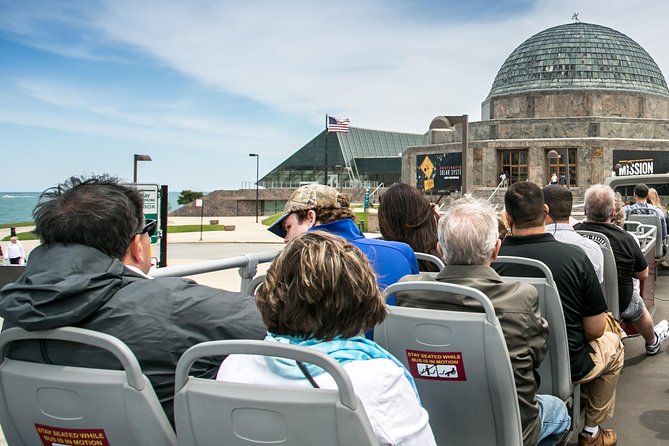
The Adler Planetarium and the Field Museum of Natural History sit in the Museum Campus area along the lakefront. These stops are among the best reasons to use the bus instead of trying to cover Chicago by foot.
At Stop 5, Adler gives you lake views and a clear look back toward the downtown skyline. The setting is as important as the building. Stop 6 serves the Field Museum and the wider Museum Campus, where you can spend several hours if you want a proper museum visit.
Do not expect to see these attractions quickly. The bus makes access easy, but admission is separate and the museums need real time. A 48- or 72-hour pass is more useful here because you can get off, visit one attraction, and continue later without squeezing everything into a single afternoon.
The upper deck can be excellent along this part of the route on a clear day. It can also be exposed to strong wind and cold, so the lower deck is the sensible choice in winter or unsettled weather.
Stop 7 brings architecture into the picture
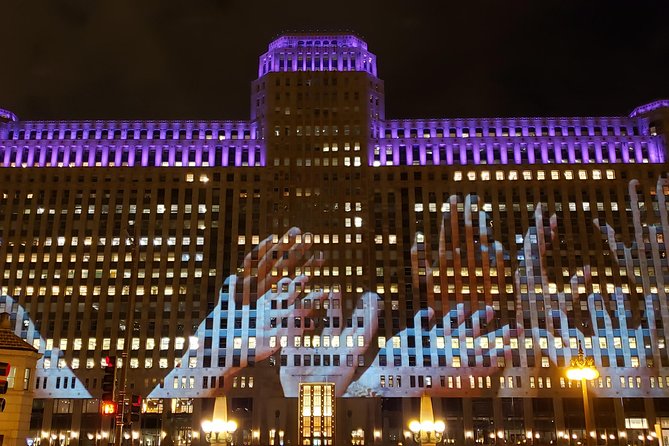
Stop 7 serves the Chicago Architecture Center and the Sheraton Grand. This is the route’s most direct connection to Chicago’s famous building tradition.
The Architecture Center offers another of the self-guided digital walking tours, focused on Chicago architecture. I would pair this stop with a walk if your ticket includes that feature. The bus gives you a broad view of the buildings, but walking lets you look up, compare facades, and notice how the river and streets shape the city.
The recorded commentary is useful here, though its quality depends on your audio connection and the individual bus. Some rides have only the digital narration, while drivers such as Felicia, Candace, and Donnie have added extra explanations and humor. If your driver is giving good local detail, stay on for a little longer. If not, the self-guided walk may provide more context.
Stop 8 at Navy Pier is a natural break
Navy Pier is one of Chicago’s most recognizable lakefront stops and an easy place to pause. You can get off, walk along the pier, take in the lake views, and return to the route when you are ready.
This stop can take more time than you expect, especially if you are traveling with children. Keep an eye on the next bus time rather than assuming another one will arrive in a few minutes. The published information gives an approximate 30 to 45-minute interval, while the tour description also refers to hourly departures, so use the live tracker instead of relying only on a printed schedule.
Navy Pier is also a good test of how you want to use your pass. If you only want photographs and a short walk, a 24-hour ticket may be enough. If you want to spend a longer stretch here and still visit the Magnificent Mile later, the longer passes give you more room.
Stops 9 and 10 cover the Magnificent Mile and 360 CHICAGO
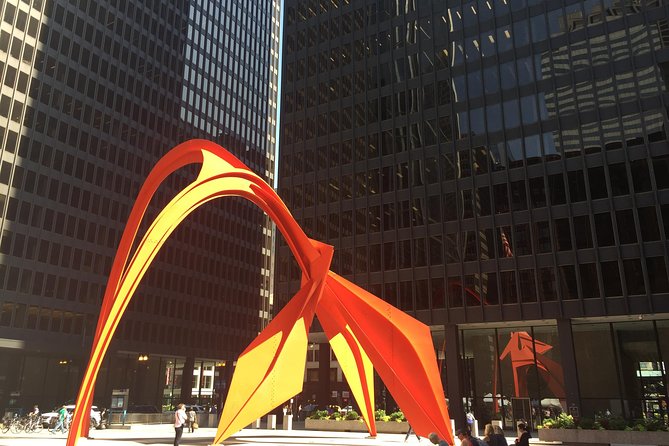
Stop 9 serves the Water Tower and the Magnificent Mile. This is the main shopping and hotel corridor on the route, with plenty of places to walk, eat, and browse.
The Water Tower stop is useful if you want to explore Michigan Avenue on foot. You may find that some attractions are closer to one stop than another, so use the app’s stop map before getting off. The bus is a good connector, but it cannot eliminate all city walking.
Stop 10 serves 360 CHICAGO at the John Hancock Center. Like Skydeck, 360 CHICAGO requires separate admission. The two viewing attractions offer different locations, so you do not need to visit both unless you specifically want to compare them.
I would avoid trying to squeeze both observation decks and several museums into one short pass. Pick the sights you care about most, and use the bus for the spaces between them.
Stop 11 in River North completes the downtown circuit
Stop 11 serves McDonald’s in River North. It may sound less exciting than the museum and lakefront stops, but it is practical. River North has restaurants, hotels, and easy access to the central business district.
This stop can work well at the end of a day when you want food before returning to your hotel. It also gives you another boarding option if you are staying in or near River North rather than the Loop.
The full circuit takes about two hours without getting off. That makes it manageable as a single ride, but traffic can stretch the timing. Build in extra room if you have a dinner reservation or a timed attraction.
The upper deck is the main attraction
The open-top, double-decker design gives you the kind of view you cannot get from a normal city bus. You can see above parked cars and catch longer sight lines along the avenues, parks, and lakefront.
The upper deck is not always fully exposed. Some buses have a covered section or glass dome, which can make a cold day more tolerable. Still, winter conditions have caused real discomfort, including cold seats and buses with heating problems. In bad weather, use the enclosed lower deck and bring layers.
On warmer days, the upper deck is the clear choice. Keep in mind that tree branches can brush the upper level along parts of the route, so sit with ordinary city-bus caution and follow safety instructions.
The lower deck has climate control and protection from wind, but the view is less open. Windows may also be less clear than you would like. I would ride upstairs for the first loop if conditions allow, then move downstairs when you want comfort.
Audio, drivers, and the role of the app
Digital commentary is available in several languages, and headphones are supplied. The narration covers the route and upcoming stops, but audio quality has not always been consistent. Some passengers have found the headphones or volume difficult, and one recurring issue is that there may not be enough headphones on a particular bus.
Bring your own wired earbuds only if the bus connection allows them, and check the volume button before the bus pulls away. The commentary is much more useful when you can hear it clearly.
The human element varies. Felicia has been praised for clear narration, humor, and safety advice. Candace has been singled out for a lively, well-paced ride, and Donnie has added extra Chicago detail beyond the recording. You may also get a driver who sticks mostly to stop announcements.
That inconsistency is worth understanding before you book. This is not a guaranteed live-guided city tour. Think of it as a route with digital information, sometimes improved by a particularly good driver.
The app is one of the most important parts of the experience. Use it to:
- Find the exact stop location
- Track buses in real time
- Check route information
- Read city information
- Look for service changes and temporary closures
This matters during parades, festivals, protests, severe weather, and major road closures. A previous route change during the Magnificent Mile light festival left one rider several miles from the starting point. Check for updates before leaving your hotel, not only after you reach the stop.
What the pass includes, and what it does not
Every pass includes the open-top sightseeing bus, the enclosed lower deck, digital commentary, WiFi, and access to the Big Bus app. Four self-guided digital walking tours are available when you select the appropriate option. Their topics are Chicago architecture, public art, the Chicago Riverwalk, and Millennium Park.
The pass does not include hotel pickup, hotel drop-off, or attraction admission. You also cannot bring luggage onboard. Food and alcohol are not allowed, although a non-alcoholic drink in a screw-top bottle is permitted. Pets are not allowed except for ADA service animals.
Wheelchair-accessible buses with lifts are available, but not every vehicle has the equipment. If you need an accessible bus, state that when booking so the operator can arrange the correct vehicle.
You can cancel for a full refund up to 24 hours before the start time. Changes inside that window are not accepted, and poor weather may lead to a different date or a refund.
Who should book Big Bus Chicago?
I would book it if you are visiting Chicago for the first time, have limited time, want a broad overview, or are traveling with children and need a break from long walks. It is also useful for solo visitors who want a simple route that connects the main downtown sights.
The tour suits you best if you enjoy choosing your own stops. You can ride the full loop, get off at the Art Institute, return at Navy Pier, and finish near River North without buying separate rides for every leg.
I would think twice if you are visiting during extreme cold, need exact departure times, or want a live guide throughout. The service can be affected by traffic and road closures, and the difference between a great driver and a quiet one is noticeable.
Should you book Big Bus Chicago?
Book the 24-hour pass for a first-day overview and a few carefully chosen stops. Choose 48 hours if you want to visit a museum, spend time at Navy Pier, and explore the Magnificent Mile without rushing. The 72-hour option is best only when you plan to make the bus part of your daily transportation.
Download the app, check service updates, and start early enough to allow for delays. On a clear day, sit upstairs for the views. In winter, use the enclosed deck and treat the open level as an option, not a promise.
At $45, the tour earns its keep when you use it to understand Chicago and reach several far-apart sights. It is not the cheapest way to move around town, but it can be a practical first step before you set off on foot.
FAQ
How long does the full Big Bus Chicago route take?
A complete circuit takes approximately two hours if you remain on the bus and do not get off at any stop.
How often does the bus arrive?
Buses are listed as arriving approximately every 30 to 45 minutes, while other operating information refers to hourly departures. Use the free app’s live tracking feature for the most useful estimate on the day of your visit.
Can I board at any stop?
Yes. You can show a printed or electronic ticket at any Big Bus stop. You can also redeem the voucher with staff at Stop 1 on the Chicago Riverwalk or with a driver at another stop.
What attractions are on the route?
Stops serve Skydeck Chicago at Willis Tower, Millennium Park, the Art Institute of Chicago, Grant Park, Adler Planetarium, the Field Museum, the Chicago Architecture Center, Navy Pier, the Magnificent Mile, 360 CHICAGO, and River North.
Are attraction admission fees included?
No. The pass includes the sightseeing bus and listed digital features, but admission to attractions is separate.
Is the bus wheelchair accessible?
Wheelchair-accessible vehicles with lifts are available, and the lifts can accommodate up to 650 pounds. Not every vehicle is equipped, so request an accessible bus in the special requirements section when booking.
Recently added around Chicago
- Travel between Chicago O’Hare and Madison★ 4.5 · 4 reviews
- Volo Auto Museum: Admission Ticket★ 4.5 · 55 reviews
- Holiday Walking Tour: Underground Chicago via the Pedway★ 5.0 · 27 reviews
- Workers Cottages of Oldtown Triangle Walking Tour★ 5.0 · 45 reviews
- Verse Immersive Holographic Theater in Chicago★ 4.5 · 28 reviews
- Vito’s Vault Chicago finest dinner theatre speakeasy★ 5.0 · 14 reviews
- Delicious Donuts & Sweet Treats: West Loop Walking Tour★ 5.0 · 47 reviews
- Traveling Spoon Chicago-Style Deep Dish Pizza Private Online Cooking Class★ 5.0 · 4 reviews
Chicago Bus Tours, compared.
Hop-on Hop-off Sightseeing Tour by Open-top Bus
Read our review →


Prohibition Speakeasies Bus Tour or Walking Tour
Read our review →
Big Bus Chicago: Sunset Tour by Open-Top Bus with Live Guide
Read our review →

City Minibus Tour with Optional Architecture Cruise
Read our review →Browse the lists this tour appears in