
Reviewed · CHICAGO ARCHITECTURE TOURS
Chicago Architecture Walking Tour: What’s New
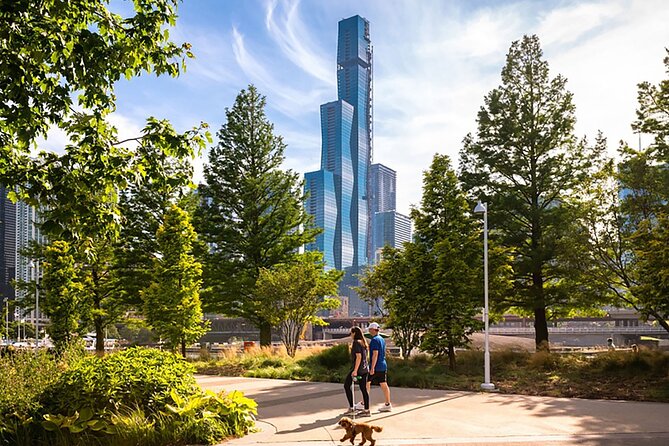
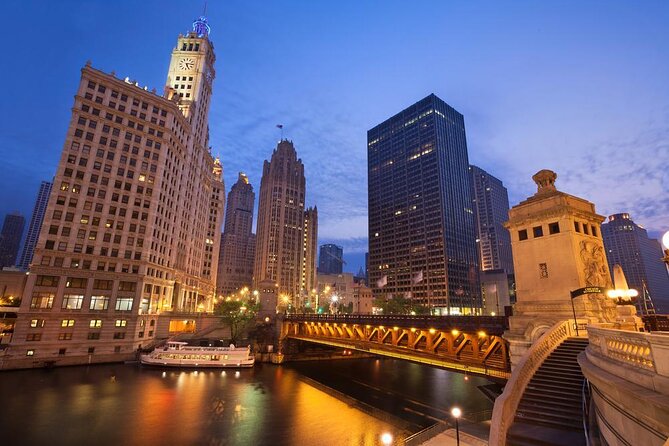
Chicago’s newest architecture is the focus here, not the familiar greatest hits. In 90 minutes, you’ll examine fresh additions around the Chicago River, including the updated Tribune Tower, 465 N Park Drive, St. Regis Chicago, and Apple Michigan Avenue. The route stays compact, so you can pay attention instead of racing across the city.
I like the small maximum of 15 people, which gives you a fair chance to ask questions. I also like that your $35 fee includes the Chicago Architecture Center galleries, adding indoor context before or after the walk. Guides such as Paula, Paul S, Mary Jo, and MaryAnn bring different stories and viewpoints to the buildings.
The main limitation is the short running time. You’ll see a useful slice of recent Chicago design, but not the whole city, and access to building interiors can change on weekends, holidays, or during unexpected closures.
Key points at a glance
- Recent Chicago design: Focus on new buildings, additions, renovations, and current apartment trends rather than only historic landmarks.
- Compact River North route: Begin at the Chicago Architecture Center, walk through Pioneer Court and Michigan Avenue, then return to the CAC.
- Strong guide-led experience: Guides including Paula, Paul S, Mary Jo, MaryAnn, and Paul S explain architecture, history, sustainability, and community spaces.
- Small-group format: The tour accepts no more than 15 people, making questions and conversation easier.
- CAC galleries included: Your admission gives you an indoor architectural overview as well as the outdoor walk.
- Good value at $35: The price is reasonable if you want guided interpretation instead of simply photographing buildings from the sidewalk.
Why Chicago’s new buildings are worth a closer look
Chicago is famous for early skyscrapers and bold modern architecture. This tour asks a different question: what is the city building now, and how does new work respond to the older city around it?
That makes the experience useful even if you already recognize the Tribune Tower or know the Loop fairly well. The guide connects current projects to older planning choices, past architectural ideas, sustainability concerns, and the way people use public spaces.
You are not just pointed toward a tall building and given its completion date. The discussion can include the architect, the building’s purpose, the surrounding community space, and the design choices that shape your view from street level. The guides are also prepared to answer questions, which matters if you are an architect, designer, student, or simply the person in your group who keeps asking why a building looks the way it does.
The emphasis on recent work gives the walk a useful sense of change. You see how historic structures are adapted, how housing design is shifting, and how large new towers alter the riverfront and nearby streets.
More architecture tours in Chicago:
- Chicago Architecture River Cruise
★ 5.0 · 15,756 reviews - Chicago River 90-Minute Architecture Tour
★ 4.5 · 9,629 reviews - Chicago River: 1.5-Hour Guided Architecture Cruise
★ 4.8 · 8,046 reviews
Starting inside the Chicago Architecture Center
The tour begins at the Chicago Architecture Center, at 111 E Wacker Drive. The first 10 minutes are set aside for introductions and opening remarks, so arrive ready to listen and get oriented.
This start is practical. You receive a short explanation of what the tour will cover before heading outside, and you can get familiar with the center itself. Admission to the CAC galleries is included, giving you another reason to allow time around the scheduled walk.
The galleries are especially useful if you want more than a quick outdoor commentary. The walking route gives you the real buildings, street views, and riverfront setting. The gallery visit gives you a broader frame for understanding Chicago architecture. You can use the two parts together rather than treating the indoor admission as an unrelated extra.
There is no hotel pickup, drop-off, luggage storage, or stroller storage. Coat check is also not included. Plan to arrive with only what you need for a 90-minute city walk.
Pioneer Court and the older city around it
From the CAC, the group moves toward Pioneer Court for about 15 minutes of discussion. This is where the tour begins to place new architecture beside Chicago’s established landmarks.
The guide discusses buildings around Pioneer Court, including the Tribune Tower area. That setting helps you compare old and new without needing a long transfer between sites. Look up, but also look at how the buildings meet the sidewalk, shape open space, and frame views toward the river.
This part is not only about façades. The value comes from seeing how a major urban center keeps changing while older buildings remain part of daily life. A guide can point out relationships you might miss when walking alone, such as how a new addition changes the feel of a historic property or how public space links several buildings.
The tour’s small size helps here. In a group capped at 15, you can usually stay close enough to hear the explanation and ask about a particular detail. On a rainy day, the walk still operates, so bring suitable clothing rather than assuming poor weather will cancel the experience.
Tribune Tower: renovation instead of simple preservation
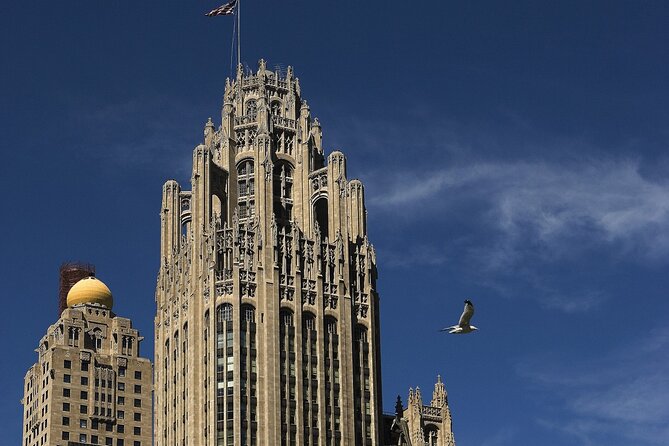
The historic Tribune Tower receives special attention for its recent renovations and additions. This is one of the most useful subjects on the route because it raises a practical architectural question: how do you give an old landmark a new purpose without erasing what made it important?
The guide explains the changes around the tower and how new work relates to the original building. You may also hear about the planning decisions behind the renovation and the way the property now fits into the surrounding area.
I like this stop because it moves beyond the easy habit of admiring an old building from across the street. You get a closer look at adaptation, a common issue in cities where historic properties must serve modern needs.
Access to interiors is not guaranteed. Building entry can change because of weekend or holiday schedules, closures, or other conditions. The tour remains worthwhile from the street, but you should not book it expecting every featured building to be open inside.
More walking tours in Chicago:
- Chicago: Gangsters and Ghosts Walking Tour
★ 5.0 · 7,155 reviews - Chicago Favorites Ultimate Food and Walking Tour
★ 5.0 · 1,962 reviews - Chicago: Gangsters and Ghosts Guided Walking Tour
★ 4.7 · 1,697 reviews - Chicago in a Day: Food, History & Architecture Walking Tour
★ 5.0 · 1,153 reviews
Apartment design and the changing urban block
Another discussion looks at recent trends in small urban rental apartments. This is a less obvious subject than a famous tower, but it may be one of the most useful parts of the tour.
Apartment design affects everyday city life. The guide can discuss how smaller rental units fit into a dense neighborhood, how developers use limited space, and how current buildings respond to housing demand. You are looking at more than an attractive exterior. You are considering who the building is for and how it functions within the city.
This topic also gives the tour a wider reach. A visitor may never live in one of these apartments, yet the design choices affect sidewalks, density, nearby services, and the feel of the neighborhood. If you are studying architecture or urban planning, this section should be particularly relevant. If you are simply curious about why new residential buildings look and work as they do, it gives you useful vocabulary and context.
The tour does not attempt to cover every new residential project in Chicago. Instead, it uses the nearby buildings to explain broader design trends. That focused approach keeps the 90-minute schedule manageable.
465 N Park Drive and the riverfront skyline
The route includes a discussion of 465 N Park Drive, one of the newer buildings examined on the walk. Here, the guide considers how a recent high-rise fits into the city’s evolving skyline and surrounding streets.
The interest is in comparison. You can think about how the building relates to nearby towers, public areas, and the riverfront setting. The guide may also connect the building to larger themes raised earlier, including recent design approaches and the use of urban space.
Do not expect a long stop at every building. The schedule includes several subjects, and the time at each location can vary. The benefit is range: you get several examples of current work in one compact area rather than spending the entire tour on one project.
Bring your attention to details at street level. A tall building is easy to photograph, but its entrance, sidewalk edge, ground-floor activity, and relationship to neighboring structures often tell you more about its effect on the city.
St. Regis Chicago and a modern tower’s role
The group also views St. Regis Chicago. This gives you another chance to consider how a major new tower contributes to the riverfront skyline and how its form reads from nearby streets.
A guide-led view is helpful because modern towers can be hard to understand from one angle. The explanation can direct your eye toward the building’s shape, its place among older and newer neighbors, and the practical choices that affect its public presence.
You should expect an exterior viewing stop rather than a guaranteed interior visit. That distinction matters. The tour is primarily a walking and interpretation experience, not a series of private building inspections.
Still, seeing several new towers in sequence creates a useful comparison. One building may seem dramatic on its own, but the larger lesson appears when you look at multiple projects together. You begin to notice how Chicago’s newest buildings share the same city while making different statements.
Apple Michigan Avenue and a memorable final building
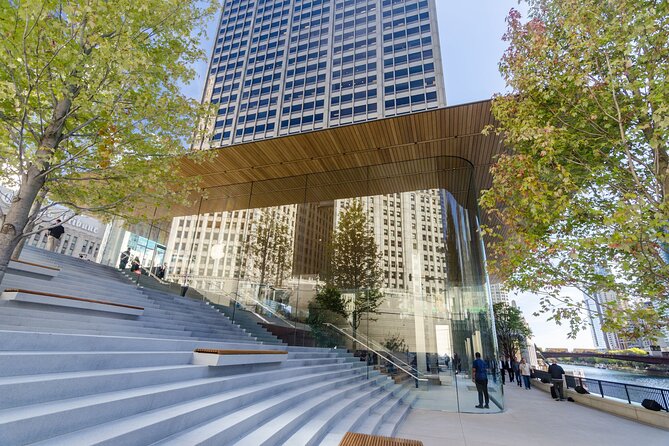
The walk reaches Apple Michigan Avenue for a 10-minute viewing stop. The store is a change of scale and purpose from the residential and mixed-use towers discussed earlier.
Rather than looking only at height, you can consider how a contemporary retail building handles a prominent location on Michigan Avenue. Its design, public presence, and connection to the surrounding street offer a different example of current architecture.
This is a good late stop because it broadens the tour. You have already considered renovation, rental housing, and large towers. Apple Michigan Avenue shows how a retail project can become part of the city’s architectural conversation.
Afterward, the group returns to the Chicago Architecture Center for closing remarks, scheduled for about five minutes. The ending is brief, but it gives you a clear finish and a chance to ask a final question.
What the guides add to the walk
The strongest part of this experience is the human explanation. Paul S is praised for answering questions and keeping the walk upbeat even in rainy weather. Paula brings information about architecture, history, the story of each building, and sustainability. Mary Jo explains how current design trends draw from and depart from earlier ideas. MaryAnn brings clear enthusiasm for Chicago and its buildings.
Those differences matter. A good architecture tour should not feel like a memorized list of dates. You want someone who can explain why a building matters, connect it to its surroundings, and respond when you notice something unexpected.
The format allows personalized attention, but it remains a group activity. With a maximum of 15 people, the setting is more intimate than a large sightseeing walk, though your experience will still depend on the day’s guide and group.
Is $35 a fair price?
At $35 per person, this is a fair buy if you value interpretation and want a compact introduction to current Chicago architecture. You are paying for a professional certified guide, a 90-minute route, and admission to the Chicago Architecture Center galleries.
The value is strongest for anyone who would otherwise wander around looking at buildings without knowing what they are seeing. You receive a planned route and a framework for reading the city. That can save time and make the rest of your Chicago sightseeing more rewarding.
The price may feel less attractive if you only want landmark photographs or prefer exploring at your own speed. The tour does not cover the entire city, and it does not promise interior access to every building. You are buying context, not a private architectural inspection.
The experience is also usually booked well ahead, with an average booking lead time of 57 days. If your dates are fixed, reserve early rather than assuming a convenient last-minute place will be available.
Practical advice before you go
Wear comfortable shoes. The route is only about 90 minutes, but it is an outdoor city walk with several stops and periods of standing.
Check the weather and dress for it. The walk can continue in rain, so a waterproof layer or umbrella is sensible. The Chicago River and nearby streets can feel exposed, and you will enjoy the guide’s explanations more if you are not distracted by being cold or wet.
Use public transportation to reach the CAC. The meeting point is near public transportation, and most people can participate. Service animals are allowed, but pets are not. Stroller and luggage storage are not provided, so make arrangements before arriving.
You receive confirmation at booking. Free cancellation is available until 24 hours before the scheduled start time. Changes or cancellations made inside that 24-hour window are not accepted for a refund.
Who should book this Chicago architecture walk?
I would choose this tour if you are interested in architecture, design, city planning, sustainability, or the way old buildings gain new uses. It also suits a first-time Chicago visitor who wants a focused introduction without spending half a day crossing the city.
It is a good option for Chicago residents, too. The route covers buildings and design trends that are easy to pass without a second thought. The guides add the background that turns familiar streets into a more readable part of the city.
Families and mixed-interest groups may find the 90-minute length manageable, though the subject is more appealing to people who enjoy looking closely and listening. It is less suitable if you dislike walking, need guaranteed indoor access, or want a broad survey of Chicago’s famous historic architecture.
Should you book it?
Book this tour if you want to understand Chicago’s current building boom in a small group, with a guide who can connect new towers, renovated landmarks, housing, retail, and public space. The CAC gallery admission makes the $35 fee more useful, and the compact route keeps the experience focused.
Skip it if your priority is a self-guided stroll, guaranteed entry into buildings, or a tour devoted mainly to historic skyscrapers. For everyone else, this is a smart way to see how Chicago is changing without losing sight of the city that came before it.
FAQ
Where does the Chicago Architecture Walking Tour: What’s New begin?
The tour begins at the Chicago Architecture Center, 111 E Wacker Drive, Chicago, Illinois 60601.
How long does the tour last?
The walking tour lasts approximately 1 hour and 30 minutes.
What is included in the price?
The $35 fee includes narration by a professional certified guide and admission to the galleries of the Chicago Architecture Center.
How large is the group?
The tour has a maximum of 15 people.
Can I enter all of the buildings discussed?
No interior access is guaranteed. Entry can change because of weekend and holiday schedules, unexpected closures, or other conditions.
Can I cancel for a full refund?
Yes. You can cancel at least 24 hours before the experience start time for a full refund. Cancellations or changes made less than 24 hours before the start are not accepted for a refund.
Recently added around Chicago
- Travel between Chicago O’Hare and Madison★ 4.5 · 4 reviews
- Volo Auto Museum: Admission Ticket★ 4.5 · 55 reviews
- Holiday Walking Tour: Underground Chicago via the Pedway★ 5.0 · 27 reviews
- Workers Cottages of Oldtown Triangle Walking Tour★ 5.0 · 45 reviews
- Verse Immersive Holographic Theater in Chicago★ 4.5 · 28 reviews
- Vito’s Vault Chicago finest dinner theatre speakeasy★ 5.0 · 14 reviews
- Delicious Donuts & Sweet Treats: West Loop Walking Tour★ 5.0 · 47 reviews
- Traveling Spoon Chicago-Style Deep Dish Pizza Private Online Cooking Class★ 5.0 · 4 reviews
Chicago Architecture Tours, compared.

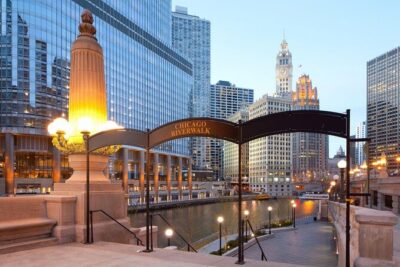


Chicago Architecture Center River Cruise aboard First Lady
Read our review →
Architecture River Cruise Skip-the-Ticket Line
Read our review →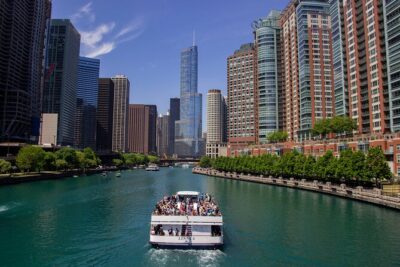
Chicago River 45-Minute Architecture Tour from Magnificent Mile
Read our review →

45-Minute Family-Friendly Architecture River Cruise
Read our review →Browse the lists this tour appears in