
Reviewed · CHICAGO ARCHITECTURE TOURS
Chicago: History and Architecture Guided Kayak Tour
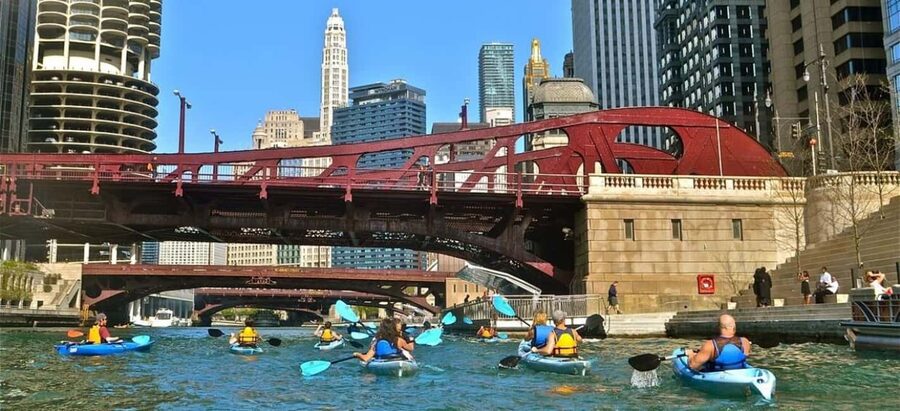
Chicago’s river is the best place to understand how the city works. From a kayak, you see the downtown towers from water level, pass beneath iron bridges, and learn why the river was engineered to flow in reverse. The city feels less like a collection of buildings and more like a machine built around a waterway.
I like the small six-person group, which gives the guide room to explain the river without shouting over a crowd. I also like the mix of architecture, engineering, and wildlife: this is not just a paddle with a few facts added on.
The main drawback is physical. You need to paddle for two hours, and this tour is not suitable for non-swimmers or people with mobility impairments. Check the kayak weight limits before booking, especially if you plan to share a double kayak.
Key Points
- Chicago’s river runs in reverse: Learn how major engineering work changed the river’s direction and shaped the city’s growth.
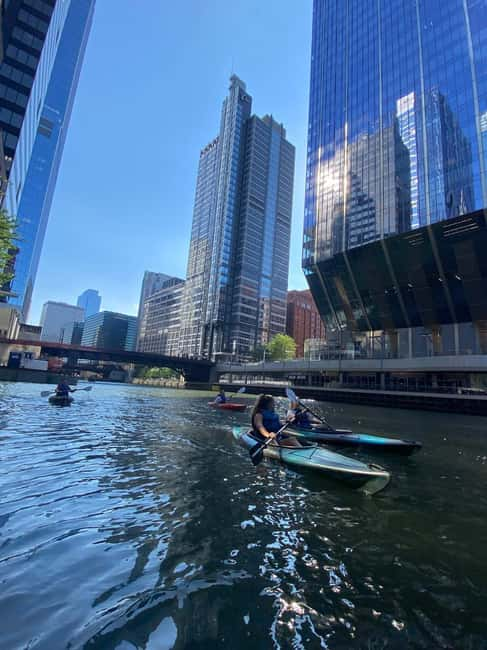
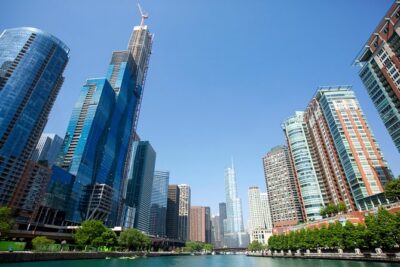
- A water-level view of downtown: Paddle through the urban canyon for a fresh angle on Chicago’s skyline and riverwalk.
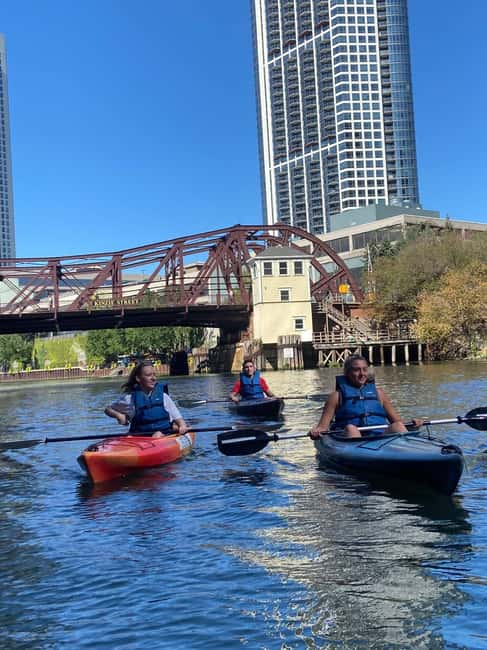
- Historic moving bridges: Pass under articulated ironwork bridges that form part of the world’s second-largest operational drawbridge system.
- Small-group guiding: The group is limited to six people, making it easier to hear the guide and ask questions.
- Two hours on the water: The pace gives you time for both paddling and commentary without taking up an entire day.
- Wildlife in the city center: Keep an eye along the riverbanks for wildlife that has returned to this downtown stretch.
Why the Chicago River Makes a Good Classroom
The Chicago River is not simply a scenic strip through the center of town. It is one of the clearest places to see how geography, industry, money, and engineering shaped Chicago.
The tour uses the river as its main story. You learn about the waterway’s part in the city’s development, the people who helped build Chicago, and the engineering decisions that altered its course. From a kayak, those subjects have a physical setting. You are not only hearing about bridges and river works. You are moving beneath them.
I find that useful for first-time visitors who want more than a skyline photo. Downtown Chicago can feel large and hard to read from street level. On the river, the buildings line both sides of you, while bridges overhead create clear markers along the route.
The guide speaks English and leads a small group. That matters on moving water, where a large group can spread out and make commentary hard to follow. With no more than six participants, you should have a better chance of hearing the explanations and asking about a building, bridge, or historical detail that catches your eye.
More kayak tours in Chicago:
- Chicago: Classic Food & Walking Tour with Free Bike or Kayak
★ 4.9 · 145 reviews - Chicago’s Lake Michigan Downtown Kayak Rental at Ohio Street Beach
★ 5.0 · 22 reviews - Chicago: 2-Hour Downtown Kayak Rental
★ 4.5 · 19 reviews
Setting Out Beneath the Downtown Towers
The tour lasts two hours and follows the central Chicago River through downtown. The exact starting point and departure time depend on availability, so you should check those details when booking and allow time to reach the launch point on your own.
Your kayak and required equipment are included. You can choose a single kayak, rated for about 275 pounds, or a double kayak, rated for about 500 pounds. Those figures matter. Check the limits before you reserve, rather than assuming a double boat will suit every pair.
The first part of the outing is about getting used to the boat and the rhythm of the river. The description does not promise a formal paddling lesson or a particular route sequence, so you should expect practical instruction from the guide as part of joining the tour, not a separate kayaking course.
This is an active sightseeing trip. You will be looking around, listening, and paddling at the same time. If you want a completely relaxed ride with no physical effort, a boat cruise would be a better match. If you like having a hand in the movement, the kayak gives you a more direct connection to the river.
Reading Chicago’s History From the Water
As you move along the river, the guide connects Chicago’s early years with the city you see today. The focus is not limited to dates and names. It includes the river’s role in Chicago’s growth and the major figures involved in developing the city.
That context gives the architecture more meaning. The high-rises are not just dramatic walls of glass and stone. They are part of a city that grew around a working waterway and then repeatedly reshaped that waterway to meet urban needs.
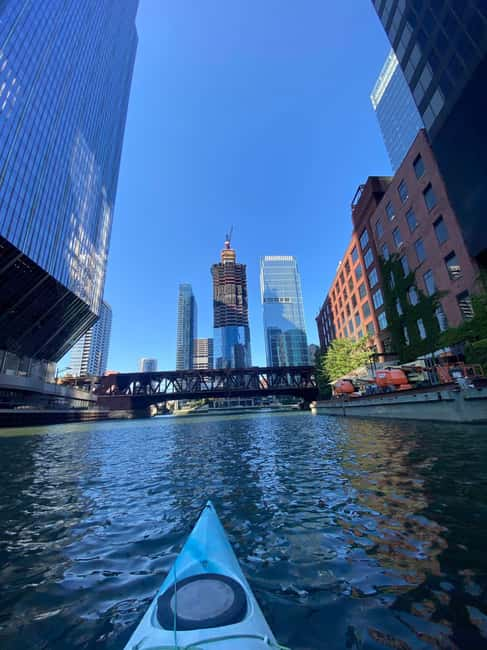
I like this approach because the river provides a natural timeline. You can look at the older bridges, the newer towers, and the renovated riverwalk promenade within one view. The changing shoreline shows how downtown has moved from heavy industrial use toward public recreation, dining, and sightseeing.
You should not expect a full survey of every architectural landmark in Chicago. The tour is centered on the river corridor, so the most useful stories will be the ones tied to what you can see from the kayak. That focus keeps the two hours manageable, though visitors seeking a detailed building-by-building architecture tour may want a separate walking tour as well.
The Engineering Story Behind the Reversed River
The most unusual fact on this trip is also one of its best teaching tools: Chicago’s river flows in reverse.
The guide explains the engineering work that changed the river’s direction and the reasons behind it. This is not a minor local curiosity. It helps explain how Chicago managed the relationship between the city, its waterways, and its growth.
From the kayak, the subject should feel especially concrete. You are sitting directly on the water being discussed, rather than hearing about it in a museum or from a sidewalk. The river becomes part of the evidence.
The tour also covers other engineering feats that shaped the downtown corridor. I would pay close attention here, because these details are easy to miss when you are walking through the city. The bridges overhead and the managed waterway below show how much of Chicago’s character comes from solving practical problems on a huge scale.
The guide’s explanations are likely to be most valuable for visitors who enjoy the why behind a place. If you mainly want photographs and little commentary, the history may feel more extensive than necessary. For many people, though, the engineering story is what turns a pleasant paddle into a worthwhile city tour.
More architecture tours in Chicago:
- Chicago Architecture River Cruise
★ 5.0 · 15,756 reviews - Chicago River 90-Minute Architecture Tour
★ 4.5 · 9,629 reviews - Chicago River: 1.5-Hour Guided Architecture Cruise
★ 4.8 · 8,046 reviews - Chicago Architecture Center River Cruise aboard First Lady
★ 5.0 · 5,536 reviews
Passing Under Chicago’s Ironwork Bridges
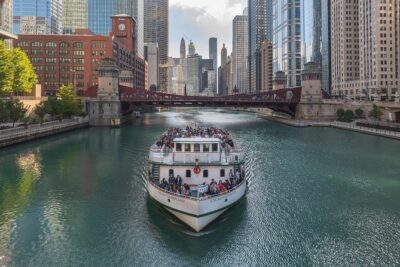
The bridges are among the clearest visual highlights. You pass under distinctive articulated ironwork structures that form part of the world’s second-largest operational drawbridge system.
That is a remarkable thing to see at close range. From the street, a bridge can seem like background infrastructure. From a kayak, you notice its underside, moving parts, supports, and relationship to the river. The low angle also makes the downtown buildings rise higher around you.
Bridge passages provide natural pauses in the tour’s story. The guide can explain how the structures operate and why they matter, while you get a view that pedestrians rarely have. The experience is still urban, not wilderness paddling, but the changing bridges keep the route visually varied.
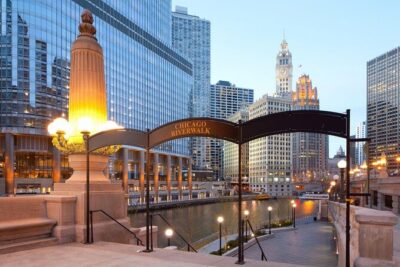
The river corridor can also be active, with people using the renovated riverwalk promenade along the shore. That public activity gives you a sense of downtown life as you pass through it. You are not separated from the city. You are part of the same central corridor, only seen from below street level.
Skyline Views, Riverwalk Activity, and Wildlife
Chicago’s skyline is most familiar from the lakefront and observation decks. The river offers a different composition. Buildings rise on both sides, bridges frame the view, and the water leads your eye through the center of downtown.
I especially like that this is a moving viewpoint. You are not stopping at one overlook and taking the standard picture. As you paddle, the angle changes constantly. A building that seems distant from the street can appear close from the river, while the riverwalk and bridge structure create foreground details.
The shoreline also brings another layer to the outing. The renovated riverwalk has become an active public space, and the tour gives you views of people enjoying the waterfront. You may also spot wildlife that has returned to this section of the river.
The word wildlife should not make you picture a quiet nature preserve. This remains the heart of downtown, with buildings, bridges, and city activity all around you. That contrast is the point. You can notice signs of nature without leaving the urban core.
Because wildlife sightings are not guaranteed, treat them as a bonus rather than the main reason to book. The surest features are the river, the bridges, the skyline, and the guide’s commentary.
What Two Hours and $64 Really Buy You
At $64 per person, this tour sits in a reasonable range for a two-hour guided downtown activity. Your price includes the live English-speaking guide, kayak, and equipment. Food and transportation to the starting point are not included.
The value comes from combining three things that would be difficult to arrange as easily on your own: access to the river by kayak, a guide who explains the city’s past and engineering, and a small group limited to six people. You are paying for a structured experience, not just boat rental time.
A self-guided rental could cost less in some situations, but it would not provide the same context. You might paddle beneath the bridges and see the skyline, yet miss why the river runs backward or how the waterway helped shape Chicago.
On the other hand, this is not a full-day excursion. Two hours makes it easier to fit around museums, meals, architecture walks, or an evening show. If you are comparing it with a longer cruise or a full architectural tour, remember that the kayak adds physical effort and personal participation.
The small group is a real part of the value. A six-person limit should make the outing more personal than a large sightseeing boat, although the experience still depends on the guide and the conditions on the day.
Who Should Book This Kayak Tour
I would recommend this for active visitors who want a new way to see downtown and enjoy learning how a city was built. It suits people who like architecture but do not want to spend all day indoors, and it works well for anyone interested in bridges, water management, and urban development.
It is also a strong choice if you have already seen Chicago from the street. The river changes the scale of the city. Familiar towers look different, and the bridges become attractions rather than things you hurry beneath.
You should think twice if you are not comfortable in a kayak or cannot swim. The tour is specifically listed as unsuitable for non-swimmers and people with mobility impairments. The weight limits also require attention: about 275 pounds for a single kayak and about 500 pounds for a double.
This is not the right pick if your ideal sightseeing means sitting still while someone else handles everything. You will need to paddle and stay engaged for the full two hours. The physical side is moderate in concept but still important in practice.
The tour may be especially useful early in a Chicago visit. Its broad explanation of the river, bridges, and downtown development can help you make sense of later walks through the city. You can also book it later, when you want a break from museums and sidewalks.
Practical Details Before You Reserve
The tour is conducted in English, and the group is limited to six participants. Equipment and the kayak are provided, while meals and transportation to the starting point are your responsibility.
Starting times vary, so check availability for the day you want. Since the activity ends at a central downtown location, you can continue exploring afterward, but the exact end point and route should be confirmed when you book.
You can cancel up to 24 hours before the activity for a full refund. The reserve-now, pay-later option lets you hold a place without paying immediately, which can help if your Chicago schedule is still shifting.
The experience has a perfect 5 rating from three verified bookings, including a July 28, 2025 booking that described it as an excellent experience. That is encouraging, but the sample is small. I would put more weight on the clear format of the tour, the six-person limit, and the strong combination of water-level views and city interpretation.
Should You Book the Chicago River Kayak Tour?
Book it if you want active sightseeing with substance. The reversed river, ironwork bridges, downtown skyline, and renewed riverwalk give the paddle a clear sense of place, while the small group keeps the guide’s commentary within easy reach.
Skip it if you are a non-swimmer, have mobility limitations, or want a passive ride. Also check the kayak weight limits before paying.
For $64, this is a good-value way to spend two hours in central Chicago. You get a closer look at the river than a standard cruise offers and a more physical connection to the city than a walk provides. The strongest reason to choose it is simple: Chicago makes more sense when you see it from the water that helped build it.
FAQ
How long is the Chicago history and architecture kayak tour?
The tour lasts two hours.
How much does the kayak tour cost?
The listed price is $64 per person.
What is included in the price?
The price includes a live English-speaking guide, a kayak, and equipment.
Is transportation to the starting point included?
No. You need to arrange your own transportation to the starting point.
How many people are in each group?
The tour is limited to six participants.
Is the tour offered in English?
Yes. The live guide conducts the tour in English.
What are the kayak weight limits?
A single kayak has a limit of about 275 pounds. A double kayak has a limit of about 500 pounds.
Can non-swimmers join the tour?
No. The experience is not suitable for non-swimmers or people with mobility impairments.
More History Tours in Chicago
- Chicago in a Day: Food, History & Architecture Walking Tour
★ 5.0 · 1,153 reviews - Chicago: Field Museum of Natural History Ticket or VIP Tour
★ 4.7 · 717 reviews - Field Museum of Natural History Admission Tickets
★ 4.5 · 489 reviews - Chicago Walking Tour: Historic Treasures of Chicago
★ 5.0 · 362 reviews
Recently added around Chicago
- Travel between Chicago O’Hare and Madison★ 4.5 · 4 reviews
- Volo Auto Museum: Admission Ticket★ 4.5 · 55 reviews
- Holiday Walking Tour: Underground Chicago via the Pedway★ 5.0 · 27 reviews
- Workers Cottages of Oldtown Triangle Walking Tour★ 5.0 · 45 reviews
- Verse Immersive Holographic Theater in Chicago★ 4.5 · 28 reviews
- Vito’s Vault Chicago finest dinner theatre speakeasy★ 5.0 · 14 reviews
- Delicious Donuts & Sweet Treats: West Loop Walking Tour★ 5.0 · 47 reviews
- Traveling Spoon Chicago-Style Deep Dish Pizza Private Online Cooking Class★ 5.0 · 4 reviews
Chicago Architecture Tours, compared.

Chicago Architecture Center River Cruise aboard First Lady
Read our review →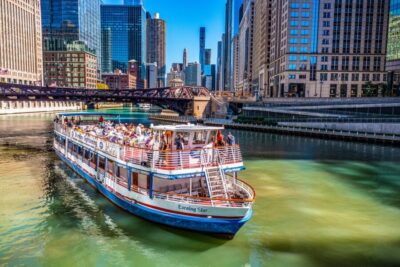
Architecture River Cruise Skip-the-Ticket Line
Read our review →
Chicago River 45-Minute Architecture Tour from Magnificent Mile
Read our review →
45-Minute Family-Friendly Architecture River Cruise
Read our review →Browse the lists this tour appears in