
Reviewed · CHICAGO ARCHITECTURE TOURS
Chicago: Prohibition-Era Culture & Architectural Treasures
Chicago’s Prohibition story comes alive here through buildings, bridges, and city streets rather than a string of old crime tales. You’ll connect organized crime, journalism, Art Deco design, and Chicago’s rapid growth while walking from the Chicago Theatre to Millennium Park.
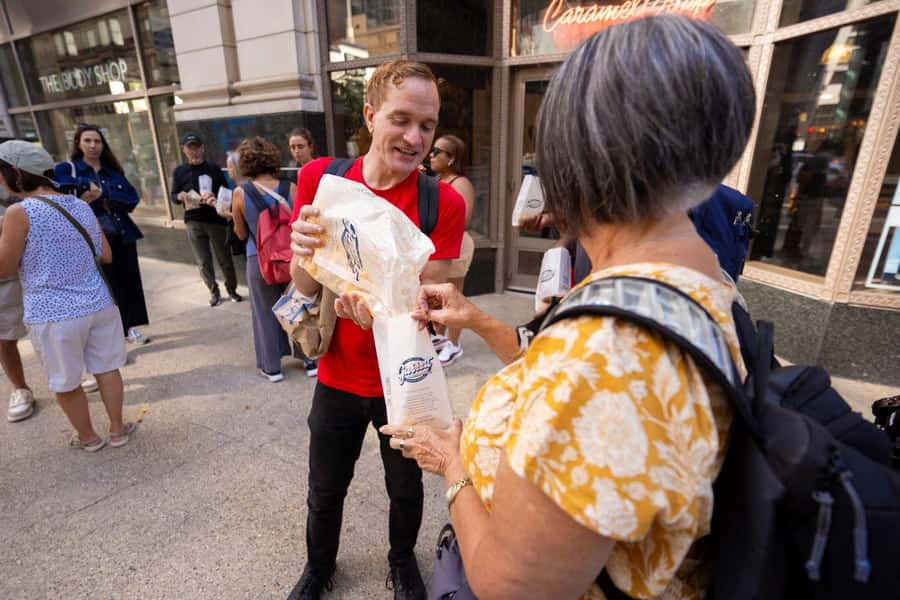
I like the small-group format, which allows guides such as Dash, Kevin, and Bash to adjust the pace and answer questions. I also like the mix of major sights and indoor stops, especially the Cultural Center and its fine architecture, plus the simple local treat of Chicago-style popcorn.
The main consideration is the distance. You’ll cover about 4.8 kilometers, or 3 miles, over 2.5 hours, and one participant found the final stretch tiring. Comfortable shoes are not optional here.
Key points to know before you book
- Chicago’s crime story is tied to its buildings: Prohibition provides the theme, but architecture and city growth get equal attention.
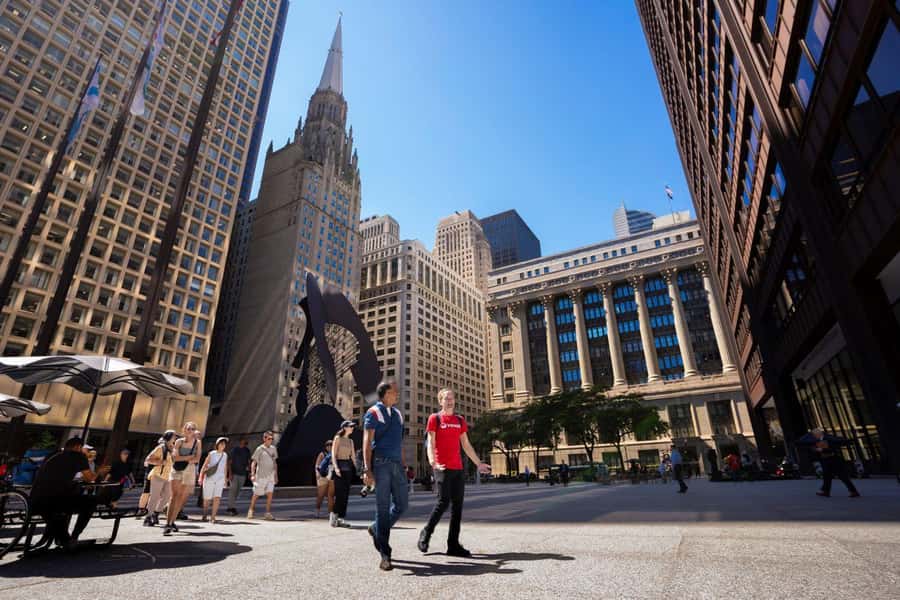
- The route links major downtown sights: You’ll see the Chicago Theatre, Riverwalk, Marina Towers, Willis Tower, the Wrigley Building, Tribune Tower, and the Bean.
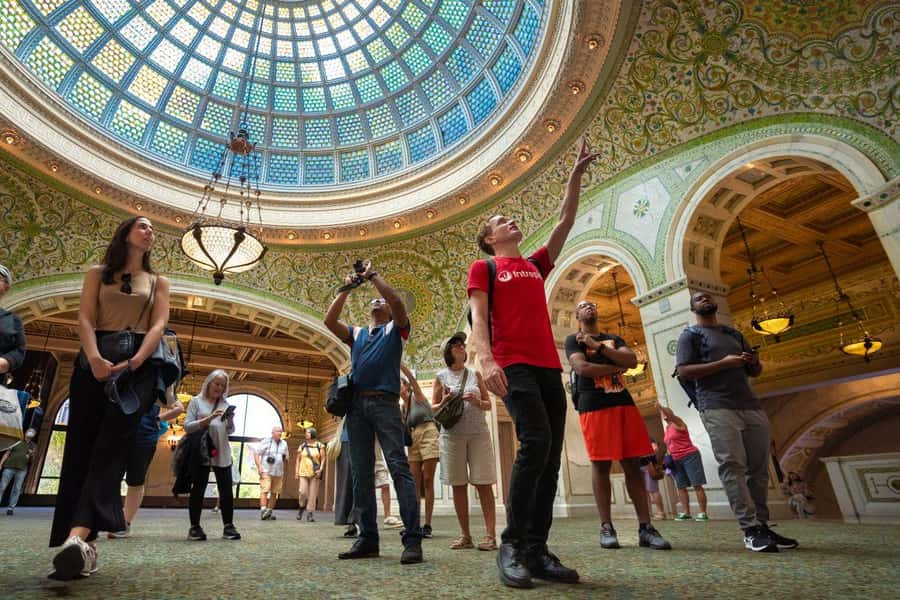
- Indoor architecture breaks up the walk: The Chicago Cultural Center offers a welcome pause and some of the tour’s most attractive interior details.
- You taste a local Chicago snack: The popcorn stop is modest but adds a pleasant local touch.
- The group remains fairly small: The maximum is 16 people, with a private option available.
- The tour runs in all weather: Rain, snow, or shine, so dress for the forecast and the season.
Why Prohibition works as a guide to Chicago
This is not simply a gangster walk. Prohibition gives the guide a way to explain how Chicago changed during a period of fast growth, political power, crime, newspapers, and ambitious construction.
You’ll hear about the forces that shaped the city while looking at the buildings themselves. That is the tour’s strongest idea: Chicago’s past is not locked in a museum. It is written into the downtown street plan, riverfront, bridges, towers, theaters, and office buildings around you.
I like this approach because it gives the familiar sights more meaning. Willis Tower is not just a tall building to photograph. The Wrigley Building and Tribune Tower are not just attractive facades. They become part of a larger story about money, media, commerce, design, and the city’s drive toward the future.
The tour is also a good choice if you want more than a crime-themed walk. Prohibition is the thread, but the content reaches into architecture and local culture. You should not book it expecting a nonstop account of gangsters and shootouts. Book it if you want a broad downtown introduction with history at its center.
More gangster tours in Chicago:
- Chicago: Gangsters and Ghosts Walking Tour
★ 5.0 · 7,155 reviews - Chicago Crime and Mob Bus Tour
★ 4.5 · 3,186 reviews - Chicago: Gangsters and Ghosts Guided Walking Tour
★ 4.7 · 1,697 reviews
Starting under the Chicago Theatre marquee
The meeting point is beneath the marquee of the Chicago Theatre at 175 North State Street. This is a practical place to begin because it is easy to identify, and the theater itself puts you in the right frame of mind for a city built around entertainment, business, and public spectacle.
Your guide introduces the story here before leading you through the downtown streets. Guides have included Dash, Kevin, Rich, Bash, Wallach, and others, and the strongest feedback centers on their ability to tell stories clearly and make the city feel personal.
That personal style matters on a walking tour. A guide who simply lists dates can make even a fine building feel flat. Here, the goal is to explain why a place matters and how it fits into Chicago’s wider story. Dash, in particular, has been praised for his smooth delivery, passion for the city, and attention to practical needs such as restrooms, snacks, and breaks.
Those details are worth noting if you are traveling with family or anyone who needs a slower pace. The itinerary is suitable for all ages and fitness levels, but the distance still requires steady walking.
The Riverwalk and the city’s vertical drama
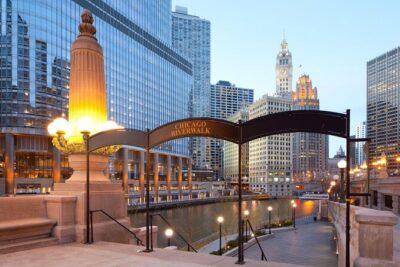
From the theater, the route heads toward the Chicago Riverwalk. This section gives you a strong sense of how Chicago layers old and new architecture close together.
You’ll learn about Marina Towers, Willis Tower, and the Jewelers Building. Each helps show a different side of the city’s growth. Marina Towers is an especially memorable shape against the river, while Willis Tower represents Chicago’s ambition to build upward. The Jewelers Building adds another piece to the city’s commercial story.
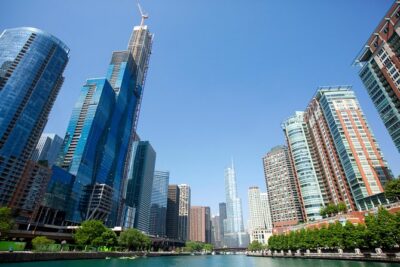
The Riverwalk is also useful because it lets you read the city from a different level. From street sidewalks, downtown can feel like a wall of facades and traffic. Near the river, the relationship between the water, bridges, and buildings becomes easier to see.
You should expect stops for explanation rather than long visits inside every building. This is a walking overview, not a private architectural inspection. The reward is the connection between several sites, while the tradeoff is that you may want more time at certain landmarks than the schedule allows.
Art Deco details at London House and Du Sable Bridge
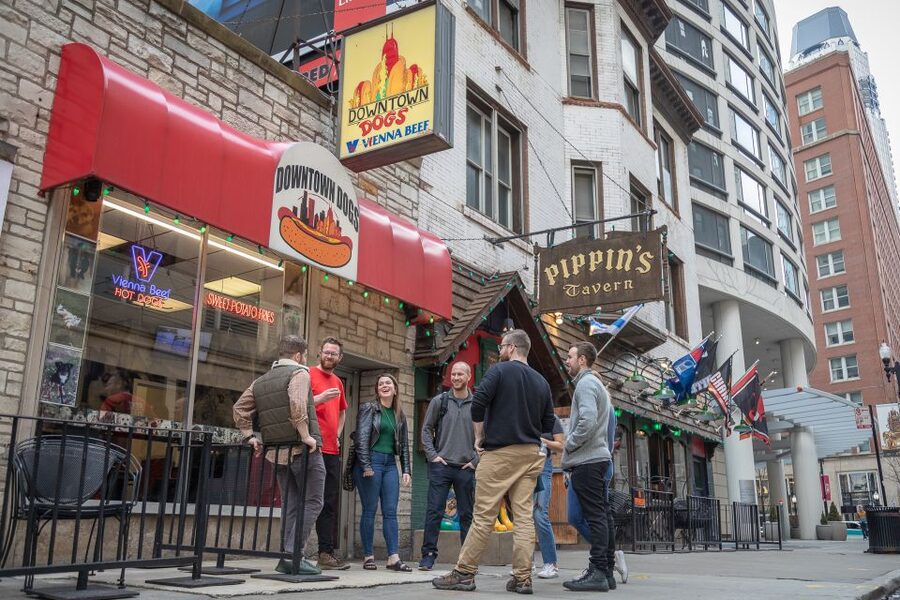
The route continues to the London House and Du Sable Bridge, where design becomes a bigger part of the story.
The London House is a useful stop for noticing Art Deco influence. Look for the geometric style and carefully planned details rather than treating the building as a quick photo stop. Your guide helps point out features that are easy to miss when you walk through the city on your own.
Du Sable Bridge adds another layer. Bridges in Chicago are not just ways to cross the river. They help explain how the river shaped movement, trade, and the city’s street pattern. The bridge also gives the guide a natural place to connect engineering, architecture, and Chicago’s growth.
This section suits you if you enjoy learning how to look at a city. You do not need a background in architecture. The guide’s job is to make the details readable, then tie them to the city’s larger story.
More architecture tours in Chicago:
- Chicago Architecture River Cruise
★ 5.0 · 15,756 reviews - Chicago River 90-Minute Architecture Tour
★ 4.5 · 9,629 reviews - Chicago River: 1.5-Hour Guided Architecture Cruise
★ 4.8 · 8,046 reviews - Chicago Architecture Center River Cruise aboard First Lady
★ 5.0 · 5,536 reviews
The Chicago Cultural Center provides an indoor pause
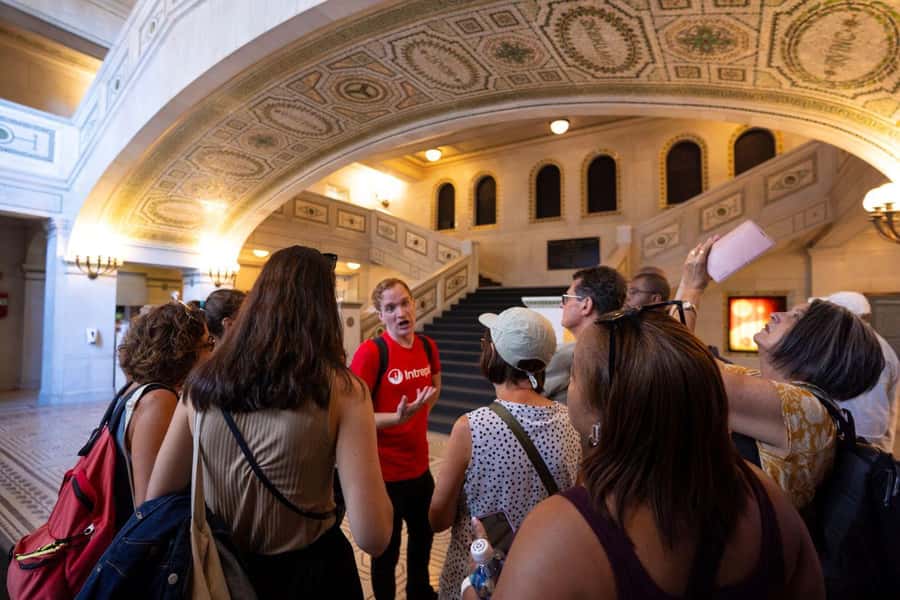
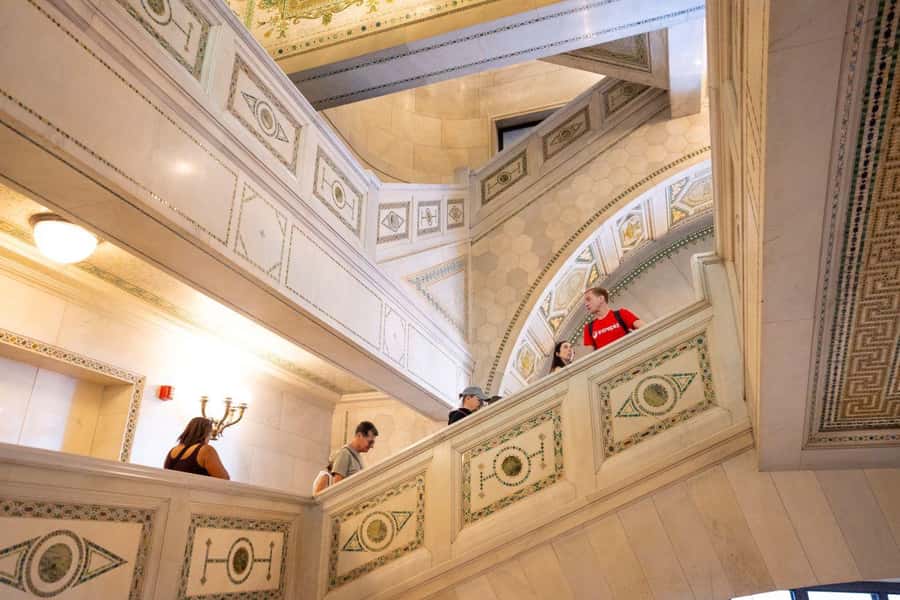
The Chicago Cultural Center is one of the most rewarding stops because it brings you inside a major public building. After walking along downtown streets, an interior visit gives your eyes and feet a break.
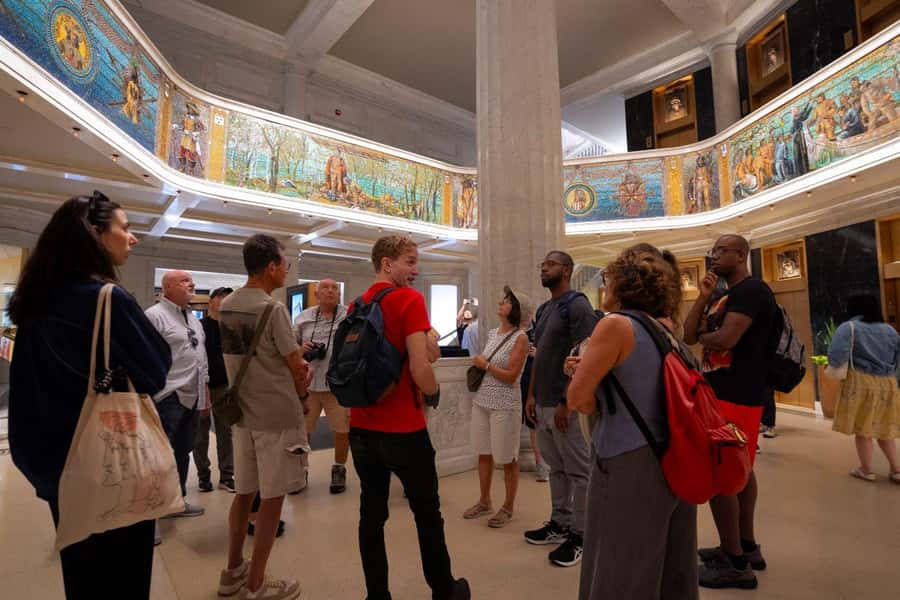
The building is known for its decorative design, and the tour uses it to show that Chicago’s architectural character is not limited to skyscrapers. You’ll have a chance to appreciate interior spaces, materials, and ornament that can be easy to overlook when you focus only on the skyline.
I particularly like this part of the route because it balances the outdoor walk. Chicago weather can change quickly, and an indoor stop adds comfort as well as content. It also helps keep the tour from feeling like a march between famous addresses.
The stop is not presented as a long museum visit, so keep your expectations in check. You are seeing the Cultural Center as part of a larger route. If its interiors interest you, you may want to return later with more time.
The popcorn tasting comes into the experience around this part of the tour. It is a small gesture, but a useful one. You get a local Chicago flavor without turning the tour into a food tour. Vegetarian options can be accommodated, but other allergies and dietary preferences cannot be handled, so contact the operator ahead of time if food is a concern.
Wrigley Building and Tribune Tower: Chicago told through media
The Wrigley Building and Tribune Tower shift the focus toward journalism and public identity.
These buildings help explain how newspapers shaped Chicago’s voice and civic life. The tour uses their architecture to connect design with the people and institutions that helped define the city. You’ll see how grand buildings could act as corporate headquarters, symbols of power, and statements about what Chicago wanted to become.
This is one reason the tour works well for first-time visitors. You get the big-name landmarks, but the guide also explains why they were built and what they represented. One local Chicago participant was surprised by how many facts about the city were still new, which is a useful sign for anyone who assumes a downtown walk will cover only obvious sights.
The route also complements a river architecture cruise. A boat gives you excellent views of the riverfront facades and the scale of the buildings. This walking tour gives you street-level context, indoor architecture, bridges, and the chance to ask questions face to face. If you have time for both, they serve different purposes.
Finishing at Millennium Park and the Bean
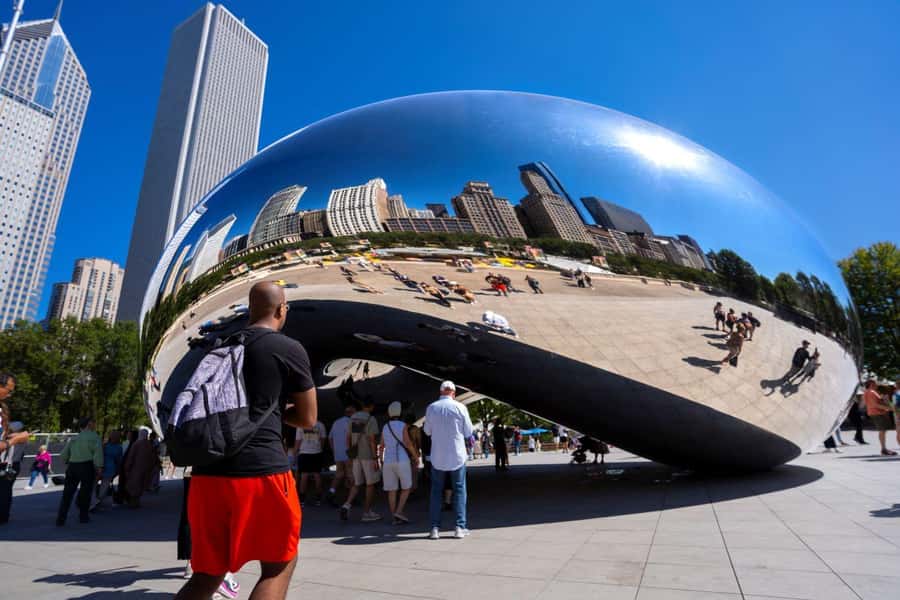
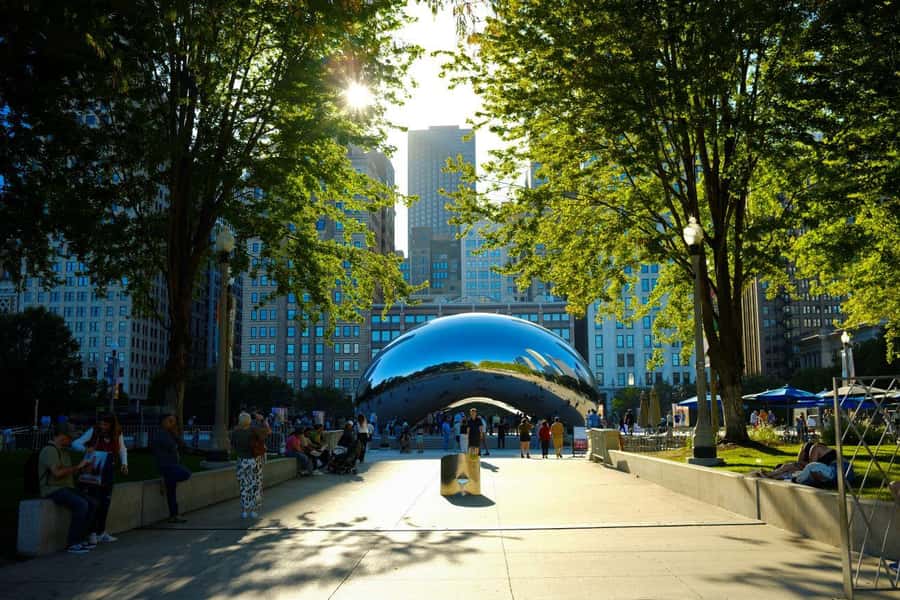
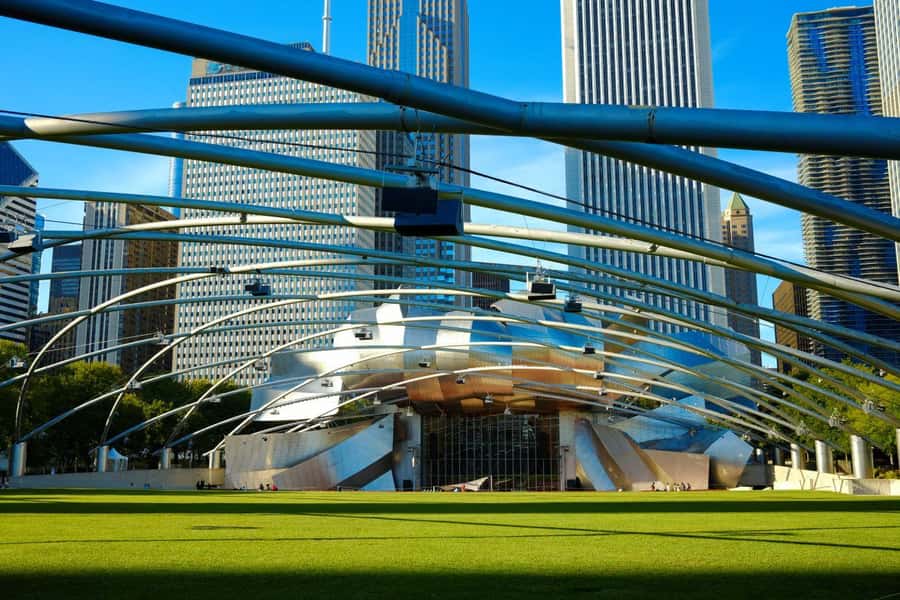
The walk ends at Millennium Park, with the Bean as the final landmark. It is a familiar stop, but ending here makes practical sense. You finish among one of Chicago’s best-known public spaces, with plenty of options for continuing your day.
The guide can offer suggestions for lunch and nearby sights. That is useful because the tour ends in a part of downtown where you may want to keep exploring rather than return to your hotel. Ask your guide for advice before the group breaks up.
The Bean can attract crowds, and the tour does not promise a private photo opportunity. Treat it as the final chapter of the route rather than the sole reason to book. The real value is the way the tour links the theater, river, towers, civic buildings, journalism landmarks, and park into one walk.
How much walking is 4.8 kilometers?
The stated route covers about 4.8 kilometers, or 3 miles. Over 2.5 hours, that is not a race, but you will be on your feet for most of the experience.
The guide may pause for explanations, photos, restrooms, or snacks, and Dash has been noted for watching the group’s needs. Still, you should plan for a full morning or afternoon of walking, not a short sightseeing loop.
Wear shoes you already trust. Bring weather-appropriate clothing, since the tour operates in rain, snow, and sunshine. A warm layer, rain protection, and water can make a major difference depending on the season.
Children under six may join free of charge, and the tour is described as child-friendly. Families should still think about the length. A child who enjoys city stories and buildings may do well, while a very young child may find the final section long.
Group size, guide style, and private tours
The small-group option has a maximum of 16 people. That is large enough to keep the price reasonable but small enough for a guide to make eye contact, answer questions, and adjust the pace.
The information also mentions a 12-person small-group format, so check the exact booking option you select. In either case, this is a more personal setup than a large coach tour.
Guide quality is central to the experience. The most praised qualities are enthusiasm, clear storytelling, patience, and a strong feel for Chicago. Dash is often singled out for making the city’s architecture and history easy to follow, while Kevin is noted for filling the walk with interesting facts and stories. Bash is praised for sharing his affection for Chicago, and Wallach for being warm and easy to talk with.
A private group is available if you want more control over the pace or are traveling with family and friends. The public small-group tour is likely the better value for most people.
Is $49 a fair price?
At $49 per person, the tour offers 2.5 hours with an English-speaking local guide, a structured route through several major downtown areas, and a popcorn tasting.
The value depends on what you want from a city tour. If you only want quick photos of the Bean and Willis Tower, you can see those places without paying for a guide. But you would miss the links between Prohibition, architecture, journalism, bridges, and Chicago’s growth.
I think the price is fair for a first visit, especially if you use the tour to get your bearings early in your stay. It gives you a working map of downtown and helps you decide which places deserve a second visit.
It is less compelling if you have already taken several architecture tours and mainly want a specialist-level examination of individual buildings. It is also not the best match if your main interest is organized crime alone. For that, a dedicated gangsters and crime tour will likely stay closer to the subject.
Free cancellation up to 24 hours before the start and a reserve-now, pay-later option make the booking less rigid. Those policies are helpful when Chicago weather or your sightseeing plan is uncertain.
Who should book this Chicago walking tour?
I would recommend it to first-time visitors who want a broad introduction to downtown, especially people interested in architecture, city history, journalism, and the way crime shaped public life.
It also suits visitors who have already booked an architecture cruise and want a street-level companion. Families can join, provided everyone is ready for the distance. The small group and guide-led pace are better for questions than a large bus tour.
You may want to skip it if you dislike walking in poor weather, have trouble covering 3 miles, or want a tour focused only on Prohibition-era criminals. You should also avoid treating the popcorn as a full food experience. It is a tasting, not lunch.
Should you book it?
Book this tour if you want Chicago’s major downtown sights explained as part of one connected story. The best parts are the guide’s personal delivery, the mix of outdoor landmarks and indoor architecture, and the chance to see how crime, media, design, and growth shaped the city.
For the best experience, schedule it early in your Chicago stay, wear reliable shoes, and leave room afterward for lunch or another downtown stop. If you are choosing between this and an architecture cruise, this walk gives you more street-level detail and personal conversation. If you want only skyline views from the river, choose the cruise instead.
At $49, it is a sensible introduction to Chicago, with enough substance to appeal to locals and repeat visitors too.
FAQ
How long is the Chicago Prohibition and architecture tour?
The tour lasts 2.5 hours and covers about 4.8 kilometers, or 3 miles, on foot.
Where does the tour begin?
It begins underneath the marquee of the Chicago Theatre at 175 N. State Street, Chicago, Illinois 60601.
Where does the tour end?
The tour ends at Millennium Park, near the Bean sculpture.
Is the tour suitable for children?
Yes. It is described as child-friendly, and children under six are permitted to join free of charge. The full route still covers about 3 miles of walking.
What happens if it rains or snows?
The tour operates in rain, snow, and sunshine. Bring comfortable shoes and clothing suited to the weather.
Is food included?
A Chicago-style popcorn tasting is included. Vegetarian options can be accommodated, but other food allergies and dietary preferences cannot be handled.
Recently added around Chicago
- Travel between Chicago O’Hare and Madison★ 4.5 · 4 reviews
- Volo Auto Museum: Admission Ticket★ 4.5 · 55 reviews
- Holiday Walking Tour: Underground Chicago via the Pedway★ 5.0 · 27 reviews
- Workers Cottages of Oldtown Triangle Walking Tour★ 5.0 · 45 reviews
- Verse Immersive Holographic Theater in Chicago★ 4.5 · 28 reviews
- Vito’s Vault Chicago finest dinner theatre speakeasy★ 5.0 · 14 reviews
- Delicious Donuts & Sweet Treats: West Loop Walking Tour★ 5.0 · 47 reviews
- Traveling Spoon Chicago-Style Deep Dish Pizza Private Online Cooking Class★ 5.0 · 4 reviews
Chicago Architecture Tours, compared.

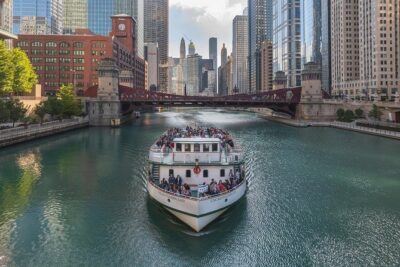
Chicago Architecture Center River Cruise aboard First Lady
Read our review →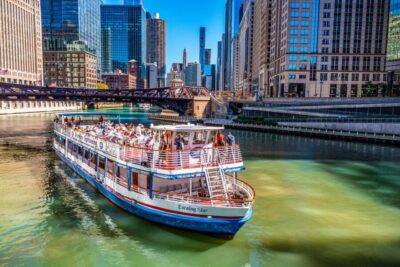
Architecture River Cruise Skip-the-Ticket Line
Read our review →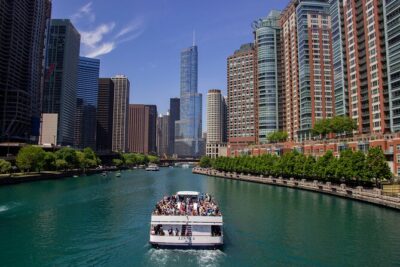
Chicago River 45-Minute Architecture Tour from Magnificent Mile
Read our review →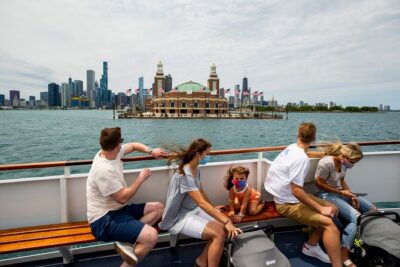
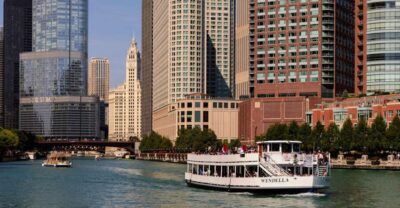
45-Minute Family-Friendly Architecture River Cruise
Read our review →Browse the lists this tour appears in