

Reviewed · CHICAGO ARCHITECTURE RIVER CRUISES
Chicago Riverwalk Self-Guided Walking Tour
Chicago’s Riverwalk is one of the best places to understand the city quickly. In a little under two hours, this self-guided audio tour takes you past grand bridges, famous towers, memorials, and working pieces of Chicago’s riverfront. The stories give you a reason to look up, not just a route to follow.
I like the offline GPS maps, which remove the worry of weak signal along the river. I also like the lifetime access: pay $14.99 once and use the tour on later visits, at your own pace, without chasing a guide or joining a fixed group.
The main drawback is that this is an app, not a live walking tour. You need to download it before setting out, bring your own headphones, and keep your phone ready. The audio can also move on before you have finished taking photos if you stop for too long.
Key points to know before you go
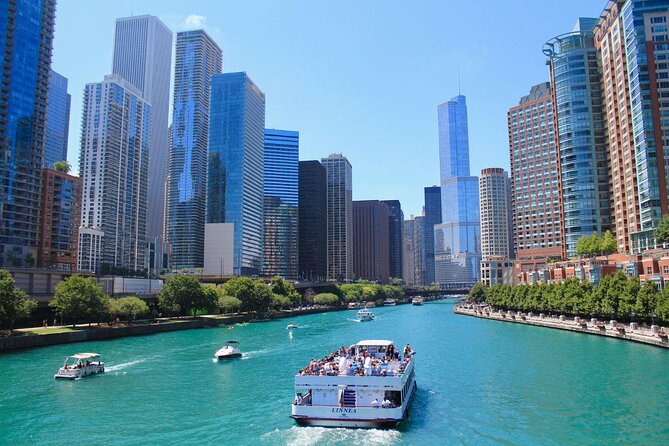
- Twelve major sights in one riverfront route: See the Wrigley Building, DuSable Bridge, Marina Towers, Merchandise Mart, Tribune Tower, NBC Tower, and more.
- Lifetime access with no expiry: Use the tour on this visit, on a later Chicago trip, or more than once.
- A flexible one-to-two-hour walk: Pause for photos, stop for food, take side trips, or split the route across several days.
- Offline navigation matters: Download the tour over a strong Wi-Fi or cellular connection before reaching the starting point.
- Best for independent walkers: You choose the pace and start time, but you will not have a person waiting to lead you.
- Good value for couples: Two people can share one tour by using split headphones, while each booked traveler can use the password on a separate device.
What this Chicago Riverwalk tour really offers
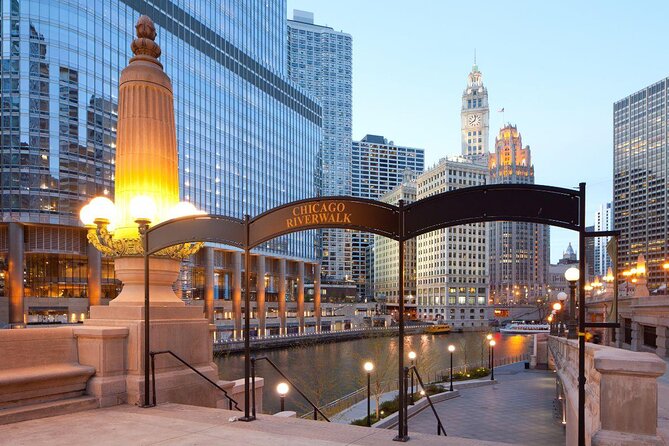
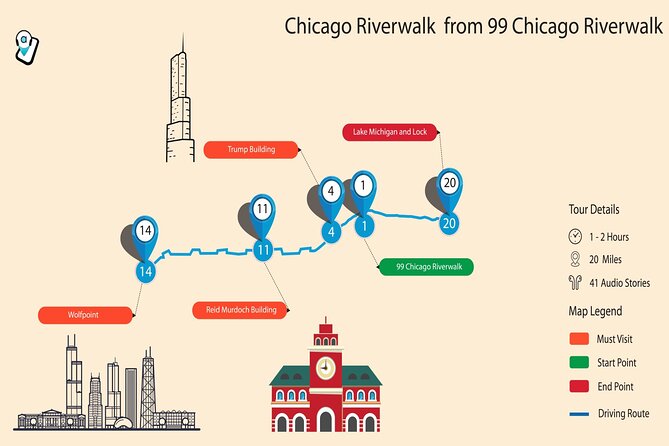
This is less a formal tour and more a moving audio guide for one of Chicago’s most interesting public spaces. You begin at 99 Chicago Riverwalk and finish at the River Esplanade near 60611. The route links twelve stops, with about five minutes of suggested audio at each one.
That does not mean you will finish in exactly an hour. Allow one to two hours for the walk, depending on how often you stop, take pictures, read signs, or explore nearby. The Riverwalk itself invites pauses, and you should not rush simply to keep the audio moving.
The app uses your location to begin each story as you reach the right point. That hands-free approach is useful when you are crossing a bridge or trying to take in a tall building. Still, keep one ear aware of your surroundings, especially near streets, bridges, and crowded paths.
The route is offered in English. The narrator’s name is not provided, but the tour includes a polished voice, extra stories, and automatic playback. If one subject catches your attention, you can listen beyond the basic stop rather than leaving the subject behind.
More architecture river cruises in Chicago:
- Chicago Architecture River Cruise
★ 5.0 · 15,756 reviews - Chicago River 90-Minute Architecture Tour
★ 4.5 · 9,629 reviews - Chicago River: 1.5-Hour Guided Architecture Cruise
★ 4.8 · 8,046 reviews
Starting at the Wrigley Building and DuSable Bridge
The Wrigley Building makes a strong opening stop. Its pale terra-cotta exterior, huge clock tower, and decorative detail give you an immediate lesson in Chicago’s love of grand commercial architecture. The building takes its name from William Wrigley Jr., whose fortune came from chewing gum.
The audio also points you toward the Hotel Intercontinental, which contains an observatory. The information provided does not include admission details for that observatory, so treat it as a nearby feature rather than part of your included tour. The walking tour itself has no attraction tickets or reservations built in.
From there, you reach the Michigan Avenue Bridge, also called the DuSable Bridge. It is attractive enough to deserve a close look, but the audio adds another layer by explaining the history behind the flags displayed on the bridge.
This is a good example of what the tour does best. You already have something impressive in front of you. The narration gives you a reason to notice details that might otherwise pass by.
Looking up at the glass tower on North Wabash
At 401 North Wabash Avenue, the scale changes. The enormous glass tower rises 1,399 feet and contains 98 stories. The narration links its construction method to the Burj Khalifa in Dubai, now the world’s tallest building.
You do not need to enter anything here. The value is in seeing how Chicago’s older masonry buildings, bridges, and modern towers fit together along a relatively short walk. Bring a wide-angle camera setting if you want the whole building in one frame, though that suggestion is practical rather than part of the tour itself.
This stop also shows why a walking tour works well in Chicago. The skyline is not a distant postcard. Buildings appear above you, between bridges, and at changing angles as you move along the river.
A quiet pause at the Vietnam Veterans Memorial
The Vietnam Veterans Memorial provides a change of mood. It consists of a sunken rectangular pool and fountain honoring Illinois residents who died in the Vietnam War.
After several stops focused on engineering, business, and architecture, this memorial asks for a quieter pause. The setting is simple, and the audio treats it as a serious place rather than just another photo stop.
You may want to lower the volume here and take a moment before moving on. The tour is flexible, so there is no need to hurry toward the next automatic story.
More self guided tours in Chicago:
- Medieval Torture Museum Ticket with Audio Guide and Ghost Hunting
★ 5.0 · 962 reviews - Chicago Self-Guided Audio Tour
★ 4.0 · 9 reviews - Chicago’s Gold Coast Hidden History: A Self-Guided Audio Walk
★ 4.5 · 7 reviews - Chicago Scavenger Hunt Adventure
★ 5.0 · 5 reviews
Marina Towers and the city within the city
Marina Towers are among the route’s most memorable pieces of architecture. Their rounded forms are often compared to giant corn cobs, and the twin towers are easy to recognize from the river.
The audio explains that the complex was designed as a city within a city. Its facilities include a theater, gym, pool, ice rink, bowling alley, 360-degree roof deck, and marina. That list helps you see the towers as more than unusual apartment buildings. They reflect an ambitious idea about urban living, with daily needs contained in one large complex.
This is likely to be one of your favorite stops if you enjoy unusual design. It is also a place where the narration adds useful context that a quick walk-by would not provide.
Why the Dearborn Street Bridge matters
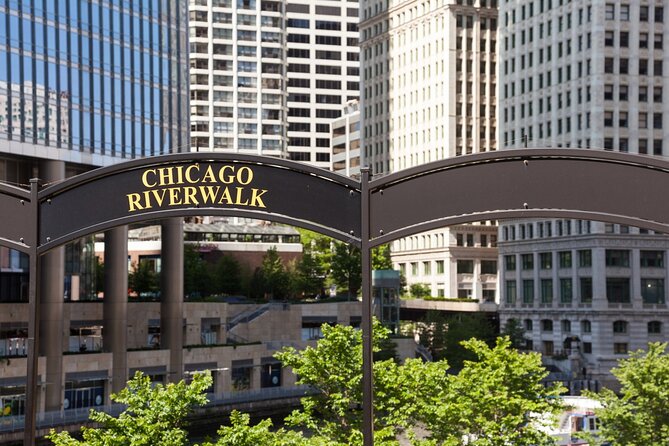
The Dearborn Street Bridge is a newer bridge by Chicago standards, built in 1962. Its story is less about decorative detail and more about public reaction to an earlier mistake.
The audio explains that the bridge replaced a badly planned structure that local residents strongly disliked. That gives the crossing a human angle. Cities are not shaped only by architects and engineers. Public opinion can force change too.
As you walk, watch for the difference between the bridge’s practical role and the more ornamental structures nearby. The tour connects those changes over time without requiring you to visit a museum or read a long guidebook.
A glimpse of older Chicago at 325 North La Salle Drive
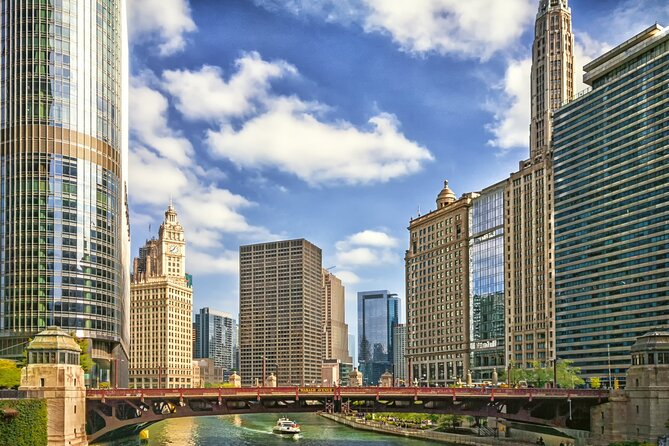
The building at 325 North La Salle Drive was constructed in 1914 and is now home to the Encyclopedia Britannica headquarters. Beside newer towers, it may seem modest at first.
That is precisely why it earns a stop. Chicago’s story is not only about the tallest building or the newest design. Older offices help show how the riverfront developed before the current skyline took shape.
I appreciate this kind of stop because it slows down the usual skyscraper checklist. You get a chance to compare age, scale, and materials rather than photographing only the biggest structure in sight.
The huge Merchandise Mart
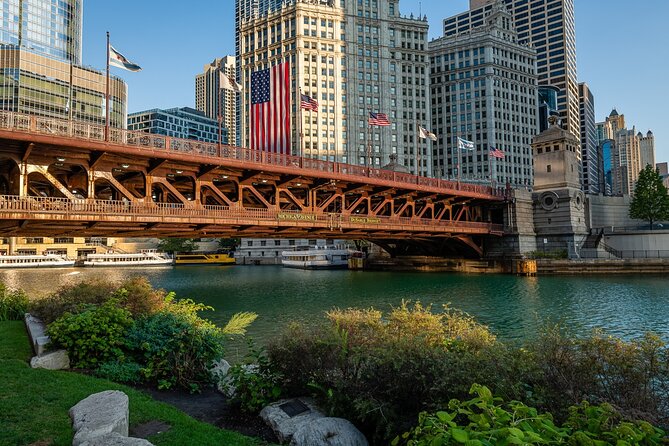
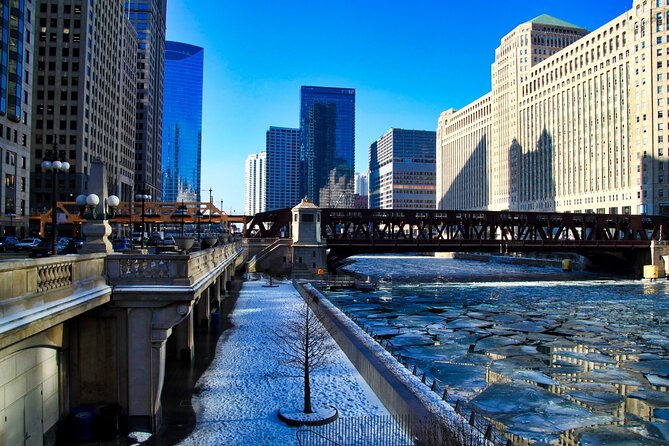
The Merchandise Mart is hard to grasp from a distance. The art-deco building covers four million square feet and has its own ZIP code.
The sheer size is the main fact, but the audio gives you a way to place the building in Chicago’s commercial story. It is not simply a large old structure. Its scale reflects the city’s historic role as a center for trade, design, and business.
Plan a little extra time here if you enjoy architecture. The supplied tour details identify the building and its size, but they do not include entry access or interior tickets. You should consider the Mart an exterior stop unless you arrange anything else separately.
The McCormick Bridgehouse and Chicago River Museum
The McCormick Bridgehouse and Chicago River Museum is the route’s clearest museum stop. It covers the river and its importance to Chicago, then adds a practical reward: bird’s-eye views from the upper floor.
Entry is not included, and no admission price is provided. Check current opening details if you want to go inside. The audio tour can still introduce the building and museum from the outside, so you are not required to add an indoor visit.
This is a useful optional break in the walk. You can pause the app, visit the museum if open, and return to the route when you are ready. That freedom is one of the better reasons to choose a self-guided format.
Tribune Tower and the hunt for beauty
Tribune Tower is one of the route’s most decorative stops. Its neo-Gothic design came from a competition held by the Chicago Tribune for its 75th anniversary. The newspaper wanted a new headquarters that would be the most beautiful and distinctive office building in the world.
The building’s pointed details and dramatic outline make the competition story easy to understand. This is not a plain office block with a famous name attached. Its appearance was central to the original goal.
The narration helps you look at the tower with that contest in mind. Instead of asking only how tall it is, you can ask what its designers wanted people to feel when they saw it.
New construction at the William P. Fahey Bridge
The next stop is the William P. Fahey Bridge, also identified as the Columbus Drive Bridge. It is Chicago’s newest river-spanning bridge on this route.
Its value is comparison. Earlier stops show older bridges, decorative structures, and replacements shaped by public frustration. This bridge points toward changing construction methods and a different approach to moving people across the river.
The tour is strongest when these stops are viewed as a sequence. You are not just visiting twelve unrelated locations. You are watching Chicago alter its riverfront over time.
NBC Tower and the final art-deco flourish
NBC Tower closes the route with another recognizable skyscraper. Its design was modeled after 30 Rockefeller Center in New York City, making it another clear example of art-deco style.
The building also has a pop-culture connection. It was once the recording location for the Jerry Springer Show and the Steve Harvey Show. That detail gives the final stop a lighter note after the memorial and the more technical bridge stories.
You finish at the River Esplanade. Since the tour is self-guided, the end is not a formal gathering point. You can continue exploring, stop for food, or simply leave the riverfront when the last story ends.
Price, access, and the practical details
At $14.99 per person, the tour is inexpensive compared with a live private walk. The strongest value comes from its lifetime access with no expiry. You can use it on future Chicago trips, repeat sections, or split the route over more than one day.
Couples may save by sharing one tour with split headphones. If you book multiple travelers, the same password can be used on the same number of devices as people booked.
Download the separate Action Tour Guide app before you arrive. The password comes by email and text, so search for audio tour if you do not see the setup message quickly. The tour must be downloaded while you have a strong Wi-Fi or cellular connection. Once it is on your phone, it works offline.
Use an iPhone running iOS 15 or later, an Android device running version 9 or later, or an iPad or tablet with GPS and cellular capability. Bring earbuds or headphones. No one meets you at the start, and there is no live guide to solve a setup problem at the river.
You can cancel for a full refund up to 24 hours before the scheduled start time. Cancellations or changes made within 24 hours are not refunded or accepted.
Who should choose this walk
I would recommend it to independent visitors who like architecture, city planning, bridges, and short historical stories. It also suits families or couples who prefer breaks and photo stops over a fixed group schedule.
The tour works well for a first visit because it links several major sights in one compact area. It also works for repeat visitors who want a reason to look more closely at familiar buildings.
You may prefer a live guide if you want questions answered on the spot, personal recommendations, or a strong sense of group energy. You should also skip it if you do not want to manage an app, headphones, battery use, and your own timing.
Should you book the Chicago Riverwalk tour?
Book it if you want a low-cost, flexible way to connect Chicago’s bridges and skyline with short audio stories. The architecture and riverfront setting receive the clearest praise, and the route includes enough variety to keep the walk from feeling like a list of office towers.
The best practical tip is simple: download everything before you go, start with a full phone battery, and allow more than the bare audio time. At $14.99, lifetime access makes this a good buy for a Chicago visit, especially if you may return. Choose a live walking tour instead only if personal interaction matters more to you than freedom and price.
FAQ
How much does the Chicago Riverwalk Self-Guided Walking Tour cost?
The tour costs $14.99 per person.
How long does the walking tour take?
The estimated duration is one to two hours, depending on your walking pace and how long you stop for photos, breaks, or side trips.
What language is the tour offered in?
The audio tour is offered in English.
Where does the tour begin and end?
It begins at 99 Chicago Riverwalk, Chicago, Illinois 60601, and ends at the River Esplanade, Chicago, Illinois 60611.
Is a live guide included?
No. This is a private, self-guided activity. No one meets you at the starting point, and your audio begins through the app when you reach the first story location.
Does the tour work without phone service?
Yes. You must download the tour while connected to strong Wi-Fi or cellular service. After downloading, the offline maps and audio work without cellular or Wi-Fi access.
What device do I need?
The recommended devices are an iPhone with iOS 15 or later, an Android device with version 9 or later, or an iPad or tablet with GPS and cellular capability.
Are attraction tickets or reservations included?
No. Attraction passes, entry tickets, and reservations are not included.
Can I cancel the tour for a refund?
Yes. You can receive a full refund if you cancel at least 24 hours before the scheduled start time. Cancellations within 24 hours are not refunded.
More Walking Tours in Chicago
- Chicago: Gangsters and Ghosts Walking Tour
★ 5.0 · 7,155 reviews - Chicago Favorites Ultimate Food and Walking Tour
★ 5.0 · 1,962 reviews - Chicago: Gangsters and Ghosts Guided Walking Tour
★ 4.7 · 1,697 reviews - Chicago in a Day: Food, History & Architecture Walking Tour
★ 5.0 · 1,153 reviews
Recently added around Chicago
- Travel between Chicago O’Hare and Madison★ 4.5 · 4 reviews
- Volo Auto Museum: Admission Ticket★ 4.5 · 55 reviews
- Holiday Walking Tour: Underground Chicago via the Pedway★ 5.0 · 27 reviews
- Workers Cottages of Oldtown Triangle Walking Tour★ 5.0 · 45 reviews
- Verse Immersive Holographic Theater in Chicago★ 4.5 · 28 reviews
- Vito’s Vault Chicago finest dinner theatre speakeasy★ 5.0 · 14 reviews
- Delicious Donuts & Sweet Treats: West Loop Walking Tour★ 5.0 · 47 reviews
- Traveling Spoon Chicago-Style Deep Dish Pizza Private Online Cooking Class★ 5.0 · 4 reviews
Chicago Architecture River Cruises, compared.

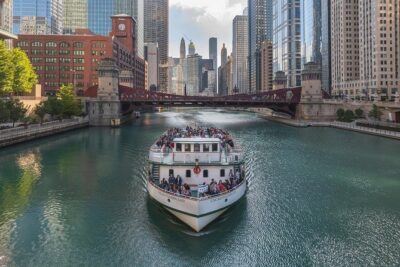
Chicago Architecture Center River Cruise aboard First Lady
Read our review →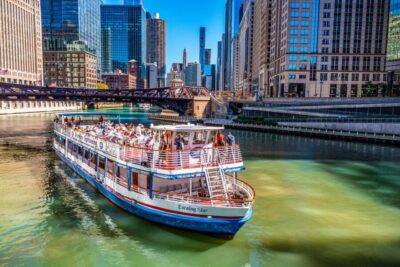
Architecture River Cruise Skip-the-Ticket Line
Read our review →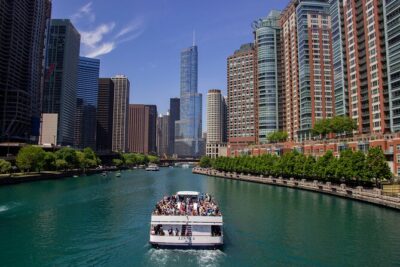
Chicago River 45-Minute Architecture Tour from Magnificent Mile
Read our review →
45-Minute Family-Friendly Architecture River Cruise
Read our review →
Browse the lists this tour appears in