
Reviewed · CHICAGO ARCHITECTURE TOURS
Chicago Walking Tour: Modern Architecture
Chicago’s modern architecture tells a lively story of steel, concrete, city planning, and changing urban life. On this 90-minute walking tour, you’ll move through the Loop and see buildings by Mies van der Rohe, Bertrand Goldberg, and other important designers, while your guide explains the ideas behind the facades.
I like the small group size, capped at 15, and the chance to begin inside the Chicago Architecture Center with its 4,000-building city model. I also like the price: $35 gets you a certified guide and admission to the CAC galleries. The main consideration is focus. If modern architecture is not your thing, the tour may feel a little repetitive, and some guides set a brisk walking pace.
Key things to know before you go
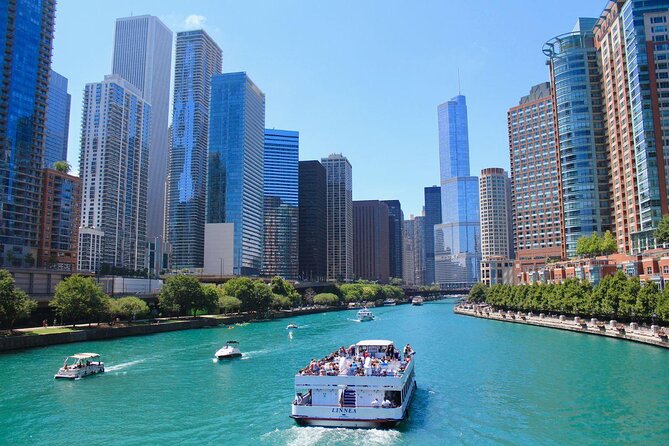
- See Chicago’s later architectural chapters: The route focuses on modern, postmodern, and newer buildings rather than the city’s earliest skyscrapers.
- Start with the giant city model: The Chicago Architecture Center’s 4,000-building model helps you understand how the Loop fits together.
- Look closely at the Daley Center: Its unpainted Cor-Ten steel and the famous Chicago Picasso give this stop plenty to discuss.
- Meet Marina City’s urban experiment: Bertrand Goldberg designed the twin towers as part of an effort to bring middle-class residents back downtown.
- Expect a personal tour: Groups are limited to 15, so you can usually hear the guide and ask questions without fighting through a crowd.
- Plan for outdoor conditions: One guide kept the commentary lively despite bitter cold, but you should still dress for the season.
Why Chicago’s newer buildings deserve a walking tour

Chicago often gets described through its early skyscrapers and Prairie School architects. This walk shifts your attention to the decades that followed, when architects tested new materials, new forms, and new ways to live in the center of a major American city.
You’ll look at buildings rather than simply pass them. That difference matters. A glass or steel tower can seem plain from a distance, yet its structure, materials, and place in the street may reveal a larger argument about how cities should work.
Your guide provides the missing context. The commentary covers designers such as Mies van der Rohe and Bertrand Goldberg, along with buildings many people hurry past on their way to work or shopping. Guides including Marcia, Kathleen, Donna, and Ollie have led versions of this experience, and the strongest guides combine architectural facts with an easy, personable style.
The tour is not a broad survey of all Chicago architecture. It has a clear modern focus, so you should book it because you want to understand postwar and later design. If your main interest is Romanesque stonework, Frank Lloyd Wright, or the city’s earliest tall buildings, another route may suit you better.
More architecture tours in Chicago:
- Chicago Architecture River Cruise
★ 5.0 · 15,756 reviews - Chicago River 90-Minute Architecture Tour
★ 4.5 · 9,629 reviews - Chicago River: 1.5-Hour Guided Architecture Cruise
★ 4.8 · 8,046 reviews
Beginning at the Chicago Architecture Center
The tour starts at the Chicago Architecture Center, at 111 E Wacker Drive. You spend about 10 minutes here, with admission included.
The center’s 4,000-building scale model gives you an immediate sense of Chicago’s size and density. It is useful before heading outside because you can see how the central streets, towers, river, and surrounding districts relate to one another. The model also turns architecture into something you can read as a citywide pattern rather than a collection of isolated buildings.
The CAC includes galleries and an award-winning store. You are not paying an extra admission fee for the galleries as part of this tour. That makes the indoor opening more than a meeting point, especially if you arrive early and want a little time to orient yourself.
Do not expect a long museum visit during the 90-minute outing. The center is the launch point, not the main event. The real value comes from connecting what you see inside to buildings in the streets around you.
Three Loop towers: Prudential, Aon, and Inland Steel
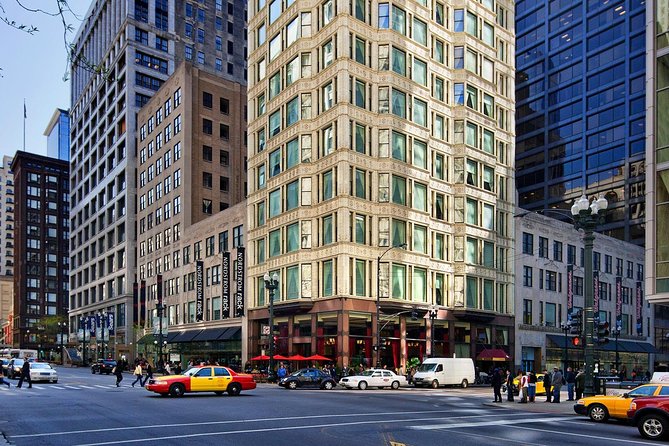
The route takes in the Prudential Building, Aon Center, and Inland Steel Building. The supplied schedule does not assign a separate time to each one, so your guide may discuss them as part of the walking sections rather than as long formal stops.
These buildings help show different approaches to modern commercial design. You’ll compare their height, materials, shape, and role in the Loop. A guide can point out details that are easy to miss when you are looking only upward at the skyline.
The Prudential Building made a particularly strong impression on one participant, which makes sense for visitors who want a memorable first example of modern Chicago. The Aon Center gives you another major downtown tower to consider, while the Inland Steel Building adds a different chapter to the story.
This part of the walk may feel more observational than theatrical. There is no promise of entering each building, and the tour centers on outside views and explanation. Come ready to listen, look up, and compare rather than expecting a series of interior visits.
The Daley Center and Chicago Picasso
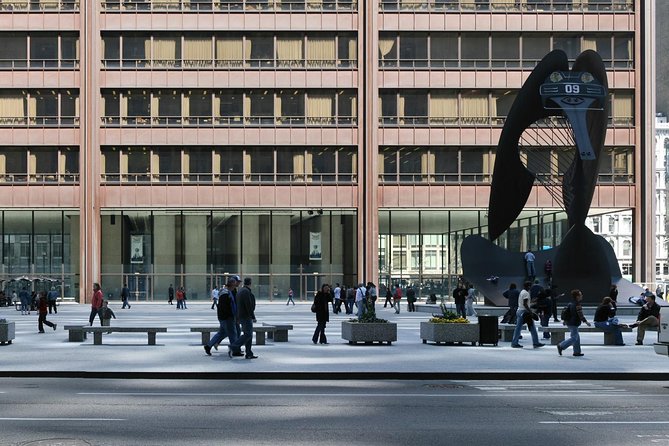
The Richard J. Daley Center receives about 15 minutes. This is one of the most useful stops because it combines architecture, materials, public space, and art in one plaza.
The building was among the first to use unpainted Cor-Ten steel as a major exterior material. The metal changes appearance as it weathers, giving the building a distinctive surface that differs from the polished glass and stone often associated with downtown towers.
Your guide also discusses the Chicago Picasso in the plaza. The artwork adds a public-art question to the architectural one: how should a large, abstract work function in the middle of a working civic center? Even if you are more interested in buildings than sculpture, the Picasso helps you see the plaza as part of the design rather than leftover space around a tower.
I like this stop because it gives the tour a human and civic angle. You are not just studying a facade. You are considering how people gather, work, cross the square, and respond to bold design in daily life.
More walking tours in Chicago:
- Chicago: Gangsters and Ghosts Walking Tour
★ 5.0 · 7,155 reviews - Chicago Favorites Ultimate Food and Walking Tour
★ 5.0 · 1,962 reviews - Chicago: Gangsters and Ghosts Guided Walking Tour
★ 4.7 · 1,697 reviews - Chicago in a Day: Food, History & Architecture Walking Tour
★ 5.0 · 1,153 reviews
AMA Plaza and the Mies connection
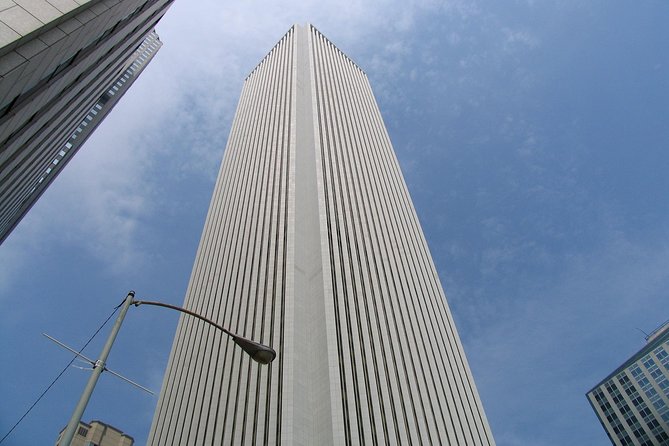
The walk continues to AMA Plaza, once home to the office of Mies van der Rohe. The supplied details do not specify a long stop here, so expect the guide to discuss the building during the route.
Mies is central to Chicago’s modern architectural story. His work is often linked with careful structure, disciplined lines, and a restrained use of materials. At AMA Plaza, the guide can place the building within that larger design approach and explain its connection to the architect’s Chicago career.
This is the sort of stop where a good explanation matters more than a long viewing period. Without context, a glass-and-steel office building can blur into the rest of the Loop. With the right remarks, you begin to notice proportion, repetition, and the relationship between the structure and the street.
If you enjoy architectural vocabulary and design history, this section may be one of your favorites. If you prefer dramatic ornament or interiors, it may feel spare. The tour asks you to appreciate precision rather than decoration.
Marina City, Bertrand Goldberg’s bold experiment
Marina City receives about 15 minutes and gives the tour its most unusual residential example. Designed by Bertrand Goldberg, this mixed-use complex was planned as an urban experiment.
Its goal was to help draw middle-class Chicagoans back to the city after more than a decade of suburban migration. That social purpose makes Marina City more interesting than a striking pair of towers. The project reflects a question that still matters: can a downtown offer enough homes, services, and daily activity to keep people living close to work and culture?
Your guide explains the complex as part of that attempt to build a fuller urban community. You can consider how residential and commercial uses were brought together, rather than treating the building as a sculpture viewed from the sidewalk.
Marina City is also a good reminder that modern architecture was not only about office towers. It shaped homes and city life, too. I would give this stop extra attention if you are interested in planning, housing, or the changing relationship between downtown Chicago and its suburbs.
The tour does not promise entry into Marina City or a private view from inside. The experience is built around exterior observation and the guide’s explanation. Still, the story gives the stop real substance, even if you are not already an architecture specialist.
The Apple Store on Michigan Avenue
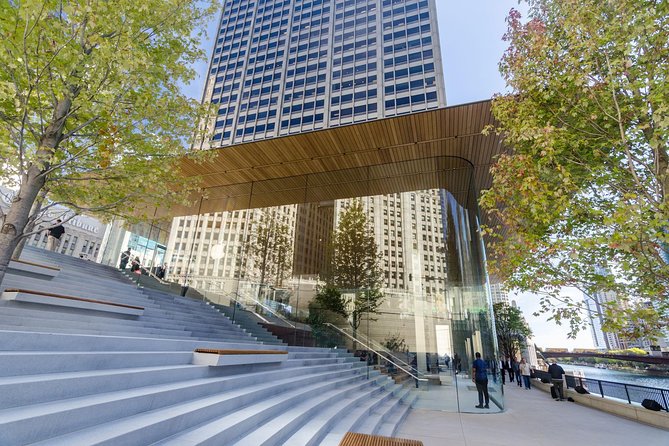
The route also includes a view of the Apple Store on Michigan Avenue. This brings the walk into a newer architectural moment and shows how contemporary retail design can join a famous shopping street.
The stop creates a useful contrast with the older modernist buildings. You can compare the store’s cleaner, more open visual approach with the heavier steel, concrete, and glass forms seen earlier in the walk.
The itinerary does not list a separate visit inside the store, so treat it as an exterior viewing point. It works best as a closing example of how Chicago continues to update its public spaces and commercial architecture.
How the 90 minutes feel on foot
The listed duration is about 1 hour and 30 minutes. The timed stops account for roughly 40 minutes, leaving the rest for walking between sites, commentary, questions, and the unscheduled building views.
That pacing gives the tour room to cover several locations without turning each one into a long lecture. It also means you should wear comfortable shoes and be ready to keep moving. Kathleen, one of the guides named in the feedback, was described as walking fast, so tell your guide if you need a slower pace.
Weather matters. This is an outdoor walking experience, and one cold-weather outing remained enjoyable because the guide kept the information lively. That does not make winter clothing optional. Bring a coat, gloves, and suitable shoes when the forecast calls for cold or wet conditions.
The group limit is 15 people. That is small enough for a more direct exchange than a large city tour, though it is not a private walk. Service animals are allowed, most people can participate, and the meeting point is near public transportation. Pets are not allowed, and the tour does not provide hotel pickup, luggage storage, stroller storage, or coat check.
What the $35 price really buys
At $35 per person, this tour offers a solid value if you care about architecture and want a guide to connect the buildings. You are paying for about 90 minutes of expert narration, a small-group format, and admission to the CAC galleries.
The value is less obvious if you plan to rush through downtown on your own. You can view many of these buildings from public streets without paying. The fee makes sense because the guide supplies the background, points out overlooked details, and links separate buildings into a story about modern Chicago.
The tour’s rating is 4.8 out of 5, with 94 percent recommending it. The strongest praise centers on guides who are friendly, clear, and well informed. Donna was praised for presenting the material in architectural order, while Marcia was described as both warm and highly prepared. Ollie was noted for making the tour fun as well as informative.
There is one important caution. A participant found the modern architecture route monotonous and suggested it would suit people who are truly interested in the subject. I agree with that warning. The tour is not designed to entertain every kind of sightseeing mood. It rewards attention.
Who should book this Chicago walk?
I would recommend it to architecture buffs, city-planning students, history lovers, and anyone who wants more than a skyline photo. It also suits repeat visitors who have already seen the classic downtown sights and want to understand the buildings they passed before.
You do not need formal architectural training. The guide’s job is to explain the buildings in plain terms and place them in context. Still, you should have genuine curiosity about design because the tour spends much of its time looking, comparing, and listening.
Families may enjoy the scale model and the Picasso, but the experience is not built around games or entertainment for young children. The walking pace and subject matter may work better for older children and adults.
You should also choose this tour if you value a human guide. The strongest part is the live narration, and the quality of that narration can shape the whole outing. Guides such as Marcia, Donna, Kathleen, and Ollie have received praise for warmth and clarity, but guide assignments can vary.
You can cancel for a full refund up to 24 hours before the start time. Cancellations or changes made within 24 hours are not refunded or accepted, so check your plans before the cutoff.
Should you book it?
Book this tour if you want to understand Chicago’s modern and postmodern buildings rather than simply photograph them. The combination of the CAC model, downtown towers, the Daley Center, AMA Plaza, Marina City, and the Apple Store gives you a clear arc from mid-century ideas to newer urban design.
Skip it if you want a broad introduction to every period of Chicago architecture, a boat ride, or substantial interior access. Also skip it if you dislike brisk walking or find modernist buildings too restrained.
For the right audience, $35 is a fair price for a focused guide, a small group, and a better way to read the Loop. Bring comfortable shoes, dress for the weather, and arrive ready to look closely at buildings you might otherwise walk past.
FAQ
Where does the Chicago Modern Architecture tour begin?
The tour begins at the Chicago Architecture Center, 111 E Wacker Drive, Chicago, Illinois 60601.
How long does the tour last?
The walking tour lasts approximately 1 hour and 30 minutes.
How large is the tour group?
The tour has a maximum of 15 travelers.
What buildings and sites are included?
The route includes the Chicago Architecture Center, Prudential Building, Aon Center, Inland Steel Building, Daley Center, AMA Plaza, Marina City, and the Apple Store on Michigan Avenue. The exact itinerary may change without notice.
Is admission to the Chicago Architecture Center included?
Yes. Admission to the Chicago Architecture Center galleries is included.
Can I cancel for a refund?
Yes. You can receive a full refund if you cancel at least 24 hours before the experience begins. Cancellations or changes made less than 24 hours before the start time are not accepted, and the amount paid is not refunded.
Recently added around Chicago
- Travel between Chicago O’Hare and Madison★ 4.5 · 4 reviews
- Volo Auto Museum: Admission Ticket★ 4.5 · 55 reviews
- Holiday Walking Tour: Underground Chicago via the Pedway★ 5.0 · 27 reviews
- Workers Cottages of Oldtown Triangle Walking Tour★ 5.0 · 45 reviews
- Verse Immersive Holographic Theater in Chicago★ 4.5 · 28 reviews
- Vito’s Vault Chicago finest dinner theatre speakeasy★ 5.0 · 14 reviews
- Delicious Donuts & Sweet Treats: West Loop Walking Tour★ 5.0 · 47 reviews
- Traveling Spoon Chicago-Style Deep Dish Pizza Private Online Cooking Class★ 5.0 · 4 reviews
Chicago Architecture Tours, compared.

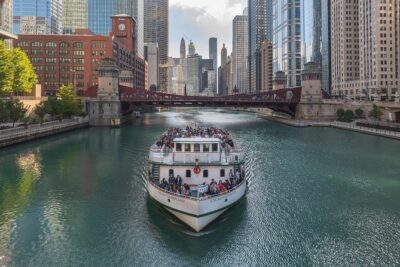
Chicago Architecture Center River Cruise aboard First Lady
Read our review →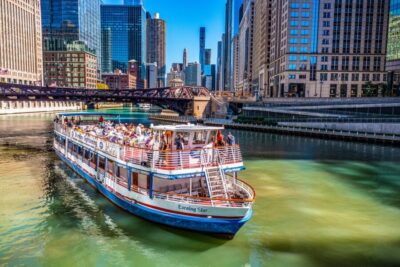
Architecture River Cruise Skip-the-Ticket Line
Read our review →
Chicago River 45-Minute Architecture Tour from Magnificent Mile
Read our review →
45-Minute Family-Friendly Architecture River Cruise
Read our review →Browse the lists this tour appears in