
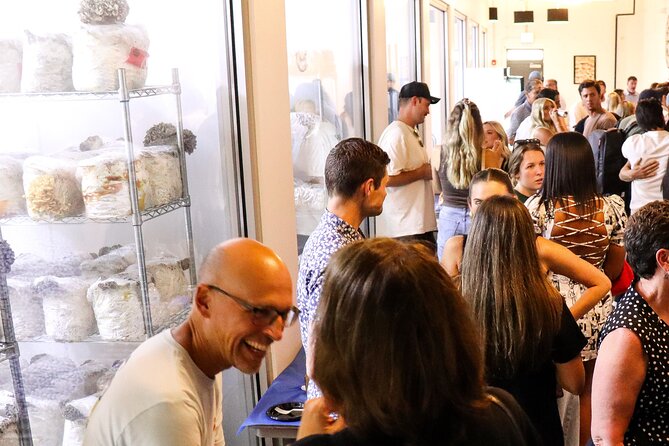
Reviewed · CHICAGO
Explore Chicago’s Indoor Mushroom Farm Experience
Chicago grows more than skyscrapers and deep-dish pizza. At Four Star Mushrooms, you can see gourmet fungi produced inside a controlled urban farm, from raw growing material to boxed products headed for restaurants and shops.
I like the clear look at the full production chain, and I like the way the tour connects mushrooms with regenerative agriculture and Chicago’s restaurant trade. The main drawback is that this is a working production facility, not a hands-on children’s attraction, so younger kids may lose interest.
- Follow the whole growing process: See substrate bagging, sterilization, inoculation, incubation, fruiting, and packaging.
- Visit a real Chicago producer: The farm supplies retail and wholesale customers throughout Chicagoland.
- See indoor agriculture in action: Controlled rooms show how specialty mushrooms can be grown in an urban setting.
- Plan for about 90 minutes: The guided portion is about an hour, with the full experience lasting roughly an hour and a half.
- Expect a small group: Attendance is capped at 25 people, which should make the working operation easier to follow.
- Book ahead: The experience is commonly reserved about 23 days before the visit.
What You See at 320 North Oakley Boulevard

The experience begins at 320 N Oakley Blvd in Chicago, with a scheduled start at 12:00 p.m. You return to the same meeting point at the end, so you do not need to arrange a separate pickup or figure out a second location.
This is a behind-the-scenes look at an operating specialty mushroom producer. You are not simply shown a display room with a few growing samples. The point is to see how the farm handles the stages that turn a prepared growing medium into food sold across the Chicago area.
That makes the setting useful for anyone interested in food systems, restaurant supply chains, urban farming, or sustainable agriculture. It also gives the tour a practical edge. You can ask yourself how a city business produces a delicate food product without relying on a traditional outdoor farm.
The experience is offered in English and uses a mobile ticket. The group limit is 25 people, large enough to create some energy but small enough to keep the visit from feeling like a crowded factory walk. Since the farm is a working facility, follow the guide’s instructions closely and avoid treating equipment as a playground.
From Raw Substrate to Sterile Growing Bags
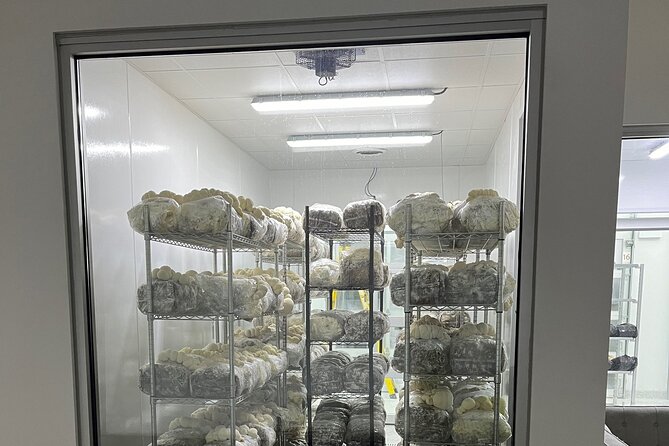
The tour begins with the material mushrooms need for growth, called substrate. You see how this raw material is placed into bags before it is sterilized and prepared for the next stage.
This part helps you understand a point that is easy to miss when buying mushrooms at a market. The visible mushroom is only the final fruiting body. Much of the work happens earlier, in preparing a clean and dependable growing base.
Sterilization matters because unwanted organisms can compete with the mushroom culture. The farm must create conditions that allow the selected mushroom strain to grow rather than letting mold or other contaminants take over. You do not need a science background to follow the basic idea, but this part adds useful context to the final product.
I especially like this opening stage because it makes the process feel less mysterious. Instead of hearing that mushrooms are grown indoors and moving on, you see the steps that make controlled production possible.
Other Chicago tours that go well next to this one:
- Chicago Architecture River Cruise
★ 5.0 · 15,756 reviews - Chicago River 90-Minute Architecture Tour
★ 4.5 · 9,629 reviews - Chicago River: 1.5-Hour Guided Architecture Cruise
★ 4.8 · 8,046 reviews
Inoculation and the Waiting Stage
After the substrate is bagged and sterilized, it is inoculated. This means the mushroom culture is introduced into the prepared material.
The bags then move into an incubation stage. Here, the mushroom culture develops through the substrate before the bags are placed in fruiting conditions. The timing and order matter. A bag cannot simply be opened and expected to produce mushrooms immediately.
This is also where the tour shows the difference between mushroom farming and many familiar forms of gardening. You are not watching a seedling push through soil in a sunny field. You are following a managed biological process that depends on cleanliness, temperature, timing, and careful handling.
The incubation stage may be less visually dramatic than a room full of mature mushrooms, but it explains how the farm keeps production moving. At any given time, different bags may be at different points in the cycle. That ongoing sequence is part of what makes an indoor operation useful for supplying customers throughout the year.
Inside the Fruiting Rooms
The grow rooms are the most visually direct part of the visit. This is where the mushrooms fruit and take on the form you recognize from a market or restaurant plate.
The controlled environment is important here. Indoor production allows the farm to manage the conditions needed for specialty mushrooms rather than depending on Chicago weather. You get a clear look at controlled environment agriculture, a phrase that can sound technical until you see the rooms and the growing system in person.
The tour is not presented as a general lesson about every kind of mushroom. Its focus is the specialty mushroom operation at Four Star Mushrooms. That makes the visit more specific and more useful than a broad nature talk. You see how an urban business applies controlled growing methods to a food product with a strong local market.
Do not expect a long tasting menu or a cooking class. The emphasis is on production. If your main interest is eating mushrooms, you may find the farm process more valuable when paired with a meal at a Chicago restaurant afterward. The tour explains where the product begins before it reaches the kitchen.
Packaging for Chicago Restaurants and Shops
Once the mushrooms are ready, the farm packages them for retail and wholesale customers throughout Chicagoland. This final stage links the grow rooms to the city’s food economy.
I like this part because it gives the tour a local payoff. You are not looking at a remote agricultural project with no clear connection to daily life. The mushrooms move into the same regional food network that supplies restaurants and stores.
For people who enjoy Chicago’s dining scene, this section adds a useful piece of context. Restaurants often talk about local ingredients, but a farm visit lets you see one local supplier’s side of that relationship. You learn that the work includes more than growing. Product handling, packaging, and dependable delivery matter too.
The packaging stage also helps you judge the $20 price. You are paying for access to the operation and an explanation of the process, not just for a short look at growing rooms. The value is strongest if you enjoy seeing how food is produced and sold, rather than expecting a tasting-focused outing.
Different part of the city, different kind of afternoon:
- Chicago: Gangsters and Ghosts Walking Tour
★ 5.0 · 7,155 reviews - Chicago Architecture Center River Cruise aboard First Lady
★ 5.0 · 5,536 reviews - Chicago: Willis Tower Skydeck and The Ledge Ticket
★ 4.6 · 4,350 reviews - Chicago: Architecture River Cruise Skip-the-Ticket Line
★ 4.8 · 4,325 reviews
Why Mushrooms Matter to Regenerative Agriculture
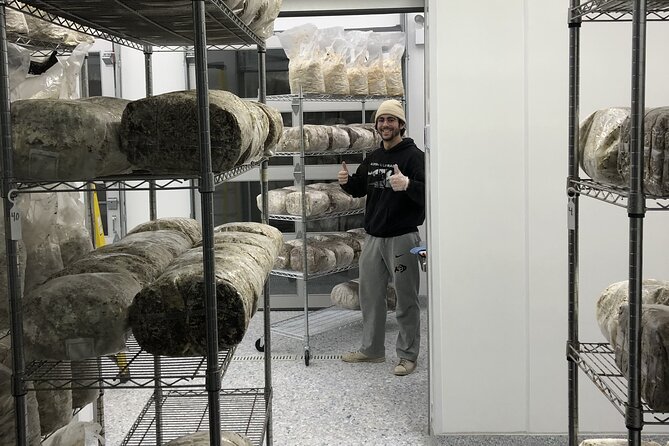
The tour places mushroom cultivation within the wider idea of regenerative agriculture. That connection is one of the more thoughtful parts of the experience.
Mushrooms can play a role in food systems that make use of organic materials and reduce the need to move every food operation far from the people who buy its products. The visit does not turn into a long lecture on environmental policy, but it gives you a practical example of how a city farm can fit into a broader approach to agriculture.
Keep your expectations sensible. The information provided for this experience does not promise a detailed lesson on the farm’s exact materials, energy use, waste systems, or carbon footprint. You should treat regenerative agriculture as an important theme, not as a full technical audit of the company.
Even so, the subject adds meaning to the tour. You are not only seeing an unusual crop. You are considering how food can be grown closer to urban customers and how mushroom production might fit into a more efficient use of agricultural resources.
How Much Time the Visit Needs
The full activity lasts about 1 hour and 30 minutes. The main guided tour is described as roughly 60 minutes, leaving the rest of the scheduled time for movement through the facility and the overall visit.
That length works well for a Chicago afternoon. It is long enough to explain the production chain without taking over your day. You could fit it between other activities, though you should leave some flexibility since a working facility may not move at the pace of a museum exhibit.
The noon start is worth noting. It gives you a straightforward plan: arrive for the midday visit, spend about an hour and a half at the farm, and continue with your Chicago plans afterward. The tour ends where it begins, so you are not left across town from your starting point.
The experience is often booked about 23 days ahead. That does not mean you must reserve it weeks in advance every time, but it is a useful warning for visitors building a fixed Chicago schedule. If you know you want the noon visit, booking early is sensible.
Is $20 a Fair Price?
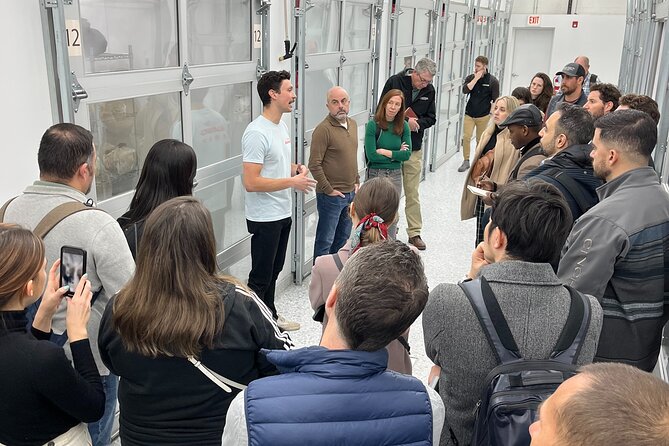
At $20 per person, this is reasonably priced for a specialized behind-the-scenes visit. You get access to a real production facility, an explanation of several growing stages, and a look at how the finished product reaches local customers.
The price is a better deal for curious adults than for people seeking entertainment alone. You are paying for subject matter and access. There is no indication that the visit includes a full meal, a tasting session, or a take-home supply of mushrooms.
I would also consider the group size. With a maximum of 25 people, the cost includes a more limited attendance format than a large public attraction. That can make it easier to follow the guide and see what is happening, though the experience may feel less personal if the group reaches its limit.
The attraction earns its price if you are already interested in food production, sustainability, restaurants, science, or unusual Chicago businesses. If you are choosing between this and a major sightseeing stop, think of it as a focused educational visit rather than a headline attraction.
Is It Right for Children?
Most people can participate, but the best audience is adults, older children, and anyone with a genuine interest in how food is grown.
Very young children may find the explanations and production steps slow. A family with children aged 5 and 3 attended, and the children were curious about the equipment, including a forklift. They did not touch it, but that detail gives you a useful picture of the setting: this is a working facility where children need close supervision.
The staff welcomed the family, so bringing young children is not automatically a bad idea. Still, I would not choose this as a main activity for toddlers unless the adults are comfortable managing them around industrial equipment and waiting through an educational presentation.
Older children who like science, cooking, farming, or biology may get much more from the visit. The farm gives them a concrete example of food production, with visible stages rather than an abstract classroom lesson.
Practical Details Before You Go
You receive confirmation when you book, and the ticket is mobile, so you can keep the reservation on your phone. The tour is offered in English.
The meeting point is 320 N Oakley Blvd, Chicago, Illinois 60612. The scheduled start time is noon, and the experience returns to that same location. Since no separate transportation is included in the details provided, plan your own way to the meeting point.
The group is limited to 25 people. Most people can participate, though the information does not provide a detailed accessibility breakdown for every part of the facility. If you have specific mobility or access needs, contact the provider before booking rather than guessing about conditions inside a working farm.
Cancellation is free up to 24 hours before the start time for a full refund. Cancellations or changes made less than 24 hours before the experience are not refunded or accepted, and the cut-off follows local Chicago time.
Who Should Book the Four Star Mushrooms Tour?
I would choose this tour if you want an unusual Chicago activity with a clear subject and a local connection. It suits food-minded visitors, curious adults, sustainability enthusiasts, restaurant fans, and anyone who has wondered how specialty mushrooms are produced at city scale.
You should also book it if you like seeing the working side of a business. The trip from substrate to retail packaging gives the visit a satisfying structure, and the restaurant connection makes the final stage feel relevant to Chicago rather than purely technical.
I would skip it if you need constant action, a tasting experience, or a polished attraction with lots of visual spectacle. The tour asks you to listen, watch, and follow a production process. Young children may enjoy the equipment more than the explanation, so families should judge their children’s patience carefully.
For the right audience, $20 buys a focused look at a food business most people never get to enter. Book ahead if the noon schedule matters, arrive ready to follow safety instructions, and expect an informative working-farm visit rather than a casual mushroom photo stop.
FAQ
Where does the mushroom farm tour begin?
The tour begins at 320 N Oakley Blvd, Chicago, IL 60612, USA.
What time does the experience start?
The scheduled start time is 12:00 p.m.
How long does the tour last?
The full experience lasts approximately 1 hour and 30 minutes. The guided farm tour itself is about 60 minutes.
Where does the experience end?
The activity ends back at the meeting point at 320 N Oakley Blvd.
How many people can join the tour?
The tour has a maximum group size of 25 people.
Is the tour offered in English?
Yes. The experience is offered in English.
What is the cancellation policy?
You can cancel at least 24 hours before the start time for a full refund. Cancellations and changes made less than 24 hours before the start time are not accepted, and the amount paid is not refunded.
Recently added around Chicago
- Travel between Chicago O’Hare and Madison★ 4.5 · 4 reviews
- Volo Auto Museum: Admission Ticket★ 4.5 · 55 reviews
- Holiday Walking Tour: Underground Chicago via the Pedway★ 5.0 · 27 reviews
- Workers Cottages of Oldtown Triangle Walking Tour★ 5.0 · 45 reviews
- Verse Immersive Holographic Theater in Chicago★ 4.5 · 28 reviews
- Vito’s Vault Chicago finest dinner theatre speakeasy★ 5.0 · 14 reviews
- Delicious Donuts & Sweet Treats: West Loop Walking Tour★ 5.0 · 47 reviews
- Traveling Spoon Chicago-Style Deep Dish Pizza Private Online Cooking Class★ 5.0 · 4 reviews