
Reviewed · CHICAGO SKYSCRAPER INTERIOR TOURS
Chicago: Secret Interiors Architecture Walking Tour
Chicago’s best architecture often waits behind an ordinary doorway. This two-hour walk takes you into grand Loop buildings where domes, mosaics, ornamental ceilings, and finely worked details are easy to miss from the sidewalk. You’ll hear how Chicago’s architects handled light, weight, fire, and the pressure to build higher.
I especially like the access to interiors you might never enter on your own and the way the tour links design to the people who used these buildings during the Gilded Age and Roaring Twenties. Guides such as Grant, Talia, Annie, and Angel have earned praise for clear explanations and lively storytelling. The main drawback is that much of the tour is outdoors, and the brisk walk can include stairs, so cold or wet weather will affect the experience.
Key points to know before you book
- The route begins at Union Station: Meet inside the Great Hall, beneath the Clinton Street sign.
- The interiors are the main prize: Expect domes, mosaics, decorative stonework, grand lobbies, and details easy to miss from outside.
- You cover a large section of the Loop: The pace is generally comfortable, though one review found it brisk and noted several stairs.
- Most of the experience is outdoors: Bring comfortable shoes and dress for the season, especially in winter.
- The route mixes famous and less obvious buildings: Stops include the Rookery, Field Building, Marquette Building, Palmer House, Chicago Cultural Center, and Marshall Field and Company Building.
- Sunday plans may change: The Rookery is closed on Sundays, so an alternative stop is used.
Why Chicago’s interiors deserve a closer look
From the street, Chicago’s architecture can feel like a contest in height and ornament. Look up and you see towers, cornices, setbacks, and stone facades. Step inside, and the city’s architectural story becomes more personal. You notice how builders wanted visitors to feel when they entered: impressed, protected, wealthy, modern, or perhaps a little overwhelmed.
This walking tour focuses on that inside view. It is not only a parade of pretty ceilings. You learn why an architect placed a skylight in a particular spot, how engineers supported heavy structures, and how builders brought daylight into deep urban buildings. Those questions make the decoration easier to understand.
The tour also gives you a useful timeline. Chicago’s early skyscrapers helped define a new kind of city. Later buildings turned toward Art Deco and modern design. In between, commercial blocks, hotels, offices, and civic spaces developed their own styles. The result is a compact lesson in how Chicago kept reinventing itself.
I would not choose this walk only for someone who wants a list of famous buildings. Choose it if you enjoy looking at doorways, staircases, ceilings, mosaics, and small design choices. The guides are encouraged to answer questions, and the strongest guides add stories about the industrial leaders, public figures, and notorious characters who passed through these rooms.
More skyscraper interior tours in Chicago:
- Original Chicago Architecture Interiors Tour: Dazzling Interiors
★ 5.0 · 1,489 reviews - Chicago’s Secret Interiors Architectural Walking Tour
★ 5.0 · 635 reviews - Chicago Walking Tour: Art Deco Skyscrapers Loop
★ 5.0 · 138 reviews
Meeting Grant, Talia, Annie, Angel, and the other guides
The guide can shape this experience more than the route itself. Grant is frequently praised for his clear delivery, historical detail, and enthusiasm. One especially useful touch is that he has offered dining suggestions after the walk. Talia is described as warm, funny, patient with questions, and attentive to group comfort. Annie brings an easy conversational style and practical suggestions for food and drink.
Angel has been praised for making even a very small group feel worthwhile, while Matthew and Avery have also been singled out for friendly, engaging presentations. The common thread is strong familiarity with Chicago’s buildings and a willingness to explain rather than simply point.
That matters in an architecture tour. A guide who only names styles can make a grand building feel like a museum label. A good guide helps you see why a detail was placed there and what it says about the people who commissioned the building. You should feel free to ask about decorations, doorways, symbols, and materials. One participant wished the guide had volunteered more about those smaller features, but found the answers useful when questions were raised.
Group size can vary. Small groups give you more room to ask questions and make it easier to hear in large lobbies. The tour can still work well with a larger group, but stay close to the guide during street crossings and indoor explanations.
Starting inside Union Station’s Great Hall
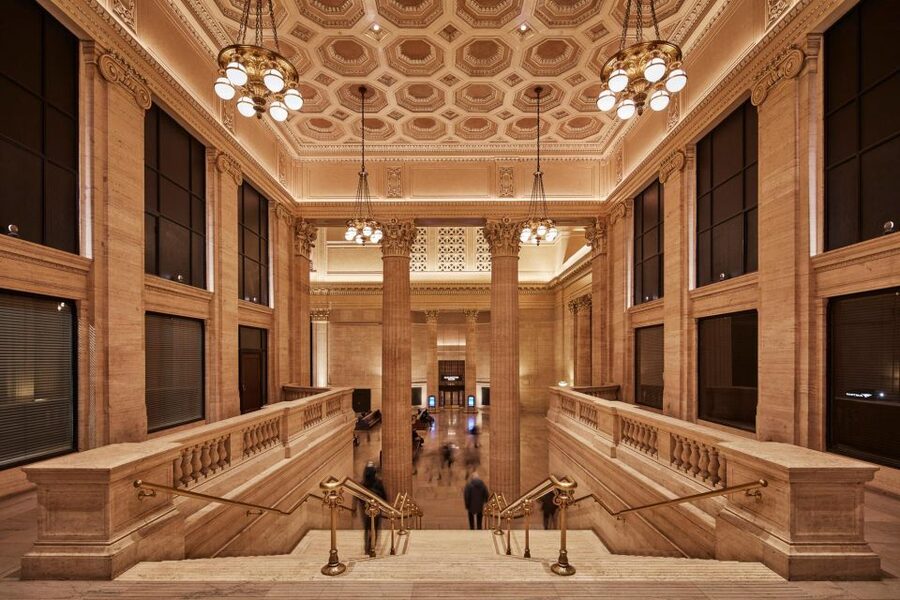
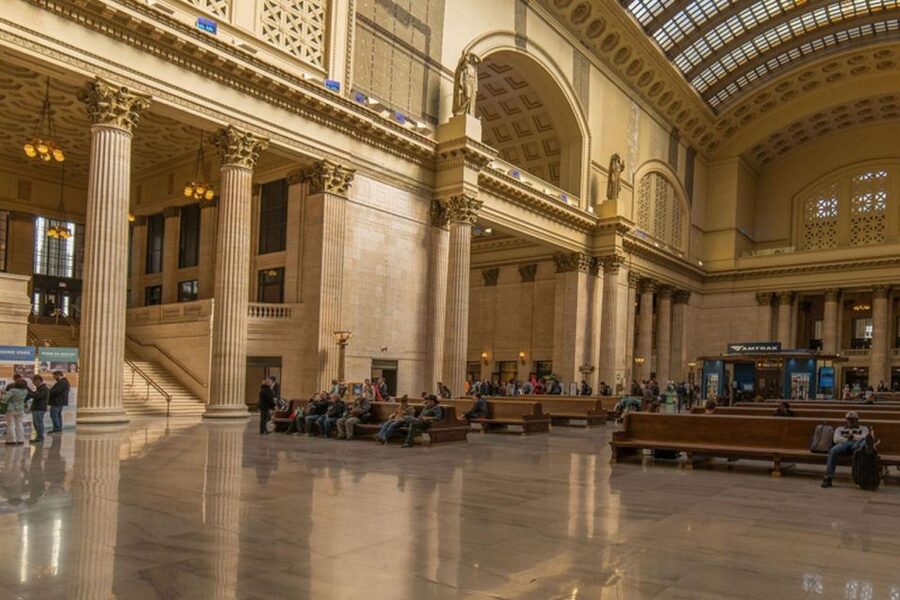
The meeting point is inside Union Station, under the Clinton Street sign in the Great Hall. This is a practical start because Union Station is itself one of Chicago’s grand public interiors, even if the tour’s main focus comes later.
Arrive ready to walk. You do not need special equipment, but comfortable shoes are important, and you should dress for the forecast. The route includes outdoor stretches between buildings, and a January review noted that roughly 90 percent of the time was spent outside. Winter visitors should bundle up rather than rely on warm interiors to break the cold.
The tour lasts about two hours. That is long enough to cover a lot of ground without turning into an all-day architectural survey. The pace has generally been described as manageable, though one person with tired legs found it fast. If stairs or a brisk walk are difficult for you, ask the guide at the start how the route can be handled.
The activity is wheelchair accessible, but individual buildings may have their own access arrangements. Since the tour moves through working and public buildings rather than one controlled museum, accessibility can depend on the stop and the day.
Chicago’s Loop and South LaSalle Street
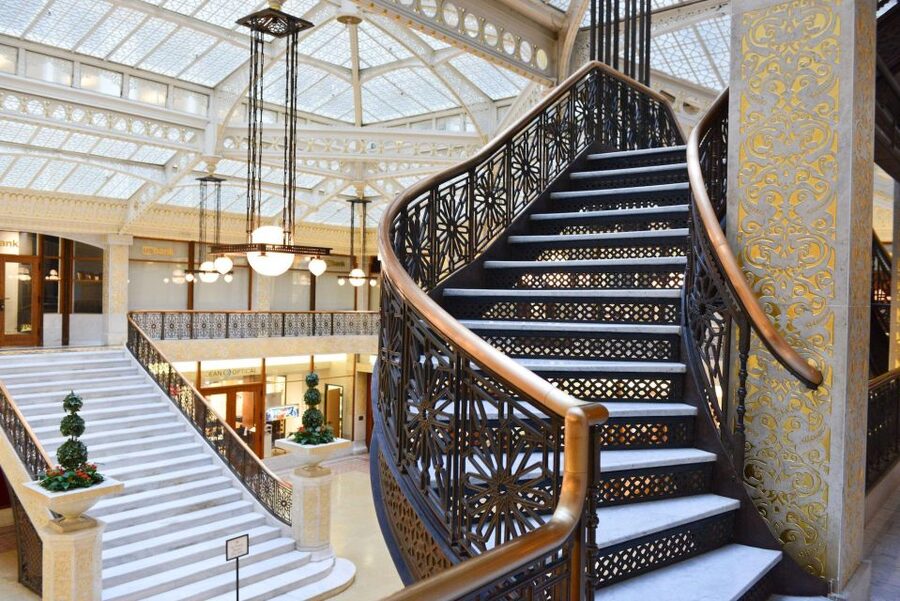
Once the walk leaves Union Station, the city itself becomes part of the lesson. The Loop is a compact setting for comparing building styles from different periods. Within a short distance, you can move from grand commercial architecture to civic decoration and early skyscraper design.
South LaSalle Street provides an important outdoor frame. Here, the guide can connect the facades, street grid, and financial district to Chicago’s ambitions as a commercial city. You are not simply walking between attractions. You are learning how buildings competed for attention and how their entrances announced importance.
This is also where you get some of the larger exterior views. If you enjoy photography, pause for facade details before the group moves on. The tour is designed around access and explanation, not long photo sessions, so have your camera ready and keep the pace.
More architecture tours in Chicago:
- Chicago Architecture River Cruise
★ 5.0 · 15,756 reviews - Chicago River 90-Minute Architecture Tour
★ 4.5 · 9,629 reviews - Chicago River: 1.5-Hour Guided Architecture Cruise
★ 4.8 · 8,046 reviews - Chicago Architecture Center River Cruise aboard First Lady
★ 5.0 · 5,536 reviews
The Rookery Building and its famous interior character
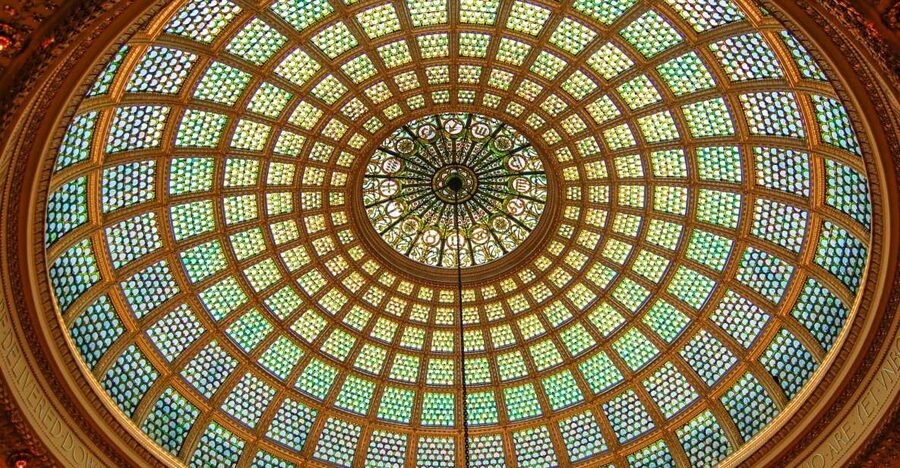
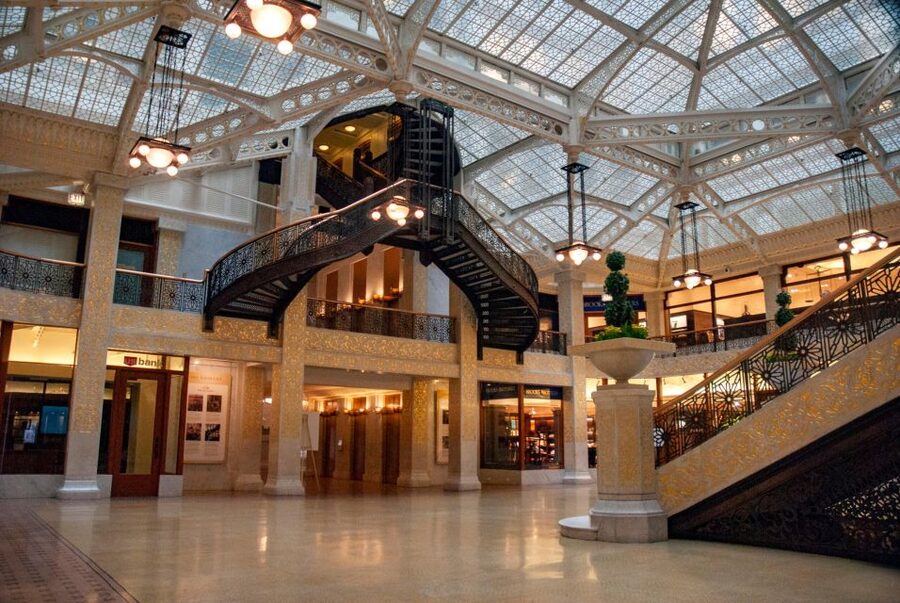
The Rookery is one of the main reasons to book this tour. Its interior gives you a strong example of how an early commercial building could combine engineering with ceremony. The building’s decorative spaces reward a slow look: study the curves, light, metalwork, and layered ornament rather than taking only a quick photo.
The guide explains the challenges of making large urban buildings practical and impressive at the same time. Light was a serious concern in dense city blocks, and interior planning had to make offices usable while still creating a memorable entrance.
The Rookery is closed on Sundays. On that day, the tour includes an alternative stop, so do not book a Sunday expecting the exact same sequence. If the Rookery is a personal priority, choose another day and confirm the available start time.
The Field Building and the Marquette Building
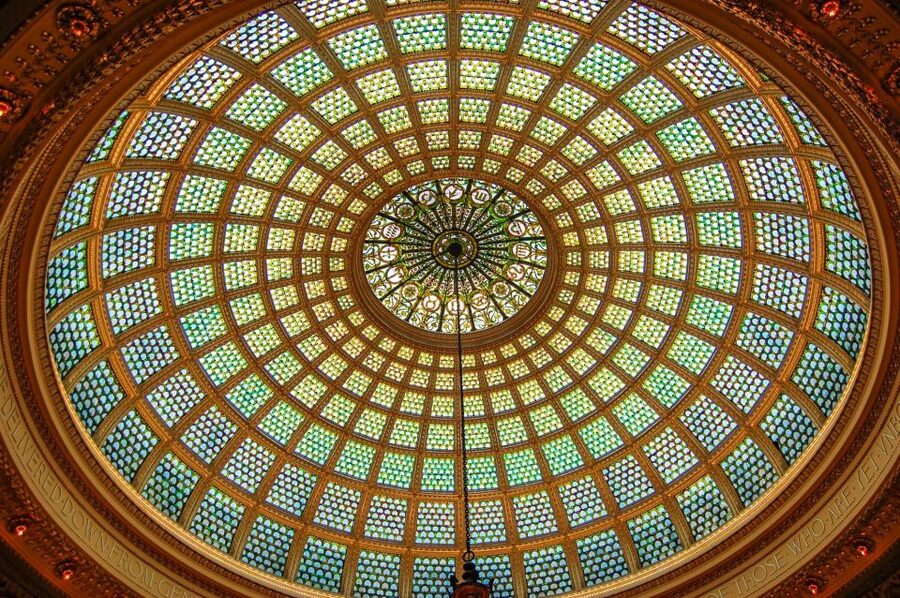
The Field Building continues the story of commercial Chicago. The stop helps you compare the exterior scale of a Loop office block with the details found inside. Look for the relationship between structure and decoration. Chicago’s early tall buildings had to appear solid and dependable while using new methods to rise above older low-rise construction.
At the Marquette Building, the emphasis shifts toward decorative design and the way art can carry a story through a public interior. Mosaics and ornamental features are not random extras. They help express the building’s identity and the city’s confidence during a period of rapid growth.
These two stops are useful for people who think they have already seen Chicago’s architecture because they have walked past the major facades. From the pavement, you may register a building’s shape. Inside, you can see how materials, light, and decoration guide your movement.
The route does not turn every building into a long lecture. That is a benefit if you want variety, though serious architecture students may wish for more time at each site. The best approach is to note which buildings catch your attention and return later for a slower look.
Palmer House and the story of grand hospitality
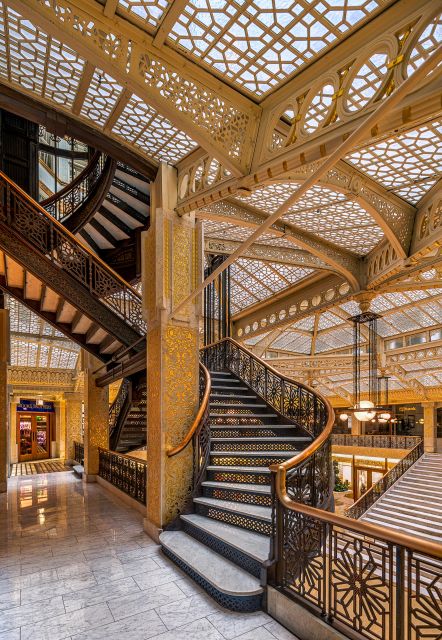
The Palmer House brings hotel architecture into the tour. Hotels had to do more than provide beds. Their lobbies were public stages where business, fashion, wealth, and celebrity met. The building helps explain why hotel interiors often received such lavish treatment.
Here, pay attention to scale and mood. The design is meant to make arrival feel like an event. Details that seem excessive today made sense in an era when a hotel’s public rooms were part of its reputation.
The Palmer House also adds variety to the route. You are not seeing office buildings one after another. The tour considers how different types of buildings served different social purposes. Commercial offices projected power and efficiency, while hotels sold comfort, status, and spectacle.
Chicago Cultural Center and the pleasure of looking upward
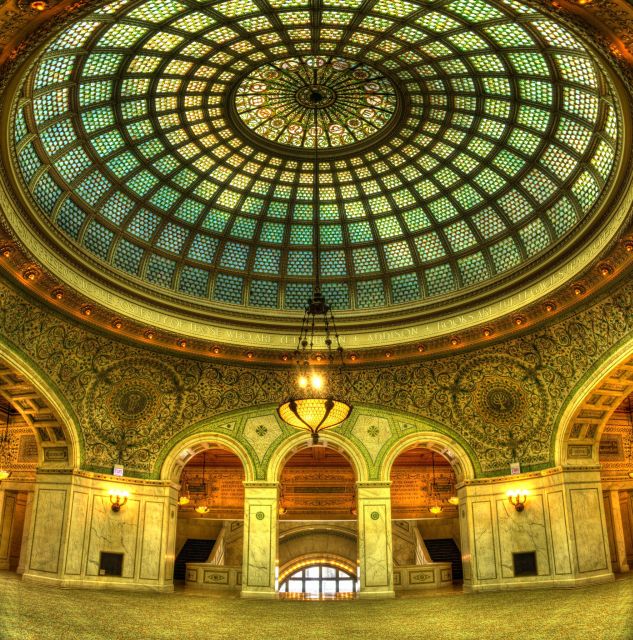
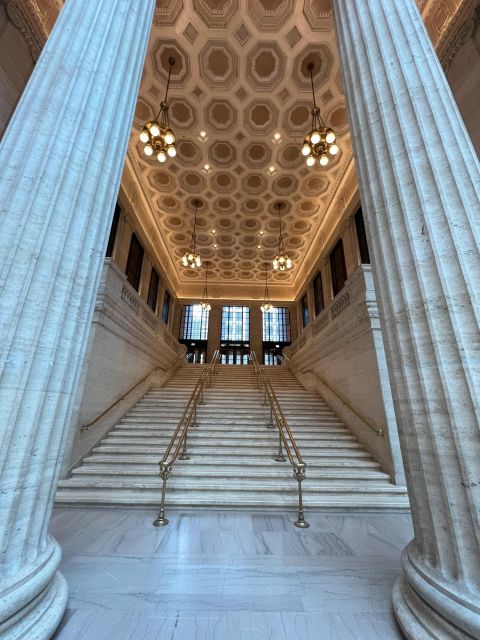
The Chicago Cultural Center is among the most visually rewarding stops. Its interior spaces show how public architecture can use decoration to create a sense of occasion. Look up at the dome and examine the mosaic work. From the floor, the scale can be hard to take in at once, so give yourself a moment to scan the entire space before focusing on individual pieces.
This stop is particularly useful for visitors who want art as well as architecture. The guide explains how materials and patterns work together, making the room more than a shell around a public function.
It is also a good place to see why guided visits help. You may notice the dome immediately, but a guide can direct your attention to construction methods, symbols, and the way daylight changes the space. The tour’s theme of solving lighting problems becomes especially clear here.
Marshall Field and Company Building, the final stop
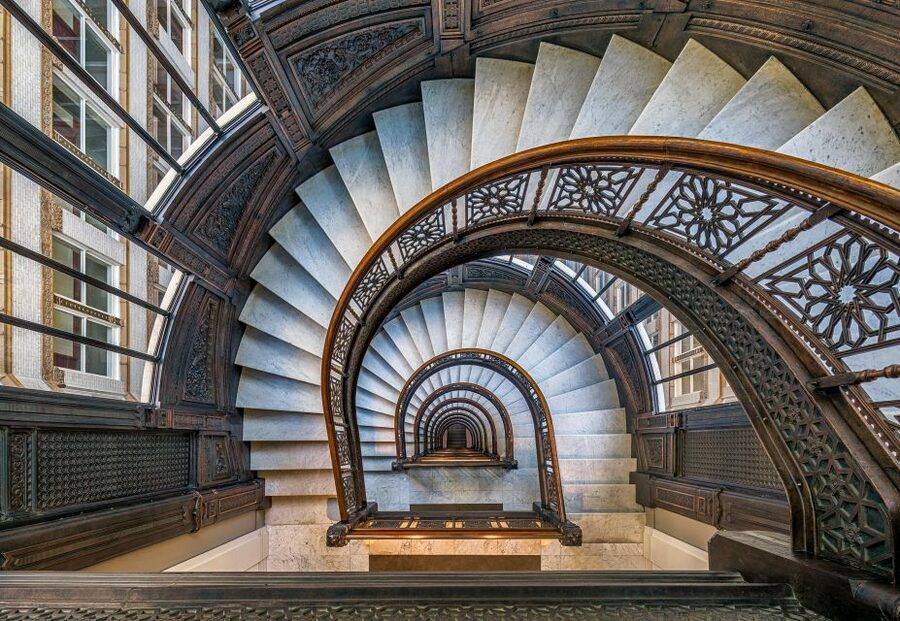
The walk finishes at the Marshall Field and Company Building, another major commercial interior. The building connects architecture to shopping, public life, and the rise of department stores. Such spaces were designed to persuade people to linger, browse, and spend time inside.
This is a fitting end because it brings together several themes from the tour: decorative craft, engineering, commerce, and changing city life. You see how an interior can be both functional and theatrical.
The finish also works well for your plans afterward. You are not returned to Union Station, so check your map before booking if you need to catch a train. The end point places you in the central Loop, making it practical to continue sightseeing, find a meal, or revisit a building that caught your eye.
What the $35 price gets you
At $35 per person, the tour offers solid value if you care about access and interpretation. You can walk past these buildings for free, but the fee pays for the guide’s explanation and the chance to enter interiors you might otherwise overlook. That distinction matters in Chicago, where the outside facade is often only half the story.
The price is less compelling if you want a slow, highly specialized examination of every building. Two hours requires choices. You will see several sites, but the guide cannot give each one a full museum-style treatment.
I see this as a good partner to a Chicago architecture boat tour rather than a replacement. A boat tour gives you broad views of the skyline and riverfront. This walk gives you floor-level details, public rooms, and the stories behind entrances and interiors. One is best for the city’s overall form; the other is best for the craftsmanship you can miss from a distance.
Flexible booking helps if your weather plans are uncertain. You can cancel up to 24 hours ahead for a full refund, and you can reserve now and pay later. These policies are useful for a walking tour in Chicago, where winter conditions can change your plans.
Who will enjoy this walk most
I would recommend it to first-time visitors who want a strong introduction to Loop architecture, but it is not only for newcomers. Several local participants discovered buildings they had passed for years without entering.
It suits:
- People who enjoy architecture, interior design, and decorative arts
- History fans interested in Chicago’s industrial and commercial rise
- Visitors who want a small-group activity that combines sightseeing with explanation
- Art Deco fans, especially those planning a September visit
- Families with older children who can manage a two-hour walk
- Anyone pairing it with a river architecture cruise
You should think twice if you dislike walking outdoors in poor weather or have difficulty with stairs. The experience is wheelchair accessible, but the route includes multiple buildings and one review specifically noted stairs in and out. Ask about the day’s route when you meet the guide if this is important for you.
Practical tips for a better two hours
Wear shoes with good support. The walk covers a sizeable area, even though it is not an exhausting hike.
Dress for the street, not just the buildings. In winter, most of the tour may be outside. In warmer weather, bring water and use sun protection as needed.
Keep your questions ready. Ask about doorways, mosaics, structural systems, and symbols. Guides are happy to explain more when you show interest, and this can turn a quick stop into the most memorable part of your day.
Do not assume every building will be available in exactly the same way every day. The Rookery is closed Sundays, and holidays or special events can affect access. One September tour coincided with Chicago Open House, creating an unusual chance to see additional spaces, including a vault at the Chicago Board of Trade, but that kind of access should be treated as a bonus rather than a promise.
Should you book the Secret Interiors Architecture Walking Tour?
Book it if you want to see the Chicago beneath the skyline. The strongest parts are the interiors, the practical explanation of engineering and light, and the guides’ personal command of the city. Grant, Talia, Annie, Angel, Matthew, and Avery have each been praised for making the subject clear and enjoyable.
I would choose this tour over a general sightseeing walk if you already know the main Loop streets and want to understand what is behind the doors. I would pair it with a river cruise if you have time for both. Skip it only if outdoor walking, winter weather, or stairs would make two hours uncomfortable.
For $35, you get more than a checklist of buildings. You get a way to look at Chicago with sharper eyes, from the grand dome overhead to the small doorway detail you might have walked past without noticing.
FAQ
Where does the Chicago Secret Interiors Architecture Walking Tour begin?
Meet the guide inside Union Station in the Great Hall, beneath the Clinton Street sign.
Where does the tour finish?
The tour ends at the Marshall Field and Company Building in Chicago’s Loop.
How long does the tour last?
The walking tour lasts two hours.
What buildings are included?
The route includes South LaSalle Street, the Rookery Building, the Field Building, the Marquette Building, Palmer House, the Chicago Cultural Center, and the Marshall Field and Company Building. Union Station is the starting point.
Is the Rookery Building open every day?
No. The Rookery is closed on Sundays, so an alternative stop is included on Sunday tours.
Is the tour wheelchair accessible?
Yes, the activity is listed as wheelchair accessible. The route also includes several buildings, and one review noted stairs in and out, so ask the guide about the day’s access if needed.
What should I bring?
Bring comfortable shoes and dress for outdoor weather. A large part of the tour takes place outside, including during winter.
More Walking Tours in Chicago
- Chicago: Gangsters and Ghosts Walking Tour
★ 5.0 · 7,155 reviews - Chicago Favorites Ultimate Food and Walking Tour
★ 5.0 · 1,962 reviews - Chicago: Gangsters and Ghosts Guided Walking Tour
★ 4.7 · 1,697 reviews - Chicago in a Day: Food, History & Architecture Walking Tour
★ 5.0 · 1,153 reviews
Recently added around Chicago
- Travel between Chicago O’Hare and Madison★ 4.5 · 4 reviews
- Volo Auto Museum: Admission Ticket★ 4.5 · 55 reviews
- Holiday Walking Tour: Underground Chicago via the Pedway★ 5.0 · 27 reviews
- Workers Cottages of Oldtown Triangle Walking Tour★ 5.0 · 45 reviews
- Verse Immersive Holographic Theater in Chicago★ 4.5 · 28 reviews
- Vito’s Vault Chicago finest dinner theatre speakeasy★ 5.0 · 14 reviews
- Delicious Donuts & Sweet Treats: West Loop Walking Tour★ 5.0 · 47 reviews
- Traveling Spoon Chicago-Style Deep Dish Pizza Private Online Cooking Class★ 5.0 · 4 reviews
Chicago Skyscraper Interior Tours, compared.
Original Chicago Architecture Interiors Tour: Dazzling Interiors
Read our review →
Chicago’s Secret Interiors Architectural Walking Tour
Read our review →
Chicago Walking Tour: Art Deco Skyscrapers Loop
Read our review →
Chicago Architecture Walking Tour: Incredible Art Deco Interiors
Read our review →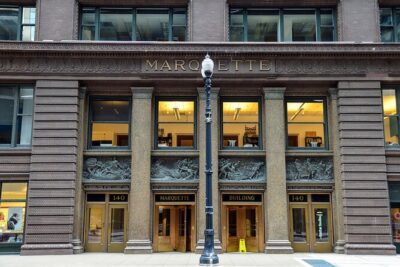
Chicago Walking Tour: Art Deco Skyscrapers Riverfront
Read our review →
Chicago’s Original Dazzling Architectural Interiors Tour
Read our review →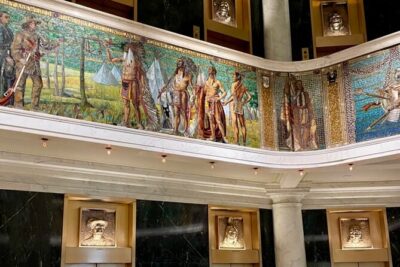
Walking Tour: Chicago’s Loop – Home of the Modern Skyscraper
Read our review →Browse the lists this tour appears in