

Reviewed · CHICAGO SELF-GUIDED AUDIO TOURS
Chicago Self-Guided Audio Tour
Chicago is a city that rewards a good route, and this self-guided audio tour gives you one for $6 per person. It links grand places such as Union Station, the Art Institute, Millennium Park, the Riverwalk, Navy Pier, and Lincoln Park Zoo, with short stories you can hear as you go.
I like the freedom to start anywhere and split the outing across several days. I also like the range: one low-cost purchase covers architecture, art, science, public parks, a zoo, and lakefront sights. The catch is important: the audio is made of brief snippets, not long guided talks, so you should see it as a prompt for exploration rather than a full replacement for a live guide.
Key points to know before you go
- Fifteen major Chicago sights: The route reaches Union Station, three museums, downtown parks, the Riverwalk, Navy Pier, Lincoln Park Zoo, and more.
- Short audio, flexible timing: Each listed stop is assigned about 20 minutes, but you control how long you stay and which places you visit.
- No fixed meeting point: You can begin and end anywhere in Chicago, in any order that suits your day.
- Two simple online tools: A SoundCloud playlist holds the audio, while Google My Maps marks the attractions and links to each recording.
- Good value for selective sightseeing: The price is low, but museum and observation deck admission costs extra.
- Bring your own setup: You need a charged phone, headphones, and internet access.
How this Chicago audio tour works in real life
This is not a GPS-guided walk, and nobody meets you at Union Station or leads your group through the city. You receive two private links on your selected date, before your chosen start time. One opens a SoundCloud playlist with the audio tracks. The other opens a Google My Maps page with the 15 attractions marked by headphone icons.
You can listen before setting out, then choose the stops that match your interests. At the Art Institute, you might want more time with the galleries. At Millennium Park, you may only need a few minutes around Cloud Gate before moving on. The system lets you make those decisions without waiting for a group.
The links work in a web browser. The map should be opened in a browser rather than the Google Maps app, which is an easy detail to miss. You do not need to create a SoundCloud account, but you do need internet access and your own earphones.
The suggested itinerary gives each stop about 20 minutes, though the full experience is described as taking roughly three to nine hours. That wide range makes sense. Fifteen locations are spread across the city, and several are substantial museums where 20 minutes barely gets you through the entrance hall.
More self guided tours in Chicago:
- Medieval Torture Museum Ticket with Audio Guide and Ghost Hunting
★ 5.0 · 962 reviews - Chicago’s Gold Coast Hidden History: A Self-Guided Audio Walk
★ 4.5 · 7 reviews - Chicago Riverwalk Self-Guided Walking Tour
★ 4.0 · 6 reviews
Union Station begins with marble and movie history
Union Station is one of the best free stops on the route. Its Great Hall gives you soaring space, marble details, and a skylight that makes the building feel far grander than a normal commuter station.
The audio adds stories about the station’s film appearances, including The Untouchables and Public Enemies. It also covers the building’s role during World War II, hidden tunnels beneath the station, and notable passengers who moved through its corridors.
I would use this as an easy first stop because it requires no admission ticket and gives you an immediate sense of Chicago’s grand civic style. Listen before wandering through the station, but remember that it remains an active transportation hub. Keep out of restricted areas and leave room for people catching trains.
Museum Campus brings science, history, and big questions

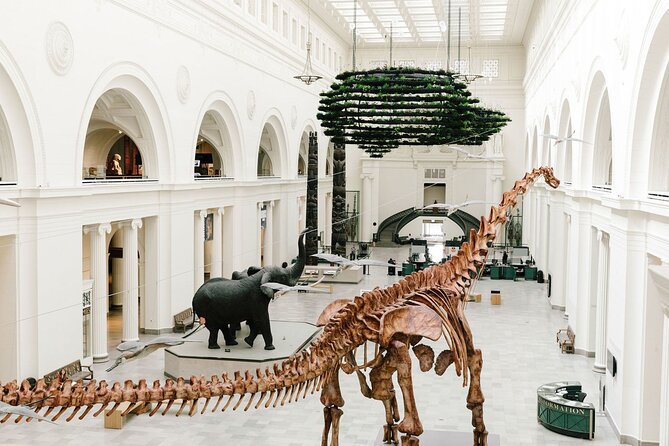
The Field Museum is one of the route’s paid attractions, so the $6 audio purchase does not cover entry. The short recording is aimed at helping you look beyond the most famous dinosaur displays.
You’ll hear about the museum’s beginnings after the 1893 World’s Fair, its Ancient Americas collection, Egyptian mummies, and scientific work carried out in laboratories above the public halls. That context gives you a reason to look for less obvious exhibits instead of heading straight to the best-known skeleton.
The Griffin Museum of Science and Industry offers a different kind of visit. It occupies the last remaining building from the 1893 World’s Columbian Exposition and includes major exhibits such as a captured German U-boat and the Pioneer Zephyr train.
This museum is also paid entry, and it can easily consume several hours by itself. I would treat the audio as an introduction, then choose a few subjects you care about. The tour cannot provide the same detail as a full museum visit, but it can help you decide where to spend your time.
Buckingham Fountain explains more than water and lights
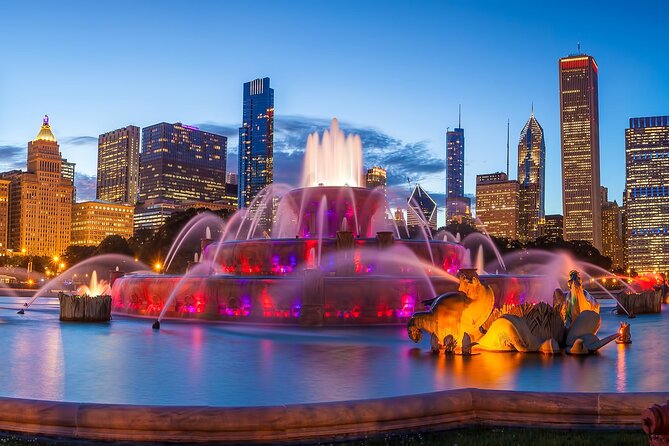
Clarence F. Buckingham Fountain is free and easy to fit between the museums and downtown sights. The audio focuses on the family story behind its creation, its engineering, and symbolism connected to the Great Lakes.
You’ll also hear about restoration work, seasonal operation, and the fountain’s nighttime light shows. The stop works best when the fountain is running, though the recording still gives the monument meaning when the water is quiet.
I like this part of the route because it turns a quick photo stop into a short lesson in civic pride and engineering. You can linger without feeling rushed, and there is no ticket or timed entry to manage.
Different part of the city, different kind of afternoon:
- Chicago Architecture River Cruise
★ 5.0 · 15,756 reviews - Chicago River 90-Minute Architecture Tour
★ 4.5 · 9,629 reviews - Chicago River: 1.5-Hour Guided Architecture Cruise
★ 4.8 · 8,046 reviews - Chicago: Gangsters and Ghosts Walking Tour
★ 5.0 · 7,155 reviews
The Art Institute rewards a slow and selective visit
The Art Institute of Chicago is another paid attraction, and it deserves more than the suggested 20 minutes if art is a priority for you. The audio points toward famous works, the donors who shaped the collection, and the connection between Chicago’s industrial wealth and its artistic ambitions.
Grant Wood’s American Gothic receives attention, along with the way certain artworks became familiar through films, household objects, and popular culture. You’ll also hear about how the museum acquired important pieces and how local patrons competed with European collectors.
That background is useful because a large art museum can feel like a long list of rooms. The recording gives you a few threads to follow. Still, do not mistake the audio for a gallery guide covering every major work. If you want detailed help inside the museum, you will need the museum’s own resources or a separate guided experience.
Millennium Park and Cloud Gate make the best free pairing
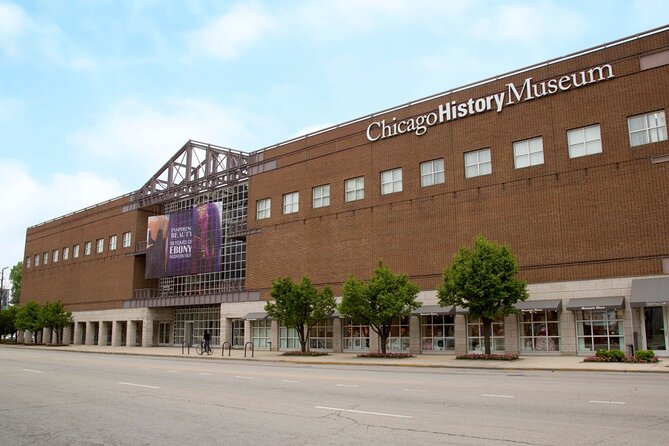
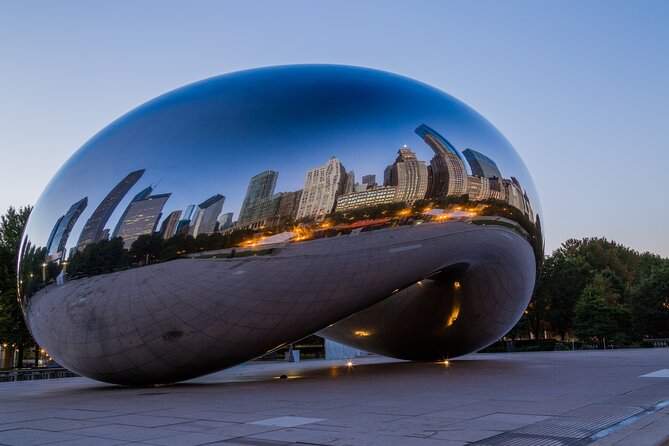
Millennium Park is one of the easiest parts of the tour to enjoy without a plan. The audio explains how a former industrial site became a public park, along with the political arguments, construction problems, and underground engineering that shaped it.
Listen for details about Crown Fountain, Lurie Garden, and the international artists involved in the park. I especially like the focus on what lies beneath the polished public spaces. The park looks effortless, but its support systems and design choices required serious work.
Cloud Gate, better known as the Bean, gets its own recording. You’ll hear about the sculpture’s controversial creation, its seamless reflective surface, engineering challenges, mathematical features, and demanding upkeep.
This is a good place to pause the audio and simply look. Walk around the sculpture, watch how the reflections change, and take in the way people gather around it. The recording gives you a useful framework, but the sculpture itself is the main event.
The Cultural Center offers a free architectural pause
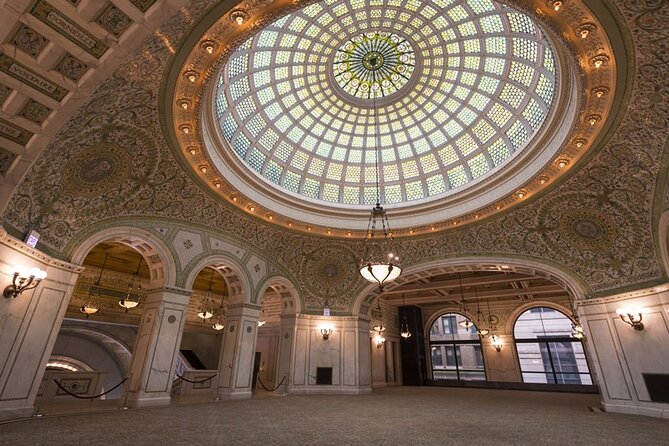
The Chicago Cultural Center is a strong choice for visitors who want beauty without another admission fee. The building was first designed as Chicago’s central library and is now a public cultural center with galleries and performance spaces.
The audio draws attention to Tiffany glass domes, mosaics, craftsmen, political efforts that prevented demolition, and the building’s role in making culture available to the public. This is a place where a short recording can work well because the architecture is compact and easy to see in one visit.
I would put this stop near Millennium Park. The locations are close enough to combine, and the Cultural Center gives you a quieter indoor break from the open park and busy downtown streets.
The Riverwalk shows Chicago’s working side

The Chicago Riverwalk adds a different mood to the itinerary. Instead of focusing on a single building, the audio follows the city’s relationship with its river, including the engineering project that reversed the river’s flow.
You’ll hear how the river supported Chicago’s growth, how neglected industrial edges became public space, and what kinds of ecosystems now exist along the water. The recording also points out architecture and details that are easier to notice from river level.
This stop is free, flexible, and easy to combine with downtown sightseeing. You can walk a short section or make it part of a longer route. The main limitation is that the audio cannot control your walking pace or provide live answers, so use the map and your own sense of direction.
Navy Pier mixes military history with lakefront entertainment
Navy Pier is Chicago’s most visited attraction and one of the route’s liveliest stops. The audio looks past the rides and restaurants to the pier’s military training role during World War II, its near-demolition, and its later rescue and conversion into an entertainment center.
You’ll also hear about the structure beneath the boardwalk, the pier’s economic role, and efforts to balance tourism with local needs and environmental concerns. That gives you a better way to read the place than treating it as only a family amusement area.
Admission to the pier itself is free, but individual attractions cost extra. I would not plan Navy Pier as a rushed 20-minute stop. Give yourself time to walk toward the lake, inspect the views, and choose activities only after you know what interests you.
The Driehaus Museum brings the Gilded Age indoors
The Richard H. Driehaus Museum requires a separate admission ticket, but it offers something missing from the parks and public buildings: an intimate look at a wealthy Chicago residence.
The audio covers the mansion’s original family, its restoration, decorative arts, Tiffany windows, hand-painted ceilings, and period furnishings. It also explains the social customs of Chicago’s elite and the craftsmen who produced the house’s elaborate details.
This is a particularly good stop if you prefer interiors, design, and domestic history to large public institutions. The recording can help you notice workmanship that is easy to overlook. Plan more than 20 minutes if you want to examine the rooms carefully.
360 Chicago turns the city into a readable map
The 360 Chicago Observation Deck is a paid attraction with wide views over the city. The audio uses the height to explain Chicago’s architectural development, major skyscrapers, neighborhoods, and the forces that shaped the city’s growth.
I like the idea of pairing this stop with the ground-level audio at Union Station, the Riverwalk, and Millennium Park. From above, those separate places begin to make sense as parts of one city.
The recording cannot replace the experience of looking out over Chicago, and weather will affect the view. Still, it gives you more to notice than a simple photo stop. Allow extra time if you want to study the skyline rather than ride up and leave.
Lincoln Park Zoo keeps the route family-friendly
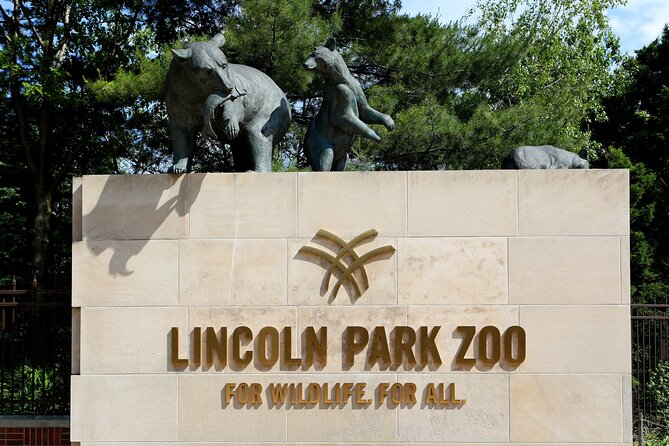
Lincoln Park Zoo is free, making it one of the easiest stops to add without increasing your day’s cost. The audio focuses on the zoo’s development from a small menagerie into a conservation and research institution.
You’ll hear about captive breeding, habitat design, animal welfare, endangered species work, and individual animals that became part of Chicago’s public life. That focus makes the zoo more than a place to stroll past enclosures.
The zoo can suit families, first-time visitors, and anyone who wants an outdoor break from museums. You still control the visit, so choose a few habitats or exhibits rather than trying to cover everything quickly.
Chicago History Museum and Newberry Library fill in the city’s story
The Chicago History Museum is a paid stop that links the city’s major events with personal accounts and everyday life. The audio covers the Great Fire, the World’s Fair, cultural movements, and the transformation from frontier trading post to major American city.
I would choose this museum if you want a clearer explanation of how Chicago became Chicago. The recording can guide your attention, but you should allow more time than the standard stop length if the exhibits catch your interest.
Newberry Library is free and offers a quieter change of pace. Its collections include rare manuscripts, historic maps, and literary materials, while the audio explains the library’s founding and place in Chicago’s intellectual life.
The library is especially suited to readers, architecture fans, and anyone interested in how institutions preserve ideas across centuries. Since it is not a conventional museum, check the tone of your visit and follow posted rules around reading rooms and public areas.
Is $6 good value for Chicago?
At $6 per person, the tour is inexpensive for the amount of choice it provides. Even if you use only four or five recordings, the price can make sense as a planning tool, especially when you are already visiting free sights such as Union Station, Buckingham Fountain, Millennium Park, the Cultural Center, the Riverwalk, Lincoln Park Zoo, and Newberry Library.
The price does not include admission to the Field Museum, Art Institute, Driehaus Museum, 360 Chicago, Chicago History Museum, or Griffin Museum of Science and Industry. It also does not include transport, food, headphones, or internet access.
The main value is flexibility, not depth. The audio content may be only a few minutes per stop, and one recorded segment can be about a minute long. If you expect a long lecture at every attraction, you may find the product too light. If you want short context while choosing your own route, it is a sensible low-cost add-on.
Who should book this experience?
I would recommend it to independent visitors who dislike fixed schedules and want a list of strong Chicago stops. It works well for mixed-interest groups because one person can prioritize art, another science, and another architecture, without splitting from a live tour.
It also suits repeat visitors who want to connect familiar places with new stories. Families may appreciate the ability to pause, skip a museum, or stop for lunch without holding up a group.
I would choose something else if you want a guide beside you, detailed interpretation inside every museum, or a tightly organized walking route with transport included. The experience is private, but private here means your group explores alone, not that a personal guide accompanies you.
FAQ
How much does the Chicago Self-Guided Audio Tour cost?
The listed price is $6 per person.
How long does the experience take?
The estimated duration is about three to nine hours. You can also split the tour across multiple days because the access links remain valid for up to six days.
How many attractions are included?
The audio guide and map cover 15 Chicago attractions.
Can I start and finish anywhere?
Yes. There is no fixed meeting point, and you can choose your own starting and ending locations.
Is this a GPS-guided tour?
No. It is not GPS-guided. You use a SoundCloud playlist for the recordings and a Google My Maps page to locate the attractions.
What do I need to bring?
Bring a fully charged smartphone, headphones or earphones, and internet access.
Are admission tickets included?
No. Entry fees are not included. Admission is required separately at places such as the Field Museum, Art Institute of Chicago, Driehaus Museum, 360 Chicago, Chicago History Museum, and Griffin Museum of Science and Industry.
What language is the audio available in?
The tour is offered in English.
Do I need to create a SoundCloud account?
No account creation is required. You open the private link in a web browser and listen to the playlist.
Should you book the Chicago audio tour?
Book it if you want an inexpensive way to organize Chicago’s major sights while keeping full control of your day. The strongest use is a selective route built around free places, with one or two paid museums added when they match your interests.
Go in expecting short, focused audio segments, not a full spoken tour lasting hours. Bring your own headphones, review the map before you leave, and check the paid admissions in advance. Used that way, this is a practical city companion and a good value for curious, self-directed visitors.
Recently added around Chicago
- Travel between Chicago O’Hare and Madison★ 4.5 · 4 reviews
- Volo Auto Museum: Admission Ticket★ 4.5 · 55 reviews
- Holiday Walking Tour: Underground Chicago via the Pedway★ 5.0 · 27 reviews
- Workers Cottages of Oldtown Triangle Walking Tour★ 5.0 · 45 reviews
- Verse Immersive Holographic Theater in Chicago★ 4.5 · 28 reviews
- Vito’s Vault Chicago finest dinner theatre speakeasy★ 5.0 · 14 reviews
- Delicious Donuts & Sweet Treats: West Loop Walking Tour★ 5.0 · 47 reviews
- Traveling Spoon Chicago-Style Deep Dish Pizza Private Online Cooking Class★ 5.0 · 4 reviews
Chicago Self-Guided Audio Tours, compared.
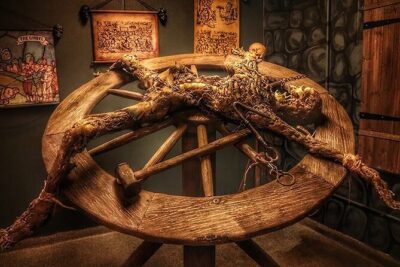
Medieval Torture Museum Ticket with Audio Guide and Ghost Hunting
Read our review →
Chicago’s Gold Coast Hidden History: A Self-Guided Audio Walk
Read our review →

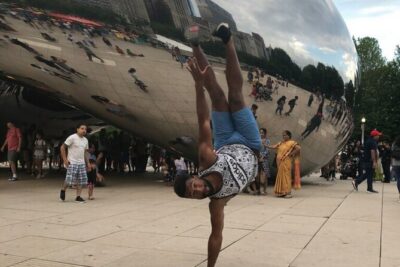

Chicago Haunted Ghost Tour GPS Self-Guided Walking Tour
Read our review →
Self-Guided Chicago Loop Tour Explore the City at Your Own Pace
Read our review →Browse the lists this tour appears in