
Reviewed · MUSEUMS
Illinois Holocaust Museum Experience360 Admission
The most striking part of Experience360 is the mix of personal testimony and new technology. You can follow survivors through childhood places in the virtual reality theater, then speak with interactive holograms that answer questions in their own recorded voices. I like the way the museum makes history personal rather than leaving you with dates and labels. I also like that your $12 ticket covers every exhibition, not just one featured room.
The staff add real value. Tom has led especially helpful visits, while MJ and Val have been praised for taking time with questions. The main drawback is emotional weight: this is a serious visit, not a light afternoon stop, and the recommended age is 12 and older. You may also need more than an hour if you want to take in every display at a thoughtful pace.
Key points to know before you go
- The $12 ticket covers all exhibitions, including the VR theater, object displays, and survivor holograms.
- VR and hologram technology make survivor testimony personal, but the subject matter can be upsetting.
- Plan on 1 to 2 hours, with extra time if you read every panel or ask many questions.
- Staff members such as Tom, MJ, and Val help bring context to the displays and welcome questions.
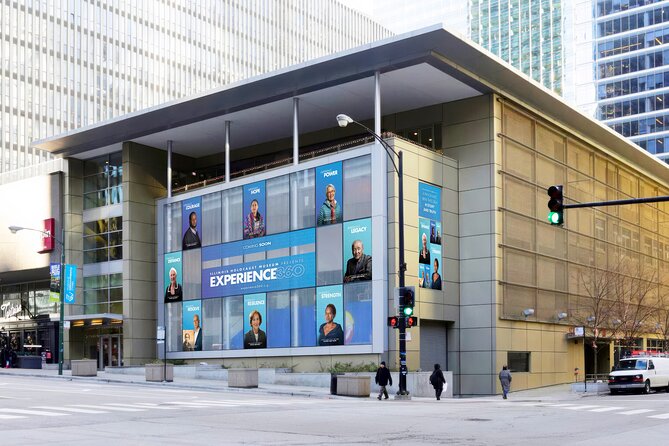
- The museum is in Chicago, near public transportation, and mobile tickets make entry simple.
- Children under 12 are not recommended, making this a better choice for older children, teens, and adults.
A serious museum with a very human focus
The Illinois Holocaust Museum Experience360 is built around memory, witness, and the question of what we do with difficult history. It begins with the Holocaust, but the museum also places that history alongside other genocides, giving you a wider frame for understanding persecution and mass violence.
That broader approach matters. You are not asked to see the Holocaust as an isolated event with no connection to the present. Instead, the museum encourages you to consider how prejudice grows, how ordinary people respond, and why testimony still matters.
I would not rush through this museum. The official visit length is about 1 to 2 hours, but that range depends on how much you read, how long you spend with the interactive features, and how many questions you ask. A quick visit can cover the main rooms. A careful visit may need the full two hours.
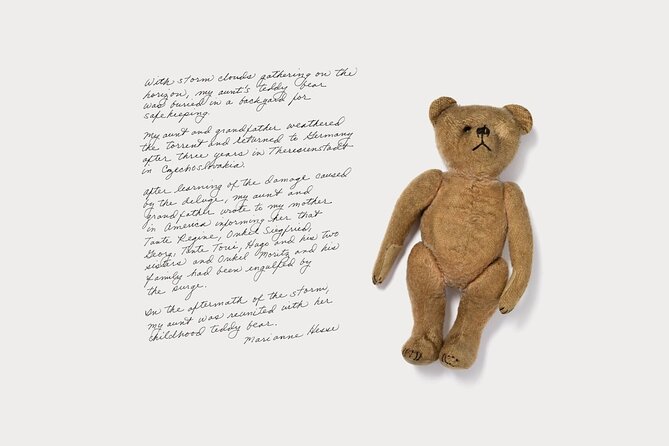
The museum is also more personal than a display of objects alone. You will encounter family memories, childhood stories, hiding places, photographs, and personal possessions. Those details can be harder to forget than a wall of statistics, which is part of the museum’s purpose.
More museums in Chicago:
- Medieval Torture Museum Ticket with Audio Guide and Ghost Hunting
★ 5.0 · 962 reviews - Chicago: Field Museum of Natural History Ticket or VIP Tour
★ 4.7 · 717 reviews - Field Museum of Natural History Admission Tickets
★ 4.5 · 489 reviews
Start in the Call-to-Action Gallery
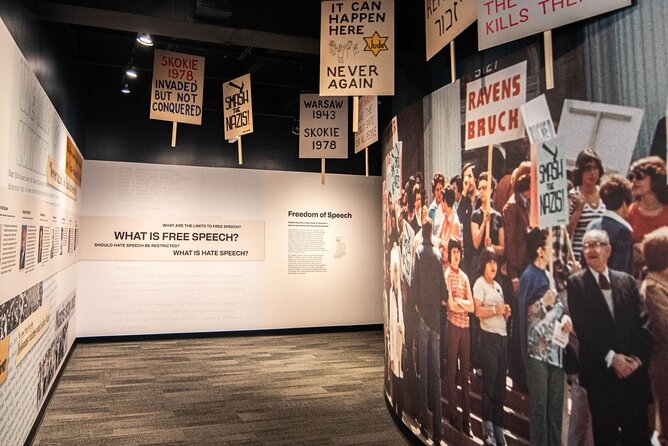
Your visit begins in the Call-to-Action Gallery. This opening section explains why a Holocaust museum was founded in Skokie, a Chicago-area community with a significant Jewish population and strong connections to Holocaust survivors.
This is useful context before you move into the larger exhibits. Instead of treating the building as a generic memorial, the gallery explains its local roots and its reason for being. You gain a clearer sense of the museum’s educational mission before the subject matter becomes heavier.
I like starting here because it connects the museum to a real community. The story is not presented as something that happened only in a distant place. It is also about people who came to the Chicago area, rebuilt their lives, and chose to preserve their memories for future generations.
Give this opening room to work. It may not have the visual impact of the VR theater or holograms, but it sets the tone for everything that follows.
The Karkomi Foundation Gallery gives the historical frame
The Karkomi Foundation Gallery provides an overview of the Holocaust and World War II. This is the place to slow down and establish the basic sequence of events, especially if you are visiting with someone who knows the subject only in broad terms.
The gallery helps you connect political developments, war, persecution, and the destruction of Jewish communities. You may find the material easier to understand here than in a display that assumes you already know the chronology.
This section is also where the museum’s educational role becomes clear. It is not only asking you to feel sorrow. It is asking you to understand how a society can move from prejudice and exclusion to organized mass murder.
I recommend spending time with the explanatory panels before moving on to the personal stories. The emotional exhibits have greater force when you understand the setting around them.
The VR theater puts you beside survivor memories
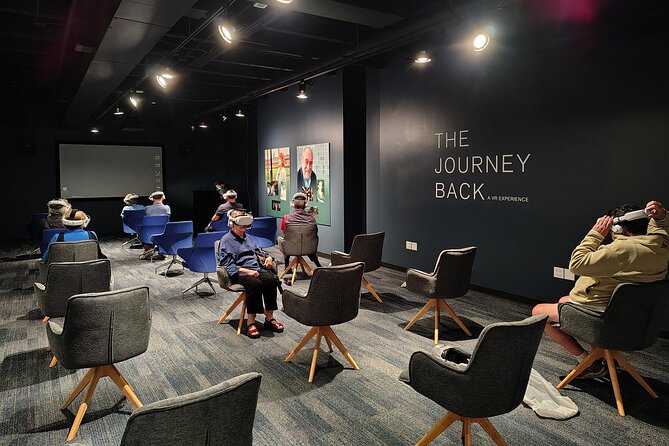
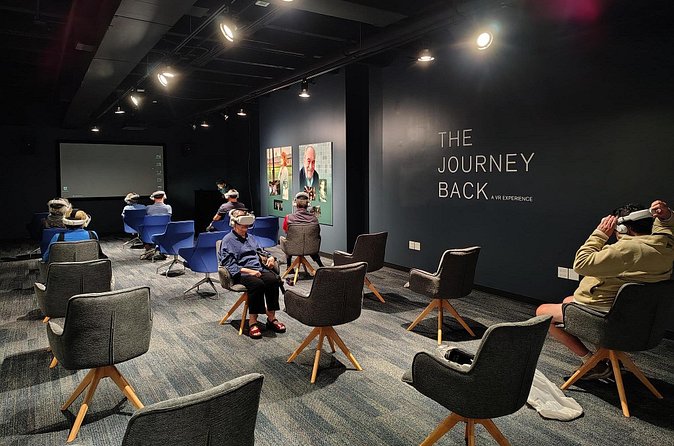
The Northern Trust Virtual Reality Theater is one of the most distinctive parts of Experience360. The program takes you through survivors’ childhood hometowns and places where they hid during the Holocaust.
The technology offers a different point of view from a standard film or photograph. You are not simply looking at an object behind glass. The panoramic format gives the testimony a sense of place, helping you connect a survivor’s memories with streets, buildings, and hiding locations.
Several people have found the VR portion to be the highlight of the visit. I can understand why. It combines personal testimony with a visual setting, creating a stronger link between the speaker and the places being described.
Still, technology is only useful here because it supports the stories. The VR theater is not an amusement ride, and you should not expect entertainment in the usual sense. Its value comes from helping you listen more closely.
If you are short on time, do not skip the surrounding galleries just to reach the VR theater. The virtual program works best as part of the full visit, not as a stand-alone attraction.
Different part of the city, different kind of afternoon:
- Chicago Architecture River Cruise
★ 5.0 · 15,756 reviews - Chicago River 90-Minute Architecture Tour
★ 4.5 · 9,629 reviews - Chicago River: 1.5-Hour Guided Architecture Cruise
★ 4.8 · 8,046 reviews - Chicago: Gangsters and Ghosts Walking Tour
★ 5.0 · 7,155 reviews
Object, Image, Memory makes private belongings speak
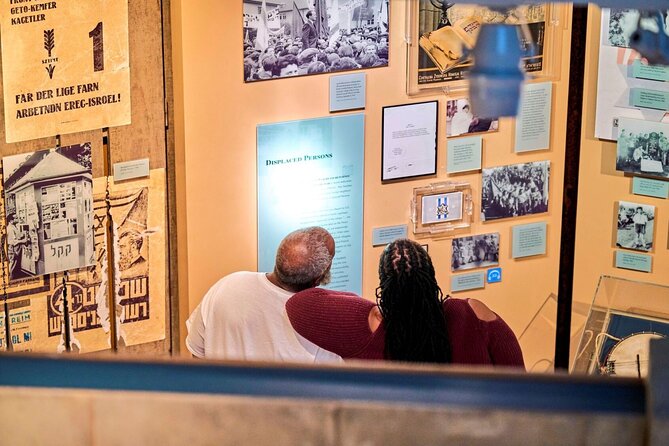
The ITW Stories of Survival: Object. Image. Memory exhibition focuses on personal artifacts, photographs, and written testimony. This is one of the quieter sections, but it may stay with you longest.
A personal object can make an enormous event feel close. Clothing, household items, photographs, or other belongings can show what a person valued before persecution interrupted ordinary life. The written testimony then gives that object a voice and a place in a larger story.
I find this approach helpful for visitors who feel overwhelmed by large historical subjects. You do not need to absorb every fact at once. You can focus on one person, one object, and one account of survival.
The emotional response can be strong. Plan accordingly, especially if you are visiting during a lunch break or between other activities. One visitor who had only a short visit wished for more time and planned to return. That is a sensible approach if you find yourself reading carefully.
Survivor holograms let you ask real questions
The interactive Holocaust Survivor Conversations are the museum’s most unusual feature. Holographic technology lets you ask questions and hear recorded answers from survivors, creating a conversation that feels more direct than a standard video presentation.
Do not be shy about asking questions. The museum encourages it, and the feature is designed for curiosity. You can use the opportunity to ask about a survivor’s childhood, family, hiding experience, liberation, or life afterward, depending on the conversation available.
This format helps bridge the gap between a historical record and a living person’s testimony. Even though the survivor is represented through technology, the focus remains on the human story.
The experience may affect people differently. Some visitors will be fascinated by the technology. Others may barely notice the technology because they are concentrating on the testimony. Both reactions are fair. The important thing is to listen and reflect.
Staff can help you get more from this section. MJ and Val have been especially helpful in answering questions and adding context. Tom has also guided visitors through the museum with care. If someone is available, ask rather than walking past a display you do not understand.
Why the staff matter so much
The museum’s staff are not just there to point you toward the next room. They can help explain the exhibits, answer questions, and add context that a label cannot always provide.
That personal help is valuable in a museum dealing with complex and painful material. You may wonder about a historical term, the meaning of an artifact, or the technology behind a display. A short conversation can make the difference between simply seeing an exhibit and understanding it.
Tom has been singled out for strong guiding, while MJ and Val have been described as kind and willing to answer many questions. If you meet them or another staff member, take advantage of the chance to talk.
The museum also offers room for different levels of engagement. You can make a quiet self-guided visit, ask questions as you go, or accept more explanation from the staff. That flexibility is helpful for families and mixed-age groups, though the content is best suited to people 12 and older.
How much time should you allow?
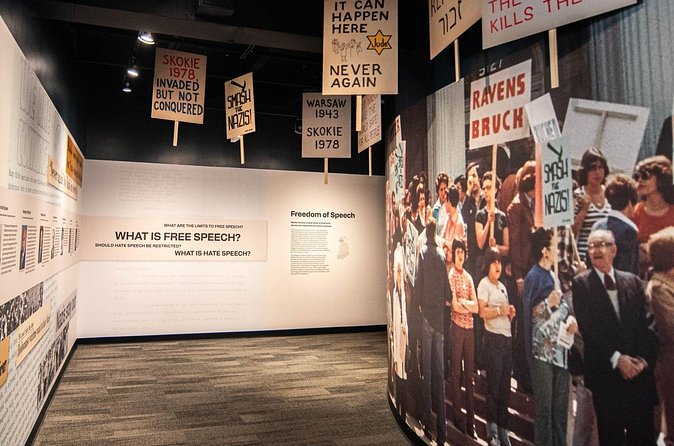
The stated duration is about 1 to 2 hours. I would allow the full two hours if this is your main activity in the area.
An hour is enough to get an overview and experience some of the major features. It is not enough for an unhurried visit through every gallery, especially if you read the testimonies or speak with staff.
Your pace will depend on the group. Someone interested in technology may spend extra time with the VR and hologram sections. A history student may focus on the Karkomi Foundation Gallery. A visitor with a personal connection to Holocaust history may need more time in the survivor stories and object displays.
If you are visiting during a work break, be realistic. You can see meaningful parts of the museum, but you may leave feeling that you need to return. That is not a flaw in the experience. It simply reflects how much material is here.
Is the $12 admission good value?
At $12 per person, Experience360 is reasonably priced for a museum visit that includes all exhibitions and several forms of interpretation. You are not paying separately for the VR theater, object collection, or hologram conversations.
The value is strongest if you allow enough time to use the full museum. A rushed hour still offers something, but the admission becomes a better deal when you take time with the galleries and ask questions.
The price is also modest compared with many Chicago attractions. More important, the visit offers an educational purpose that does not depend on large-scale spectacle. The technology adds interest, but the personal stories are the reason to come.
I would not choose this place simply to fill spare time without considering the subject. The $12 price is fair, but the real cost is attention and emotional energy. You need to be ready to listen.
Practical details for planning your visit
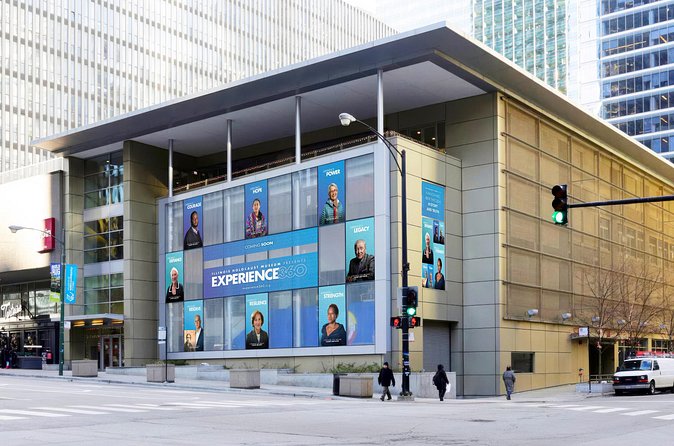
The museum is in Chicago and is near public transportation. That makes it workable as part of a day in the city, though the information provided does not specify a particular transit route or nearby station.
Opening hours are listed as 10 a.m. to 5 p.m., Monday through Sunday, for the period from August 26, 2025, through February 16, 2027. Check the date on your reservation carefully, since operating details can change.
Your ticket is mobile, so you can keep the confirmation on your phone. Confirmation is provided when you book. Service animals are allowed, and most people can participate.
The material is not recommended for children under 12. That advice is worth taking seriously. The subject matter includes persecution, genocide, and survivor testimony, and younger children may not be ready for the emotional or historical content.
Because the experience is available by reservation and is often booked about 15 days ahead, booking early is sensible for a particular date. Free cancellation is available up to 24 hours before the start time. Canceling within 24 hours does not qualify for a refund, and changes within that period are not accepted.
Who should visit Experience360?
I would recommend this museum to anyone interested in modern history, human rights, Jewish history, education, or the ways museums preserve personal testimony. It also suits visitors who want an experience that asks for thought rather than quick entertainment.
Older teenagers may gain a great deal from it, especially if an adult is available to discuss the material afterward. Adults visiting with friends, family, or school groups can choose how much explanation and conversation they need.
The museum is a particularly good choice if you have already seen conventional Holocaust exhibits and want a different way to encounter survivor testimony. The VR and hologram features offer a new format without replacing the objects, photographs, and written accounts that give the subject its grounding.
I would be more cautious about bringing young children or anyone who is looking for a light attraction. The museum is somber, and some parts may leave you speechless. Bring patience, and perhaps a tissue.
Should you book this Chicago museum experience?
Book it if you want a focused, affordable museum visit that combines solid historical context with personal survivor testimony. The $12 price is easy to justify, especially since it includes every gallery, the VR theater, and the hologram conversations.
Give yourself close to two hours, ask questions, and do not treat the technology as a quick novelty. The strongest parts are the human ones: a survivor’s childhood memory, an object tied to a lost home, or an answer that makes the past feel close.
Skip it only if you want a casual attraction or if your group is not ready for serious material. For history lovers and thoughtful visitors, Experience360 offers a memorable way to learn, remember, and consider what those memories ask of you now.
FAQ
Where is the Illinois Holocaust Museum Experience360 located?
The experience is located in Chicago, USA.
How much does admission cost?
Admission costs $12 per person.
How long does the visit take?
The visit lasts approximately 1 to 2 hours, depending on how much of the museum you explore and how long you spend with the interactive exhibits.
What does the admission ticket include?
Admission includes access to all museum exhibitions, including the Call-to-Action Gallery, Karkomi Foundation Gallery, Northern Trust Virtual Reality Theater, ITW Stories of Survival: Object. Image. Memory, and the interactive survivor holograms.
What are the opening hours?
The listed hours are 10 a.m. to 5 p.m., Monday through Sunday, for August 26, 2025, through February 16, 2027.
Is the experience suitable for children?
The experience is not recommended for children under 12.
Can I cancel my booking?
You can cancel for a full refund up to 24 hours before the experience start time. Cancellations or changes made less than 24 hours before the start time are not accepted for a refund.
Recently added around Chicago
- Travel between Chicago O’Hare and Madison★ 4.5 · 4 reviews
- Holiday Walking Tour: Underground Chicago via the Pedway★ 5.0 · 27 reviews
- Workers Cottages of Oldtown Triangle Walking Tour★ 5.0 · 45 reviews
- Volo Auto Museum: Admission Ticket★ 4.5 · 55 reviews
- Verse Immersive Holographic Theater in Chicago★ 4.5 · 28 reviews
- Vito’s Vault Chicago finest dinner theatre speakeasy★ 5.0 · 14 reviews
- Delicious Donuts & Sweet Treats: West Loop Walking Tour★ 5.0 · 47 reviews
- Traveling Spoon Chicago-Style Deep Dish Pizza Private Online Cooking Class★ 5.0 · 4 reviews
Museums, compared.
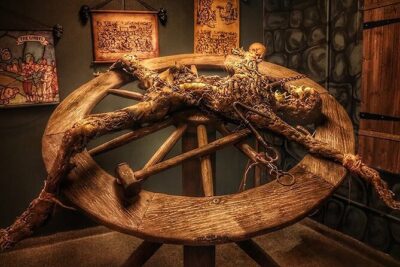
Medieval Torture Museum Ticket with Audio Guide and Ghost Hunting
Read our review →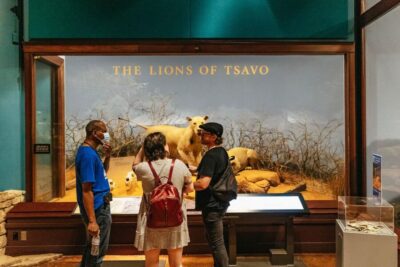
Field Museum of Natural History Ticket or VIP Tour
Read our review →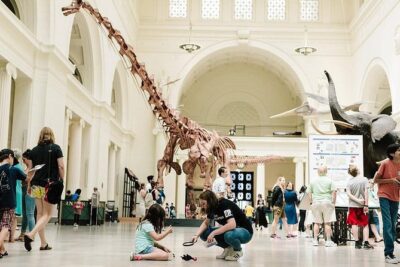
Field Museum of Natural History Admission Tickets
Read our review →

2-Hour Chicago Lakefront & Museum Campus Segway Tour
Read our review →


Chicago Landmarks & Museum Campus Small Group Segway Tour
Read our review →Browse the lists this tour appears in