
Reviewed · CHICAGO GHOST TOURS
Prairie Avenue Haunted History Tour and Ghost Hunt
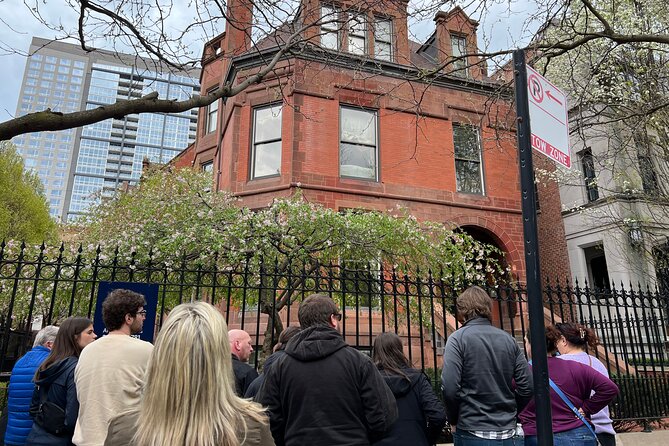
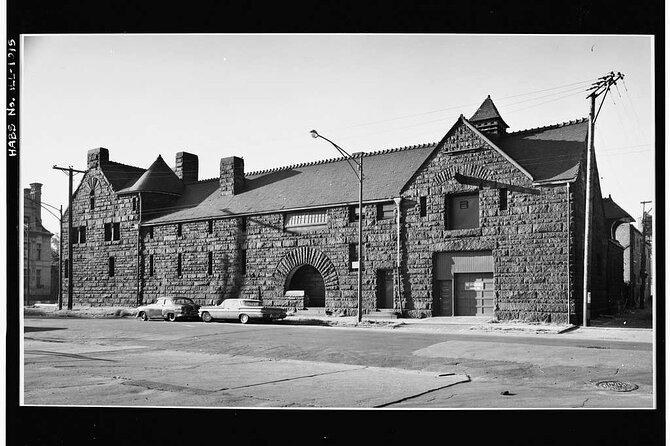
Chicago’s old Millionaire’s Row takes on a different mood after sunset. On this two-hour-20-minute walk, you move from Glessner House through Prairie Avenue’s grand homes and churches, hearing about wealthy families, scandalous characters, and reported hauntings along the way. Tony leads the tour, and the ghost-hunting gear gives you something active to do besides listen.
I like the mix of solid Chicago history and playful supernatural storytelling. I also like the small-group limit of 25, which should make it easier to hear Tony and ask questions. The main drawback is practical: this is an outdoor evening walk, and several people found the cold hard to ignore, especially when underdressed.
Key points to know before you book
- Tony is the guide to request: He brings strong knowledge of Prairie Avenue and answers questions with enthusiasm.
- The tour covers five important stops: You see the Marshall Field Jr. Mansion, Clarke House, Keith House, Second Presbyterian Church, and the wider Prairie Avenue district.
- Ghost hunting is hands-on: You are given ghost-hunting equipment to use during the walk.
- The history is more than haunted tales: Stories include George Pullman, Henry Ives Cobb, Chicago’s old elite, and the district’s earlier days as an Indian trail.
- Dress for Chicago after dark: The tour runs outdoors at 8 p.m., and cold or poor weather can affect the experience.
- You finish where you begin: The meeting point is in front of Glessner House at 1800 South Prairie Avenue.
Why Prairie Avenue works so well after dark
Prairie Avenue is an unusually good setting for a ghost walk because the buildings already carry plenty of drama. In the late 19th century, this area became home to Chicago’s wealthy and famous. Mansions, churches, and grand residences lined the avenue, while their owners shaped the city through business, architecture, railroads, and industry.
You are not walking through a made-up haunted village. You are walking through a real historic district with stories tied to recognizable Chicago figures. That gives the ghost tales some useful grounding. First you learn who lived here, what they built, and how they fit into the city. Then you hear about the strange incidents and reported spirits attached to those places.
I like that balance. If you want only jump scares, this may feel too historical. If you enjoy old buildings, local scandals, and a little nighttime suspense, the mix makes good sense.
The walk begins at 8 p.m. in front of Glessner House. The tour ends at the same point, which simplifies your evening plans. You do not need to arrange a second pickup location, and you can return to the spot where you left your transportation.
More ghost tours in Chicago:
- Chicago: Gangsters and Ghosts Walking Tour
★ 5.0 · 7,155 reviews - Chicago: Gangsters and Ghosts Guided Walking Tour
★ 4.7 · 1,697 reviews - Medieval Torture Museum Ticket with Audio Guide and Ghost Hunting
★ 5.0 · 962 reviews
Marshall Field Jr. Mansion: scandal at the first stop
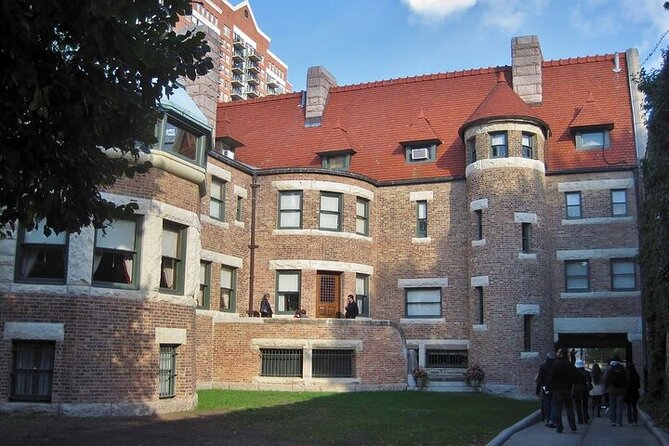
The first stop is the Marshall Field Jr. Mansion, where the tour begins with stories of the home, its occupants, and its scandals. The name connects the building to one of Chicago’s best-known commercial families, but the focus here is not simply on wealth or architecture.
Tony uses the mansion as an entry point into the personal side of Prairie Avenue. You hear about the people behind the grand facades, including the troubles and ghost stories linked to this residence. That approach helps set the tone for the rest of the walk: the buildings are impressive, but the people connected to them are often more interesting.
You spend about 20 minutes here. That is enough time for a focused introduction without lingering so long that the tour loses its pace. Since admission is not listed for an interior visit, expect this to be an exterior stop rather than a mansion tour inside.
For me, this is a strong opening because it introduces the two threads that run through the evening: Chicago’s social history and its supernatural folklore. You get the setting first, then the eerie layer.
Clarke House Museum and Chicago’s oldest building
The Henry B. Clarke House is a Greek Revival-style home and one of the most important stops on the route. You learn about its place in Chicago history as the city’s oldest building, along with the more troubled stories associated with it.
The Clarke House gives the tour a useful change of mood. The Marshall Field Jr. Mansion brings questions of wealth and scandal. Clarke House offers a closer look at early Chicago and the survival of an older home in a city better known for rebuilding and modern growth.
You spend roughly 20 minutes here. The outside viewing and storytelling are especially useful if you have not visited the museum during the day. The evening setting changes how you see the structure, but you should not expect a full museum visit as part of this experience.
This is also one of the stops where the historical material can matter as much as the ghost story. I would pay attention to the details about the building’s age and the difficult history attached to it. They give the supernatural tales more context than a simple list of haunted addresses.
Keith House and the feel of Prairie Avenue
The Keith House is a distinct 1870s mansion in the heart of the Prairie Avenue Historic District. The stop lasts about 20 minutes and helps you see how the neighborhood’s residences fit together as a group rather than as isolated curiosities.
At this point, you begin to get a stronger sense of Prairie Avenue as a former center of elite Chicago life. The homes reflect an era when industrial fortunes and civic influence were displayed in brick, stone, and elaborate design. Tony’s storytelling connects the individual house to the people and ambitions that shaped the district.
The Keith House may be most valuable to you if you enjoy architecture but do not want a tour limited to design details. You hear about the building, but the evening also keeps moving through personal stories and ghost lore.
A possible limitation is that exterior storytelling requires you to use your imagination. You will not get the same close look at rooms, furniture, or interior decoration that you would on a house museum visit. In exchange, you get the broader neighborhood setting and the unusual feel of seeing these homes at night.
More history tours in Chicago:
- Chicago in a Day: Food, History & Architecture Walking Tour
★ 5.0 · 1,153 reviews - Chicago: Field Museum of Natural History Ticket or VIP Tour
★ 4.7 · 717 reviews - Field Museum of Natural History Admission Tickets
★ 4.5 · 489 reviews - Chicago Walking Tour: Historic Treasures of Chicago
★ 5.0 · 362 reviews
Second Presbyterian Church after sunset
Second Presbyterian Church brings a different kind of architecture to the route. This Gothic Revival landmark is a religious building rather than a mansion, and the stories here concern the haunted history of a beautiful house of worship.
The change matters. Prairie Avenue’s supernatural stories are not limited to wealthy homes and family scandals. A church adds another layer of local memory, with a setting that can feel solemn and atmospheric even before the ghost stories begin.
You spend about 20 minutes at this stop. As with the other locations, the value comes from Tony’s explanation and the exterior surroundings rather than an advertised interior admission. If you like historic churches, Gothic Revival design, or stories tied to old buildings with a public role, this should be one of the more memorable pauses.
I would keep your expectations measured. The tour does not promise proof of spirits. It gives you stories and equipment, then lets you decide how seriously to take the ghost-hunting side. That is part of the fun, especially if your group enjoys comparing impressions.
One hour through the Prairie Avenue Historic District
The longest portion of the tour lasts about an hour and covers the wider Prairie Avenue Historic District, also called the Prairie District. This is where the individual stops come together.
You hear how Prairie Avenue began as an Indian trail before becoming a home for 19th-century millionaires. That shift tells you a great deal about Chicago itself, a city that grew quickly and drew people who made fortunes through business, railroads, architecture, and industry.
The stories include George Pullman, whose name is linked to the famous train sleeping car, and Henry Ives Cobb, the architect behind the Newberry Library. These references expand the tour beyond a single street. They connect the mansions to larger changes in Chicago and to the people whose work helped define the city.
This hour also gives Tony room to tell more of the neighborhood’s scandals and ghost stories. The longer format should suit you if you prefer a guide who can explain connections instead of rushing from one address to the next. Past participants specifically praised Tony’s storytelling, humor, and willingness to answer questions. One person described the evening as a fun date night, while another found the experience especially effective when the night felt unusually active and eerie.
The drawback is that an hour outdoors can feel long in bad weather. Wear warm layers and sensible shoes. Even a fun story is harder to enjoy when you are cold, and one person admitted being underdressed on a chilly night. The tour requires good weather, and if poor weather causes cancellation, you are offered a different date or a full refund.
What the ghost-hunting equipment adds
The ghost-hunting gear makes this more than a standard historic walking tour. You do not simply hear about reported spirits while following a guide. You get equipment to use during the route, which gives you a role in the evening.
The information provided does not specify the type or number of devices, so I would not book this expecting a particular technical setup. Think of the equipment as a fun way to take part, not as a scientific investigation with guaranteed results.
That distinction is important. The strongest part of the experience appears to be the storytelling, while the equipment adds play and suspense. Tony’s background in the neighborhood gives the activity substance. The devices give your group something to try as you listen and move between locations.
This format works especially well for a date night, a small group of friends, or a family with older children who enjoy spooky themes. It may be less suitable if you want a quiet architecture tour or a serious discussion of historical evidence.
Tony’s guiding style and group size
Tony is repeatedly singled out for his strong command of Chicago and Prairie Avenue history, his humor, and his open approach to questions. That matters on a tour with many names and buildings. A guide who can explain the background clearly makes the mansions easier to remember.
He also appears to adjust well when conditions are less than ideal. One group had poor weather and still found the tour worthwhile. That does not remove the need to dress properly, but it suggests the evening is not built only around perfect atmosphere.
The maximum group size is 25 people. That is not an intimate private walk, but it is small enough to be more manageable than a large city tour. You should have a better chance of hearing the guide at each stop and taking part with the ghost-hunting equipment.
The mobile ticket is convenient, and confirmation is provided at booking. The meeting place is easy to identify: in front of Glessner House at 1800 South Prairie Avenue. The location is near public transportation, and service animals are allowed. Most people can participate, though you should remember that this is a walking tour outdoors at night.
Is $40 a fair price?
At $40 per person, this tour costs more than a simple neighborhood walk but less than many large, highly produced evening attractions. The value depends on what you want from it.
You are getting about two hours and 20 minutes, a guide-led tour of a major historic district, five planned areas of interest, local stories, and ghost-hunting equipment. If you are interested in both Chicago history and spooky entertainment, the two themes share the same time slot instead of requiring separate tours.
The price is less attractive if you mainly want to enter historic buildings. Admission to the listed stops is free, but the experience is not presented as a series of interior museum visits. You are paying for the guide’s storytelling, route, local context, and evening format.
I think the price is reasonable for a first-time visitor who wants a different side of Chicago. It is also a practical choice for a date night because the activity has a clear start and end, a strong theme, and enough material to keep conversation going. For a history fan who prefers quiet daytime access to interiors, I would spend the money elsewhere.
Who should book this evening walk?
You should consider booking if you enjoy:
- Local history told through buildings and personalities
- Old mansions, churches, and historic neighborhoods
- Ghost stories presented alongside real places and people
- A guide-led date night or group activity
- Participating with simple ghost-hunting equipment
- Evening walks with a little suspense
You may want to skip it if you dislike being outdoors at night, have trouble walking for more than two hours, or want guaranteed access inside the buildings. The tour is also not ideal if you expect theatrical scares or proof of paranormal activity.
Bring warm clothing, especially in cooler months. Since the start time is 8 p.m. and the route lasts more than two hours, the temperature can become a bigger factor than you expect.
Should you book the Prairie Avenue Haunted History Tour?
Book it if you want Chicago history with a supernatural twist and you like a guide who can tell a good story. Tony’s command of the neighborhood, the mix of famous residents and local scandals, and the chance to use ghost-hunting gear give the walk more substance than a basic haunted stroll.
I would choose it for a curious first visit to Prairie Avenue, a date night, or an evening with friends. I would not choose it as a replacement for a house museum visit or an architecture tour focused on interiors.
At $40, the experience earns its value through the combination of history, atmosphere, and participation. Dress for the weather, arrive ready to walk, and treat the ghost hunting as playful rather than guaranteed proof. If that sounds like your kind of evening, this is a smart way to meet Chicago’s old elite after dark.
FAQ
Where does the Prairie Avenue Haunted History Tour begin?
The tour begins in front of Glessner House at 1800 South Prairie Avenue, Chicago, Illinois 60616.
What time does the tour start?
The tour starts at 8 p.m.
How long does the tour last?
The experience lasts approximately two hours and 20 minutes.
Where does the tour end?
The activity ends back at the meeting point in front of Glessner House.
Is ghost-hunting equipment provided?
Yes. You can use ghost-hunting equipment during the tour.
What happens if bad weather cancels the tour?
The experience requires good weather. If it is canceled because of poor weather, you are offered a different date or a full refund.
Recently added around Chicago
- Travel between Chicago O’Hare and Madison★ 4.5 · 4 reviews
- Workers Cottages of Oldtown Triangle Walking Tour★ 5.0 · 45 reviews
- Volo Auto Museum: Admission Ticket★ 4.5 · 55 reviews
- Holiday Walking Tour: Underground Chicago via the Pedway★ 5.0 · 27 reviews
- Verse Immersive Holographic Theater in Chicago★ 4.5 · 28 reviews
- Vito’s Vault Chicago finest dinner theatre speakeasy★ 5.0 · 14 reviews
- Delicious Donuts & Sweet Treats: West Loop Walking Tour★ 5.0 · 47 reviews
- Traveling Spoon Chicago-Style Deep Dish Pizza Private Online Cooking Class★ 5.0 · 4 reviews
Chicago Ghost Tours, compared.
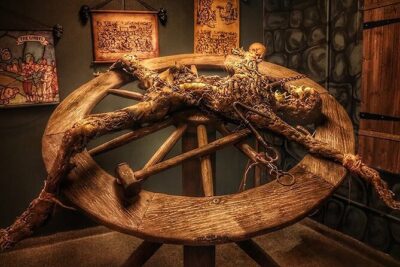
Medieval Torture Museum Ticket with Audio Guide and Ghost Hunting
Read our review →
Haunted Chicago Booze and Boos Ghost Walking Tour
Read our review →
Embers of the Windy City: Chilling Chicago Ghost Tours
Read our review →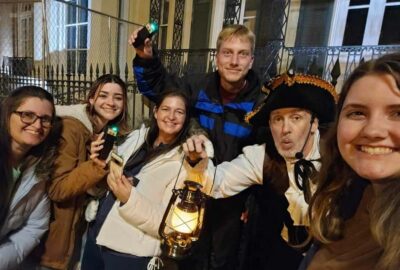
Ghosts & Hauntings of the Windy City Walking Tour
Read our review →
Browse the lists this tour appears in