
Reviewed · CHICAGO SKYSCRAPER INTERIOR TOURS
Chicago Art Deco Madness Walking Tour
Chicago’s Art Deco story is hiding in plain sight. On this compact walk through the Loop, Ronnie Frey points out the bold stonework, geometric patterns, metal details, and grand interiors that are easy to miss when you are rushing between skyscrapers.
I like the small group, capped at 10 people, and the way the route mixes famous buildings with less obvious architectural details. I also like the guide’s background as an interior designer and historic architecture specialist. The main consideration is that lobby access depends on the day, and the tour is nonrefundable unless poor weather or a failure to reach the minimum group size cancels it.
Key things to know before you book
- About seven Art Deco buildings: The route covers major examples from the 1920s, plus churches, sculptures, and department-store interiors.
- Ronnie Frey leads the walk: His style is energetic, personable, and packed with details about design, Chicago history, and the Roaring Twenties.
- Small group, maximum 10 people: You should have a better chance to hear explanations and ask questions than on a large city tour.
- Interiors are a bonus, not a guarantee: Lobbies and arcades are visited when open, so the exact indoor portion can change.
- Easy downtown route: The walk lasts about 1 hour and 45 minutes and is described as manageable, but you still need a moderate level of fitness.
- Strong value for architecture fans: At $45, you are paying for focused interpretation rather than admission tickets, since the listed stops are free to enter.
Why Chicago is such a good Art Deco city
Chicago is often introduced through its early skyscrapers and pioneering steel-frame buildings. This tour moves into a later chapter, when architects used polished stone, bronze, terra cotta, stylized figures, zigzags, sunbursts, and other crisp patterns to give office towers a sense of speed and modern life.
The timing matters. Many of the buildings on this walk were designed during the 1920s, when Chicago was expanding quickly and businesses wanted offices that looked confident and new. Art Deco was not simply decoration pasted onto a building. It shaped entrances, elevator lobbies, ceiling patterns, elevator doors, lighting, and even the way a building announced its purpose from the street.
You will also get a slice of Chicago beyond Art Deco. The route includes a striking Gothic church, large public sculptures, and the old Marshall Field department store, now Macy’s on State Street. That variety keeps the walk from becoming a parade of similar facades.
Ronnie Frey’s role is important here. The tour is not just a list of construction dates and architects. He points out details that can seem ordinary until someone explains what to look for. His enthusiasm is one of the main reasons this experience suits people who want to understand design, not merely photograph it.
More skyscraper interior tours in Chicago:
- Original Chicago Architecture Interiors Tour: Dazzling Interiors
★ 5.0 · 1,489 reviews - Chicago’s Secret Interiors Architectural Walking Tour
★ 5.0 · 635 reviews - Chicago: Secret Interiors Architecture Walking Tour
★ 4.9 · 498 reviews
Starting at the Board of Trade
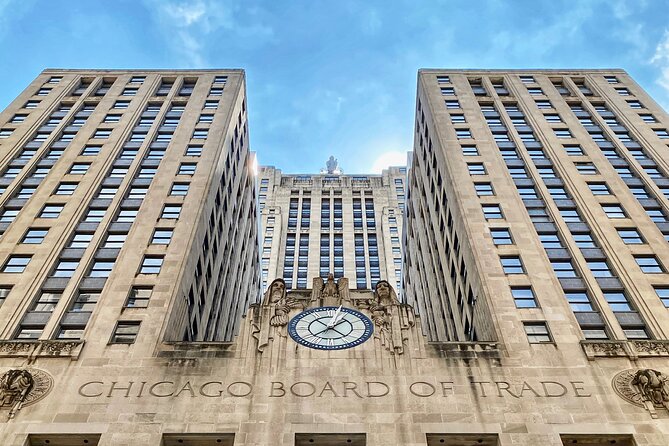
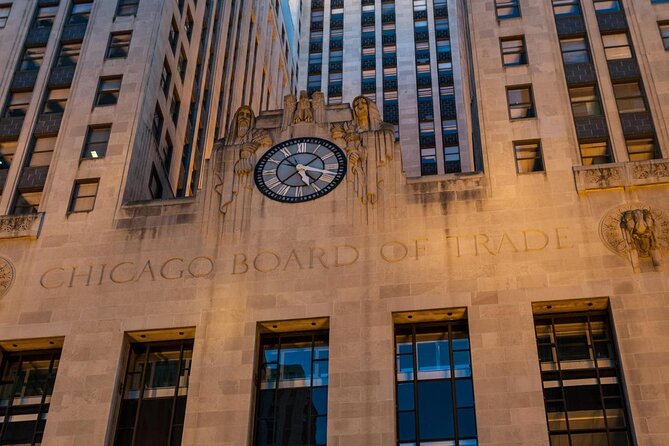
The tour begins at 11 a.m. near 231 South LaSalle Street, on the fourth floor of Wintrust Mortgage. The first major stop is the Chicago Board of Trade Building, a fitting place to begin because its exterior has the scale and theatrical style many people associate with Chicago Art Deco.
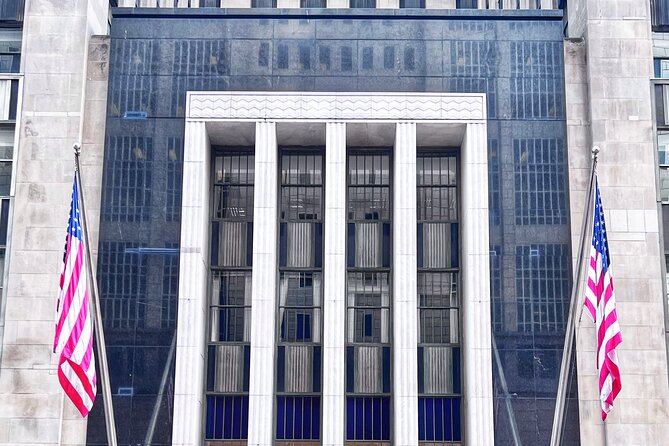
You will spend about 20 minutes looking at the building’s exterior and, when open, its interior lobby. Pay attention to the building as a complete composition rather than only its height. Ronnie can help you read the details around the entrance and upper sections, then explain how the design projected power and order in the financial district.
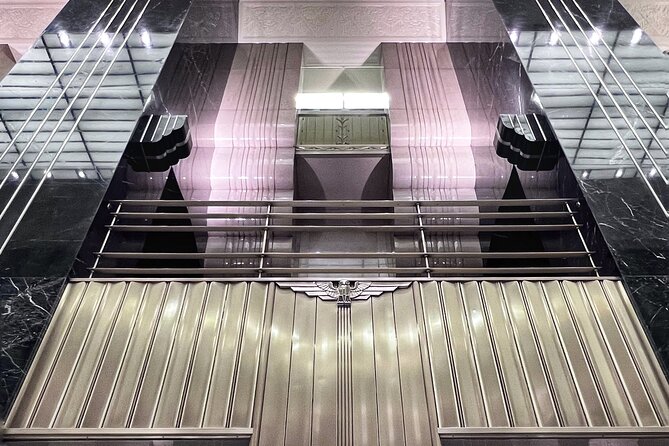
The lobby visit is especially useful because Art Deco often makes more sense indoors. Street-level views show the mass and ornament, but the lobby reveals how the style controlled the whole visitor experience. Geometric surfaces, decorative metalwork, and carefully planned patterns give the building a polished identity.
One practical point: the lobby is not guaranteed to be open. If you are booking mainly for interiors, keep that in mind. Even with an exterior-only visit, this is a strong first stop because the building provides a clear introduction to the period and its visual language.
LaSalle Street’s three close-up examples
The route continues to 135 South LaSalle Street, where you will spend about 15 minutes examining the exterior and, when open, the interior arcade. The arcade adds a different scale from the Board of Trade. Instead of trying to take in an entire tower, you can look closely at the materials and repeated shapes around the entrance and public passage.
Next comes One North LaSalle Street, with another 15-minute stop for the exterior and lobby when access allows. Seeing several buildings in a short stretch helps you compare how architects used the same broad style in different ways. One building may feel formal and restrained, while another uses stronger color, pattern, or ornament.
At 33 North LaSalle Street, the tour spends about 10 minutes on the exterior. This stop is useful because you can see how Art Deco details work on a building that may not receive the same attention as the Board of Trade. Ronnie’s job is to make sure you do not walk past the smaller clues: the shape of window surrounds, decorative bands, entrance treatment, and details high above street level.
These three LaSalle Street stops are among the best parts of the experience for anyone who enjoys close looking. You are not simply being led from one famous address to another. You are being trained to spot the style on your own.
A Gothic church and a distant red sculpture

The First United Methodist Church of Chicago provides a short but worthwhile change of pace. The exterior has Gothic details, and the church is described as the tallest church in America, sometimes called the chapel in the sky. The stop lasts about five minutes and includes photographs of the interior rather than a stated interior visit.
This is not an Art Deco building, and that is precisely why it earns a place on the route. The church gives you a useful contrast. Gothic architecture reaches back toward medieval forms, while Art Deco looked forward with machine-age geometry and modern materials. Seeing both during one downtown walk makes the architectural discussion more useful.
You will also catch a distant view of a large red sculpture. The stop is brief, so this is more of a visual pause than a full art lesson. Still, it adds another layer to the walk and breaks up the sequence of office buildings.
More walking tours in Chicago:
- Chicago: Gangsters and Ghosts Walking Tour
★ 5.0 · 7,155 reviews - Chicago Favorites Ultimate Food and Walking Tour
★ 5.0 · 1,962 reviews - Chicago: Gangsters and Ghosts Guided Walking Tour
★ 4.7 · 1,697 reviews - Chicago in a Day: Food, History & Architecture Walking Tour
★ 5.0 · 1,153 reviews
Public art at Miró’s Chicago and The Picasso
The route includes two famous outdoor sculptures, Miró’s Chicago and The Picasso. Each stop lasts about two minutes, so do not expect a long presentation devoted to either work. Instead, these are quick chances to connect the city’s older architecture with its modern public-art tradition.
The short stops can also help the pace. A nearly two-hour architecture walk needs changes in subject, and these sculptures give you a moment to step back from facades, lobbies, and decorative details. If you enjoy taking photographs, you will have several different kinds of subjects by this point: formal buildings, church ornament, public sculpture, and street scenes.
Macy’s and the old Marshall Field interiors
Macy’s on State Street is one of the most rewarding stops because the experience moves indoors. You will see Art Deco motifs inside the former Marshall Field department store, along with the famous Tiffany Glass atrium.
The building also has the large bronze clocks associated with the old Field’s tradition and the familiar meeting place under the clock. These clocks date from the early 1900s, so this stop is not limited to Art Deco. It shows how a major department store carried layers of design from different periods and used grand interiors to turn shopping into a public experience.
The Tiffany Glass atrium gives the stop a different mood from the office lobbies. Instead of focusing only on geometric wall patterns or corporate grandeur, you get decorative glass and a more open interior setting. This is a good place to let Ronnie explain how commercial buildings used art, materials, and scale to make an impression.
Allow about 10 minutes here. That is enough for an introduction and a look around, but not enough for an extended exploration of Macy’s. If this interior is a major reason you want to book, remember that building access and the exact time available can vary.
Ending at the Carbide and Carbon Building
The final major stop is the Carbide and Carbon Building, with about 10 minutes devoted to its exterior and interior lobby when open. Its green terra cotta makes it one of the easiest buildings on the route to recognize.
The color alone is striking, but the value lies in seeing how the green exterior works with the building’s Art Deco ornament. Inside, the lobby provides another chance to examine the polished, decorative side of the style. After several LaSalle Street examples, this building gives the tour a memorable closing image.
The walk ends at 68 East Wacker Place, near the Chicago Motor Club Building and the Hampton Inn Loop. Ending close to North Michigan Avenue makes the tour useful as part of a larger day downtown. You can continue toward the river, shops, or other central Chicago sights without having to return to the starting point.
What the small group changes
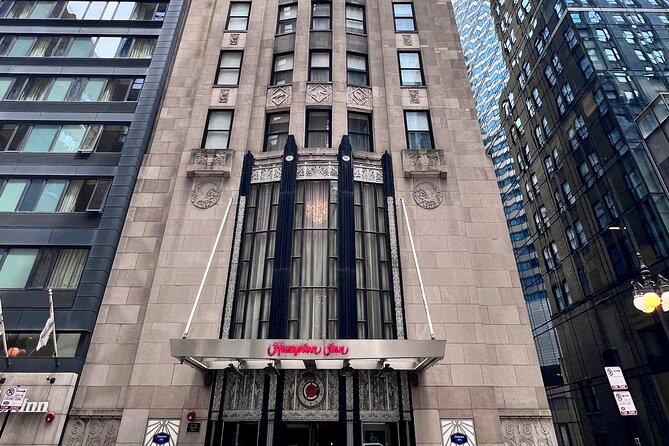
The maximum group size is 10 people. That is small enough to make a real difference on an architecture tour, especially when the guide is pointing to details above the street or explaining a pattern in a lobby.
With Ronnie Frey leading, you should have a better chance to ask why a building looks the way it does, rather than simply listening to a fixed speech. His approach has been described as fun, organized, and engaging, with an emphasis on stories as well as design.
That personal attention is one reason this tour works for both committed Art Deco fans and curious first-timers. You do not need to arrive already able to identify every style. The point is to learn what to notice, then start seeing it elsewhere in the city.
The small size does not mean the tour is private. You will still be walking with other people, and the pace is shared. But a group of 10 is far more practical than a large crowd when the guide pauses in a busy downtown setting.
Is $45 a fair price?
The price is $45 per person. No admission fees are listed for the stops, so the cost goes toward Ronnie’s time, route planning, explanations, and access to a focused architecture experience.
I see this as a fair price if you care about Chicago design and want more than a quick self-guided look at famous buildings. A guide can turn a facade you might ignore into a lesson in materials, symbols, planning, and social history. The information also stays useful after the tour, because you can apply the same way of looking to other buildings in Chicago.
The value is less clear if you prefer to move at your own pace or mainly want to enter every building. Indoor access is conditional, and the schedule gives only short visits at several stops. You are buying interpretation and a well-planned route, not guaranteed access to private or restricted spaces.
The tour lasts about 1 hour and 45 minutes, which is a good length for a first introduction. It is long enough to cover a solid range of sites without taking up half your day. You will need moderate physical fitness, and comfortable shoes are a sensible choice even though the walk has been described as easy.
Timing, weather, and booking cautions
The tour begins at 11 a.m. and uses a mobile ticket. The starting point is near public transportation, which helps if you are staying elsewhere in Chicago. Confirm the exact meeting details on your booking because the starting address is listed as 231 South LaSalle Street, fourth floor.
Service animals are allowed. The experience requires good weather, and if poor conditions cause a cancellation, you are offered another date or a full refund. It also requires a minimum number of participants, with the same choice of a new date, another experience, or a refund if that minimum is not reached.
The less forgiving part is the normal cancellation rule. The booking is nonrefundable and cannot be changed for any reason if you cancel or request an amendment. I would avoid booking this too early if your plans are uncertain.
Who should book this walk?
I would choose this tour if you like architecture, design, Chicago history, or city photography. It is especially suited to people who pass downtown buildings every day but want help noticing what is above the storefronts and beyond the entrance.
It also fits a first visit to Chicago because the route covers the financial district, State Street, and part of the North Michigan Avenue corridor. You get a compact introduction to several central areas without spending a full day on foot.
You might skip it if your main goal is a general sightseeing tour, a long visit inside each building, or a relaxed stroll with lots of free time. The schedule is focused, the group moves through several stops, and some interiors may be closed.
Should you book the Chicago Art Deco Madness Walking Tour?
Book it if you want a short, focused architecture walk led by someone who can explain why Chicago’s buildings look the way they do. The Board of Trade, LaSalle Street buildings, Macy’s interiors, and green Carbide and Carbon Building give you a strong set of examples, while the church and sculptures keep the route varied.
I would be comfortable recommending it to anyone who enjoys design but does not yet know much about Art Deco. The price is reasonable for a small group and an expert-led route, and Ronnie Frey’s personable style should make the information easy to follow.
Just set your expectations correctly: interior access depends on what is open, weather matters, and the booking cannot normally be refunded. If those limits work for you, this is a smart way to see downtown Chicago with sharper eyes.
FAQ
How long is the Chicago Art Deco Madness Walking Tour?
The tour lasts approximately 1 hour and 45 minutes.
What time does the tour begin?
The listed start time is 11 a.m.
Where does the tour begin?
The tour begins at Wintrust Mortgage, 231 South LaSalle Street, fourth floor, Chicago, Illinois 60604.
Where does the tour end?
The tour ends at 68 East Wacker Place, near the Chicago Motor Club Building and Hampton Inn Loop.
How many people can join the tour?
The maximum group size is 10 people.
Are the building interiors guaranteed to be open?
No. The tour visits several lobbies and an arcade when they are open. The itinerary also includes photographs of the First United Methodist Church interior.
Recently added around Chicago
- Travel between Chicago O’Hare and Madison★ 4.5 · 4 reviews
- Volo Auto Museum: Admission Ticket★ 4.5 · 55 reviews
- Holiday Walking Tour: Underground Chicago via the Pedway★ 5.0 · 27 reviews
- Workers Cottages of Oldtown Triangle Walking Tour★ 5.0 · 45 reviews
- Vito’s Vault Chicago finest dinner theatre speakeasy★ 5.0 · 14 reviews
- Verse Immersive Holographic Theater in Chicago★ 4.5 · 28 reviews
- Delicious Donuts & Sweet Treats: West Loop Walking Tour★ 5.0 · 47 reviews
- Traveling Spoon Chicago-Style Deep Dish Pizza Private Online Cooking Class★ 5.0 · 4 reviews
Chicago Skyscraper Interior Tours, compared.
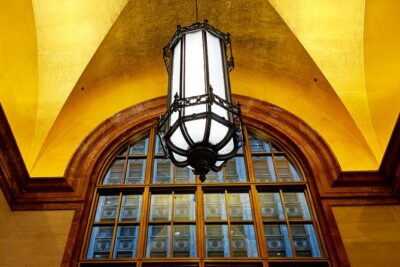
Original Chicago Architecture Interiors Tour: Dazzling Interiors
Read our review →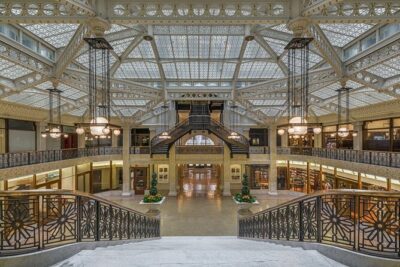
Chicago’s Secret Interiors Architectural Walking Tour
Read our review →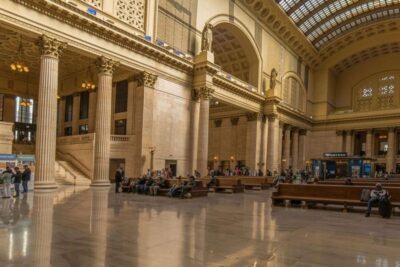

Chicago Walking Tour: Art Deco Skyscrapers Loop
Read our review →
Chicago Architecture Walking Tour: Incredible Art Deco Interiors
Read our review →
Chicago Walking Tour: Art Deco Skyscrapers Riverfront
Read our review →
Chicago’s Original Dazzling Architectural Interiors Tour
Read our review →Browse the lists this tour appears in