
Reviewed · CHICAGO SKYSCRAPER INTERIOR TOURS
Chicago: Art Deco Skyscrapers Walking Tour
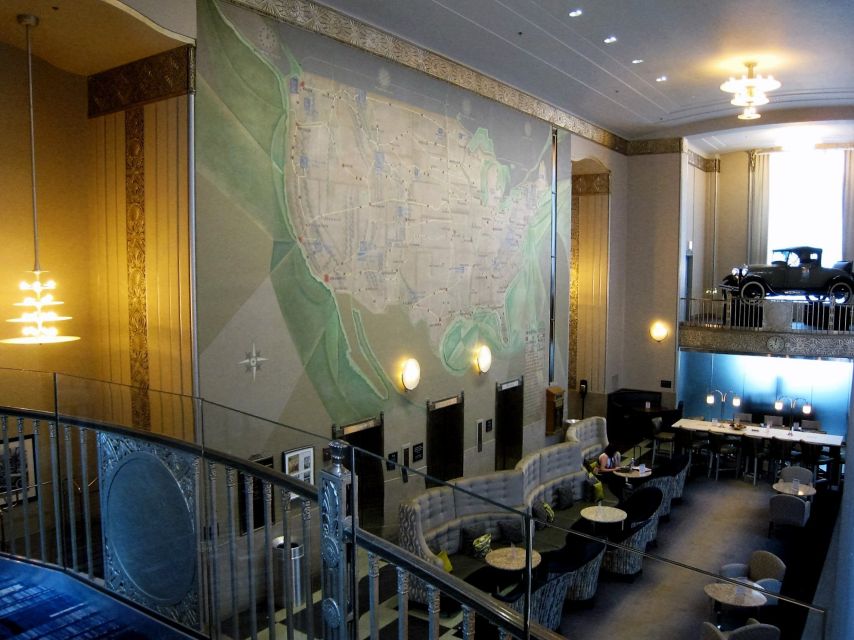
Chicago’s Art Deco treasures are not only on the skyline. They are under your feet and around you in the grand lobbies of five skyscrapers near the Chicago River. This 90-minute walk shows you how zigzags, octagons, sunbursts, flowers, polished surfaces, and geometric ornament turned office entrances into theater.
I like the chance to go inside five landmark buildings, including the Carbide and Carbon Building and the Chicago Motor Club Building. I also like the small group, limited to 10 people, and the guides’ clear pacing, humor, and close attention to detail. The main drawback is practical: you must leave luggage and strollers behind, and the tour runs rain or shine.
Key points to know before you book
- Five Art Deco interiors: See the lobbies of major 1920s skyscrapers rather than simply admiring their facades from the sidewalk.
- A trained local docent: Your English-speaking guide is a Chicago Architecture Center certified volunteer with extensive training in architecture and city history.
- A compact downtown route: The walk begins at 30 N LaSalle Street and finishes at the Merchandise Mart.
- Small group format: With a limit of 10 participants, it is easier to hear the guide and ask questions.
- Useful extras: Admission to Chicago Architecture Center exhibits is included with the tour.
- Plan for the weather: Tours depart in rain or shine, and weather-related refunds are not available.
Why Chicago is such a good place for Art Deco
Chicago has a special claim on Art Deco. The style reached the city in the 1920s after an international art exposition in Paris helped spread its clean lines and decorative geometry. Chicago then gave it a local stage at the 1933 and 1934 Century of Progress Exposition.
The timing mattered. The Roaring ’20s were a period of business growth, new construction, and public confidence. Chicago’s skyscrapers were not merely practical containers for offices. Their owners wanted entrances that announced success the moment you walked through the door.
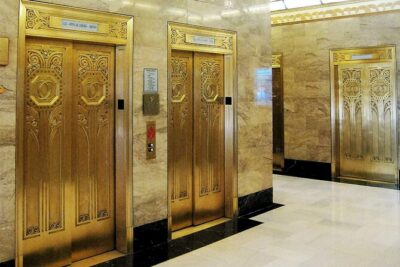
That is why this tour works best as an interior experience. From the street, you may notice a building’s height, setbacks, or unusual crown. Inside, you can see the smaller decisions that define Art Deco: repeated angles, stylized flowers, metallic finishes, carefully arranged color, and patterns that suggest speed and modern machinery.
Your guide also connects the style to older sources. Art Deco drew influence from Cubism and from the art and architecture of the ancient Middle East. The result was modern but not plain. It looked forward while borrowing shapes and symbols from the past.
More skyscraper interior tours in Chicago:
- Original Chicago Architecture Interiors Tour: Dazzling Interiors
★ 5.0 · 1,489 reviews - Chicago’s Secret Interiors Architectural Walking Tour
★ 5.0 · 635 reviews - Chicago: Secret Interiors Architecture Walking Tour
★ 4.9 · 498 reviews
Starting at 30 N LaSalle Street
Arrive about 10 minutes early at 30 N LaSalle Street with your confirmation ready. The docent checks names against the attendance list, so the beginning is simple and organized.
This is a walking tour, not a bus tour, and the group is capped at 10. That small size matters inside office and hotel lobbies. You are less likely to be pushed to the back, and you can usually hear the explanation without the guide having to raise their voice for a large crowd.
The opening discussion introduces the basic Art Deco vocabulary. You learn to recognize zigzags, octagons, sunbursts, and flowers, then put those terms to use as the walk continues. That approach is more useful than a string of dates because it gives you a way to read other Chicago buildings on your own.
The docent program is one of the tour’s strongest features. Chicago Architecture Center volunteers receive hundreds of hours of training in Chicago architecture and history. The best guides bring that preparation to life with stories and a relaxed pace. The available feedback especially praises guides who are funny, detailed, and good at keeping the walk moving without rushing it.
The Carbide and Carbon Building’s polished drama
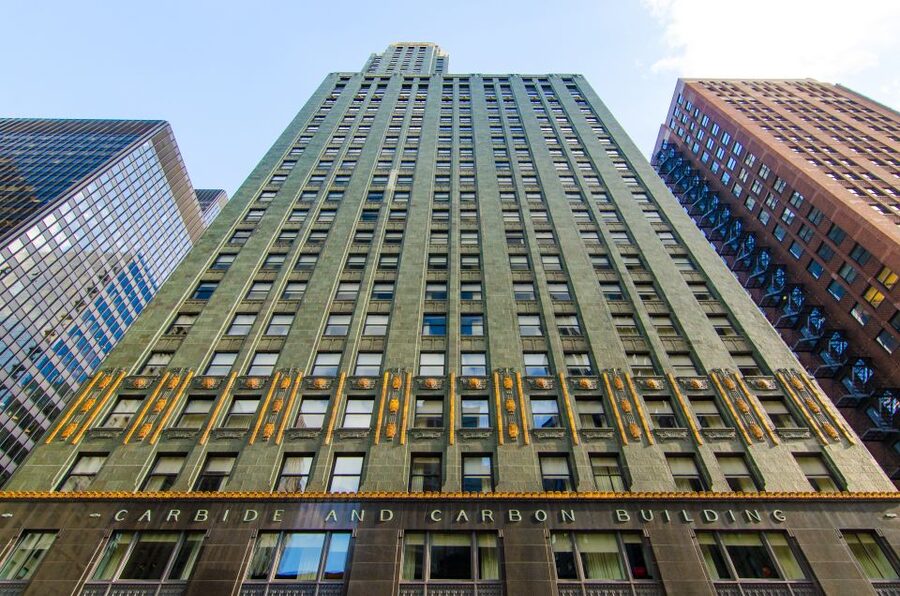
The Carbide and Carbon Building is one of the clearest examples of Art Deco excess on the route. Today it is the St. Jane Hotel, but its design still reflects the ambitions of the 1920s business boom.
The building is a Chicago landmark, and the tour gives you a chance to appreciate its interior rather than just photograph the exterior. Expect the guide to point out how the decorative program works as a whole, from the broad arrangement of the lobby to the smaller patterns and materials at eye level.
This is where Art Deco’s optimism becomes easy to understand. The style was not shy. It used ornament, shine, symmetry, and strong geometry to make an entrance feel important. You will see why a lobby could function as a piece of corporate image-making long before modern branding became an everyday term.
The hotel’s current use also adds a useful layer. These buildings have changed purpose over time, but their public spaces still carry the visual language of the period that produced them.
The Chicago Motor Club Building and its modern identity
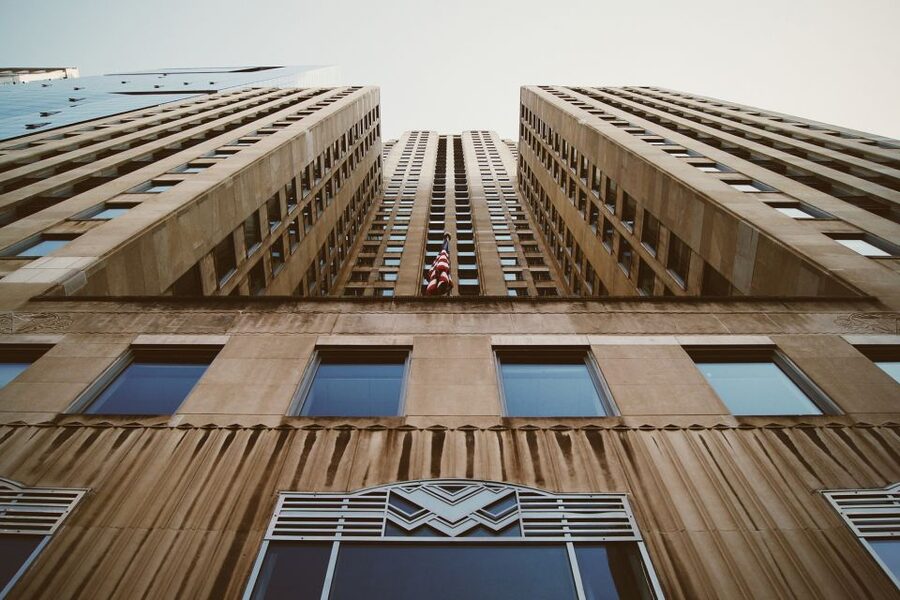
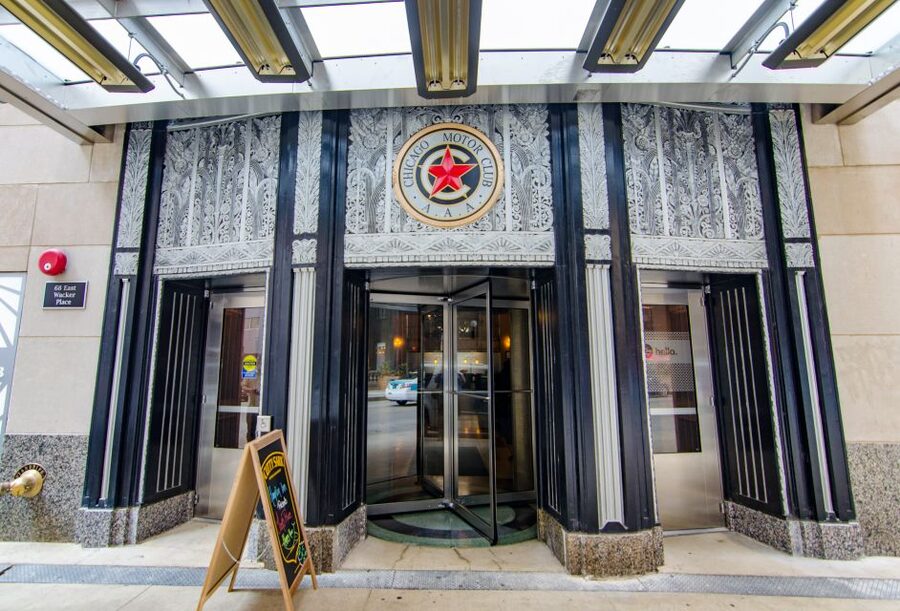
The Chicago Motor Club Building, now a Hampton Inn, offers another look at how Art Deco served a specific modern audience. Its original connection to motoring fits the era’s fascination with speed, travel, machines, and new technology.
The tour helps you see how those ideas appear in architectural decoration. Art Deco often suggests motion through angled lines, repeated forms, and stepped shapes. You are not simply looking at pretty details. You are seeing how designers tried to make a building feel current and energetic.
The interior visit is particularly useful for anyone who tends to focus on skyscraper exteriors. A facade may show you the building’s outline, but the lobby reveals how the architects wanted people to feel when entering. In these spaces, decoration was part of the welcome, the status message, and the sense of arrival.
Because the building now operates as a hotel, access is subject to the practical realities of a working property. The tour is designed around entering five buildings, but specific interior conditions can vary. Follow your docent’s instructions and expect the group to keep moving.
More walking tours in Chicago:
- Chicago: Gangsters and Ghosts Walking Tour
★ 5.0 · 7,155 reviews - Chicago Favorites Ultimate Food and Walking Tour
★ 5.0 · 1,962 reviews - Chicago: Gangsters and Ghosts Guided Walking Tour
★ 4.7 · 1,697 reviews - Chicago in a Day: Food, History & Architecture Walking Tour
★ 5.0 · 1,153 reviews
The often-overlooked Trustees System Service Building
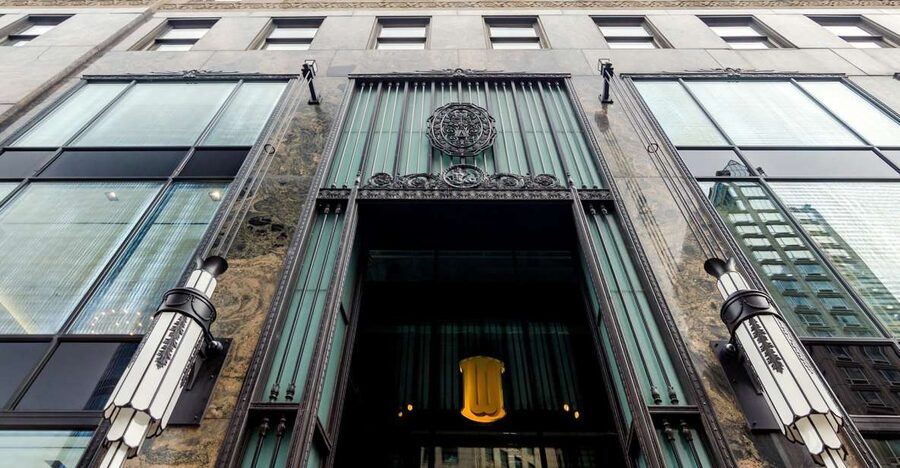
The Trustees System Service Building, now called Century Tower, may be the most surprising stop for many people. It is described as colorful and frequently overlooked, which makes it a good reminder that Chicago’s best architecture is not always the building with the tallest profile.
Its Art Deco character shows how much variety the style could contain. Art Deco is often reduced to black, gold, silver, and severe geometry. This building helps broaden that picture with color and a more playful decorative approach.
The guide’s role is important here. Without context, an overlooked building can remain overlooked. With the right explanation, you begin to notice the choices that separate an ordinary commercial structure from a designed environment.
This is also a good stop for photographers, though the tour is not built around extended photo time. You will be moving with a small group through active public spaces, so bring your camera, but listen first and photograph when the guide allows.
The Engineering Building and the practical side of ornament
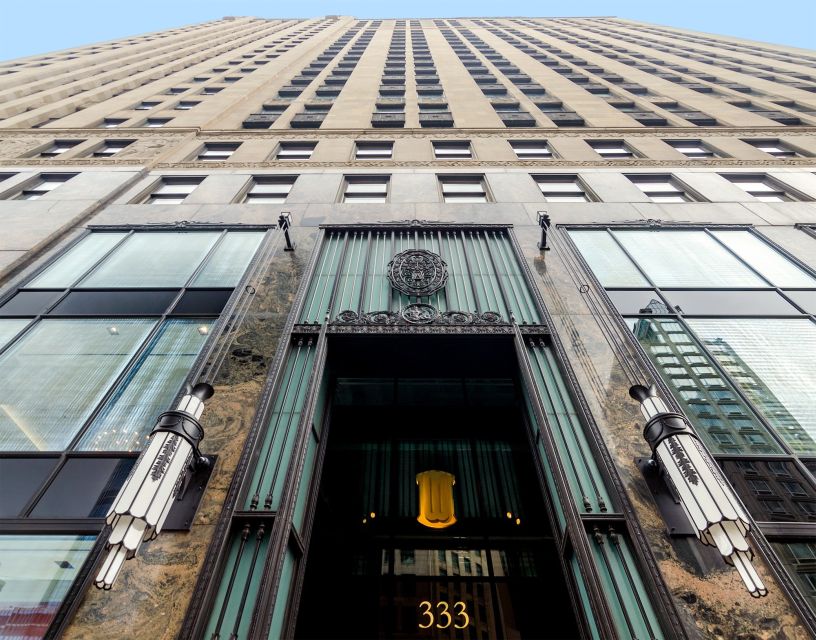
The Engineering Building is another Chicago landmark included on the route. Its name points to the city’s long connection with construction, industry, and technical achievement, while its Art Deco treatment shows that engineering and decoration were not opposites.
The period’s architects wanted buildings to look efficient and modern, but they also wanted them to feel impressive. Geometric ornament gave structural ambition a polished public face. The Engineering Building helps make that point: a commercial building could express seriousness and imagination at the same time.
Here, watch for repeated forms and organized patterns. Art Deco decoration often works through rhythm. A single motif may seem small, but a series of the same shapes can guide your eye across a wall, doorway, or ceiling.
The stop also helps connect the individual buildings. You are not seeing five unrelated lobbies. You are comparing different responses to the same broad style, the same decade, and the same citywide appetite for new construction.
Reaching the Merchandise Mart
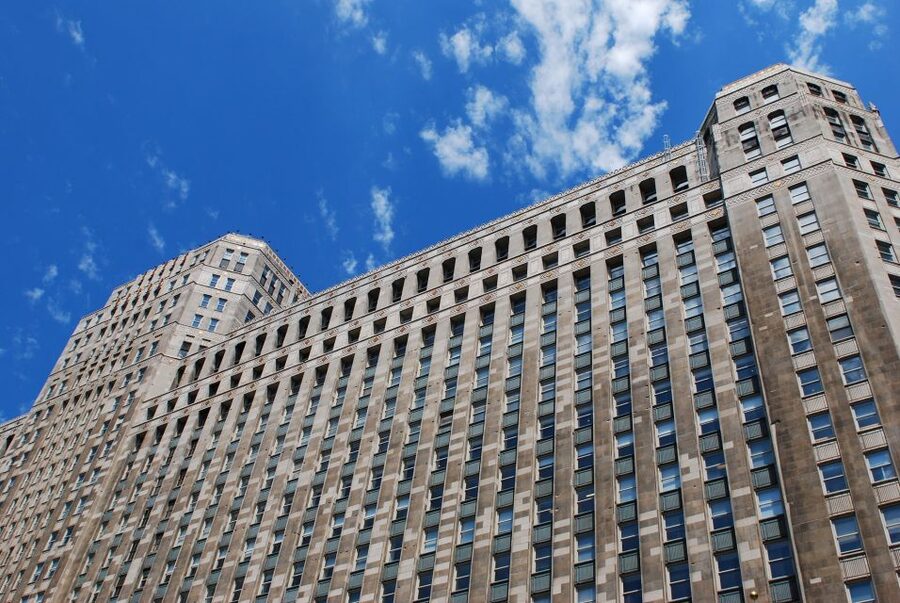
The tour finishes at the Merchandise Mart, a fitting endpoint for a route centered on Chicago’s business boom. This enormous commercial building is tied to the city’s trading and retail history, and its scale gives the final part of the walk a strong sense of arrival.
The endpoint is useful for planning the rest of your day. You can continue exploring the River North area, spend more time with Chicago’s architecture, or make your way to another downtown attraction. The tour does not include hotel pickup or drop-off, so you will need to arrange your own way to the starting point and onward from the finish.
Finishing here also gives the tour a clear shape. You begin with an introduction to Art Deco language, examine several distinct landmark interiors, and end at a building that represents the commercial energy behind much of Chicago’s 1920s construction.
What the 90-minute timing feels like
Ninety minutes is a sensible length for this subject. It is long enough to enter five buildings and establish the story, but short enough to fit before lunch, after breakfast, or between other downtown plans.
The pace is steady rather than leisurely. You will walk outdoors between buildings, then stop inside for explanations. If you want long periods to sketch, photograph, or study every decorative panel, this may feel brisk. If you want a well-shaped introduction to the style, the timing is more practical.
The small group helps the schedule. A group of 10 can move through entrances and lobbies more easily than a large crowd. It also gives you a better chance to ask about a detail that catches your eye.
Wear comfortable shoes and dress for changing weather. The tour departs in rain or shine, and there are no weather-related refunds. The outdoor sections are not the main event, but they are part of the experience.
Price, access, and what you receive
The advertised price is $35 per group up to one participant. Because that wording is unusual for a walking tour, check the booking screen carefully if you are arranging the experience for more than one person. The value comes from the combination of a trained docent, entry into five iconic Art Deco buildings, and access to Chicago Architecture Center exhibits.
That is a fair proposition if you care about architecture. You are not paying only for a stroll through downtown. You are paying for access to interiors you might otherwise pass without entering, plus the explanation that makes their decoration meaningful.
Admission to the Chicago Architecture Center exhibits is included. That makes it worth checking how you can fit the exhibits into your day, since they add another way to understand Chicago’s buildings and design traditions.
The tour is wheelchair accessible. Pets are not allowed, although service animals are welcome. Secure storage is not available for luggage or strollers, and there is no coat check, so arrive with only what you can comfortably carry.
You can cancel up to 24 hours before departure for a full refund, and the reserve-now, pay-later option keeps your plans flexible. Those policies are useful if your schedule is still changing, but they do not cover weather cancellations because the tour operates in all conditions.
Who will get the most from this walk
I would choose this tour if you want to understand why Chicago’s older skyscrapers look the way they do. It is especially well suited to first-time architecture visitors who want a clear introduction without committing to a long lecture or a full-day program.
It also suits repeat visitors. You may have already seen the famous exteriors, but entering five lobbies changes the experience. The route gives you details to look for the next time you walk downtown.
Families with older children may enjoy the visual clues. Sunbursts, zigzags, octagons, and flowers are easy ideas to spot, and the small group makes it easier to stay involved. Very young children may find a 90-minute architecture walk less engaging, especially since the tour includes explanations and steady walking rather than hands-on activities.
This is less suitable if you have heavy luggage, a stroller you cannot leave behind, or no tolerance for bad weather. It is also not the right choice if your main goal is a skyline viewpoint. The tour focuses on lobbies, decoration, and architectural history, not panoramic views.
Should you book the Art Deco Skyscrapers Walking Tour?
Book it if you want to see Chicago from the inside and learn a simple visual language for reading its architecture. The five-building route, small group, and trained docent give the experience real substance, while the 90-minute length keeps it manageable.
Skip it if you need luggage storage, want a weather-proof activity, or prefer a fast exterior photo walk. For everyone else, this is a focused and useful way to understand the glamour, confidence, and geometric style of Chicago’s Roaring ’20s skyscrapers.
FAQ
How long does the Art Deco Skyscrapers Walking Tour last?
The tour lasts 90 minutes.
Where does the tour begin?
It begins at 30 N LaSalle Street in Chicago.
Where does the tour finish?
The tour finishes at the Merchandise Mart.
How early should I arrive?
Arrive 10 minutes before departure with your confirmation available.
How many buildings do you enter?
You enter five iconic Art Deco buildings during the walking tour.
Is the tour given in English?
Yes. The live tour guide leads the experience in English.
Who leads the tour?
A Chicago Architecture Center certified volunteer docent leads the walk. Docents receive hundreds of hours of training in Chicago architecture and history.
Is the tour wheelchair accessible?
Yes, the tour is wheelchair accessible.
Can I bring luggage or a stroller?
No. The tour cannot provide secure storage for luggage or strollers, and large bags are not allowed.
What happens if it rains?
The tour departs rain or shine. Refunds are not available because of weather, so dress for the conditions.
Recently added around Chicago
- Travel between Chicago O’Hare and Madison★ 4.5 · 4 reviews
- Volo Auto Museum: Admission Ticket★ 4.5 · 55 reviews
- Holiday Walking Tour: Underground Chicago via the Pedway★ 5.0 · 27 reviews
- Workers Cottages of Oldtown Triangle Walking Tour★ 5.0 · 45 reviews
- Verse Immersive Holographic Theater in Chicago★ 4.5 · 28 reviews
- Vito’s Vault Chicago finest dinner theatre speakeasy★ 5.0 · 14 reviews
- Delicious Donuts & Sweet Treats: West Loop Walking Tour★ 5.0 · 47 reviews
- Traveling Spoon Chicago-Style Deep Dish Pizza Private Online Cooking Class★ 5.0 · 4 reviews
Chicago Skyscraper Interior Tours, compared.
Original Chicago Architecture Interiors Tour: Dazzling Interiors
Read our review →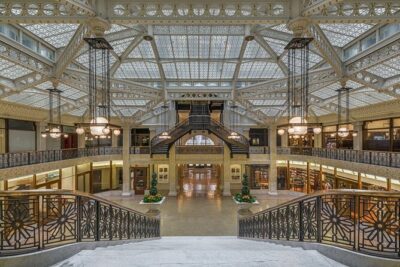
Chicago’s Secret Interiors Architectural Walking Tour
Read our review →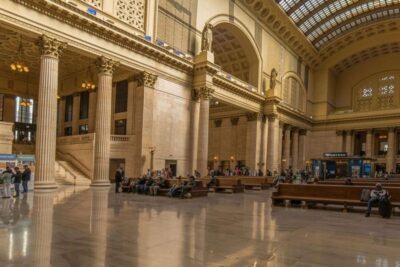

Chicago Walking Tour: Art Deco Skyscrapers Loop
Read our review →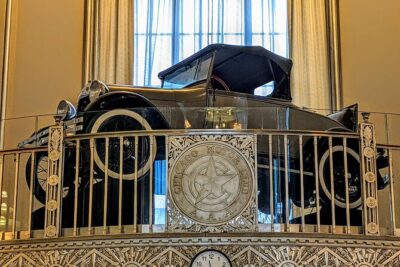
Chicago Architecture Walking Tour: Incredible Art Deco Interiors
Read our review →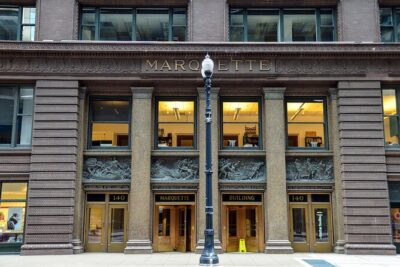
Chicago Walking Tour: Art Deco Skyscrapers Riverfront
Read our review →
Chicago’s Original Dazzling Architectural Interiors Tour
Read our review →Browse the lists this tour appears in