
Reviewed · CHICAGO WALKING TOURS
Chicago Walking Tour: Connecting Past and Present
Chicago’s architectural story comes into focus on foot. In 1 hour and 45 minutes, you move from the ornate Wrigley Building to modern work by Frank Gehry and Renzo Piano, with a guide explaining how Chicago keeps changing without losing its architectural identity.
I like the small group limit of 15, which gives a trained guide room to answer questions. I also like that admission to the Chicago Architecture Center galleries is included, so you get more than a sidewalk stroll. The main consideration is pace: several landmark stops are brief viewing visits, not long indoor tours.
The guides make a real difference here. Betsy has been praised for her lively, informative approach, while Matthew brings humor and energy. Jill leads a leisurely walk and shares her clear enthusiasm for Chicago architecture. You should also plan for city weather, comfortable shoes, and a tour that stays outdoors for most of its route.
Key points at a glance
- Chicago Architecture Center access: Begin and end here, with gallery admission included.
- A quick architectural timeline: See major Chicago buildings from earlier skyscraper design through contemporary work.
- Small group setting: The maximum group size is 15 people.
- Strong guide focus: Guides such as Betsy, Matthew, and Jill bring different styles to the walk.
- $35 value: The price covers the guide, walking tour, and Architecture Center galleries.
- Simple downtown location: The meeting point is near public transportation at 111 E Wacker Drive.
Why this walk works as a first look at Chicago
Chicago can feel like an open-air architecture museum, but it is easy to walk past important buildings without knowing what you are seeing. This tour gives you a useful framework. Instead of viewing one landmark in isolation, you connect several eras and design ideas during one compact outing.
The route begins at the Chicago Architecture Center, a sensible starting point for a subject this broad. You can look through its galleries before or after the walk, and that included admission adds context to what you see outside. I like this arrangement because the tour is not just a collection of photo stops. The center gives you a place to begin sorting out Chicago’s architectural story.
Your guide is a trained and certified professional, and the narration is the heart of the experience. The buildings matter, but so do the explanations between them. You can expect stories about Chicago, the city’s development, and the architects who shaped its public face.
The group size is capped at 15. That is small enough for a guide to keep track of the group and respond to questions without turning the walk into a private tour. It also helps with the practical side of city walking, where a large crowd can clog a sidewalk or make conversation difficult.
More walking tours in Chicago:
- Chicago: Gangsters and Ghosts Walking Tour
★ 5.0 · 7,155 reviews - Chicago Favorites Ultimate Food and Walking Tour
★ 5.0 · 1,962 reviews - Chicago: Gangsters and Ghosts Guided Walking Tour
★ 4.7 · 1,697 reviews
Starting at the Chicago Architecture Center
The Chicago Architecture Center at 111 E Wacker Drive is both the meeting point and the return point. You do not need to arrange a separate end location, which makes the tour easy to fit into a day of downtown sightseeing.
The center’s gallery admission is included. This is an important part of the value, especially if you have only a short time in Chicago and want a compact introduction before moving on to other sights. The galleries can help you understand the city’s buildings in a broader setting, while the walk lets you see those ideas at street level.
The tour lasts about 1 hour and 45 minutes. The listed landmark visits are often about five minutes each, with 10 minutes set aside at the Architecture Center. That means much of the experience comes from walking between locations and listening as the guide connects one building to the next.
Do not think of the five-minute stops as missed opportunities. They are viewing points, not formal interior visits. You pause, look, take photographs, and hear why the building matters before continuing through the downtown streets.
The Wrigley Building and Chicago’s polished riverfront
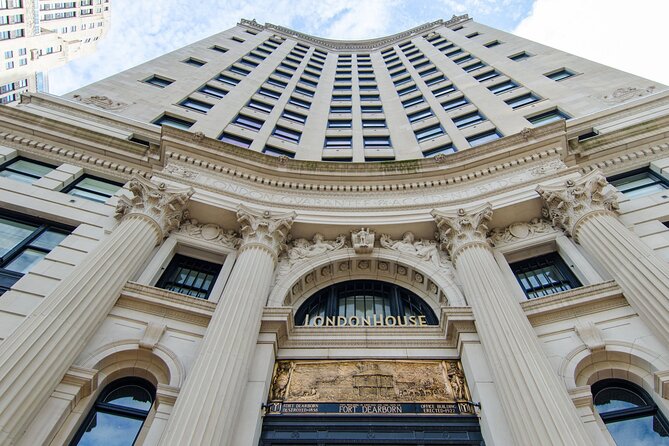
The Wrigley Building is one of the first major visual markers on the walk. You view the building and nearby structures, giving the guide a chance to place it within the surrounding collection of downtown architecture.
This is a good early stop because it shows how a single building can shape the feel of an entire street. You are not simply looking at a famous facade. You are also seeing how neighboring buildings frame it and how Chicago’s riverfront district brings different periods into one view.
The visit is brief, so you will not be touring the building’s interior. If you want a detailed architectural inspection from every angle, you will need to do that on your own after the tour. The advantage of the short stop is that it keeps the outing moving and leaves room for several other landmarks.
Daley Center and the city’s public face
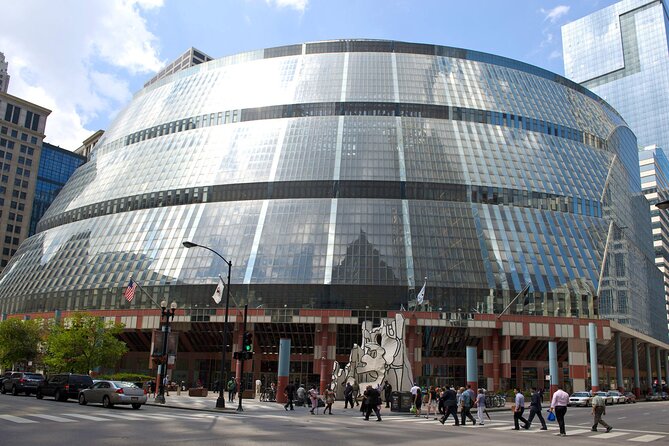
At the Daley Center, the focus shifts to a major civic setting. You view the center and its surrounding buildings while the guide adds the local context that a quick photograph cannot provide.
Public buildings reveal something different from commercial landmarks. Their scale, placement, and open space say a great deal about how a city presents itself. This stop helps broaden the walk beyond famous private buildings and gives you another way to read downtown Chicago.
Again, the stop is brief and viewed from outside. That makes the tour best for travelers who want an overview rather than a technical study of one building. I find that a fair trade at $35, since the route gives you several major sights instead of using the whole session on one location.
Different part of the city, different kind of afternoon:
- Chicago Architecture River Cruise
★ 5.0 · 15,756 reviews - Chicago River 90-Minute Architecture Tour
★ 4.5 · 9,629 reviews - Chicago River: 1.5-Hour Guided Architecture Cruise
★ 4.8 · 8,046 reviews - Chicago Architecture Center River Cruise aboard First Lady
★ 5.0 · 5,536 reviews
The Reliance Building and a changing city
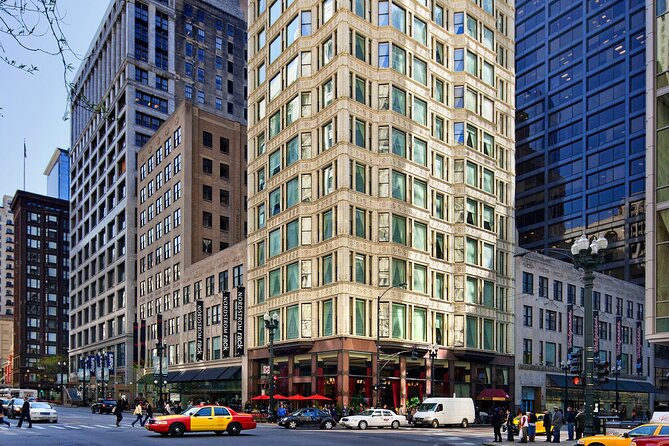
The Reliance Building adds another point on the architectural timeline. You view it along with the surrounding buildings, and the guide explains its place in Chicago’s development.
This is where the tour’s theme of connecting past and present becomes useful. Chicago’s architecture is not one single style. Older buildings, civic spaces, commercial towers, and newer designs sit within the same city center. Seeing them in sequence helps you notice changes in materials, shape, purpose, and visual scale.
The stop also rewards close attention. A guide can point out details you might otherwise miss, then relate them to the city’s wider architectural story. Since the itinerary is subject to change, the exact order or selection of buildings may vary. That flexibility can help the guide respond to local conditions, but you should not treat every stop as absolutely fixed.
Jay Pritzker Pavilion and modern Chicago
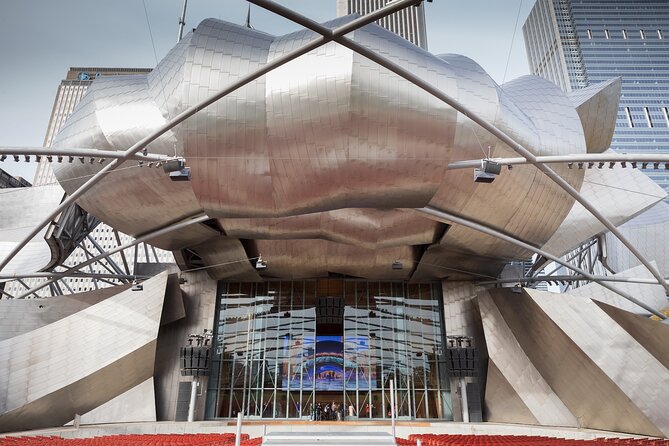
The walk continues to Jay Pritzker Pavilion, where Chicago’s more recent public architecture enters the picture. You view the pavilion and nearby buildings, adding a modern note to the earlier stops.
This is also one of the clearest places to feel the range of the tour. The route does not stay focused on historic towers. It includes contemporary design and the work of architects such as Frank Gehry and Renzo Piano, showing that Chicago’s building story is still being written.
The pavilion visit is another short outdoor stop, so the value comes from the guide’s explanation and from seeing the structure in its surrounding setting. You will have time to absorb the form, take photographs, and continue. You should not expect a performance, a seated event, or a special interior visit as part of the tour.
Marina City, Gehry, and Piano in one compact outing
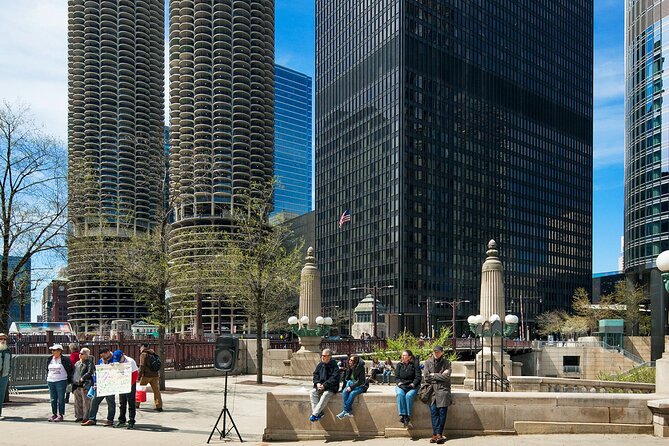
Marina City is among the Chicago landmarks highlighted during the walk, and the tour also points to work by Frank Gehry and Renzo Piano. These names give the experience useful range. You are not getting a narrow tour of one architectural period or one architect’s work.
I like this mix for a first visit because it gives you comparison points. You can look at an earlier building, then a civic structure, then a modern work, and begin to see how each responds to its purpose and time. The guide’s job is to make those comparisons clear without burying you in specialist terms.
The supplied route lists only certain named stops, so you should not expect a full survey of every major building in downtown Chicago. Think of it as a focused introduction with a strong collection of highlights. If one architect or building catches your attention, you can return later with more time.
The guide style matters here
The strongest part of this experience is the human layer. Betsy has been described as phenomenal, interesting, and informative. Matthew brings a smart, entertaining style with plenty of fun in the telling. Jill leads a more leisurely walk and shares clear enthusiasm for Chicago architecture.
Those details matter because a walking tour depends on rhythm. A dry lecture can make even a great building feel distant. A guide who tells stories, explains details, and keeps the group moving can make the same street much more memorable.
You cannot choose a particular guide from the information provided, so it is best to judge the tour by its structure rather than expect one named person. Still, the repeated praise for the guides’ energy and clarity points to the experience’s main strength: it is designed to be both informative and enjoyable.
What $35 gets you
At $35 per person, this is a reasonably priced introduction to downtown Chicago architecture. The fee includes the 1-hour-45-minute guided walk, narration by a professional certified guide, admission to the Chicago Architecture Center galleries, and views of several well-known buildings.
The value is strongest if you want orientation. You can see a range of landmarks in one outing, learn what makes them important, and decide which ones deserve a longer visit later. You also avoid the cost and time of booking several separate activities.
The price does not include food, drinks, coat check, or storage for luggage and strollers. Those exclusions are easy to overlook, so arrive prepared to carry what you need. The tour is near public transportation, which helps if you are fitting it into a wider downtown day.
The booking pattern suggests that people often reserve about 25 days ahead. You may want to plan early if your dates are fixed, especially since the group is limited to 15. Confirmation is provided when you book.
Who should book this walk
I would choose this tour for a first visit to Chicago, especially if you want an introduction that is more focused than a general sightseeing walk. It suits adults, older children, architecture fans, and anyone who likes to understand the place they are seeing rather than collect photos without context.
It is also a good fit if your schedule is tight. The duration is long enough to offer real substance, but short enough to leave most of the day open. Because the tour begins and ends at the Chicago Architecture Center, it is easy to pair with other downtown plans.
You should be comfortable walking outdoors for nearly two hours. Most people can participate, and service animals are allowed. Pets are not allowed. The information does not specify a fully accessible route or the exact walking distance, so contact the provider if you have mobility concerns or need a particular accommodation.
The tour may not suit you if you want extended interior access, a slow technical study of individual buildings, or a private guide. The itinerary can change without notice, and several stops are short viewing visits. That is not a flaw, but it is important to know what you are buying.
Booking flexibility and practical planning
Free cancellation is available if you cancel at least 24 hours before the local start time. Cancellations made less than 24 hours in advance are not refunded, and changes inside that window are not accepted.
Wear comfortable shoes and check the forecast before you go. The tour is designed around walking, and the guide’s commentary is part of the experience between the named stops. Bring only what you want to carry, since luggage and stroller storage is not provided.
You can expect confirmation at booking. The activity starts and ends at 111 E Wacker Drive, and it is close to public transportation. With a maximum of 15 people, arriving ready to begin on time will help the group keep its pace.
Should you book the Chicago Architecture Center walk?
Book it if you want a clear, lively introduction to Chicago architecture at a fair price. The combination of the Architecture Center galleries, a trained guide, major landmarks, and modern work by Gehry and Piano gives you plenty of substance in less than two hours.
Skip it if your priority is entering buildings or spending a long time at one site. This is an overview on foot, with short landmark stops and a flexible route. For most first-time visitors, that is exactly its strength: you get a useful sense of Chicago’s architectural character, then have the rest of your trip to explore the buildings that caught your eye.
FAQ
How long does the Chicago walking tour last?
The tour lasts approximately 1 hour and 45 minutes.
Where does the tour begin?
It begins at the Chicago Architecture Center, 111 E Wacker Drive, Chicago, Illinois 60601.
Where does the tour end?
The tour ends back at the Chicago Architecture Center.
What is included in the price?
The $35 price includes admission to the Chicago Architecture Center galleries, narration by a professional certified guide, and the walking tour of several famous Chicago buildings.
How many people can join the tour?
The tour has a maximum of 15 travelers.
Which Chicago buildings are included?
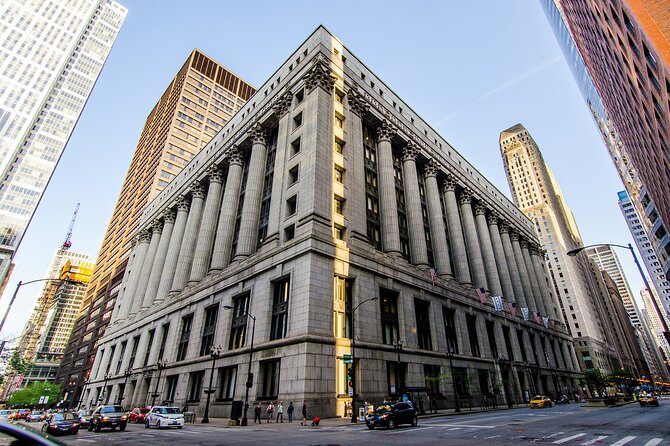
The walk includes views of the Wrigley Building, Daley Center, Reliance Building, and Jay Pritzker Pavilion. Marina City, along with work by Frank Gehry and Renzo Piano, is also highlighted during the experience.
Are food and drinks included?
No. Food and drinks are not included.
Are pets allowed?
Pets are not allowed, but service animals are allowed.
Can I cancel for a full refund?
Yes. You can receive a full refund if you cancel at least 24 hours before the experience start time. Cancellations made less than 24 hours before the start time are not refunded.
Recently added around Chicago
- Travel between Chicago O’Hare and Madison★ 4.5 · 4 reviews
- Volo Auto Museum: Admission Ticket★ 4.5 · 55 reviews
- Holiday Walking Tour: Underground Chicago via the Pedway★ 5.0 · 27 reviews
- Workers Cottages of Oldtown Triangle Walking Tour★ 5.0 · 45 reviews
- Vito’s Vault Chicago finest dinner theatre speakeasy★ 5.0 · 14 reviews
- Verse Immersive Holographic Theater in Chicago★ 4.5 · 28 reviews
- Delicious Donuts & Sweet Treats: West Loop Walking Tour★ 5.0 · 47 reviews
- Traveling Spoon Chicago-Style Deep Dish Pizza Private Online Cooking Class★ 5.0 · 4 reviews
Chicago Walking Tours, compared.


Chicago Favorites Ultimate Food and Walking Tour
Read our review →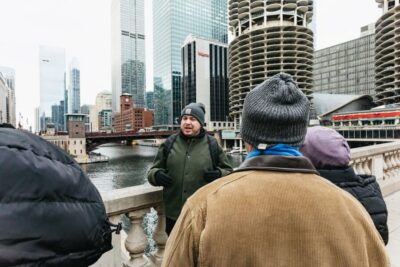
Chicago in a Day: Food, History & Architecture Walking Tour
Read our review →
Chicago’s Secret Interiors Architectural Walking Tour
Read our review →


Browse the lists this tour appears in