
Reviewed · CHICAGO WALKING TOURS
Walking Tour: Pilsen Chicago – Creativity & Community
Chicago’s Pilsen neighborhood tells its story in painted walls, family-run food spots, old churches, colorful homes, and the excellent National Museum of Mexican Art. This tour connects those sights by train and on foot, beginning downtown with Chagall’s Four Seasons and ending at Picasso’s sculpture in Daley Plaza.
I like two things right away: the Pink Line ride makes Pilsen part of a wider Chicago story, and guide Tom Schaffner brings the route to life with local knowledge and a native Chicagoan’s pride. I also like that the museum visit is built in, rather than left as an optional extra.
The main consideration is pace. Three hours covers a lot, including train rides, stairs, neighborhood walking, food stops, and a museum. You should be comfortable walking and climbing stairs, since not every station has an elevator.
Key points to know before you book

- Pilsen by Pink Line: Reach the neighborhood from the restored Quincy station and return from 18th Street with transit tickets included.
- Murals with context: The artwork is not just photo scenery. Tom explains how it reflects Mexican-American culture, local identity, and the neighborhood’s changing role in Chicago’s art scene.
- Museum time included: The National Museum of Mexican Art gives you about 30 to 45 minutes for permanent displays and current exhibitions.
- Small-group format: The maximum group size is 10, which suits travelers who prefer questions and conversation over a large procession.
- Food is flexible: Taqueria Los Comales and a paleteria are part of the route, but meals, drinks, pastries, and frozen treats cost extra.
- Downtown bookends: Chagall begins the outing, while Picasso provides a fitting public-art finale in Daley Plaza.
Why this route makes Pilsen easier to understand
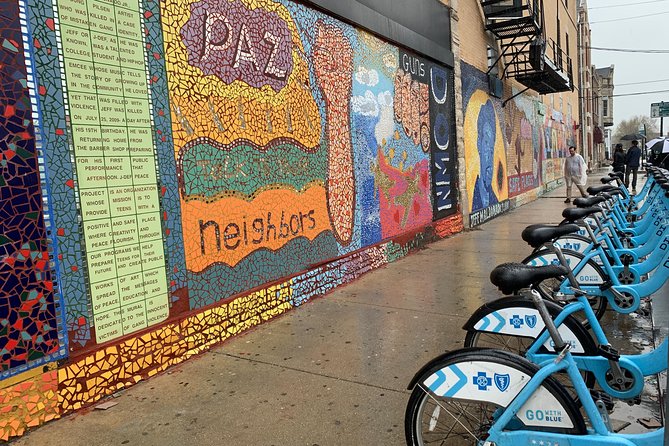
Pilsen can feel like two different Chicago stories at once. It is a Mexican-American community shaped by migration, family life, religious traditions, and public art. It is also a neighborhood known for murals, galleries, restaurants, and artists.
You see that mix more clearly when you approach by train instead of simply arriving at a restaurant or museum. The route begins in the Loop, passes through the restored Quincy station, and then carries you toward Pilsen on the Pink Line. Along the way, Tom connects downtown architecture, Chicago transit, and neighborhood change.
That connection is one of the tour’s strongest features. You are not only seeing Pilsen. You are learning how it fits into the city around it.
The group is capped at 10 people. That matters on a walking tour with artwork to discuss. A small group makes it easier to pause, ask about a mural, or request more detail about a building without holding up a crowd.
More walking tours in Chicago:
- Chicago: Gangsters and Ghosts Walking Tour
★ 5.0 · 7,155 reviews - Chicago Favorites Ultimate Food and Walking Tour
★ 5.0 · 1,962 reviews - Chicago: Gangsters and Ghosts Guided Walking Tour
★ 4.7 · 1,697 reviews
Starting with Chagall’s Four Seasons downtown
Meet at the Marquette Building, 140 South Dearborn Street, at 10:30 a.m. The opening stop is Chagall’s Four Seasons, a large mosaic at 10 South Dearborn.
You get about 20 minutes here, with no separate admission charge. The artwork is an excellent opening because it sets up the tour’s central theme: Chicago uses public art to express identity, memory, and place.
Tom may also point out the Marquette Building itself before the route begins. Its lobby has notable mosaics and architectural detail, and the building gives you a sense of downtown Chicago beyond the usual skyscraper checklist.
The walk toward Quincy can include views of major Loop landmarks. Past stops have included the Board of Trade and the Rookery, along with a short explanation of the area’s architecture. That makes the first part useful even if you already know the standard downtown sights.
I would arrive a few minutes early. The meeting point is in a busy central area, and you will want time to find the building without rushing through the opening explanation.
Riding from Quincy to Pilsen
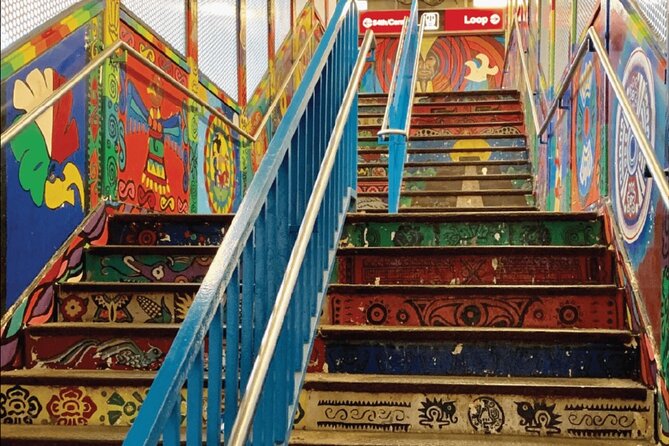
Quincy station is one of the more attractive stops on Chicago’s elevated rail system. It has been restored, and the station’s old character gives the train ride a sense of place rather than making it feel like a simple transfer.
Your transit tickets are included. Tom can explain how the system works and show you how a ticket kiosk functions, even though you do not need to buy your own ticket for this outing.
The ride toward Pilsen is brief, but it adds useful context. Chicago’s train lines are part of the city’s daily structure, linking neighborhoods that can feel far apart on foot. From the train, Tom may point out sites and explain how the surrounding areas developed.
There are practical limits. This is public transportation, not a private vehicle, so the route depends on normal train operations and the group must move together through stations. The tour also requires stairs at some points. If stairs are difficult for you, ask about the route before booking.
Walking through Pilsen’s murals and architecture
Once you arrive in Pilsen, the walking portion becomes the heart of the outing. The neighborhood is known for murals, but the value here is the explanation around them.
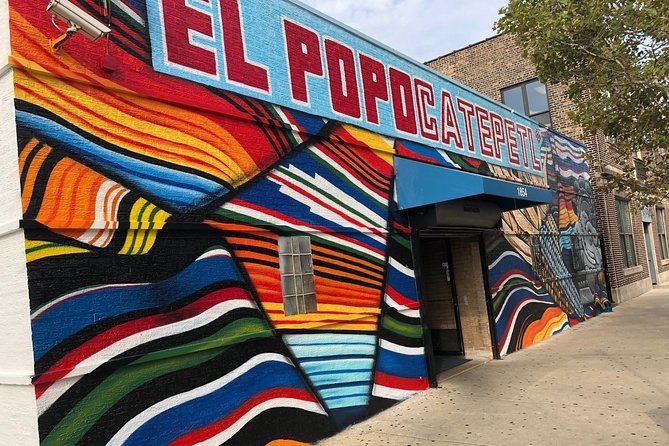
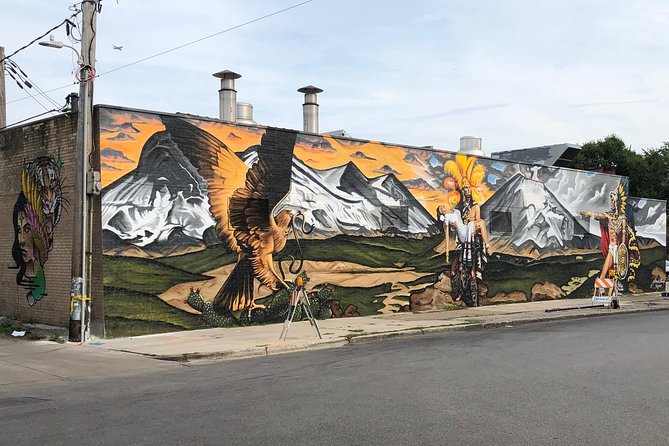
You will see walls that reflect Mexican and Mexican-American culture, community memory, religious themes, and local pride. Tom describes what the images mean and places them within Pilsen’s social and artistic story. That turns the walk into more than a search for colorful backdrops.
The route also includes architecture that is easy to miss if you are focused only on the murals. Schools, churches, private homes, and commercial buildings all contribute to the neighborhood’s look. Some façades feature mosaics or painted details, while others show the everyday character of a long-established community.
The best approach is to leave room for pauses. You will want photos, but the explanations are what make the walk worthwhile. Pilsen’s public art often works as a record of the people who live there, not simply as decoration.
The tour allows about an hour around the Taqueria Los Comales area. That is a generous portion of the outing, but it includes food time and the wider neighborhood walk. You might stop at a bakery for Mexican pastries, depending on the group and timing. Food is not included, so bring money for anything you want to eat.
Different part of the city, different kind of afternoon:
- Chicago Architecture River Cruise
★ 5.0 · 15,756 reviews - Chicago River 90-Minute Architecture Tour
★ 4.5 · 9,629 reviews - Chicago River: 1.5-Hour Guided Architecture Cruise
★ 4.8 · 8,046 reviews - Chicago Architecture Center River Cruise aboard First Lady
★ 5.0 · 5,536 reviews
Eating at Taqueria Los Comales

Taqueria Los Comales gives you a chance to try Mexican food in Pilsen rather than relying on a downtown restaurant near the meeting point. Past outings have included tacos and drinks, with the group ordering and paying separately.
This is a useful part of the tour for anyone who wants local flavor built into the day. It also keeps the meal flexible. You can choose what appeals to you instead of paying for a fixed menu.
The tradeoff is that the food stop takes time from the walking route. If you want a full meal, you should expect to spend part of the hour sitting and eating. If you prefer to keep moving, you can treat the stop as a chance to buy a snack or simply follow the group.
A panadería stop has also been part of the route on some outings. That gives you another chance to try a pastry without turning the tour into a formal food tour. Because food stops can vary with timing and group interest, do not book this solely for a guaranteed tasting menu.
Visiting the National Museum of Mexican Art
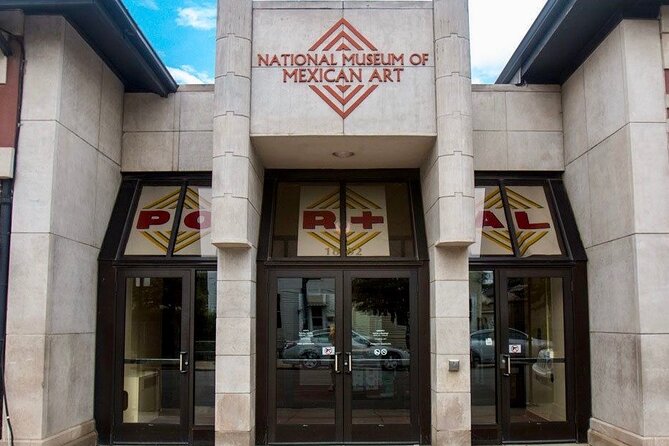
The National Museum of Mexican Art is the cultural anchor of the Pilsen portion. Admission is listed as free, and a museum donation is included in the tour price.
Plan on about 30 minutes here, though past visits have lasted closer to 45 minutes when the schedule allowed. You can see pieces from the permanent collection as well as changing exhibitions. A Día de los Muertos display has been part of the visit during one seasonal outing, though exhibitions change.
I particularly like this stop because it gives structure to what you have seen outside. Murals and building art show how culture appears in public space. The museum adds a broader artistic frame, with work presented inside a respected institution.
This is not a long museum visit. You will not see every gallery or examine every display at length. Instead, you get an introduction that can help you decide if you want to return on your own for more time.
If museums are your main reason for visiting Pilsen, plan a separate visit later. If you want a balanced afternoon of art, food, transit, and neighborhood life, the short museum stop fits well.
Finishing with a paleta and the ride back
After the museum, the route heads to Paleteria Y Neveria Sabores De Michoacán. This neighborhood shop offers traditional Mexican frozen treats, including paletas and other sweets.
The stop lasts about 15 minutes. Refreshments are extra, but the cost is usually easier to manage than a full meal, and the short break works well after walking through the neighborhood.
A fruit-filled paleta can be a refreshing change from the heavier food at lunch. The stop also gives you one last taste of a local business before the group returns to the train.
You then board at 18th Street and ride back toward the Loop. Transit tickets are included, and the return trip gives Tom another chance to discuss the route, the train system, or Chicago neighborhoods.
The final stop is Daley Plaza, where you see Picasso’s famous sculpture, Untitled, at 50 West Washington Street. Ending with a major piece of public art mirrors the beginning at Chagall’s mosaic. The tour starts with a large artwork downtown, visits a neighborhood where art fills the streets, and finishes with another Chicago landmark.
What the three-hour schedule really feels like
Three hours sounds moderate, but this is an active outing. You walk between downtown landmarks, use elevated train stations, stroll through Pilsen, visit a museum, stop for food, and return downtown.
You should wear comfortable shoes and bring water. The tour does not require athletic ability, but the stated expectation is moderate physical fitness. Stairs are part of the experience, and some station entrances may not have elevators.
The start time is 10:30 a.m., which gives you a full morning before lunch and leaves the afternoon available. The schedule also makes this easy to pair with another Chicago activity, though I would avoid booking something rigid immediately afterward. Train timing, group pace, and food stops can affect the exact finish.
The tour is offered in English and uses a mobile ticket. Since food and drinks are not included, plan for those expenses separately.
The value of a small group and local guide
The guide is central here. Tom Schaffner is presented as a lifelong Chicago resident and the owner of L Stop Tours. His role goes beyond pointing out murals. He explains local history, architecture, train lines, current neighborhood changes, and the meaning behind the art.
The small group makes his style more useful. He can adjust the amount of time spent on food, architecture, or artwork to match the group when the schedule permits. Past outings have included extra time at a bakery, a sit-down taco meal, or additional discussion around the museum.
That flexibility is valuable, but it is not unlimited. The tour still needs to return by train and finish at Daley Plaza within roughly three hours. If you want a highly customized private tour, this is not quite the same product. If you like a planned route with some room for personal interests, it should suit you well.
Who should book this Pilsen tour?
I would choose this tour if you want to see Chicago beyond the central Loop, but you do not want to spend a day sorting out train routes and neighborhood stops on your own.
It suits you especially well if you like:
- Public art with social and cultural meaning
- Mexican food and local sweets
- Small museums
- Architecture and neighborhood walks
- Public transportation as part of sightseeing
- A guide who can answer questions and adjust the pace
Families with older children may also like the mix of train travel, murals, food, and a museum. Very young children could find the walking and station stairs tiring.
Art lovers get the strongest payoff, but you do not need an art background. The tour explains what you are seeing in plain terms. Food-focused visitors should note that the stops are part of a wider cultural walk, not a dedicated tasting tour.
Should you book it?
Book this tour if you want a compact, well-connected introduction to Pilsen, especially if murals and Mexican art are high on your Chicago list. The included transit tickets, museum donation, small group, and local guide add real value, even though meals and treats are extra.
Skip it if you want a slow museum visit, a long restaurant meal, or a private vehicle. The route is active and time-conscious.
For most visitors with three free hours, this is a smart way to reach Pilsen and understand why its art matters. You get a neighborhood walk, a museum, local food options, and two major downtown artworks without having to plan the connections yourself.
FAQ
Where does the tour start?
The tour starts at the Marquette Building, 140 South Dearborn Street, Chicago, Illinois 60603.
What time does the tour begin?
The tour begins at 10:30 a.m.
Where does the tour finish?
The tour finishes at Untitled by Pablo Picasso in Daley Plaza, 50 West Washington Street, Chicago, Illinois 60602.
How long does the tour last?
The tour lasts approximately three hours.
Is the tour offered in English?
Yes. The experience is offered in English.
Are train tickets included?
Yes. Transit tickets for the train portions are included.
Is admission to the National Museum of Mexican Art included?
The tour includes a museum donation, and the museum stop has no separate admission charge listed.
Are food and drinks included?
No. Food, drinks, pastries, tacos, and paletas are not included in the tour price.
Is the tour suitable for people with limited mobility?
The tour requires moderate physical fitness and may involve stairs because not all train stations have elevators. Ask about your mobility needs before booking.
How many people can join the tour?
The maximum group size is 10 people.
Can you cancel for a full refund?
Yes. You can cancel at least 24 hours before the local start time for a full refund. Cancellations or changes made within 24 hours are not refunded or accepted. The experience also requires a minimum number of participants, and if the operator cancels for that reason, you are offered another date or experience, or a full refund.
Recently added around Chicago
- Travel between Chicago O’Hare and Madison★ 4.5 · 4 reviews
- Workers Cottages of Oldtown Triangle Walking Tour★ 5.0 · 45 reviews
- Volo Auto Museum: Admission Ticket★ 4.5 · 55 reviews
- Holiday Walking Tour: Underground Chicago via the Pedway★ 5.0 · 27 reviews
- Verse Immersive Holographic Theater in Chicago★ 4.5 · 28 reviews
- Vito’s Vault Chicago finest dinner theatre speakeasy★ 5.0 · 14 reviews
- Delicious Donuts & Sweet Treats: West Loop Walking Tour★ 5.0 · 47 reviews
- Traveling Spoon Chicago-Style Deep Dish Pizza Private Online Cooking Class★ 5.0 · 4 reviews
Chicago Walking Tours, compared.

Chicago Favorites Ultimate Food and Walking Tour
Read our review →
Chicago in a Day: Food, History & Architecture Walking Tour
Read our review →
Chicago’s Secret Interiors Architectural Walking Tour
Read our review →

Browse the lists this tour appears in