
Reviewed · CHICAGO WALKING TOURS
Chicago Walking Tour: Tiffany Treasures
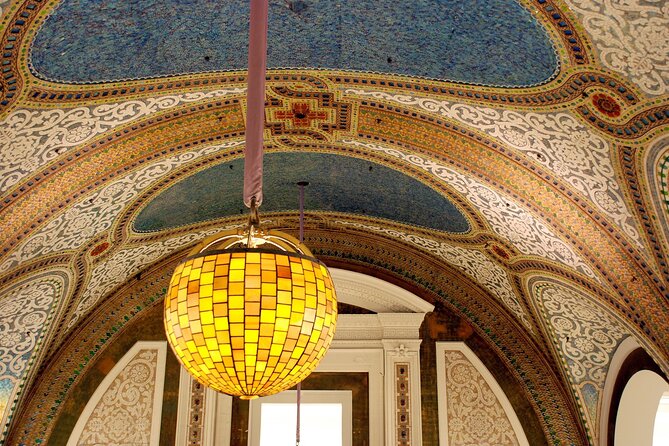
Chicago’s Tiffany treasures are easy to miss. You can walk past Macy’s on State Street or enter the Marquette Building without noticing the glowing glass, mosaics, domes, and decorative details overhead. This 90-minute walking tour puts those often-overlooked works at the center of the story.
I like the small maximum of 10 people, which makes it easier to hear your guide and ask questions. I also like the route’s mix of public buildings, including the Chicago Cultural Center and Macy’s, rather than a single museum visit. The main consideration is pace: some visitors found the walk brisk, especially on busy streets or in cold weather.
Key points to know before booking
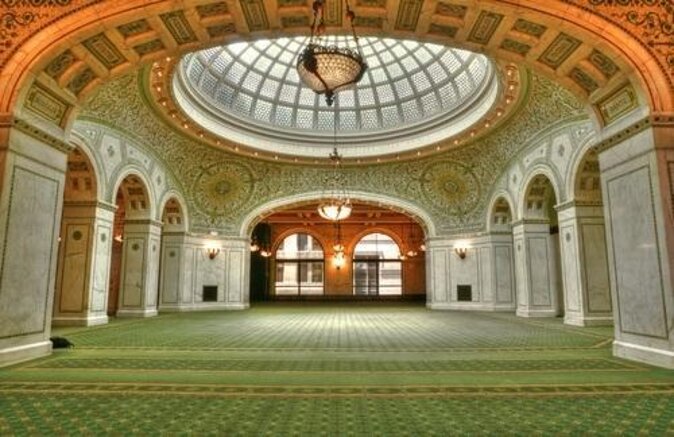
- Tiffany works in everyday public places: You see fine glass and decoration in buildings you might otherwise pass without entering.
- Small group of up to 10: The size suits questions, close viewing, and a more personal talk with the guide.
- Starts inside the Chicago Cultural Center: Meet in the North Lobby at 77 E Randolph Street at 2:00 pm.
- Ends at the Marquette Building: The route is convenient for continuing downtown sightseeing afterward.
- Includes Chicago Architecture Center galleries: Use the included admission for more Chicago design exhibits after the walk.
- Best for architecture and art fans: Young children may find the subject and walking pace less suitable.
Why Tiffany glass feels different in Chicago
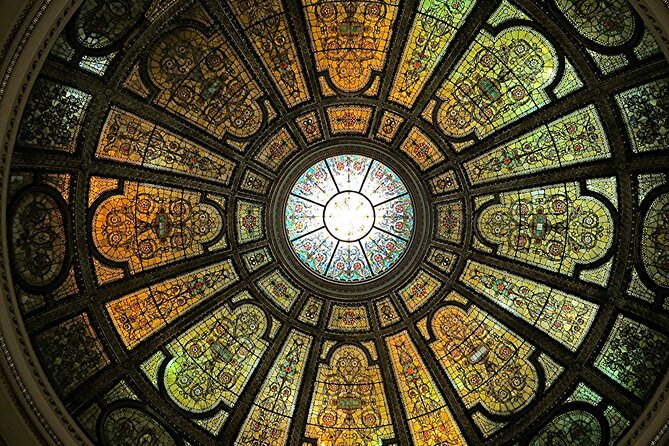
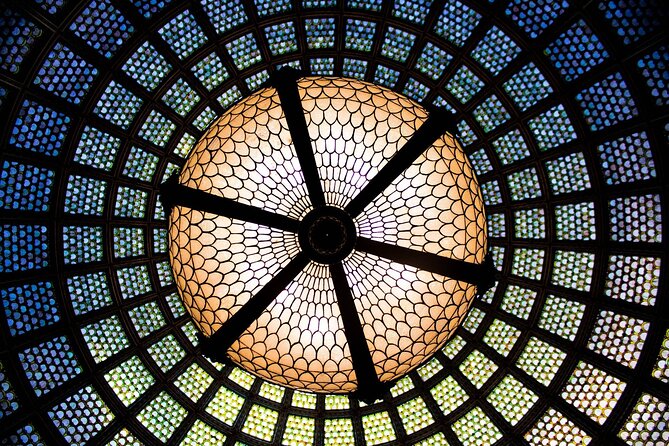
Louis Comfort Tiffany is best known for stained glass, but this tour shows a broader decorative world. You may see colored glass arranged in elaborate patterns, mosaics, domed ceilings, ornamental vaults, and light fixtures. The appeal is not only the glass itself. It is the way the artwork was built into Chicago’s public and commercial architecture.
Chicago is a particularly good place for this subject because the route connects art with the city’s rebuilding and growth in the late 19th century. The buildings are not simply containers for artwork. Their walls, ceilings, entry halls, and decorative programs were designed to make a strong impression on people entering them.
I like that the tour treats these spaces as part of daily city life. You are not looking at Tiffany pieces behind a museum barrier alone. You may see them in a former library setting, a department store, or an office building with a public lobby. That gives the art a useful sense of place.
Your certified Chicago Architecture Center guide explains the makers, the buildings, and later restoration work. Guides such as Claudia, Joan, and Priscilla have been praised for making the subject approachable, adding extra points of interest, and patiently handling different walking speeds. The quality of the tour depends partly on the individual guide, but the subject gives a strong guide plenty to work with.
More walking tours in Chicago:
- Chicago: Gangsters and Ghosts Walking Tour
★ 5.0 · 7,155 reviews - Chicago Favorites Ultimate Food and Walking Tour
★ 5.0 · 1,962 reviews - Chicago: Gangsters and Ghosts Guided Walking Tour
★ 4.7 · 1,697 reviews
Starting in the Chicago Cultural Center
The tour begins at 2:00 pm inside the North Lobby of the Chicago Cultural Center, 77 E Randolph Street. This is an important detail. Do not wait outside and assume the group will gather on the sidewalk. Give yourself time to find the North Lobby and locate the guide before the start.
The Cultural Center is a fitting meeting place because it is part of the architectural story. Rather than spending the opening minutes on a long transfer, the guide can begin with the building around you. This also gives you a first look at the kind of decorative work the tour focuses on.
The opening stop is listed as about 10 minutes, but the full experience lasts about an hour and a half. The brief stop label should not be read as a strict measure of how long you will spend looking at each detail. The guide’s explanation, building access, and the pace of the group can affect the timing.
This first section is a good chance to adjust your expectations. The tour is not a long museum lecture with every object labeled in front of you. It is a city walk, so you will alternate between looking closely at interiors and moving through downtown streets.
Macy’s on State Street and the art of looking up
Macy’s on State Street is one of the route’s most useful stops because it shows how art can survive in a busy commercial setting. The exterior is listed as part of the stop, but the experience may include access to interior features when building schedules allow. That access can change on weekends, holidays, or during unexpected closures.
Look up as you enter or move through the building. Tiffany-related decoration is easy to miss when you are focused on shopping, signs, or the people around you. The point of having a guide is that you are directed toward details you might not notice on your own.
This is also where the tour makes a practical point about preservation. Decorative glass and architectural features need care, and restoration efforts help explain why these public interiors still look impressive today. You will hear how the artwork relates to its setting instead of treating each piece as an isolated antique.
One advantage of visiting a working public building is the sense of discovery. You are seeing art in a place that still has an everyday purpose. One drawback is that the surroundings may be noisy or crowded, and access cannot be guaranteed at every departure. If a particular interior is important to you, keep that limitation in mind.
The Marquette Building’s tribute in glass
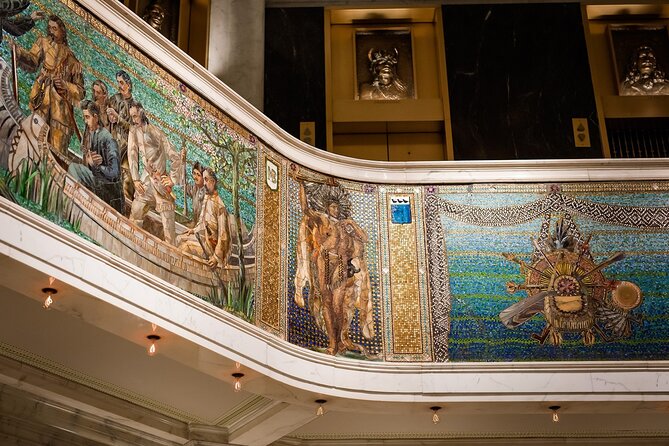
The tour concludes outside the Marquette Building at 140 S Dearborn Street. The building is one of the route’s strongest architectural moments, and the interior decoration connects art with Chicago’s post-fire rebuilding period.
The Marquette Building is associated with Father Jacques Marquette, and its decoration includes a tribute to him. The building’s appeal is more restrained than the word Tiffany might suggest. Its effect comes from the relationship between the structure, the glass, and the larger decorative plan.
This stop gives the guide room to explain how a late-19th-century commercial building could also serve as a public statement. You are not just seeing pretty windows. You are looking at how developers and architects used art to express civic pride, memory, and confidence in a growing city.
The tour ends outside the Marquette Building, which is convenient if you want to continue exploring downtown. You can also return to one of the earlier buildings on your own, as some participants have done, especially if you want more time to study a ceiling or mosaic without a group waiting.
Because the tour finishes here rather than returning to the Cultural Center, plan your next stop from the Marquette Building area. The one-way route saves time, but it means you should not leave anything at the starting point. Coat check, luggage, and stroller storage are not included.
Different part of the city, different kind of afternoon:
- Chicago Architecture River Cruise
★ 5.0 · 15,756 reviews - Chicago River 90-Minute Architecture Tour
★ 4.5 · 9,629 reviews - Chicago River: 1.5-Hour Guided Architecture Cruise
★ 4.8 · 8,046 reviews - Chicago Architecture Center River Cruise aboard First Lady
★ 5.0 · 5,536 reviews
Possible extra views and changing building access
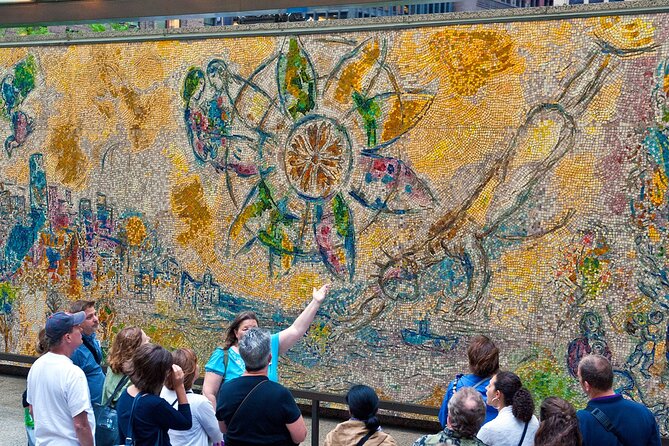
The published route names the Chicago Cultural Center, Macy’s, and the Marquette Building, while the wider experience focuses on four late-19th-century landmarks and may include additional interior views. The Art Institute area has also featured in the walk, including ceiling pieces and other decorative details that can feel like a behind-the-scenes look at familiar spaces.
Access is the variable. Building interiors may change because of weekend or holiday schedules, private events, or unforeseen closures. A guide may add nearby points of interest, but you should not book the tour expecting one exact interior view to be guaranteed every time.
This flexibility is both a strength and a limitation. It lets the guide respond to what is open and show more of downtown’s design, but it makes the experience less predictable than a standard museum route. If you are flexible, the changing access is unlikely to spoil the outing. If you need to see one specific piece, check current conditions before booking.
The included admission to the Chicago Architecture Center galleries gives you a useful follow-up option. The Architecture Center is not the main walking stop, but the ticket lets you continue with exhibits about Chicago’s buildings and design. Ask for the admission information before leaving if it is not handed to you automatically.
How much walking and what the pace feels like
The tour is described as about 1 hour and 30 minutes, with several stops and outdoor movement between buildings. One participant described it as closer to two hours with relaxed stops, while another found the pace fast across busy streets. The practical lesson is simple: allow some flexibility after the advertised end time.
Most of the route is manageable for people who are comfortable walking downtown. Several participants appreciated the elevator access and the fact that the tour did not feel like an exhausting march. Still, the group needs to stay together, and the guide may move quickly between stops.
If you have any difficulty walking, tell the guide at the start. Stay alert at street crossings and make sure the full group has gathered before the guide begins the next explanation. This matters in a city center where traffic, crowds, and noise can separate people quickly.
Wear comfortable shoes and dress for the weather. A rainy or cold day does not necessarily ruin the tour because much of the viewing happens indoors, but you will still spend time outside between buildings. Food and drinks are not included, so plan a snack or meal before or after the walk.
Why the small group matters
The tour is limited to 10 people. That is a real advantage for this subject because Tiffany glass often rewards close looking. In a large group, you may struggle to hear a detail about a ceiling or ask why a certain color or pattern was used.
A small group also helps in buildings where you need to keep moving or share a public space with other people. The guide can pause for questions and adjust explanations more easily. Several guides have been described as warm, enthusiastic, and patient, with extra information added when time allowed.
The small size does not eliminate the need to keep up. A group of 10 can still spread out on a busy sidewalk. If you are traveling with an older relative or anyone who walks slowly, mention that at the beginning and stay near the guide.
The tour is not recommended for young children. That does not mean children are forbidden, but the subject depends on careful looking, architectural detail, and historical explanation. Older children with an interest in art or buildings may do better than very young ones.
Is $35 a fair price?
At $35 per person, the tour is reasonably priced for a specialist walk led by a certified Chicago Architecture Center guide. You are paying for focused interpretation, a small group, access to several landmark settings, and admission to the Architecture Center galleries.
The value is strongest if you would otherwise pass these buildings without knowing what to look for. A self-guided walk costs less, but you would need to research the Tiffany connections, identify the correct interiors, track opening conditions, and understand the restoration story yourself.
The included gallery admission adds value, especially if you are already planning to visit the Architecture Center. The tour does not include food, drinks, coat check, luggage storage, or stroller storage, so factor those practical needs into your plans.
The experience is best seen as a focused architecture lesson rather than a general sightseeing tour. If you want many major Chicago attractions in one outing, another city tour may cover more ground. If you want to understand a narrow subject in detail, $35 is a fair trade for the guidance.
Who should book this Tiffany walk?
I would choose this tour if you like stained glass, decorative arts, historic buildings, or the less obvious side of Chicago. It also suits repeat visitors who have already seen the major attractions and want a new way to read familiar streets.
Art museum fans should find plenty to enjoy, especially if the route includes additional decorative views near the Art Institute. Architecture students, photographers, and anyone interested in restoration will benefit from the guide’s attention to materials and building context.
This is less suitable if you dislike walking, need a fixed indoor schedule, or want guaranteed access to every named interior. It is also not the best pick for very young children. The group moves through working public buildings, and conditions can change.
Book ahead if your dates are fixed. The tour is commonly reserved about 20 days in advance, and advance reservations are required. You can cancel for a full refund up to 24 hours before the start time, but later cancellations and changes are not accepted.
My call: book it for the details
I recommend the Chicago Walking Tour: Tiffany Treasures for anyone who wants to see how art lives inside Chicago’s public architecture. The strongest parts are the small group, the certified guide, the unusual interiors, and the chance to connect Tiffany glass with the Cultural Center, Macy’s, the Marquette Building, and possibly other nearby spaces.
Go in ready for a walking tour, not a perfectly fixed museum itinerary. Meet inside the North Lobby, arrive prepared for outdoor transfers, ask about Architecture Center admission, and allow extra time at the end. If those conditions suit you, this is a thoughtful $35 way to see Chicago with your eyes pointed upward.
FAQ
Where does the tour begin?
Meet inside the North Lobby of the Chicago Cultural Center at 77 E Randolph Street, Chicago, Illinois 60602.
What time does the tour start?
The tour starts at 2:00 pm.
Where does the tour end?
The walk ends outside the Marquette Building at 140 S Dearborn Street, Chicago, Illinois 60603.
How long does the tour last?
The listed duration is approximately 1 hour and 30 minutes. Some outings may take closer to two hours depending on stops, walking pace, and building access.
How many people can join the tour?
The group is limited to a maximum of 10 people.
What buildings are included?
The experience focuses on Tiffany-related glass and decoration at the Chicago Cultural Center, Macy’s on State Street, the Marquette Building, and other late-19th-century landmarks. Interior access can change because of schedules or closures.
Is admission to the Chicago Architecture Center included?
Yes. The ticket includes admission to the galleries at the Chicago Architecture Center. The center itself is not directly part of the walking route.
Can I cancel for a refund?
Yes. You can cancel at least 24 hours before the start time for a full refund. Cancellations or changes made less than 24 hours before the experience are not accepted.
Recently added around Chicago
- Travel between Chicago O’Hare and Madison★ 4.5 · 4 reviews
- Volo Auto Museum: Admission Ticket★ 4.5 · 55 reviews
- Holiday Walking Tour: Underground Chicago via the Pedway★ 5.0 · 27 reviews
- Workers Cottages of Oldtown Triangle Walking Tour★ 5.0 · 45 reviews
- Vito’s Vault Chicago finest dinner theatre speakeasy★ 5.0 · 14 reviews
- Verse Immersive Holographic Theater in Chicago★ 4.5 · 28 reviews
- Delicious Donuts & Sweet Treats: West Loop Walking Tour★ 5.0 · 47 reviews
- Traveling Spoon Chicago-Style Deep Dish Pizza Private Online Cooking Class★ 5.0 · 4 reviews
Chicago Walking Tours, compared.


Chicago Favorites Ultimate Food and Walking Tour
Read our review →

Chicago in a Day: Food, History & Architecture Walking Tour
Read our review →
Chicago’s Secret Interiors Architectural Walking Tour
Read our review →


Browse the lists this tour appears in