
Reviewed · CHICAGO WALKING TOURS
Retro River North Walking Tour
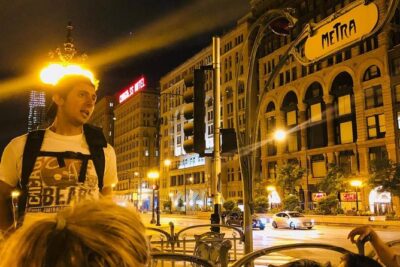
River North reveals its character after dark, when vintage neon signs, old doorways, and grand stone buildings begin telling their stories. This free walking tour connects those details with Chicago history, from Abraham Lincoln’s church to the Tiffany bronze doors at Murphy Auditorium.
I like the small group of no more than eight, which gives the guide room to point out details you could easily miss. I also like the mix of architecture, shops, music venues, and old signs. The main consideration is that the tour lasts nearly two hours and requires moderate physical fitness, with no indoor admission included at the main stops.
Key details before you go
- Vintage signs lead the way: See the Redhead Piano Bar’s neon sign, Hard Rock Cafe’s giant illuminated guitar, and other old-fashioned storefront details.
- Architecture is as important as neon: St. James Cathedral, the Driehaus Museum, Murphy Auditorium, and Tree Studios give the walk real variety.
- Ronnie guides the experience: His tours focus on design, architecture, local stories, and small details that are easy to pass without noticing.
- The group is capped at eight people: That is a useful size for an evening city walk and informal questions.
- The tour begins at 6:00 pm: Meet at 731 North La Salle Drive and finish near the Chicago River at Tortoise Supper Club.
- The price is listed as $0 per person: You do not pay admission for the tour itself, but drinks, food, and any purchases are extra.
Why River North works so well after dark
River North can seem like a district of restaurants, bars, hotels, and busy streets if you only pass through. This tour asks you to slow down and look upward, toward old signs, carved details, stained glass, and buildings that have survived major changes in the neighborhood.
The focus is not only on vintage neon. The guide also explains why particular properties matter, even when they have no glowing sign out front. That keeps the walk from becoming a simple photo hunt. You get a broader picture of how Chicago’s commercial, religious, artistic, and entertainment life developed in one compact area.
The evening start is useful. You see the neighborhood in its working-day setting, then catch the first signs and illuminated storefronts as the light fades. Because the walk begins at 6:00 pm, check the date and season if you care about seeing the signs fully lit.
The tour is operated by Tours by Doorways Of Chicago, and Ronnie is the guide named in the available tour feedback. His approach centers on architecture, design, and unusual city stories. The strongest reason to choose this walk is the combination of those subjects. You are not simply being led from one bar to another.
More walking tours in Chicago:
- Chicago: Gangsters and Ghosts Walking Tour
★ 5.0 · 7,155 reviews - Chicago Favorites Ultimate Food and Walking Tour
★ 5.0 · 1,962 reviews - Chicago: Gangsters and Ghosts Guided Walking Tour
★ 4.7 · 1,697 reviews
St. James Cathedral and a direct link to Lincoln
The first stop is St. James Cathedral, where you spend about 15 minutes. This is an effective opening because the building connects River North to national history almost at once.
Abraham Lincoln worshipped at St. James shortly after being elected president in 1860. That detail gives the church a personal connection to the years just before the Civil War, rather than leaving Lincoln as a distant figure in a textbook.
The church also carries the scars of Chicago’s Great Fire. After the Civil War, the congregation enlarged and redecorated the building on a grander scale. Only a few weeks after the redesigned church was rededicated in 1871, the fire left the stone walls and bell tower. The bells had warned people in the neighborhood about the approaching flames.
Your time here is brief, so think of this as a guided introduction rather than a long church visit. Admission is free, and the stop is especially worthwhile if you like buildings where physical evidence and historical events meet. You can also pray in the same space associated with Lincoln.
The Driehaus Museum and Chicago’s Gilded Age interiors
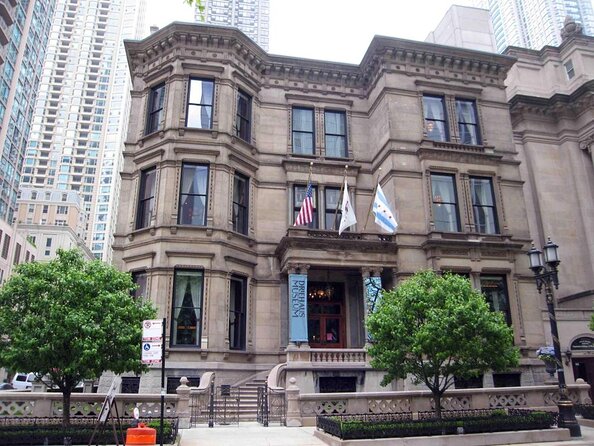
The Richard H. Driehaus Museum is housed in the former Samuel M. Nickerson House. The mansion was completed in 1883 for a wealthy Chicago banker and cost $450,000, reportedly making it the most expensive and elaborate private residence in Chicago at the time.
The house was designed by Edward J. Burling of Burling and Whitehouse, one of the city’s early prominent architectural firms. Even from the outside, this stop helps explain the scale of wealth that appeared in Chicago during the late 19th century.
Inside, the materials are the real draw: marble, onyx, carved domestic and exotic woods, glazed tiles, and stained glass. Original furnishings from the Nickerson period are displayed alongside American and European decorative arts.
The tour allows about 15 minutes here, and admission is listed as free as part of the stop. That timing means you should not expect a full museum visit with every room explored at length. Still, the guide’s explanation gives you a useful frame for understanding the house, and you can return on your own if the interiors catch your attention.
I particularly like this stop because it gives the walk visual weight. Neon signs are fun, but the Driehaus Museum shows the other side of River North: private money, formal design, and the high ambitions of 1880s Chicago.
Murphy Auditorium and Tiffany’s bronze doors
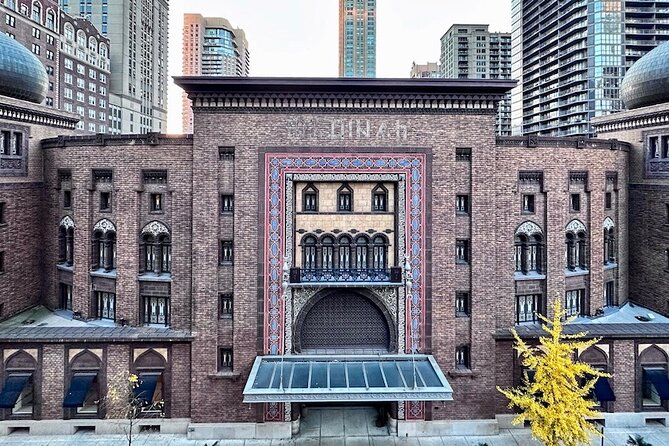
Next comes Murphy Auditorium, a six-story, 32,000-square-foot building constructed between 1923 and 1926 for the American College of Surgeons. Benjamin Marshall and Charles E. Fox designed it. The same architectural partnership also designed the Edgewater Beach Apartment building, once known as the Pink Palace.
The building became part of the Driehaus Museum’s footprint in 2022. Its entrance is the main event on this walking tour. Two cast bronze doors made by Tiffany Studios frame the front entrance, giving you an unusually good reason to stop and study a doorway.
Photos of the interior are available during the tour, which helps since the visit is not presented as a full interior admission. This is a good example of how the walk works: you see a remarkable exterior detail, then receive enough context to understand why it matters.
Allow roughly 15 minutes. If you enjoy architecture, bring a phone or camera, but do not spend the whole time looking at the screen. The doors reward close attention to their metalwork, proportions, and entrance design.
Different part of the city, different kind of afternoon:
- Chicago Architecture River Cruise
★ 5.0 · 15,756 reviews - Chicago River 90-Minute Architecture Tour
★ 4.5 · 9,629 reviews - Chicago River: 1.5-Hour Guided Architecture Cruise
★ 4.8 · 8,046 reviews - Chicago Architecture Center River Cruise aboard First Lady
★ 5.0 · 5,536 reviews
Tree Studios and the artists who lived there
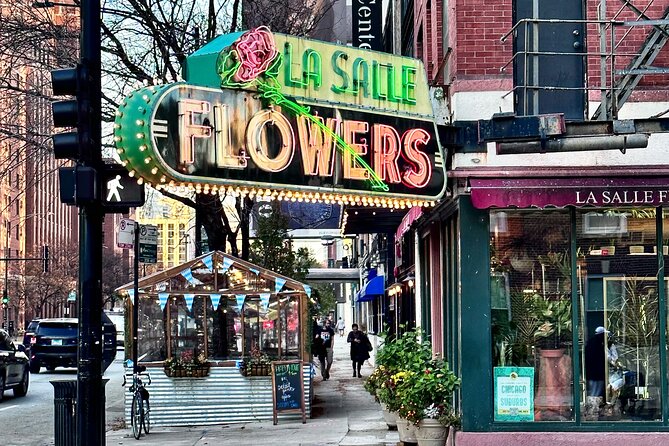
Tree Studios was commissioned in 1894 by Judge Lambert Tree and his wife, Anna Field Tree, who was the daughter of department-store founder Marshall Field. The complex was created as an artists’ residence and has been home to more than 500 artists.
That original purpose gives the property a different feel from the private mansion and public auditorium. It shows Chicago as a place where artists worked and lived, not only a city of bankers, merchants, and grand institutions.
The names connected with Tree Studios are striking. Sculptors Albin Polasek and John Storrs lived there, as did illustrator J. Allen St. John, muralist John Warner Norton, painters Ruth Van Sickle Ford, John Singer Sargent, and Pauline Palmer. Actors Peter Falk and Burgess Meredith also called the studios home.
You will hear about the Ivy Room, a venue inside Tree Studios that is known for events and weddings. The walk gives you a glimpse of the complex and helps explain its lasting appeal. It is a fine stop for anyone interested in artists’ communities, adaptive use, or the way old buildings continue to support modern life.
P.O.S.H. and a look into the Tree Studios courtyard
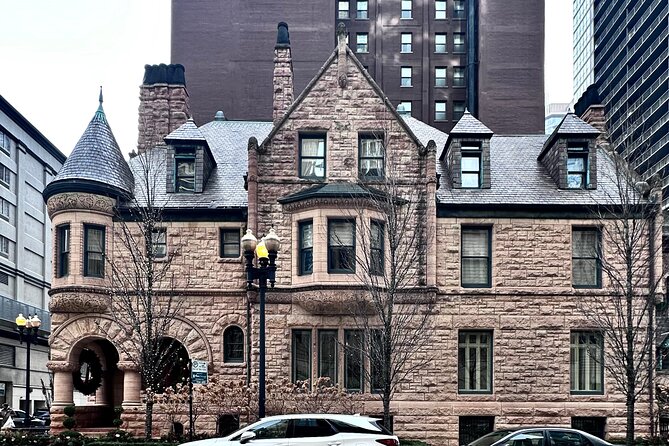
P.O.S.H. opened in Chicago in 1997 for shoppers tired of mass-produced sameness. The shop specializes in vintage hotel and estate silver, restaurant china, dinnerware, and changing European flea-market finds.
The guide takes you inside, where the shop has a Parisian flea-market feel. This is not simply a storefront photo stop. You get to see the objects close up, and from the back of the shop you can glimpse the courtyard of Tree Studios.
I like this pairing with the previous stop. First you hear about the complex as an artists’ residence, then you see a working shop within that setting. The objects at P.O.S.H. also fit the tour’s interest in old design. Silverware, china, and hotel pieces can reveal how people once ate, traveled, and entertained.
Keep in mind that the assortment changes. If you see something you want, the tour does not include purchases. The value here is the setting and the visual break from a standard architecture walk, not a guaranteed shopping list.
Redhead Piano Bar and the evening neon
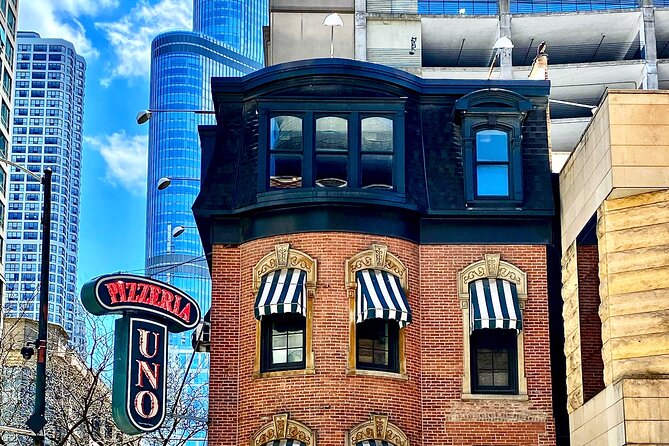
The Redhead Piano Bar has one of the tour’s most memorable vintage neon signs. It sits on Ontario Street and has operated as a neighborhood piano bar since 1993.
The bar offers nightly live piano music and is decorated with memorabilia from an earlier era. It attracts people for cocktails, conversation, and piano performances, giving the stop a strong connection to River North’s nightlife.
About 15 minutes is allotted here. Admission is not included, and the tour does not promise a full music-club visit. Think of it as a look at a local institution and its sign, with the option to return later if the atmosphere appeals to you.
This is also the point where the tour shifts more clearly from residential and civic architecture toward entertainment history. If you enjoy photographing old signs, this is one of the stops to watch for.
Hard Rock Cafe and a giant illuminated guitar
Hard Rock Cafe Chicago is easy to spot because of the giant guitar lighting the parking lot. The restaurant has been a dining, entertainment, and shopping destination for more than 30 years.
Inside, the walls display music memorabilia connected with artists including Billy Joel, Buddy Guy, Jimi Hendrix, and Prince. The collection gives the stop a direct link to Chicago’s music culture and to the larger history of popular music.
Admission and food are not included. The walking tour uses the cafe as a visual and cultural marker rather than a meal stop. That is useful if you want to photograph the guitar and hear about the venue, but you should not plan on eating there as part of the ticket.
This stop will appeal most to music fans. It also adds a bit of playful scale after the more formal details at the cathedral, mansion, and auditorium.
House of Blues and the tour’s final music note
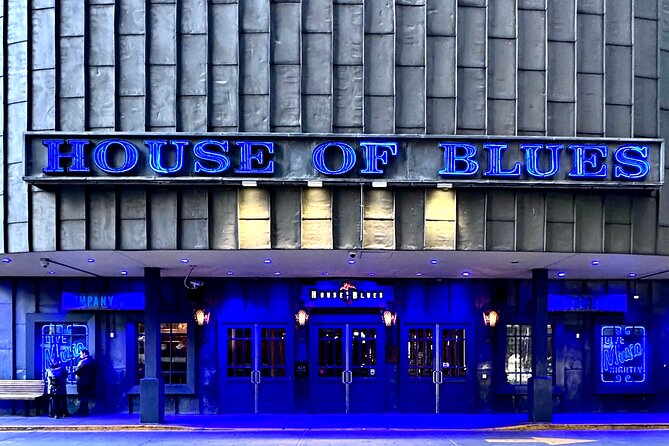
House of Blues Chicago brings another music venue into the route. Its guiding idea is unity in diversity, with an emphasis on peace, love, community, acceptance, human expression, racial equality, and spiritual harmony.
The tour presents the venue as part of Chicago’s entertainment and cultural life. You are not promised a concert or admission, so treat it as a stopping point for context and exterior details unless you arrange something separately.
By this stage, the walk has covered churches, private wealth, artists’ housing, retail, piano-bar culture, and major music brands. House of Blues helps complete that progression. It also gives the guide a chance to connect buildings with the people and ideas that use them.
Finishing near the river at Tortoise Supper Club
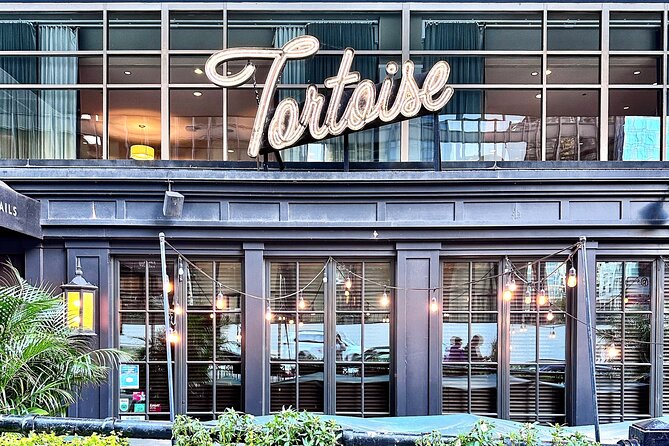
The walk ends at Tortoise Supper Club, at 350 North State Street near the Chicago River and Marina City. The tour information suggests jazz at Tortoise Supper Club afterward, but any food or drinks you order are your responsibility.
That ending is practical. You can finish the historical walk and continue the evening with dinner or music without arranging another neighborhood transfer. It also puts you close to the river, making it easy to continue exploring the area on foot.
The total duration is about one hour and 40 minutes to two hours. Since the itinerary lists eight stops at approximately 15 minutes each, the actual pace includes walking time between locations. Wear shoes suited to a city walk and be ready to remain on your feet for most of the experience.
Price, group size, and what you actually receive
The listed price is $0 per person, which makes the experience unusual. You receive the guided walk, access to the guide’s commentary, and historical photos of each stop through a free app. There is no separate admission charge listed for the cathedral, Driehaus Museum, or the other sightseeing stops.
The zero price does not mean the whole evening is free. Alcoholic drinks, food, shopping at P.O.S.H., and any paid activity at the music venues are not included. Read the offer carefully at booking so you understand what is covered.
The maximum group size is eight people. That is one of the tour’s strongest practical features. A guide can point out a small architectural detail or answer a question without trying to manage a large crowd. Ronnie’s style, based on the available descriptions, includes local stories, design observations, and photo opportunities, so the small group should suit that format well.
The tour requires good weather. If poor weather forces a cancellation, you are offered another date or a full refund. If the minimum number of participants is not reached, you are offered another date or experience, or a full refund. Otherwise, the booking is non-refundable and cannot be changed.
Who should book this River North walk
I would choose this tour if you like architecture, vintage signs, Chicago stories, and places that reward a second look. It also suits repeat visitors and Chicago residents who want to see familiar streets through a different lens. The mix of major sites and smaller design details keeps the walk from feeling like a standard landmark checklist.
It is less suitable if you want long interior visits, a seated tour, or a food-focused evening. The main stops are viewed within a tightly timed route, and the paid venues are not included as full entertainment experiences.
You should also be comfortable with a moderate amount of walking and a two-hour evening commitment. Service animals are allowed, and the route is near public transportation, but the supplied details do not specify step-free access at every stop.
Should you book the Retro River North Walking Tour?
Book it if you want a compact, low-cost introduction to River North that goes beyond restaurants and nightlife. The best parts are the small group, Ronnie’s focus on architecture and design, the vintage neon, and the unexpected connections between Lincoln, the Great Chicago Fire, artists, Tiffany Studios, and modern music venues.
Skip it if your priority is entering every building or attending a concert. For everyone else, this is a smart way to spend an evening: you get a guided look at the neighborhood, useful historical context, photos in a free app, and a convenient finish near the river where you can continue the night.
FAQ
How much does the Retro River North Walking Tour cost?
The listed price is $0 per person. Food, alcoholic beverages, shopping, and any paid admission or activity at the music venues are not included.
How long does the tour last?
The tour lasts approximately one hour and 40 minutes to two hours.
What time does the tour begin?
The tour begins at 6:00 pm.
Where does the tour start?
The meeting point is 731 North La Salle Drive, Chicago, Illinois 60654.
Where does the tour end?
The tour ends at Tortoise Supper Club, 350 North State Street, near the Chicago River and Marina City.
How many people can join the tour?
The tour has a maximum of eight travelers.
What is included with the tour?
The tour includes historical photos of each stop in a free app.
What happens if bad weather cancels the tour?
If poor weather causes cancellation, you are offered a different date or a full refund. If the minimum number of participants is not met, you are offered a different date or experience, or a full refund.
Recently added around Chicago
- Travel between Chicago O’Hare and Madison★ 4.5 · 4 reviews
- Volo Auto Museum: Admission Ticket★ 4.5 · 55 reviews
- Holiday Walking Tour: Underground Chicago via the Pedway★ 5.0 · 27 reviews
- Workers Cottages of Oldtown Triangle Walking Tour★ 5.0 · 45 reviews
- Verse Immersive Holographic Theater in Chicago★ 4.5 · 28 reviews
- Vito’s Vault Chicago finest dinner theatre speakeasy★ 5.0 · 14 reviews
- Delicious Donuts & Sweet Treats: West Loop Walking Tour★ 5.0 · 47 reviews
- Traveling Spoon Chicago-Style Deep Dish Pizza Private Online Cooking Class★ 5.0 · 4 reviews
Chicago Walking Tours, compared.

Chicago Favorites Ultimate Food and Walking Tour
Read our review →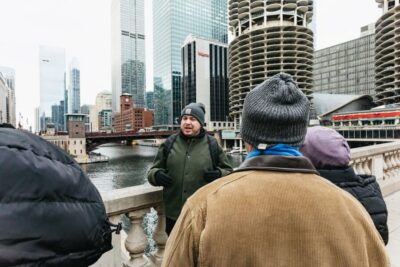
Chicago in a Day: Food, History & Architecture Walking Tour
Read our review →
Chicago’s Secret Interiors Architectural Walking Tour
Read our review →

Browse the lists this tour appears in