
Reviewed · CHICAGO HISTORY TOURS
Walkin’ with Colin: Chicago History-Mystery-Comedy-Tragedy Tour
Chicago’s downtown core is packed with stories, but many are easy to miss while you hurry between the Loop’s tall buildings. Walkin’ with Colin turns that short stretch into a lively mix of art, architecture, comedy, mystery, and tragedy, with stops inside several remarkable buildings.
I like the way the route connects famous works such as Chagall’s Four Seasons and Picasso’s 50-foot sculpture with less obvious details inside the Marquette and Rookery buildings. I also like Colin’s use of pictures and video to make the stories easier to follow. The main consideration is pace and weather: this is a two-hour, two-mile walk with stairs, elevators, escalators, and outdoor sections.
Key points at a glance
- Chicago’s best indoor architecture: Visit the Marquette Building, Rookery Building, Macy’s State Street, and the Chicago Cultural Center.
- Big-name public art: See Chagall’s Four Seasons, Calder’s Flamingo, and Picasso’s monumental Untitled sculpture.
- A small, personal group: The tour is limited to 10 people, which gives Colin room to answer questions and adjust the pace.
- More than an architecture walk: Stories cover entertainers, department stores, city history, art, and the people behind Chicago’s growth.
- Useful in mixed weather: Several indoor stops help break up the outdoor walking, though rain or severe conditions can still affect the tour.
- Good value at $44: You get about two hours of guided sightseeing, with most stops free to enter.
Why this downtown walk feels different
Many Chicago walking tours focus on skyscraper design. This one uses architecture as the doorway into a broader city story. You look at buildings, but you also hear about entertainment, retail, public art, and the odd turns that helped shape modern Chicago.
The tone matters. Colin is not presenting a dry list of dates and architects. His approach mixes jokes with serious stories, and the title gives you a fair warning: comedy and tragedy sit beside one another. A funny detail about a theater or department store may lead into a darker episode from the city’s past.
That mix suits you if you like context with your sightseeing. You will not simply photograph a beautiful ceiling and move on. Colin explains why the building matters, then supports the talk with electronic images and footage. This is especially useful when a historic site has changed over time or when a detail is hard to see from the sidewalk.
The group limit of 10 is another plus. A small group makes it easier to hear in busy streets, ask questions, and enter buildings together. One practical point is worth taking seriously: keep an eye on the group when crossing streets. The walk includes several stops and photo opportunities, so slower walkers should stay close to Colin and the rest of the group.
More history tours in Chicago:
- Chicago in a Day: Food, History & Architecture Walking Tour
★ 5.0 · 1,153 reviews - Chicago: Field Museum of Natural History Ticket or VIP Tour
★ 4.7 · 717 reviews - Field Museum of Natural History Admission Tickets
★ 4.5 · 489 reviews
Chagall’s Four Seasons starts the visual story

The tour begins at 1 North Dearborn Street and quickly reaches Chagall’s Four Seasons. This large mosaic mural is one of the route’s strongest opening sights because it announces the tour’s interest in art right away.
You get about 15 minutes here. That is enough time to look closely, take photographs, and hear why the work belongs in Chicago’s public spaces. Chagall’s mural is not an isolated art stop. Colin uses it to begin a larger conversation about the city’s unusual mix of public art, bold architecture, and civic ambition.
The outdoor setting means light and weather can affect your view. Still, this is a low-effort start, and the short opening stop gives you time to settle into the pace before the route moves indoors.
The Marquette Building reveals Chicago’s older face
The Marquette Building offers both exterior and interior views. Its age and decoration make it a useful contrast to the sleek modern buildings around it. From outside, you begin to see how Chicago’s early skyscrapers aimed to impress at street level, not just through height.
The interior is the real reason to pay attention. Decorative features and historic design details reward a slower look, and Colin gives the building a place in the city’s development rather than treating it as a quick photo stop.
This section also shows why comfortable shoes matter. The total walk is manageable, but the tour keeps stopping, looking up, entering buildings, and changing levels. You are better off with footwear that works on pavement and indoor floors than with something chosen only for appearance.
Calder and Mies bring modern art into the route
At Calder’s Flamingo, modern art meets modern architecture. Alexander Calder’s bright public sculpture is paired with the clean lines associated with Mies van der Rohe, giving you a compact lesson in how art and architecture can shape the same public space.
The stop lasts about 10 minutes. That may sound brief, but public sculptures work well in short visits. You can take in the scale, see how the sculpture relates to the surrounding buildings, and then hear Colin explain the setting.
This is one of the places where the tour’s range helps. You are not spending two hours inside only historic buildings. Instead, the route moves from older decoration to modern simplicity, allowing you to compare Chicago’s changing ideas about beauty and public space.
Different part of the city, different kind of afternoon:
- Chicago Architecture River Cruise
★ 5.0 · 15,756 reviews - Chicago River 90-Minute Architecture Tour
★ 4.5 · 9,629 reviews - Chicago River: 1.5-Hour Guided Architecture Cruise
★ 4.8 · 8,046 reviews - Chicago: Gangsters and Ghosts Walking Tour
★ 5.0 · 7,155 reviews
The Rookery Building is a major interior highlight
The Rookery Building is described as Chicago’s oldest skyscraper and is one of the route’s most important stops. You get about 15 minutes here, with time to appreciate the building’s interior as well as its place in Chicago’s early high-rise story.
For many people, this will be the point where the tour feels especially rewarding. The route brings you into a building that you might easily pass without entering on your own. Colin’s preparation also helps here. Historic interiors can blur together when you visit several in one day, but supporting images and clear storytelling give each one a separate identity.
The Rookery is a good example of the tour’s value. You are paying for access to a guide’s attention and explanation, not for a ticket-heavy attraction. Most of the listed stops are free, but knowing where to go and what to look for saves you time and makes the buildings more meaningful.
Picasso’s Untitled makes a bold public statement

Picasso’s 50-foot Untitled sculpture is another short but memorable stop. Its size alone makes it difficult to ignore, yet the real interest comes from the questions it raises about public art and Chicago’s willingness to place modern work in the heart of the city.
Colin treats the sculpture as more than a landmark for a photograph. You get a chance to consider how people respond to large abstract art in a public setting. The 10-minute stop is enough for an introduction without letting one work take over the entire walk.
If modern art leaves you unsure what to look for, this is a useful place to listen closely. Colin’s style is interactive, and the guide’s supporting photos and footage can help connect what you see with a wider story.
The Chicago Theatre adds entertainment and personality
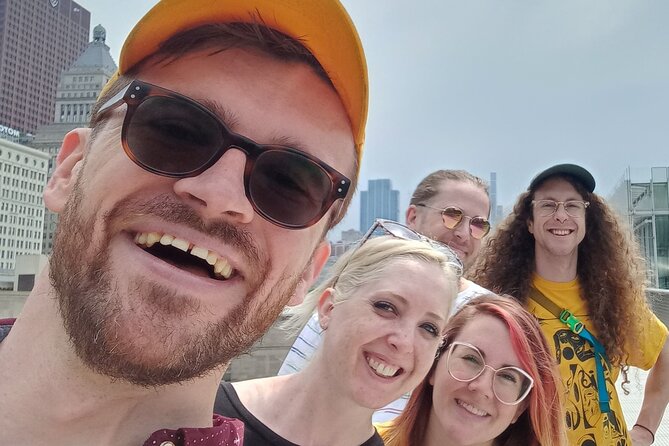
The Chicago Theatre gets about 15 minutes, with attention on the building and the entertainers connected to the city. This stop broadens the tour beyond architecture and public art. Chicago’s theaters helped shape its cultural identity, and the theatre offers a natural setting for stories about performance, fame, and the city’s appetite for spectacle.
The listed admission is not included, so treat this as an exterior-focused stop rather than a theater visit with a separate ticket. You will have time to look carefully at the iconic facade and hear the background without committing to a performance.
This is also where the comedy side of the tour makes sense. Stories about entertainers give Colin room to be playful, while the historical setting keeps the material grounded. If your main interest is architecture, you still get a striking building. If you enjoy show-business stories, this section adds another layer.
Macy’s State Street explains the department-store revolution
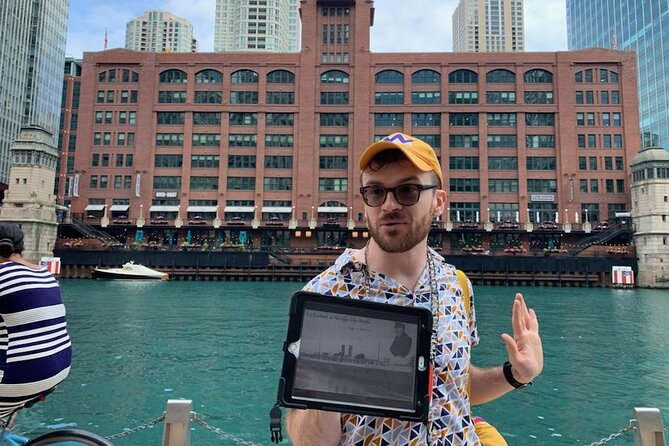
The Macy’s stop brings you to the former Marshall Field’s department store, once described as the biggest in the world. The subject is not simply shopping. Chicago played a major part in shaping the modern department store, and this stop explains how retail became a central part of urban life.
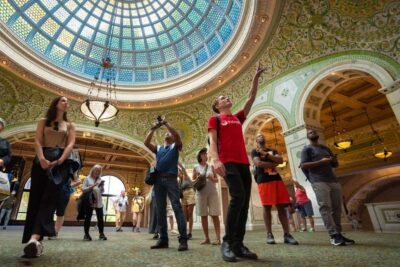
You get about 10 minutes here. The building is also known for its Tiffany dome, a detail that can surprise people who associate the store only with shopping. This is a good example of why the tour is useful even for someone who has spent time in Chicago. You may have entered the store before without noticing the design above you or understanding the building’s place in retail history.
The stop is free to enter, but it remains an active department store. That means you should expect a public commercial setting rather than a quiet museum. Colin’s direction helps you focus on the details without losing track of the group.
The Chicago Cultural Center provides a strong finish
The tour ends at the Chicago Cultural Center, at 78 East Washington Street. Colin calls it the People’s Palace, and that name fits a building with grand public spaces, civic purpose, and a library legacy.
You get about 15 minutes here. The Cultural Center is a fitting final stop because it gathers several themes from the walk: public art, beautiful interiors, education, and the city’s desire to create impressive spaces for ordinary people to use.
Ending here also makes practical sense. You finish in the central Loop rather than returning to the starting point, so you can continue sightseeing, find food, or use nearby public transportation. The route from the first meeting point to the Cultural Center is about two miles, and the endpoint is clearly provided in advance.
What the two hours are really worth
The price is $44 per person. For a two-hour guided walk, that is a reasonable price if you want a structured introduction to central Chicago and prefer more than a surface-level look at famous buildings.
The value comes from the variety. You see public murals, a Calder sculpture, Picasso, historic skyscrapers, a major theater, a department store interior, and a civic cultural building. Paying separately to enter attractions is not the main point here, since most stops are free. You are paying for the route, the explanations, the storytelling, and the chance to notice details you might miss alone.
Colin’s preparation adds to that value. His electronic images and footage can clarify past appearances, point out details, and keep the talk moving when you are standing on a sidewalk or in a large hall. The strong focus on stories also means the tour can appeal to someone who does not normally choose architecture walks.
The timing is helpful for a short Chicago visit. Morning and afternoon departures let you fit the tour around meals, museums, or a river cruise. Since the tour is booked an average of 18 days ahead, I would reserve before your visit rather than assume you can decide at the last minute.
Weather, stairs, and the pace you should expect
This is an adventurous two-hour experience, not a completely flat stroll. The route covers about two miles and includes indoor and outdoor sections, stairs, elevators, and escalators. You need a moderate level of fitness, though the walking pace is described as manageable and the stops break up the distance.
Weather deserves attention. The experience requires good weather, and poor conditions can lead to a new date or a full refund. Even when the tour goes ahead, bring an umbrella in rainy conditions and dress for Chicago wind or heat. Indoor stops help, but they do not remove the need to spend time outside.
The route can adapt when conditions change. Colin has moved parts of a walk into underground passageways when rain became a problem, but you should not treat that as a guarantee or a substitute for checking the forecast.
Service animals are allowed, and the starting point is near public transportation. Confirmation arrives at booking, and free cancellation is available up to 24 hours before the start time. Changes or cancellations inside that 24-hour window are not accepted for a refund.
Who will enjoy Walkin’ with Colin?
I would recommend this tour to first-time Chicago visitors who want a useful orientation without spending half a day on a bus. It also fits repeat visitors and local residents who have seen the main buildings from outside but have not paid attention to their interiors.
Families can enjoy it if children are comfortable walking and listening for two hours. The comedy and visual material help keep the subject moving, while the mix of art and stories gives different ages something to notice.
It is also a good choice for solo visitors and couples who like asking questions. The small group limit makes the experience more personal than a large downtown walk.
I would hesitate only if you want a slow, highly specialized architecture lecture, a fully indoor activity, or a tour with no stairs and no outdoor walking. The route covers a lot in two hours, and the variety is the point. You will get a broad, lively introduction rather than a single-subject study.
Should you book it?
Book Walkin’ with Colin if you want Chicago explained through its buildings, art, retail past, and entertainers. The strongest reasons are the small group, Colin’s use of visual aids, the number of impressive interiors, and the unusual range of subjects covered in a short route.
At $44, it is a sound choice for anyone who values good interpretation more than admission tickets. Wear comfortable shoes, watch the weather, stay with the group at crossings, and allow the full two hours. If that sounds like your kind of city walk, this is an easy way to see central Chicago with more purpose than simply ticking off landmarks.
FAQ
How long is Walkin’ with Colin?
The tour lasts about two hours and covers approximately two miles through central Chicago.
Where does the tour start and finish?
It starts at 1 North Dearborn Street in Chicago. It ends at the Chicago Cultural Center, 78 East Washington Street.
What sights are included?
The route includes Chagall’s Four Seasons, the Marquette Building, Calder’s Flamingo, the Rookery Building, Picasso’s Untitled sculpture, the Chicago Theatre, Macy’s on State Street, and the Chicago Cultural Center.
Is admission included?
Most listed stops have free admission. Admission to the Chicago Theatre is not included.
How many people can join the tour?
The maximum group size is 10 people.
What happens if the weather is poor?
The experience requires good weather. If it is canceled because of poor conditions, you will be offered another date or a full refund.
Recently added around Chicago
- Travel between Chicago O’Hare and Madison★ 4.5 · 4 reviews
- Workers Cottages of Oldtown Triangle Walking Tour★ 5.0 · 45 reviews
- Volo Auto Museum: Admission Ticket★ 4.5 · 55 reviews
- Holiday Walking Tour: Underground Chicago via the Pedway★ 5.0 · 27 reviews
- Verse Immersive Holographic Theater in Chicago★ 4.5 · 28 reviews
- Vito’s Vault Chicago finest dinner theatre speakeasy★ 5.0 · 14 reviews
- Delicious Donuts & Sweet Treats: West Loop Walking Tour★ 5.0 · 47 reviews
- Traveling Spoon Chicago-Style Deep Dish Pizza Private Online Cooking Class★ 5.0 · 4 reviews
Chicago History Tours, compared.
Chicago in a Day: Food, History & Architecture Walking Tour
Read our review →
Field Museum of Natural History Ticket or VIP Tour
Read our review →
Field Museum of Natural History Admission Tickets
Read our review →
Chicago Walking Tour: Historic Treasures of Chicago
Read our review →
Historical and Architectural Chicago Fireboat River & Lake Cruise
Read our review →
Field Museum of Natural History All-Access Pass
Read our review →
Browse the lists this tour appears in