
Reviewed · CHICAGO WALKING TOURS
Workers Cottages of Oldtown Triangle Walking Tour
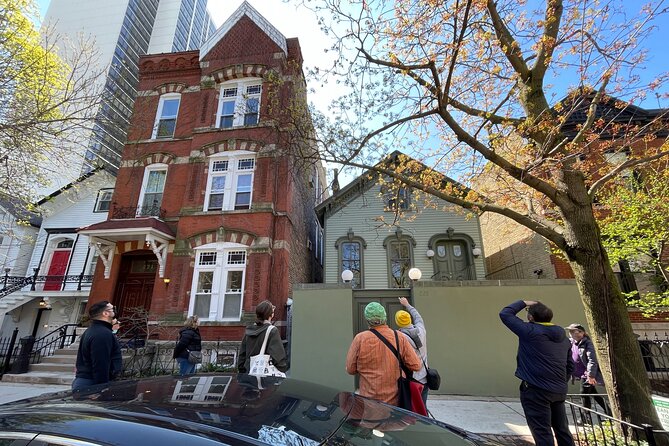
Chicago’s Old Town Triangle gives you a rare look at the city before steel towers filled the skyline. In about two hours, you’ll pass 40 to 50 workers’ cottages, rare rowhouses, a former farmhouse, and St. Michael Church, which was once the tallest building in the United States.
I like the small group, limited to eight people, and the focus on ordinary homes rather than only famous landmarks. I also like the clear neighborhood route, which begins on Eugenie Street and ends just a few blocks away. The main drawback is the price: at $45, this is not a cheap stroll, especially since there is no entry to an interior site.
- 40 to 50 workers’ cottages: See the modest homes that reveal what Chicago looked like in the 1800s.
- Small-group format: With no more than eight people, it is easier to hear the guide and ask questions.
- Rare architectural survivors: Look for an entire block of cottages, Louis Sullivan’s early rowhouses, and the area’s only remaining farmhouse.
- Major local landmarks: The route includes St. Michael Church, Crilly Court, Twin Anchors, and homes tied to the Wacker family.
- Simple neighborhood logistics: Meet at 164 W Eugenie Street at 11 a.m. and finish at 216 W Menomonee Street.
- Weather matters: The walk can be canceled for poor weather, so keep your plans flexible.
Why Old Town’s Workers’ Cottages Matter
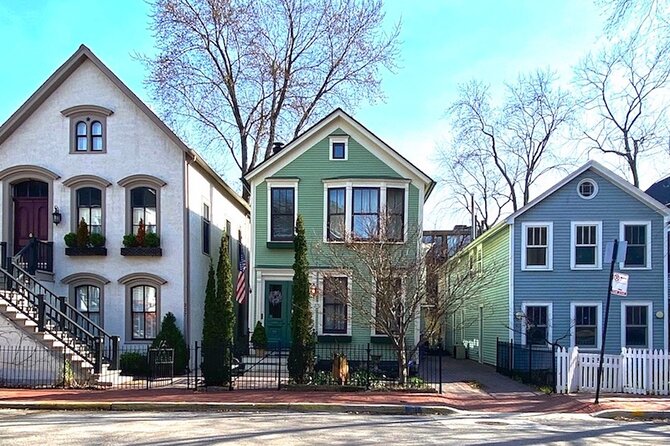
When people picture Chicago architecture, they often think of grand skyscrapers, Frank Lloyd Wright, or the famous homes of Prairie Avenue. This tour takes a different route. It shows you small wooden and masonry homes built for working families in the mid-1800s, before the city’s streets filled with grand apartment buildings.
The Old Town Triangle survived the Great Chicago Fire of 1871. That gives the neighborhood unusual value. You are not simply looking at old houses. You are seeing pieces of the city that existed before the fire and before Chicago became a modern industrial giant.
I find this kind of walk especially useful because the buildings are still part of a living neighborhood. You are not moving through a reconstructed museum district. You are walking along residential streets and learning how architectural details, building materials, and house layouts fit into Chicago’s early growth.
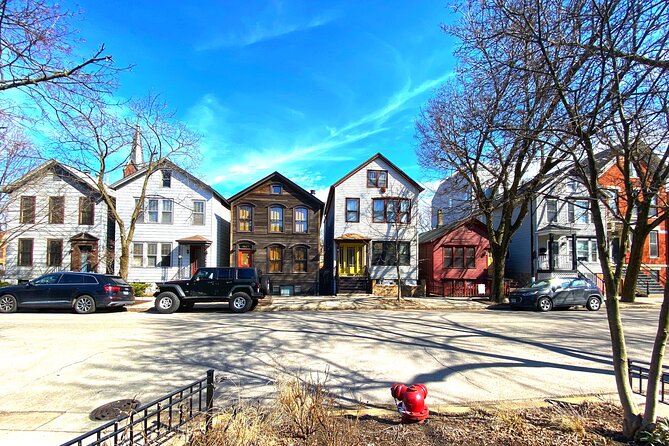
The cottages were built in several styles. Some are simple and plain. Others were altered or dressed up over time. In a few places, several cottages survive side by side. One section includes an entire block with cottages on both sides of the street, giving you the clearest sense of how the neighborhood once looked.
Meeting on Eugenie Street
The tour begins at 164 W Eugenie Street at 11 a.m. Eugenie Street is a good starting point because it quickly puts you among historic houses instead of making you wait for the history to begin. The meeting point is in the Old Town Triangle, near public transportation, so you do not need to arrange a separate transfer to a distant attraction.
You receive a mobile ticket, and confirmation is provided when you book. Since this is a walking tour, wear comfortable shoes and plan for outdoor conditions. The stated duration is about 1 hour 45 minutes, though the stop schedule describes roughly two hours of sightseeing. I would allow the longer amount of time so you are not rushing afterward.
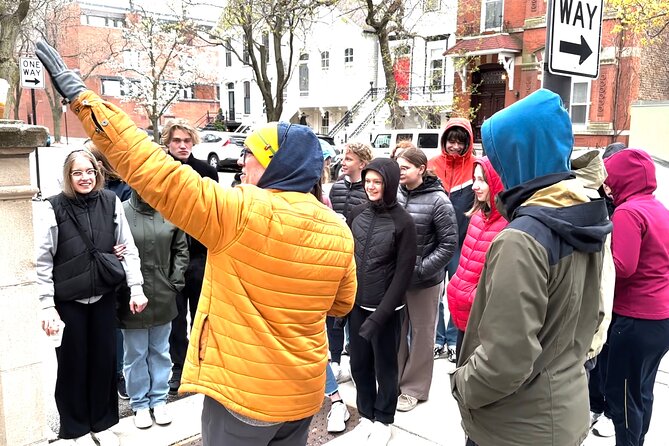
The group limit of eight is one of the best features here. A small group makes a real difference on a residential street. You can hear explanations without standing at the back, and you have a better chance to ask about a particular doorway, porch, or row of houses.
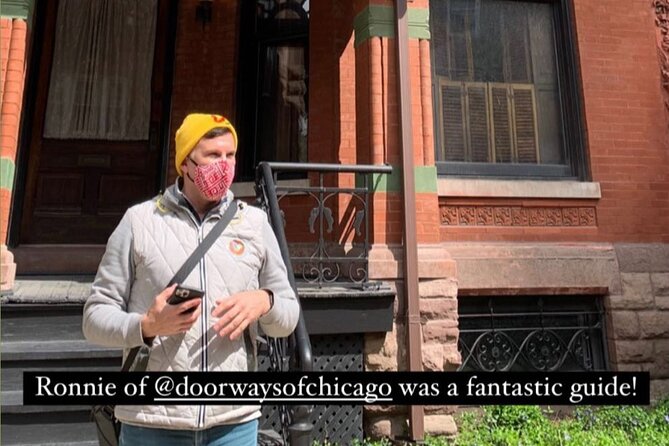
If Ronnie is leading your tour, you can expect a guide who brings strong personal interest to the neighborhood. His connection to the cottages is clear from the way he has photographed them and shared their architectural details. Guide assignments can vary, so the experience may not always be led by him.
More walking tours in Chicago:
- Chicago: Gangsters and Ghosts Walking Tour
★ 5.0 · 7,155 reviews - Chicago Favorites Ultimate Food and Walking Tour
★ 5.0 · 1,962 reviews - Chicago: Gangsters and Ghosts Guided Walking Tour
★ 4.7 · 1,697 reviews
Forty to Fifty Cottages in the Old Town Triangle
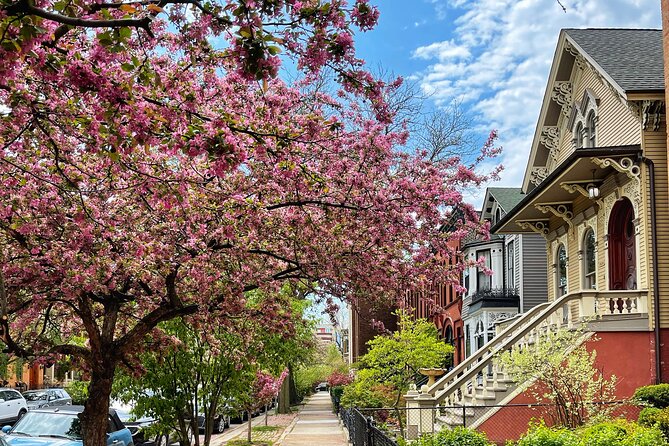
The main part of the walk focuses on 40 to 50 workers’ cottages. This is the heart of the experience, and you should give it your full attention. The houses may look modest at first, but the guide helps you notice their different designs and construction styles.
The important point is not that every cottage is grand. Most are valuable because they survived. Together, they show the scale and character of Chicago before the Great Fire and before later redevelopment changed much of the city.
I like the way this shifts your attention from famous architects to the people who built and occupied the neighborhood. You begin to read the street as a historical document. A porch, roofline, narrow lot, or repeated house plan can tell you something about how homes were added and how the area grew.
The tour also includes several rare groupings. In one place, you can see multiple cottages in a row. In another, cottages line both sides of an entire block. Those stretches help you picture the original neighborhood better than a single preserved house ever could.
The setting remains residential, so be considerate with photography and conversation. The appeal comes from seeing the houses in their everyday surroundings, not from entering them. If you want an interior tour, this experience will not provide it.
Eugenie Street’s Queen Anne and Second Empire Rowhouses
A short stop on West Eugenie Street focuses on a row of five houses built in 1886. The architect was Harald Hansen, and the buildings combine Queen Anne and Second Empire features in an unusually varied group.
This is a useful contrast with the workers’ cottages. The cottages show everyday housing from an earlier period, while the Eugenie Street rowhouses reflect a more decorative and prosperous phase of Chicago’s development. The five homes are designed as a group but are not identical, so you can compare their details from one facade to the next.
The stop lasts about 10 minutes. That is enough time to hear the basic story and examine the facades, but not enough for a long architectural lecture. I appreciate that the route keeps moving. You get several focused examples instead of spending the entire morning at one address.
The guide also connects this street to the early development of Chicago. That broader context matters. The houses are not isolated curiosities. They belong to the story of a city expanding, gaining wealth, and developing new ideas about urban housing.
Crilly Court and the People Who Lived There
North Crilly Court offers another change of pace. Here, the focus is on the people associated with the street and on a property recognized as a National Historic Landmark.
This stop is less about counting house types and more about connecting buildings to individual lives. You hear about notable people who lived here, giving the street a social history as well as an architectural one. The combination is helpful because historic neighborhoods can otherwise become a parade of facades with no human story behind them.
The stop is planned for about 15 minutes. That gives the guide room to explain the court’s significance without making the walk feel slow. I would pay attention to the contrast between Crilly Court and the cottage blocks. Together, they show how a relatively small area could contain several different levels of wealth and several periods of construction.
Different part of the city, different kind of afternoon:
- Chicago Architecture River Cruise
★ 5.0 · 15,756 reviews - Chicago River 90-Minute Architecture Tour
★ 4.5 · 9,629 reviews - Chicago River: 1.5-Hour Guided Architecture Cruise
★ 4.8 · 8,046 reviews - Chicago Architecture Center River Cruise aboard First Lady
★ 5.0 · 5,536 reviews
St. Michael Church, the Former Tallest Building in America
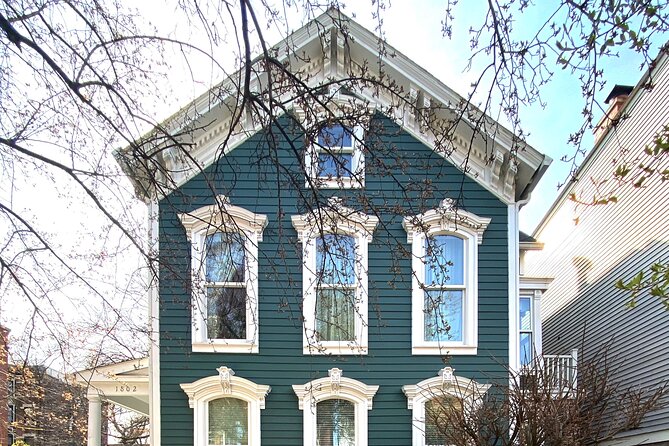
St. Michael Church of Old Town is the route’s largest architectural landmark. Built between 1866 and 1869, it was once the tallest building in the United States for 16 years.
That fact gives the church unusual weight in the tour. It helps you understand the scale of early Chicago and the importance of religious buildings in a growing city. In an area filled with small homes, the church’s height and presence make it easy to see why it became such a major local marker.
The stop lasts about 20 minutes, one of the longest on the walk. That makes sense. The church carries architectural, religious, and city history all at once. You should expect the focus to remain on the exterior and the story of the building, since the tour information does not promise an interior visit.
For me, this is one of the strongest stops because it links the neighborhood to a national story. Chicago was still young, yet its church was briefly the tallest building in the country. That detail makes the city’s rapid growth feel concrete.
Twin Anchors and Old Town’s Neighborhood Character
The walk also pauses outside Twin Anchors Restaurant and Tavern, founded in 1932. It is known for baby-back ribs and for its long connection to Frank Sinatra.
This is a short, five-minute stop, so do not expect a meal or a restaurant visit as part of the tour. Instead, it adds a later layer to the neighborhood’s story. The route is not limited to the 1800s. It also shows how Old Town continued to function as a local community through the 20th century.
Twin Anchors gives the walk a pleasant change in tone. After cottages, rowhouses, and church history, you get a glimpse of a neighborhood tavern with its own place in Chicago culture. If you want to eat there, plan that separately after the tour rather than assuming time is included.
The Wacker Homes and Chicago’s Early City Builders
Another stop takes you to the homes of Charles and Frederick Wacker. Charles Wacker is associated with Wacker Drive, and the tour explains how father and son contributed to the early design and growth of Chicago.
The value here is the connection between private houses and major city planning. You are not only looking at where important people lived. You are also hearing how individuals helped shape the streets, infrastructure, and public face of the city.
The stop itself is brief, about five minutes. That means the guide will likely give you a compact explanation rather than a full biography. I think that works well within the overall route, since the tour uses many short stops to build a larger picture.
Louis Sullivan Before He Became Famous
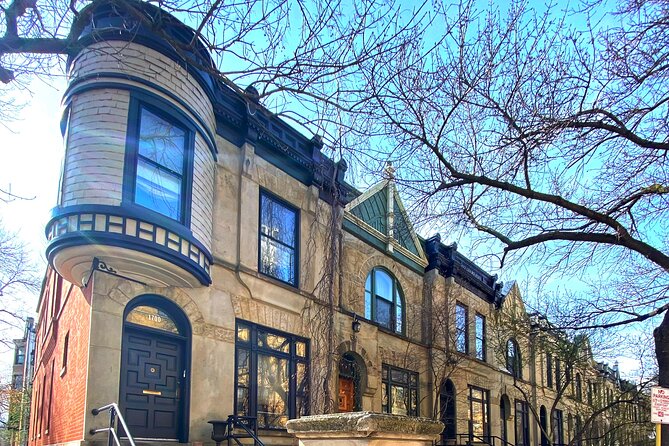
The Ann Halsted Rowhouses add one of the most interesting architectural details on the route. They were designed by Louis Sullivan when he was in his early 20s, before he became widely known.
This is a good reminder that famous architects have early work. You can look at these rowhouses with that in mind and consider how an architect’s style develops before the signature buildings arrive.
The stop lasts about five minutes, but its importance is greater than the time suggests. If you have an interest in architecture, this may be one of the stops you remember best. It gives you a direct link to a major Chicago architect without requiring a separate architecture tour.
The tour does not promise entry into the rowhouses, so the experience depends on what you can see from the street. Bring your attention to the facades and listen for the guide’s explanation of Sullivan’s early career.
The Last Farmhouse and the End on Menomonee Street
The final stop is at 216 W Menomonee Street, where you see the only remaining farmhouse from the period when Old Town was still farmland outside the city limits.
This is a striking ending because it reaches back even further than the workers’ cottages. Before the area became an urban neighborhood, it was agricultural land beyond the city. The farmhouse gives you a physical reminder of that earlier setting.
The tour ends only a few short blocks from the starting point. That makes the route practical for your day. You can return to the area without arranging transportation, or continue exploring Old Town on foot.
The guide’s personal connection to this final cottage adds warmth to the ending. It was the first workers’ cottage he noticed before he understood what these houses represented. That kind of personal starting point helps explain why this neighborhood has become such a strong focus for him.
Is $45 a Fair Price?
At $45 per person, this is priced above a casual neighborhood stroll but below many large city tours. The value comes from the guide’s research, the number of historic properties covered, and the small group limit.
You are paying for interpretation rather than admission. There is no museum ticket or interior access included. If you prefer to explore at your own pace with a guidebook, you could see some of the streets for free. But you would miss the connected story linking the cottages, church, rowhouses, famous residents, and early city planners.
The price makes more sense if you care about architecture, local history, or Chicago before the skyscrapers. It is less compelling if you want a broad city highlights tour or a food experience. The route stays within the Old Town Triangle, so it offers depth rather than a sweeping look at all of Chicago.
Who Will Enjoy This Walk Most?
I would recommend this tour to anyone who likes old houses, city development, and stories tied to specific streets. It is especially useful if you have already seen Chicago’s major downtown sights and want a quieter neighborhood experience.
The small group suits people who prefer conversation over a large guide-led crowd. It also works well for residents who pass these homes every day but want to know why they matter. A past participant who lived in the neighborhood found the tour useful for exactly that reason, and Ronnie was praised for being informative, passionate, and professional.
You should have a moderate level of physical fitness. The route involves walking outdoors for nearly two hours, and the tour requires good weather. Service animals are allowed, and the area is near public transportation.
The experience is not ideal if you need guaranteed shelter, want a seated activity, or hope to tour historic interiors. The cancellation terms are strict because the booking is normally non-refundable. If poor weather cancels the walk, you are offered another date or a full refund. The same applies if the minimum number of participants is not reached.
My Recommendation for the Old Town Triangle Walk
Book this tour if you want to understand Chicago through its surviving homes rather than only its biggest attractions. The cottages are the main reason to go, but St. Michael Church, Crilly Court, the Sullivan rowhouses, and the old farmhouse give the route welcome variety.
I especially like the combination of ordinary and grand. You see workers’ housing, wealthy rowhouses, a famous church, a landmarked property, a long-running tavern, and homes linked to city builders in one compact area.
At $45, I would choose it for a focused architecture and history morning, not as a general introduction to Chicago. Bring comfortable shoes, allow about two hours, and book only if you can accept an outdoor walk and a strict cancellation policy. For the right audience, this is a thoughtful way to see the Old Town Triangle as a surviving piece of early Chicago rather than simply a pretty neighborhood.
FAQ
How long does the Workers Cottages of Oldtown Triangle Walking Tour last?
The tour lasts approximately 1 hour 45 minutes. The scheduled stops describe close to two hours of sightseeing, so allow about two hours for the full experience.
Where does the tour begin?
The meeting point is 164 W Eugenie Street, Chicago, Illinois 60614. The start time is 11 a.m.
Where does the tour end?
The tour ends at 216 W Menomonee Street, a few short blocks from the starting point.
How many people can join the tour?
The group is limited to a maximum of eight people.
What does the $45 price include?
The $45 price covers the guided walking experience. Admission tickets are not charged at the listed stops.
Is the tour suitable for people with limited mobility?
The tour requires a moderate level of physical fitness because it is an outdoor walking experience lasting nearly two hours. Specific accessibility details beyond service animals being allowed are not provided.
What happens if the weather is poor?
The tour may be canceled in poor weather. In that case, you are offered a different date or a full refund.
Recently added around Chicago
- Travel between Chicago O’Hare and Madison★ 4.5 · 4 reviews
- Volo Auto Museum: Admission Ticket★ 4.5 · 55 reviews
- Holiday Walking Tour: Underground Chicago via the Pedway★ 5.0 · 27 reviews
- Verse Immersive Holographic Theater in Chicago★ 4.5 · 28 reviews
- Vito’s Vault Chicago finest dinner theatre speakeasy★ 5.0 · 14 reviews
- Delicious Donuts & Sweet Treats: West Loop Walking Tour★ 5.0 · 47 reviews
- Traveling Spoon Chicago-Style Deep Dish Pizza Private Online Cooking Class★ 5.0 · 4 reviews
- Private Transfer from Chicago Airport (ORD)★ 3.5 · 3 reviews
Chicago Walking Tours, compared.

Chicago Favorites Ultimate Food and Walking Tour
Read our review →
Chicago in a Day: Food, History & Architecture Walking Tour
Read our review →
Chicago’s Secret Interiors Architectural Walking Tour
Read our review →

Browse the lists this tour appears in