
Reviewed · CHICAGO WALKING TOURS
Chicago: Magnificent Mile Walking Tour
Chicago’s Magnificent Mile is more than a shopping street. It is a long lesson in how a city changes, from a dirt road called Pine Street to a grand avenue lined with skyscrapers, hotels, vertical malls, and luxury shops. This 90-minute walk explains that change while showing you some of the best-known buildings on North Michigan Avenue.
I like the clear architectural story, which ties the DuSable Bridge, Daniel Burnham’s 1909 Plan of Chicago, and the rise of high-end retail into one easy-to-follow route. I also like the Chicago Architecture Center admission, since you can continue studying the city’s buildings after the walk, including its downtown model and skyscraper displays.
The main limitation is the narrow focus. The route concentrates on Michigan Avenue and nearby landmarks, so you will not cover a large part of downtown or many side streets. The tour is listed as wheelchair accessible, yet the information also says it is not suitable for people with mobility impairments, so you should confirm the current route before booking if that matters to you.
Key points at a glance
- Pine Street’s transformation: See how a dirt road became Chicago’s grandest shopping avenue.
- Famous buildings up close: Hear stories about the Tribune Tower, Wrigley Building, 875 N. Michigan Avenue, and other architectural icons.
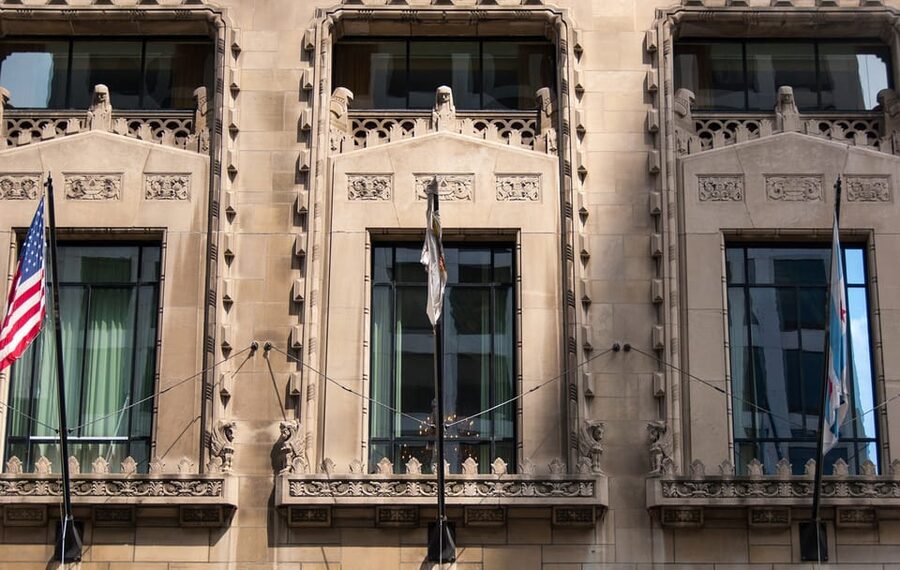
- Historic interiors: Look inside the Medinah Athletic Club, where Egyptian and Renaissance decoration share the same building.
- Art Deco sculpture: View bas relief panels inside an Art Deco office building.
- A compact 90-minute route: The walk is focused and efficient, but it does not attempt to cover all of downtown.
- Architecture Center admission included: Use the galleries, downtown building model, and skyscraper displays after the outdoor walk.
How Pine Street became the Magnificent Mile
The strongest part of this tour is its sense of change. You are not simply pointed toward attractive buildings and given their dates. You learn why this particular stretch of Michigan Avenue became so important.
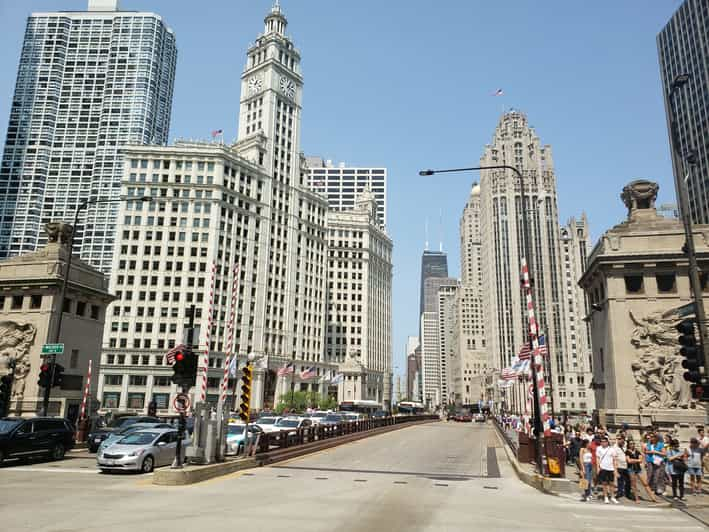
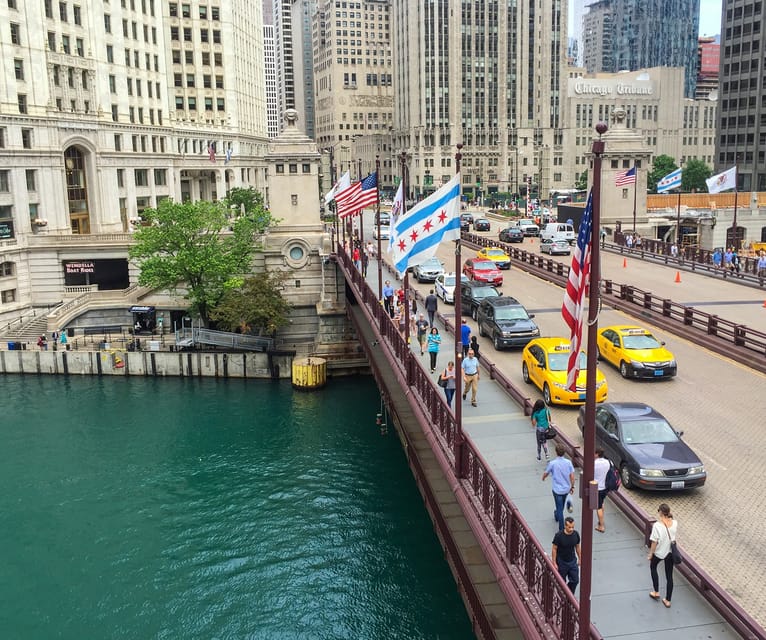
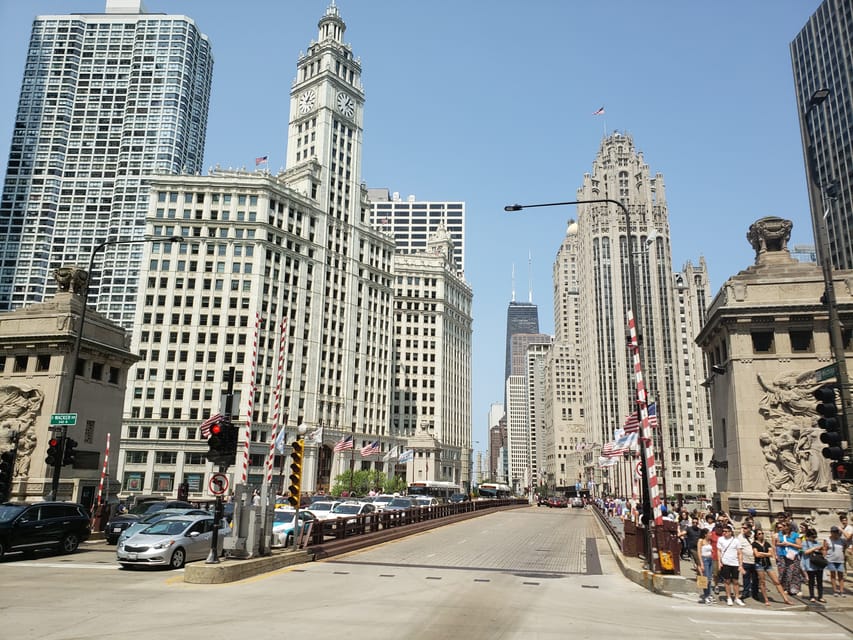
The story begins with Pine Street, once a dirt road beside a less developed part of the city. The opening of the DuSable Bridge in the 1920s helped connect the area across the Chicago River with the growing commercial district. Warehouses and factories gave way to a broad avenue designed for business, shopping, and grand public views.
That change was shaped by Daniel Burnham and the 1909 Plan of Chicago. The plan helped promote a more orderly, impressive city center, with wide streets and buildings that could give Chicago a strong civic identity. On this walk, the phrase Paris on the Prairie makes sense as a description of the avenue’s early ambition. The buildings were meant to create a sense of ceremony, not just provide office space.
I find this context more useful than a list of architectural terms. It helps you see North Michigan Avenue as a planned urban project. The avenue’s scale, its mix of historic facades and tall towers, and its concentration of retail all follow a larger idea about how Chicago should present itself.
More Magnificent Mile tours:
- Chicago River 45-Minute Architecture Tour from Magnificent Mile
★ 4.5 · 2,924 reviews - Magnificent Mile Tour With Optional 360 Chicago Upgrade
★ 5.0 · 80 reviews - Chicago Perfume Making Classes on Magnificent Mile
★ 5.0 · 44 reviews
The DuSable Bridge and the start of the route
The tour begins inside the Chicago Architecture Center at 111 E Wacker Drive. From there, you head toward the DuSable Bridge, one of the key points in the story of Michigan Avenue.
The bridge stop is brief, listed at about five minutes, but its importance is much greater than the amount of time suggests. It explains how the river crossing changed access to the area and helped turn a warehouse and factory district into a commercial corridor.
You will want to pay attention here even if you have already crossed the bridge on your own. The guide gives the crossing a useful purpose. Instead of treating it as a simple connection between two parts of downtown, the tour presents it as a piece of city planning that helped set the stage for the Magnificent Mile.
The bridge also gives you a clean transition from the older commercial city near the river to the grander avenue ahead. The tour does not linger for long, so anyone hoping for a long photo stop should plan to take extra pictures before or after the walk.
Wrigley Building and the icons of Michigan Avenue
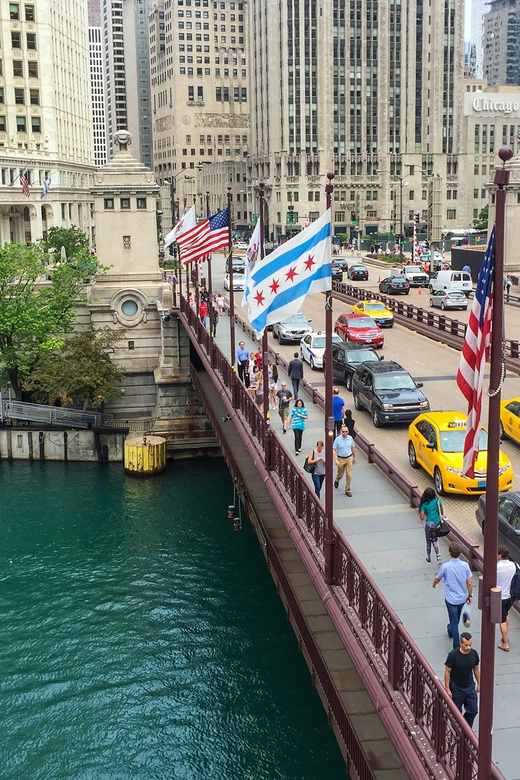
The Wrigley Building is one of the major architectural stops. Its presence helps explain why North Michigan Avenue became known around the world, rather than remaining just another downtown shopping street.
The tour also discusses the Tribune Tower and 875 N. Michigan Avenue, formerly known as the Hancock Tower. These buildings represent different periods and different ideas about what a prominent city building should do. One gives the avenue a historic, decorative identity, while the other shows the impact of modern high-rise construction.
The guide’s job here is to explain the stories behind the facades. That makes a real difference. You can admire the buildings on your own, but a certified guide can point out how their design relates to the larger development of the avenue and how architecture was used to draw businesses, shoppers, and hotel clients.
A guide named Jim has led this experience and was described as articulate, informed, and fun. If he is leading your departure, you can expect a lively delivery with room for questions. The available feedback also points to guides who explain the subject clearly and welcome questions, which suits this tour well because the buildings invite close looking.
Inside the Medinah Athletic Club
One of the more unusual parts of the walk is the look inside the Medinah Athletic Club, now connected with the InterContinental Chicago Magnificent Mile hotel.
The building’s decoration ranges from Egyptian to Renaissance styles. That mixture gives you a good reminder that architecture is often shaped by fashion, fantasy, and marketing as much as by practical needs. A building could be designed to make its users feel that they had entered an exotic or grand setting, even while remaining in the middle of Chicago.
This interior visit adds variety to the route. Much of the walk takes place outdoors, looking up at facades and towers. The Medinah Athletic Club gives you a chance to study decorative details from inside, where the atmosphere and materials matter as much as the overall outline of the building.
The stop is listed at about five minutes, so do not expect a long interior tour. Still, it is a worthwhile inclusion for anyone who enjoys decorative architecture. It also gives the walk more range than a simple procession past shops and office towers.
More walking tours in Chicago:
- Chicago: Gangsters and Ghosts Walking Tour
★ 5.0 · 7,155 reviews - Chicago Favorites Ultimate Food and Walking Tour
★ 5.0 · 1,962 reviews - Chicago: Gangsters and Ghosts Guided Walking Tour
★ 4.7 · 1,697 reviews - Chicago in a Day: Food, History & Architecture Walking Tour
★ 5.0 · 1,153 reviews
Art Deco panels and the modern shopping avenue
The route continues through the present-day shopping district, where contemporary buildings sit beside older landmarks. You will see vertical malls, skyscrapers, hotels, residential towers, and structures designed to reflect the brands operating inside them.
This is where the tour connects architecture with commerce. On the Magnificent Mile, buildings are not always quiet containers for shops. Their facades, entrances, lighting, height, and interiors all help create a particular image for the district.
The tour includes a look at bas relief sculptural panels inside an Art Deco office building. These panels are easy to miss if you are walking alone with your attention fixed on storefronts. The guide helps you notice how much decoration survives in places that now function as ordinary commercial buildings.
The stops at Burberry and Apple Michigan Avenue are listed as about five minutes each. They are not shopping sessions or product demonstrations. Instead, they show how newer retail buildings use design to make a store feel like a destination. Apple Michigan Avenue, in particular, represents the more recent phase of the avenue’s development, when shopping districts began placing as much emphasis on building design and public space as on the goods sold inside.
You should not expect a complete survey of every shop or side street. One person wanted the walk to cover more territory and see more streets, and that is a fair concern. The route is best for learning about the core of Michigan Avenue, not for exploring the entire neighborhood.
What the 90-minute format gives you
Ninety minutes is enough time to establish a strong story without taking up half your day. I like this length for a first look at downtown architecture, especially if you also want time for museums, shopping, or the riverfront.
The tradeoff is pace. You will move between several stops, and some visits are short. The five-minute points at the DuSable Bridge, Wrigley Building, InterContinental, Burberry, and Apple Michigan Avenue give the tour a clear rhythm, but they do not allow long independent exploration at every location.
You should wear comfortable shoes and arrive ready to walk outdoors. The experience departs rain or shine, and no weather-related refunds are offered. Chicago weather can change quickly, so a rain layer is a sensible choice even when the forecast looks favorable.
The tour is conducted in English with a live guide. It does not include hotel pickup, food, drinks, luggage storage, stroller storage, or coat check. Leave large bags and luggage elsewhere before arriving, since they are not allowed and the Architecture Center cannot store them.
Is $35 a good value?
The price is listed as $35 per group up to one person. That wording is unusual, so check the booking details carefully to understand how the reservation is priced for your party.
The value comes from combining a guided walk with admission to the Chicago Architecture Center galleries. If you only wanted a short look at Michigan Avenue, you could see many of the buildings from the street without paying. The fee makes more sense if you want the background, interior access, and a guide who can connect the individual stops.
The nonprofit nature of the Chicago Architecture Center also adds a practical benefit. Ticket income supports education and community programs, including Girls Build!, Teen Fellows, the Newhouse Architecture + Design Competition, and Open House Chicago. I would not book a tour solely for that reason, but it is good to know that your ticket helps fund local architecture education and public programming.
The value is strongest for a first-time Chicago visitor, an architecture fan, or anyone who wants a structured introduction before exploring the city alone. It is less compelling if you already know the Magnificent Mile well or prefer to roam without a fixed route.
Continue inside the Chicago Architecture Center
Your ticket includes admission to the Chicago Architecture Center galleries, and I would make time for them. The indoor exhibits give you a second way to understand the city after seeing the real buildings outside.
The interactive downtown model is especially useful because it shows how the central area fits together. You can also see models illustrating the development of Chicago skyscrapers and the many styles used across the city.
This gallery visit helps fill in what a 90-minute walk cannot cover. The outdoor route focuses on Michigan Avenue, while the Center gives you a wider look at Chicago’s building traditions and changing skyline. If you have only a short time in the city, the combination gives you more context than the street walk alone.
The Center is also the meeting point and return point, which keeps the experience simple. You check in inside at 111 E Wacker Drive, walk the route, and finish back at the same place.
Who should book this walk?
I would recommend it to you if you want architecture explained in plain language, with enough city history to make the buildings meaningful. It is a good choice for first-time visitors, design students, shoppers who want more context, and anyone curious about how Chicago developed its central commercial district.
The walk also suits people who prefer a short, focused activity. At 90 minutes, it fits neatly into a morning or afternoon, and the included galleries let you continue at your own pace.
I would be more cautious if you want a broad downtown tour. The route stays centered on North Michigan Avenue, and one of its limits is that it does not cover many side streets or a wide section of Chicago. It is also not the best choice for anyone carrying luggage or a stroller, since there is no storage.
The accessibility information needs special attention. The experience is marked wheelchair accessible, but it is also marked as not suitable for people with mobility impairments. Since those statements conflict, contact the provider before booking and ask about the current walking route, bridge access, interiors, and seating options.
Should you book the Magnificent Mile walking tour?
Book it if you want the Magnificent Mile explained as a piece of city planning rather than treated as a row of stores. The best parts are the Pine Street story, the DuSable Bridge connection, the famous building stops, the Medinah Athletic Club interior, and the Art Deco sculptural panels.
Skip it if you want to cover a large part of downtown or spend most of your time shopping. For the right reader, the $35 price is reasonable because it includes a certified guide and Chicago Architecture Center admission, with ticket income also supporting local programs.
Plan for rain or shine, leave large bags behind, and allow extra time for the galleries after the walk. That simple preparation will help you get the most from this compact introduction to Chicago’s most famous avenue.
FAQ
How long is the Magnificent Mile walking tour?
The tour lasts 90 minutes.
Where does the tour begin?
You check in inside the Chicago Architecture Center at 111 E Wacker Drive, Chicago, Illinois 60601.
What language is the tour conducted in?
The live tour is conducted in English.
Is admission to the Chicago Architecture Center included?
Yes. Admission to the Chicago Architecture Center galleries is included in the tour price.
Does the tour include hotel pickup or drop-off?
No. Hotel pickup and drop-off are not included.
Can I bring luggage or a stroller?
No secure storage is available for luggage or strollers, and large bags are not allowed. You should make other storage arrangements before arriving.
Is the tour wheelchair accessible?
The activity is listed as wheelchair accessible, but the information also says it is not suitable for people with mobility impairments. Contact the provider before booking to confirm that the current route meets your needs.
Recently added around Chicago
- Travel between Chicago O’Hare and Madison★ 4.5 · 4 reviews
- Volo Auto Museum: Admission Ticket★ 4.5 · 55 reviews
- Holiday Walking Tour: Underground Chicago via the Pedway★ 5.0 · 27 reviews
- Workers Cottages of Oldtown Triangle Walking Tour★ 5.0 · 45 reviews
- Verse Immersive Holographic Theater in Chicago★ 4.5 · 28 reviews
- Vito’s Vault Chicago finest dinner theatre speakeasy★ 5.0 · 14 reviews
- Delicious Donuts & Sweet Treats: West Loop Walking Tour★ 5.0 · 47 reviews
- Traveling Spoon Chicago-Style Deep Dish Pizza Private Online Cooking Class★ 5.0 · 4 reviews
Chicago Walking Tours, compared.


Chicago Favorites Ultimate Food and Walking Tour
Read our review →
Chicago in a Day: Food, History & Architecture Walking Tour
Read our review →
Chicago’s Secret Interiors Architectural Walking Tour
Read our review →

Browse the lists this tour appears in