
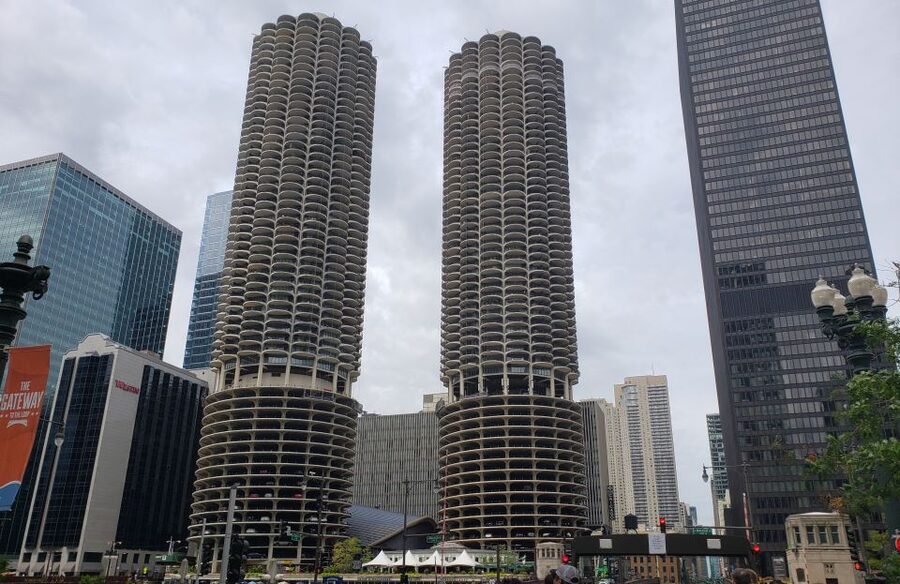
Reviewed · CHICAGO WALKING TOURS
Chicago: Must See Chicago 90 minute Walking Tour
Chicago’s best architecture lesson takes place outdoors, where the city’s famous buildings rise around you. This 90-minute walk links the Loop, Chicago River, and Millennium Park while explaining how Beaux Arts, Art Deco, Modernist, and Post-Modernist design shaped Chicago.
I like the Chicago Architecture Center-trained guides, who turn a skyline walk into a clear lesson in design, materials, and city history. I also like the included CAC admission, especially the giant model of Chicago with more than 4,250 miniature buildings. The main drawback is that this is an architecture-focused tour, not a broad sightseeing tour, and you go inside none of the landmark buildings.
Key points at a glance
- Three central Chicago settings: Follow a route through the Loop, beside the Chicago River, and into Millennium Park.
- A useful architecture primer: Compare Beaux Arts, Art Deco, Modernist, and Post-Modernist buildings in one compact walk.
- Major landmarks from the street: See Willis Tower, the Wrigley Building, Tribune Tower, the Chicago Theatre, the Art Institute, and more.
- Guides trained by the CAC: Guides such as Paige, Claudia, Anna, Howard, and Lori have been praised for clear storytelling and strong subject knowledge.
- CAC admission included: Visit the exhibits within seven days, including the large-scale city model and an interactive film experience.
- Good value for a short visit: The advertised price is $35 per group up to one person, with the normally $15 CAC admission included.
Why this 90-minute walk works well in Chicago

Chicago can feel like a giant outdoor architecture museum, but the city is easier to understand when someone points out the links between its buildings. This tour gives you that framework without taking up half a day.
The route focuses on downtown’s three main centers. The Chicago Loop is the historic core. The Chicago River explains the city’s commercial and physical growth. Millennium Park brings you into the newer civic center, with The Bean as its instantly recognizable calling card.
That range matters. You are not looking at one narrow period or one type of building. In a short time, you can compare classical-looking façades, ornate Art Deco details, glassy modern towers, and newer skyscrapers with unusual shapes.
I would treat this as an orientation walk. It helps you understand what you are seeing for the rest of your Chicago stay. If you return to the river, Millennium Park, or the Loop later, you will notice details that might otherwise pass overhead.
The 90-minute length is another advantage. You get a focused introduction without committing to a long walking day. Still, the route covers a lot of ground, so comfortable shoes matter. Tours leave rain or shine.
More walking tours in Chicago:
- Chicago: Gangsters and Ghosts Walking Tour
★ 5.0 · 7,155 reviews - Chicago Favorites Ultimate Food and Walking Tour
★ 5.0 · 1,962 reviews - Chicago: Gangsters and Ghosts Guided Walking Tour
★ 4.7 · 1,697 reviews
The Chicago Loop: a street-level lesson in styles
The Loop is the strongest part of the experience for anyone who wants to see Chicago architecture in a compact area. The guide introduces buildings from several design eras, helping you spot the differences instead of treating the skyline as one giant wall of glass and stone.
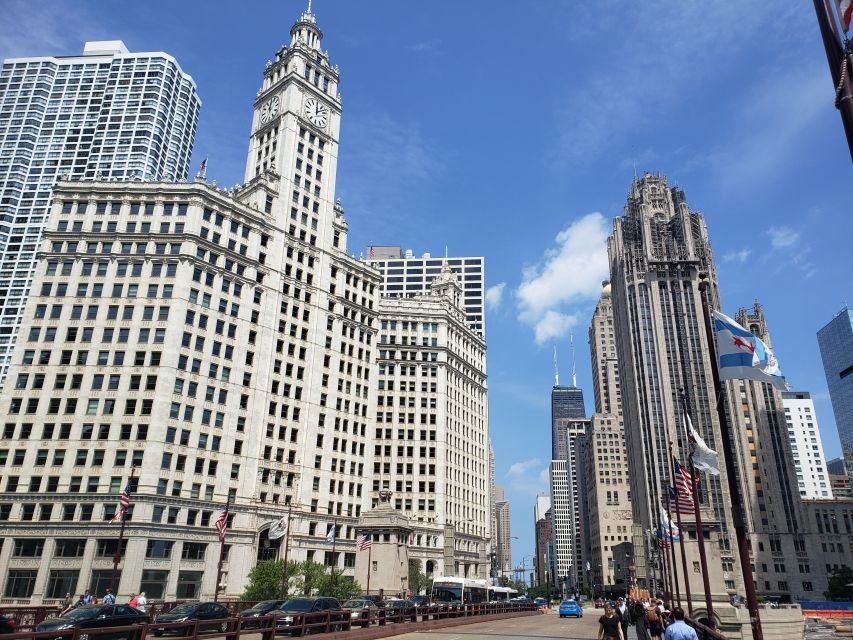
You will see the Wrigley Building, whose design pays homage to classical traditions. Its bright exterior and decorative treatment make it easy to recognize, but the useful part is learning how classical ideas were adapted for a modern commercial city.
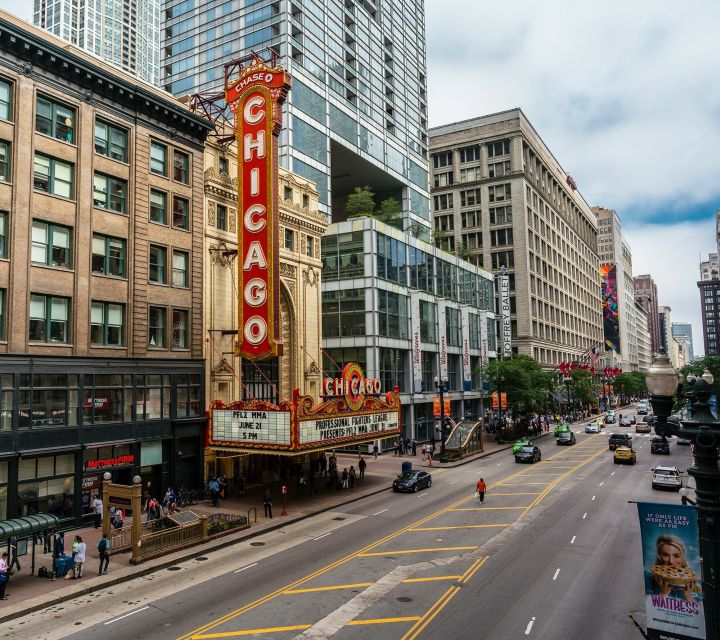
Nearby, the Tribune Building offers another example of architecture looking backward for inspiration. The tour also covers the Chicago Theatre, a downtown landmark with a strong connection to the city’s entertainment identity.
The Art Institute of Chicago adds a cultural stop to the route. It is not simply another impressive façade. Its presence helps show how Chicago’s public and cultural buildings use classical design to signal importance and permanence.
The tour does not take you inside these buildings. That is important to know before booking. You are studying façades, entrances, towers, materials, and the way each structure fits into the street. For many people, that is enough. If your main goal is interior decoration or access to observation decks, you will need separate plans.
Art Deco details at Carbide & Carbon and the Board of Trade
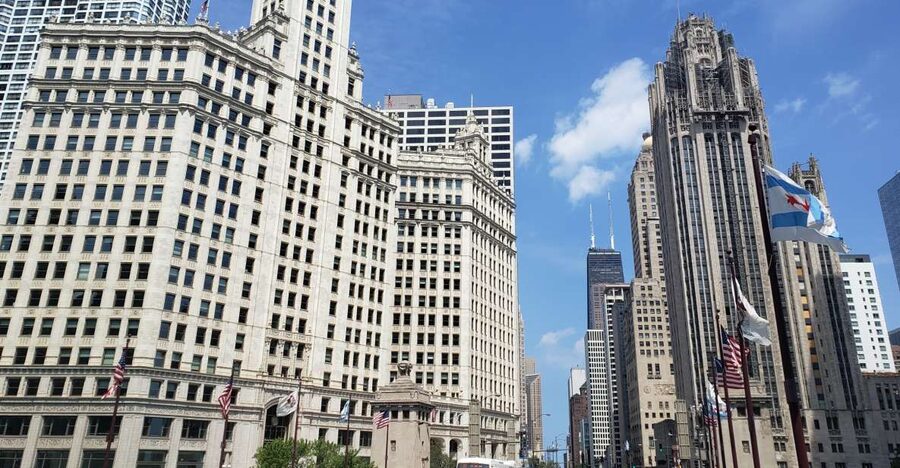
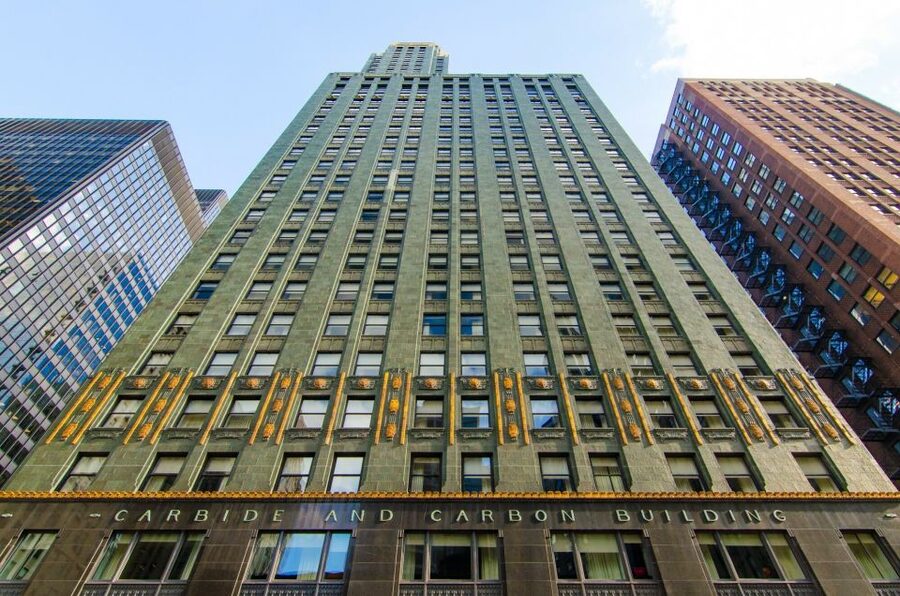
The Art Deco portion gives the walk some visual drama. The Carbide & Carbon Building is one of the easiest places to appreciate the style from outside. Look for the building’s polished, decorative finish and the strong vertical emphasis that makes it feel both elegant and theatrical.
The Chicago Board of Trade Building brings a different kind of presence. Its design shows how a financial institution could use Art Deco decoration to project confidence and power. Your guide explains how the building’s form and details connect to its purpose.
This is where a trained guide adds real value. A quick photo can capture the building, but it cannot explain why the decoration looks different from the classical buildings nearby. The tour gives you a basic visual vocabulary: symmetry, ornament, vertical lines, materials, and the choices that make one era distinct from another.
If you enjoy taking photos, bring a camera or keep your phone ready. The tour offers many street-level views, though downtown buildings can be difficult to frame in a single shot. You will get the best results by looking upward and allowing a little time at each stop.
The modern skyline: Willis Tower, Hancock, AON, Aqua, and Trump
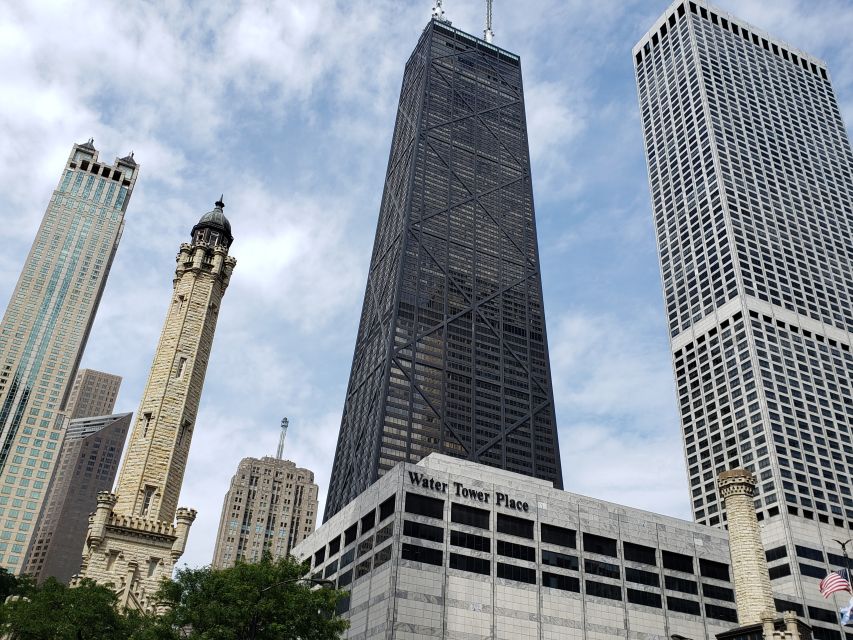
Chicago’s modern towers show how quickly building methods and city needs changed. The route includes Willis Tower, the John Hancock Center, and the AON Building, giving you three major examples of modern skyscraper design.
These buildings are useful comparisons. Their height is only part of the story. The guide discusses construction methods and materials, so you can begin to understand why towers from different decades look and feel different.
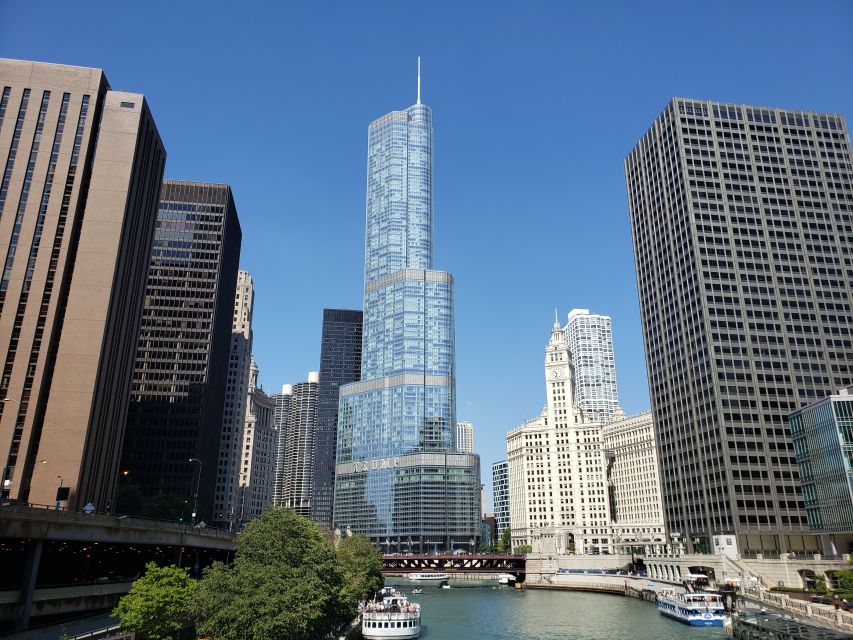
The itinerary also includes more recently completed skyscrapers, including Aqua and Trump Tower. Aqua is especially useful for seeing how a contemporary tower can use an unusual exterior form rather than a simple straight-sided box.
Trump Tower adds another recent example to the skyline. Together, the newer buildings show that Chicago’s architectural story did not end with its early skyscrapers or famous Art Deco landmarks.
This section is best for people who want more than a list of famous names. The guide’s role is to connect the buildings to broader design ideas. You may not remember every technical term, but you should leave better able to tell why one tower belongs to a different design period than another.
Different part of the city, different kind of afternoon:
- Chicago Architecture River Cruise
★ 5.0 · 15,756 reviews - Chicago River 90-Minute Architecture Tour
★ 4.5 · 9,629 reviews - Chicago River: 1.5-Hour Guided Architecture Cruise
★ 4.8 · 8,046 reviews - Chicago Architecture Center River Cruise aboard First Lady
★ 5.0 · 5,536 reviews
Along the Chicago River, where the city makes sense

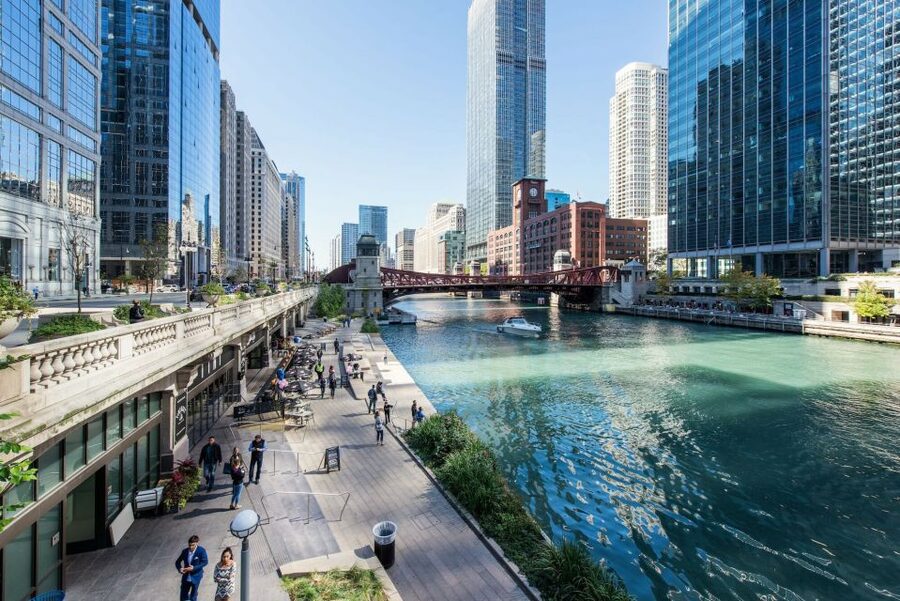
The Chicago River is one of the three main settings on the tour, and it gives the architecture a useful physical context. From the river, you can see how the downtown towers gather around a narrow corridor of water and commerce.
The river also helps explain why Chicago developed as a major city. The tour treats it as the city’s lifeblood, linking the buildings to the urban setting rather than presenting them as isolated objects.
This portion should appeal to you if you want a clearer sense of downtown geography. Instead of walking from one unrelated photo stop to another, you see how the Loop, the river, and the surrounding towers fit together.
The route remains outdoors. Due to current restrictions stated for this experience, you cannot enter the buildings, so the river section is also a reminder that this is a street-based tour. That keeps the pace moving, but it means you should not expect lobby visits or interior architectural details.
Millennium Park and The Bean
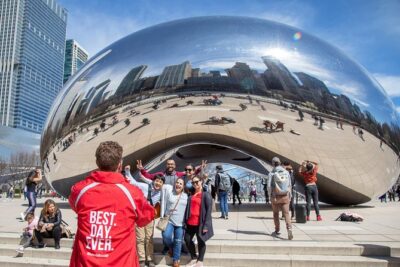
The walk continues to Millennium Park, home of the famous The Bean sculpture. This gives the tour a different visual finish after its long run of historic and commercial buildings.
Millennium Park is a useful place to discuss newer public design. The park and sculpture represent a more recent side of Chicago, where public space, art, and city identity meet. You also get one of the tour’s easiest photo opportunities.
The Bean can be crowded at times, and the tour does not promise a private photo stop or extended free time. If you want carefully composed pictures, you may need to return on your own. Still, including it in the route helps connect architecture to public art and everyday city life.
For a first visit, I like ending here. You have seen old and new design, major towers, traditional façades, and a modern public landmark. The walk gives you a broad visual map of downtown without pretending to cover every part of Chicago.
What the CAC exhibits add
Your ticket includes entry to the Chicago Architecture Center within seven days of the walking tour. The normal exhibit admission is listed as $15, so this is a meaningful part of the value rather than a token extra.
The Center’s exhibits cover Chicago neighborhoods, housing types, leading architects, and future projects. That broadens the experience beyond the central skyline. Downtown buildings are the focus of the walk, while the Center helps you think about how people live across the wider city.
The largest attraction is the scale model of Chicago, with more than 4,250 miniature buildings. A cinematic backdrop animates key moments in the city’s story, making it easier to understand the size and structure of the city than you can from street level.
The Center also includes a film and interactive elements. It is not a huge museum, so plan your expectations accordingly. You should think of it as a focused architecture center that works especially well before or after the walk.
I would visit the exhibits after the tour if you want the explanations to have more meaning. Once you have seen the buildings in person, the model can help you place them in the wider city. You can also visit within the seven-day window, which gives you flexibility rather than forcing a same-day museum visit.
Guides and the quality of the storytelling
The guides are certified and rigorously trained by the Chicago Architecture Center. The stated aim is to combine education with storytelling, and that balance is important on a walking tour.
Several guides have received especially warm praise, including Paige, Claudia, Anna, Howard, and Lori. The strongest feedback centers on clear explanations, passion for the subject, preparation, and the ability to answer questions while keeping the group moving.
Claudia has been praised for being especially accommodating, while Howard was noted for explaining how Chicago’s buildings, neighborhoods, and city plans continue to change. Lori was described as passionate and effective at explaining how famous structures came to be.
Your assigned guide may be someone else. Still, the training gives the tour a consistent foundation. A good guide can make a building memorable by explaining its purpose, materials, and place in Chicago’s story. The experience is less about memorizing dates and more about learning how to read the city.
The tour is conducted in English. Group size can vary. A particularly small group may allow more questions and a more personal pace, while a larger group may require you to stay close to the guide in busy downtown areas.
Price, timing, and practical value
The advertised price is $35 per group up to one person. The wording is unusual, so check the booking page carefully for the exact price shown for your party and date.
The included CAC admission normally costs $15. That makes the walking tour itself a reasonable purchase if you plan to use the Center within seven days. You are paying for a trained guide, a 90-minute route, and a museum-style follow-up visit rather than just a quick stroll past buildings.
Arrive 15 minutes before departure and present your ticket at the Chicago Architecture Center box office. There is no hotel pickup or drop-off, so you need to make your own way to the Center.
Do not bring luggage or large bags. The tour cannot provide secure storage for luggage or strollers, and there is no coat check. Assistance dogs are allowed, but other pets are not.
Wear comfortable shoes and bring a face mask or protective covering if required for your visit. The tour runs in rain or shine, so check the weather before leaving and dress for an outdoor walk.
You can cancel up to 24 hours in advance for a full refund, and the reserve-now, pay-later option keeps payment flexible. Those policies are useful if your Chicago schedule is still changing.
Who should book this Chicago architecture walk?
I recommend it most to first-time visitors, architecture fans, and anyone who wants a quick downtown orientation. It also suits repeat visitors. One person who had already visited Chicago three times still found new material to learn.
Families and mixed-interest groups may also find the format useful because the route includes famous buildings, public art, skyline views, and stories about the city. The 90-minute length is easier to manage than a long specialist lecture.
You should think twice if you want extensive interior access. The tour cannot go inside the buildings under the stated restrictions. You should also skip it if your priority is food, shopping, neighborhood life, or broad Chicago history without an architecture focus.
The route is a good match for photographers, but it is not a dedicated photography tour. You will have many chances to take pictures, yet the guide’s main purpose is teaching, not waiting for perfect light.
Should you book the Must See Chicago walk?
Book this tour if you want a well-organized introduction to the buildings that define downtown Chicago. The guide training, broad range of architectural styles, and included CAC visit make the $35 price attractive when you use the museum admission.
Skip it if you need interior visits, luggage storage, or a tour centered on something other than architecture. For everyone else, this is a compact way to get your bearings, learn why Chicago’s skyline looks the way it does, and leave with a better eye for the city’s buildings.
FAQ
How long is the Chicago Must See walking tour?
The walking tour lasts 90 minutes.
Where does the tour begin?
The tour begins at the Chicago Architecture Center. Arrive 15 minutes before departure and present your ticket at the box office.
What language is the tour conducted in?
The live tour is conducted in English.
Which areas of Chicago does the route cover?
The route covers the Chicago Loop, the Chicago River, and Millennium Park.
Which buildings and landmarks can I see?
The route includes Willis Tower, the John Hancock Center, the AON Building, the Wrigley Building, the Tribune Building, the Chicago Theatre, the Art Institute of Chicago, the Carbide & Carbon Building, the Chicago Board of Trade Building, Aqua, Trump Tower, and The Bean.
Can I enter the buildings during the tour?
No. Due to the stated COVID-related restrictions, the tour cannot go inside the buildings at this time.
Is admission to the Chicago Architecture Center included?
Yes. Your ticket includes admission to the CAC exhibits within seven days of the walking tour. The normal admission is listed as $15.
Can I bring luggage or a stroller?
No. The tour does not provide secure storage for luggage or strollers, and large bags are not allowed.
What happens if it rains?
Tours depart rain or shine. Wear comfortable shoes and dress for the weather.
Recently added around Chicago
- Travel between Chicago O’Hare and Madison★ 4.5 · 4 reviews
- Workers Cottages of Oldtown Triangle Walking Tour★ 5.0 · 45 reviews
- Volo Auto Museum: Admission Ticket★ 4.5 · 55 reviews
- Holiday Walking Tour: Underground Chicago via the Pedway★ 5.0 · 27 reviews
- Verse Immersive Holographic Theater in Chicago★ 4.5 · 28 reviews
- Vito’s Vault Chicago finest dinner theatre speakeasy★ 5.0 · 14 reviews
- Delicious Donuts & Sweet Treats: West Loop Walking Tour★ 5.0 · 47 reviews
- Traveling Spoon Chicago-Style Deep Dish Pizza Private Online Cooking Class★ 5.0 · 4 reviews
Chicago Walking Tours, compared.


Chicago Favorites Ultimate Food and Walking Tour
Read our review →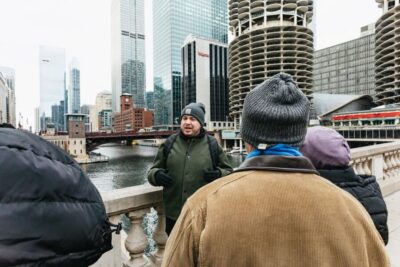
Chicago in a Day: Food, History & Architecture Walking Tour
Read our review →
Chicago’s Secret Interiors Architectural Walking Tour
Read our review →


Browse the lists this tour appears in