
Reviewed · CHICAGO WALKING TOURS
Chicago: Treasures of the Golden Age Walking Tour
Chicago’s Golden Age buildings turn a walk through the Loop into a lesson in ambition. From the Chicago Cultural Center’s huge Tiffany dome to the grand old department store now known as Macy’s on State, this tour shows how Chicago rebuilt its cultural image after the 1893 World’s Columbian Exposition.
I like the way the tour joins architecture with human stories, including the men and women who wanted Chicago to rival the great cities of Europe. I also like that guides such as Doug, Ron, Maureen, Paul S, and Jackeline have been praised for making complex design ideas easy to follow. The main drawback is simple: you spend two hours on city streets, so cold, rain, and plenty of walking can affect the experience.
Key points at a glance
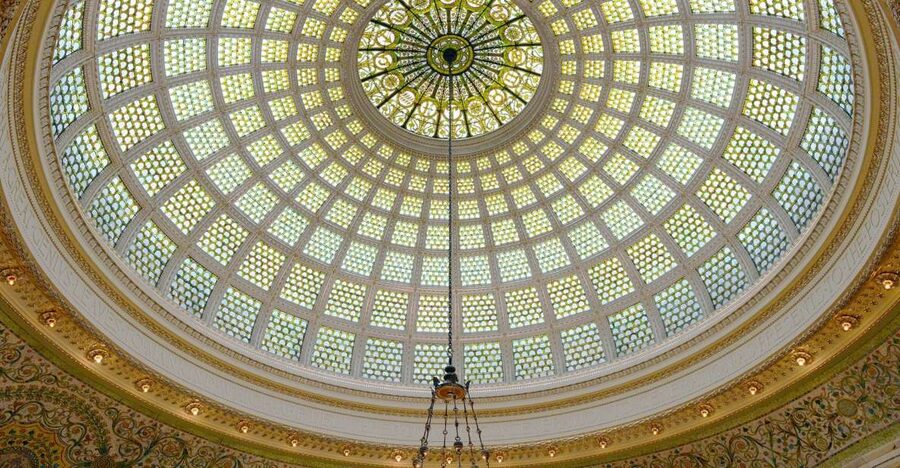
- The Tiffany dome: Enter the Chicago Cultural Center to see the world’s largest Tiffany glass dome.
- State Street grandeur: Learn how the former Marshall Field’s department store, now Macy’s, shaped Chicago shopping and civic life.
- Golden Age design: See work linked to Daniel Burnham, Louis Sullivan, and Holabird and Roche.
- A cultural comeback: Understand why Chicago pushed hard to become a major cultural metropolis after the 1893 fair.
- More than façades: The route may include interiors, giving you a closer look at restored public and commercial spaces.
- A nonprofit choice: Your ticket helps fund Chicago Architecture Center education and community programs.
Why Chicago’s Golden Age still matters
The tour focuses on the years from the 1890s through the 1930s, when Chicago was changing at a startling pace. The city had already become a major center of business and industry, but it wanted more than commercial power. After the success of the World’s Columbian Exposition in 1893, civic leaders worked to present Chicago as a serious cultural capital.
That ambition shows in the buildings around the Loop. Instead of plain commercial blocks, the city gained museums, department stores, concert halls, hotels, and public buildings dressed in Beaux-Arts, neo-Georgian, and neo-Gothic styles. These designs looked back to Europe and earlier eras, yet they were built for a modern American city filled with elevators, steel frames, electric lights, and crowded streets.
I find that contrast one of the best reasons to take this walk. You are not just looking at old stone. You are seeing a city use architecture to make a public argument: Chicago belongs among the world’s great cities.
The guide also helps connect individual buildings to the people behind them. You may hear about architects such as Daniel Burnham, Louis Sullivan, and Holabird and Roche, along with the business leaders and civic figures who commissioned their work. That human side keeps the tour from becoming a parade of dates and architectural labels.
More walking tours in Chicago:
- Chicago: Gangsters and Ghosts Walking Tour
★ 5.0 · 7,155 reviews - Chicago Favorites Ultimate Food and Walking Tour
★ 5.0 · 1,962 reviews - Chicago: Gangsters and Ghosts Guided Walking Tour
★ 4.7 · 1,697 reviews
Starting at the Chicago Architecture Center
The meeting point is inside the Chicago Architecture Center at 111 East Wacker Drive. You check in there before setting out, and your ticket includes admission to the Center’s exhibits. That is a useful addition, particularly if you arrive early or want a little more context before walking through the Loop.
The Center is also a fitting place to begin. It is devoted to Chicago’s built environment, so the tour comes with a stronger foundation than a general city walk. Your guide is certified by the Chicago Architecture Center, the city’s leading architecture authority, and the route is designed around historic buildings rather than broad sightseeing alone.
English is the tour language. The activity lasts two hours, with starting times varying by availability. The price is listed as $35 for a group of up to one. That wording is unusual, so check the exact booking setup before paying, especially if you are booking for more than one person.
For the right visitor, the cost is fair. You get a live guide, a focused two-hour route, access to the Center’s exhibits, and a subject that can be difficult to understand from a guidebook alone. A self-guided walk costs less, of course, but you would need to do the research yourself and would miss the chance to ask questions as the buildings come into view.
The Chicago Cultural Center and its Tiffany dome
The Chicago Cultural Center is one of the tour’s strongest stops. The building is known for the world’s largest Tiffany glass dome, a detail that sounds impressive on paper but is far more useful when a guide explains what you are seeing and why it mattered.
Look up slowly. The dome is not a small decorative feature tucked into a corner. It is a commanding interior centerpiece, and it gives the building a sense of ceremony. The tour uses this stop to show how public architecture could be both functional and theatrical.
You may also get a chance to step inside other buildings along the route. That matters because Chicago’s Golden Age is not only about street façades. Some of the finest work is found in lobbies, ceilings, stairways, decorative stone, and ornamental metalwork that you might walk past without noticing.
The exact interiors available can vary, and the tour cannot promise every access point on every departure. Still, the Cultural Center is a major payoff even if you have already seen photographs. A guide can point out details you would likely miss while trying to keep up with city traffic and your own sightseeing schedule.
Macy’s on State and the world of department stores
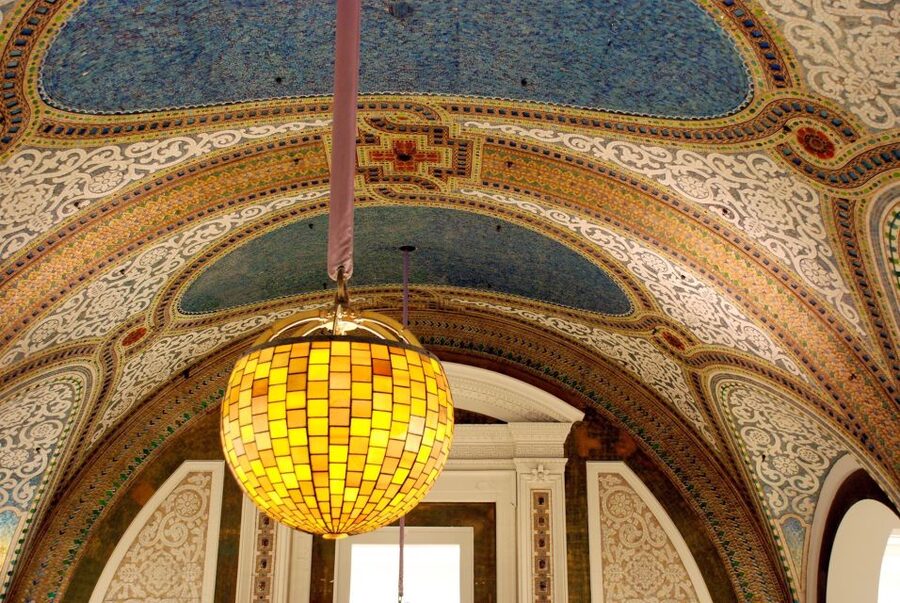
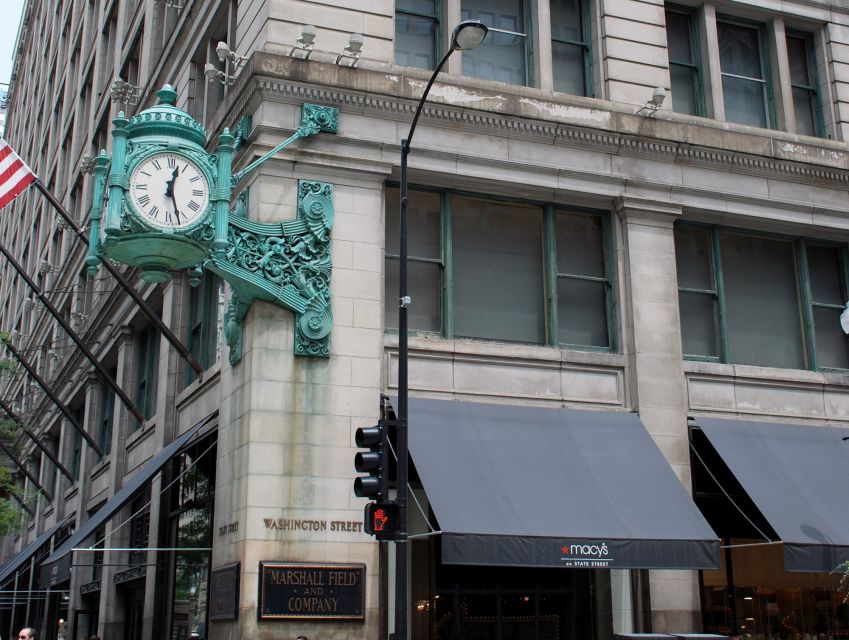
The former Marshall Field’s department store, now Macy’s on State, gives the tour a different angle. It is not simply a pretty building. Department stores were important social and commercial spaces, and their design reflected the growing confidence of Chicago’s business class.
Inside and outside, the building helps explain how shopping became part of urban culture. Large stores needed to attract people, impress them, and keep them moving through a carefully designed space. Architecture did part of the selling.
This is also where the tour’s focus on famous people becomes useful. A guide can connect the building to the company, its patrons, and the larger story of Chicago’s rise. You get a better sense of how commerce and culture worked together rather than treating architecture as decoration pasted onto business.
One benefit of this stop is that it may change the way you see ordinary errands later in your trip. A department store can look like a place to buy clothes or gifts. In this setting, it becomes evidence of how Chicagoans once imagined modern city life.
Different part of the city, different kind of afternoon:
- Chicago Architecture River Cruise
★ 5.0 · 15,756 reviews - Chicago River 90-Minute Architecture Tour
★ 4.5 · 9,629 reviews - Chicago River: 1.5-Hour Guided Architecture Cruise
★ 4.8 · 8,046 reviews - Chicago Architecture Center River Cruise aboard First Lady
★ 5.0 · 5,536 reviews
Palmer House and the hotel as civic theater
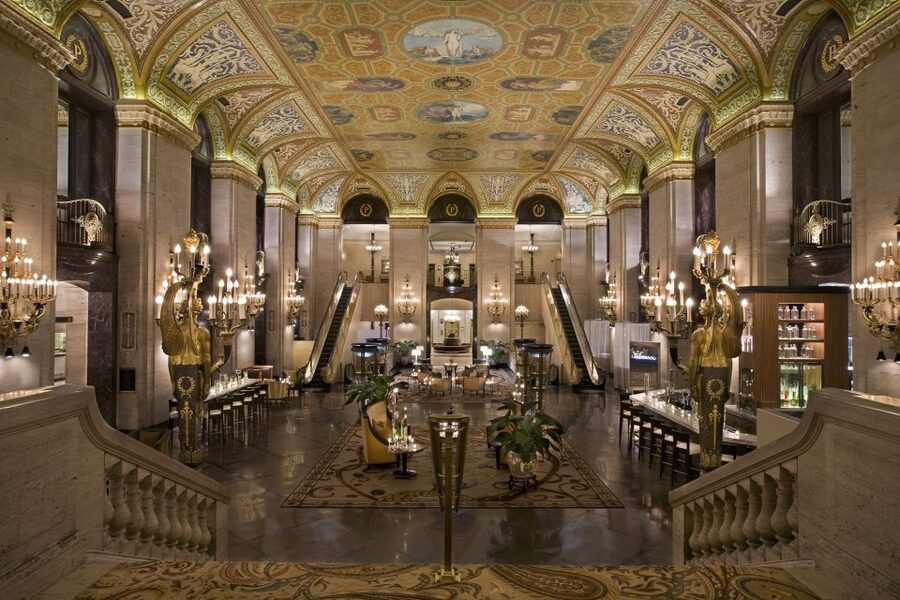
The Palmer House adds another layer to the route. This beautifully restored hotel dates from the 1920s and shows how hotels were designed to welcome more than overnight visitors. They were meeting places, social stages, and public symbols of confidence.
The interiors are especially important here. A grand hotel gives the guide a chance to discuss materials, decoration, scale, and the way historic spaces were intended to make people feel. Even if you are not staying at the hotel, you can better understand why such buildings held a special place in the city.
The Palmer House also helps break up the route. Instead of looking only at office towers and commercial blocks, you see how the Golden Age shaped hospitality and public life. The building brings a more personal scale to the story, even with its grand proportions.
For anyone interested in preservation, this is a valuable stop. The appeal is not only that the building survived. It is that restoration allows you to read the design more clearly today. Paint, ornament, lighting, and decorative details can show how much thought went into spaces that modern construction often treats as secondary.
Burnham, Sullivan, Holabird and Roche
The architectural names on this tour are not random footnotes. Daniel Burnham represents the civic ambition behind much of Chicago’s planned grandeur. His influence is tied to the idea that buildings and public spaces could help shape a better city.
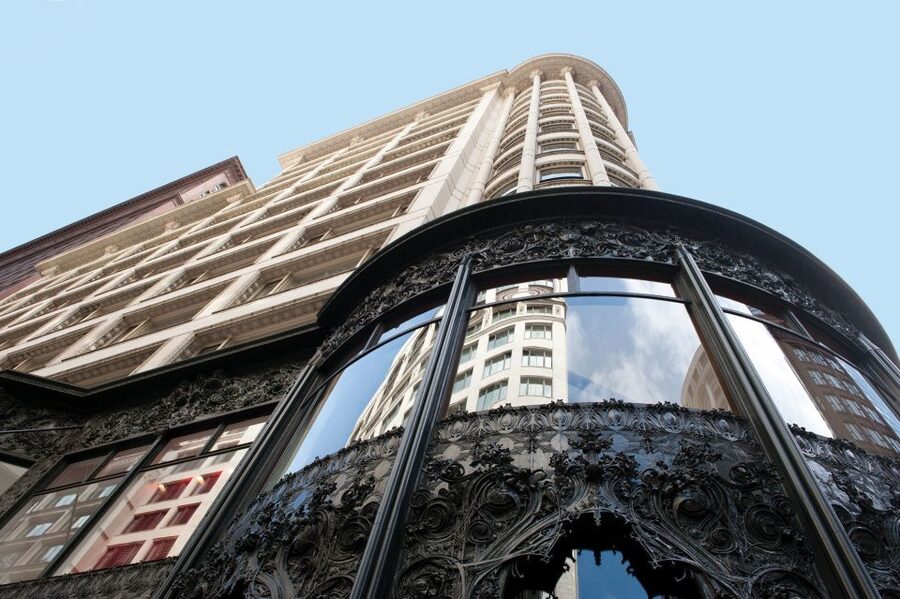
Louis Sullivan brings a different point of view. His work is closely tied to Chicago’s role in the development of the modern skyscraper, and his ideas pushed architects to think about how tall buildings should express their purpose. Even when the tour focuses on revival styles, Sullivan provides a useful counterpoint.
Holabird and Roche add another important thread. Their work helps show the range of Chicago architecture during this period, when designers were working with new technology while borrowing forms from earlier traditions.
You do not need an architecture degree to follow these comparisons. A good guide translates terms such as Beaux-Arts, neo-Georgian, and neo-Gothic into things you can actually see: symmetry, ornament, arches, materials, vertical lines, formal entrances, and decorative patterns.
The strongest guides also leave room for questions. Jamie, for example, was praised for presenting information naturally and using a microphone system so people could look around while still hearing the explanation. That detail matters on a city walk. You should be able to study a cornice or doorway without losing the thread of the talk.
Stories, pacing, and the human side of the walk
The guide can make or break an architecture tour. Here, the guide pool includes people with long experience in Chicago, including one guide who had lived in the city for more than 30 years. Guides such as John, Tony, Matthew, Ingrid, Alice, and Ross have been praised for clear explanations, humor, good pacing, and personal stories.
That variety is worth keeping in mind. Your guide will not be the same person featured in every departure, and presentation styles can differ. Still, the training standard gives the tour a useful base, while the best guides add their own connection to the city.
I like tours that let architecture breathe a little. You need time to look up, compare buildings, and ask why one entrance feels grander than another. The tour has earned praise for moving at a comfortable pace, but it is still a two-hour walk with many buildings packed into a small area.
You may see a large number of sites in a short time. That is good for a first visit or a short stay, but it also means individual buildings may receive only a limited amount of attention. If you want a long technical study of one architect, this is probably too broad. If you want a well-organized introduction to the Loop’s major historic architecture, the scope works well.
Walking conditions and practical comfort
Wear comfortable shoes. This is not optional advice. The route covers city streets for two hours, and even a pleasant walk can feel tiring when you are stopping often, standing to listen, and looking upward.
The tour runs rain or shine, and weather does not qualify you for a refund. A cold day can be managed, but you should dress for the forecast and bring protection from rain or wind. One winter group still enjoyed the experience during a snowstorm, while another guide used indoor stops to help people warm up on a very cold day. That suggests the route can adapt at times, but you should not count on perfect shelter.
Luggage and large bags are not allowed, and there is no secure storage for luggage or strollers. There is also no coat check. Plan to arrive without bulky belongings, particularly if you are checking out of a hotel or carrying shopping bags.
The activity information describes the tour as wheelchair accessible, but it also lists people with mobility impairments as not suitable. Those details do not fully agree. If you use a wheelchair, walker, or need a slower pace, contact the provider before booking and ask about the current route, interior access, and walking conditions.
Pets are not allowed, although service animals are welcome. Bring a passport or ID card, as one may be required.
Who will get the most from this tour
This is a strong choice for a first-time Chicago visitor who wants more than a quick look at the skyline. It also suits repeat visitors. One person who had already taken several architecture tours still learned new things, which says something about how much detail the Loop can hold.
You will likely enjoy it most if you:
- Like buildings but want the story behind them
- Prefer walking to sitting on a bus
- Want to see both exteriors and selected interiors
- Enjoy history explained through real places
- Have two hours to spare in the Loop
- Appreciate a guide who can answer questions and adjust the pace
It is less suitable if you dislike city walking, need guaranteed indoor access, or want a narrow focus on modern skyscrapers. This tour is about the late 19th and early 20th centuries, especially the cultural and commercial buildings that helped Chicago remake its public image.
Solo visitors can also fit in comfortably. The route gives you a shared activity without requiring a full-day commitment, and the live guide provides a social center without forcing you to make conversation with the group.
What your ticket supports
Your ticket does more than pay for a guide and a walk. The Chicago Architecture Center is a certified nonprofit, and ticket income helps support local education and community programs.
Those efforts include Girls Build!, Teen Fellows, the Newhouse Architecture + Design Competition, and Open House Chicago. The exact connection between your individual ticket and a particular program is not specified, but the broader purpose is clear: your booking supports architecture education and public engagement in Chicago.
That adds value if you like experiences that give something back to the place you are visiting. You still need to judge the tour on its own merits, but the nonprofit model is a worthwhile extra.
Should you book the Golden Age walking tour?
Book it if you want Chicago’s Loop to make more sense. The Chicago Cultural Center, Macy’s on State, and Palmer House provide strong visual stops, while the stories of Burnham, Sullivan, Holabird, Roche, and the city’s civic leaders give the route a clear purpose.
I would especially recommend it early in your Chicago visit. Once you understand why these buildings were built and what they were meant to say, you will look at the rest of the city with better eyes.
Skip it if you want a short, effortless sightseeing stop or if two hours on foot sounds uncomfortable. For everyone else, the combination of major landmarks, interior details, trained guides, and nonprofit support makes the $35 listing a solid value, provided the booking price and group wording suit your party.
FAQ
Where does the tour meet?
You check in inside the Chicago Architecture Center at 111 East Wacker Drive, Chicago, Illinois 60601.
How long does the tour last?
The walking tour lasts two hours.
What language is the tour conducted in?
The live tour is conducted in English.
What buildings are included?
Highlights include the Chicago Cultural Center, the former Marshall Field’s department store, now Macy’s on State, and the Palmer House. The route also covers other historic buildings in the Loop.
Will I see the inside of any buildings?
The tour includes a glimpse inside some of Chicago’s beloved buildings, including the Chicago Cultural Center. Interior access can vary.
Is admission to the Chicago Architecture Center included?
Yes. Admission to the Chicago Architecture Center exhibits is included.
Can I bring luggage or a stroller?
No. The tour does not provide secure storage for luggage or strollers, and large bags are not allowed.
What happens if it rains?
The tour departs rain or shine. There are no refunds due to weather, so dress for the conditions.
Recently added around Chicago
- Travel between Chicago O’Hare and Madison★ 4.5 · 4 reviews
- Volo Auto Museum: Admission Ticket★ 4.5 · 55 reviews
- Holiday Walking Tour: Underground Chicago via the Pedway★ 5.0 · 27 reviews
- Workers Cottages of Oldtown Triangle Walking Tour★ 5.0 · 45 reviews
- Verse Immersive Holographic Theater in Chicago★ 4.5 · 28 reviews
- Vito’s Vault Chicago finest dinner theatre speakeasy★ 5.0 · 14 reviews
- Delicious Donuts & Sweet Treats: West Loop Walking Tour★ 5.0 · 47 reviews
- Traveling Spoon Chicago-Style Deep Dish Pizza Private Online Cooking Class★ 5.0 · 4 reviews
Chicago Walking Tours, compared.

Chicago Favorites Ultimate Food and Walking Tour
Read our review →
Chicago in a Day: Food, History & Architecture Walking Tour
Read our review →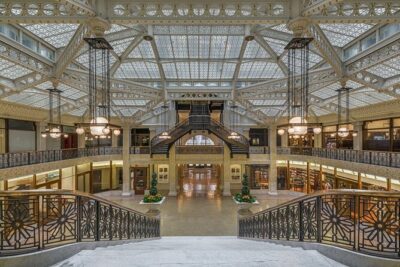
Chicago’s Secret Interiors Architectural Walking Tour
Read our review →

Browse the lists this tour appears in