
Reviewed · CHICAGO WALKING TOURS
Chicago Walking Tour: The Magnificent Mile
The most useful thing about this Magnificent Mile walking tour is that it turns a famous shopping street into an open-air lesson in Chicago architecture. In 90 minutes, a certified guide points out landmark buildings, explains how the avenue developed, and helps you notice details that are easy to miss from a car or bus.
I like the small group limit of 10, which gives the walk a personal feel, and I like that your $35 ticket includes the Chicago Architecture Center galleries. The main drawback is that the tour covers a busy commercial stretch, so you should expect city traffic, pedestrians, and possible changes to building interiors on weekends, holidays, or during unexpected closures.
Key points to know before you book
- Small groups of no more than 10: You can hear the guide clearly and ask questions without shouting across a crowd.
- A focused 90-minute route: The walk covers major Michigan Avenue sights without taking up half your day.
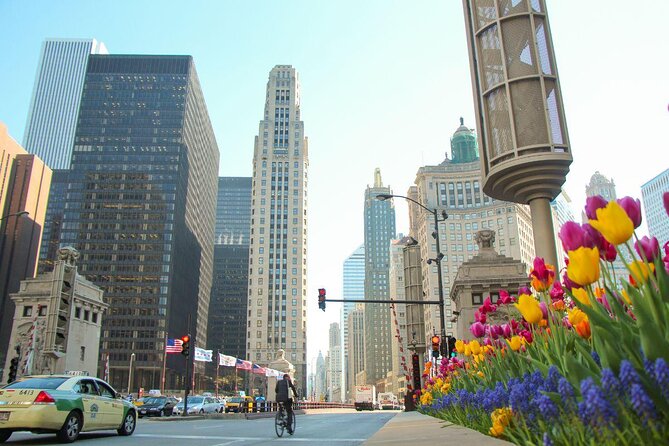
- Architecture beyond the shop windows: You see the Wrigley Building, Tribune Tower, 875 N Michigan Avenue, and other notable façades.
- Chicago Architecture Center admission included: Use the gallery visit to add more context before or after the walk.
- Guide-led stories make the street readable: Guides such as Tim bring in history, local detail, and a friendly sense of fun.
- Plan for an outdoor city walk: Food, drinks, luggage storage, stroller storage, and coat check are not included.
Why this short walk makes sense on the Magnificent Mile
Michigan Avenue can feel like a long parade of department stores, luxury brands, restaurants, and passing traffic. That commercial energy is part of the experience, but it can also make the street’s architecture fade into the background.
This tour gives you a reason to look up. You move along the Magnificent Mile with a guide who explains the past and design of the buildings around you, rather than simply pointing out their names. That matters in Chicago, where a single block can contain several different eras of construction and design.
The route is also a good fit for a first visit. You get a clear introduction to one of the city’s best-known avenues, then you can return later to shop, photograph, or explore the buildings at your own pace.
At $35 per person, the price is reasonable if you value interpretation rather than just sightseeing. You are paying for a 90-minute guided walk, a capped group, and admission to the Chicago Architecture Center galleries. If you only want a quick stroll down Michigan Avenue, you can do that for free. If you want the street to make more sense, the fee earns its keep.
More Magnificent Mile tours:
- Chicago River 45-Minute Architecture Tour from Magnificent Mile
★ 4.5 · 2,924 reviews - Magnificent Mile Tour With Optional 360 Chicago Upgrade
★ 5.0 · 80 reviews - Chicago Perfume Making Classes on Magnificent Mile
★ 5.0 · 44 reviews
Starting at the Chicago Architecture Center on Wacker Drive
The tour begins at the Chicago Architecture Center, at 111 E Wacker Drive. This is a practical meeting point for a walking tour because the center gives you a place to orient yourself before heading outside.
Admission to the center’s galleries is included, so do not treat the meeting point as a place to wait and leave. Allow time to look through the exhibits either before or after the walk. The tour itself lasts about an hour and a half, while the gallery visit gives you a chance to continue with Chicago’s building stories on your own.
The experience ends back at the same meeting point. That makes it easy to plan around, especially if you want to continue exploring nearby afterward.
The tour has a maximum of 10 people. This is one of its strongest practical features. A guide can keep the group together without the impersonal feel of a large sightseeing outing, and you should have a better chance to hear explanations at street corners and along busy sidewalks.
Reading the Magnificent Mile through its buildings
The central stop is the Magnificent Mile itself. Here, the guide covers the avenue’s development as well as the history and architecture of important buildings along the route.
The value is in the connections. You are not just looking at a shopping district. You are learning how the street’s grand buildings, hotels, clubs, towers, bridges, and retail façades sit together. The guide helps you separate the old from the new and understand why this stretch became such a major part of Chicago.
You will have opportunities to stop for photographs. The pace is not built around rushing from one landmark to the next, and the available information suggests time is made for looking closely and taking pictures. Still, this remains a city walk, so keep your camera ready rather than expecting a long, quiet photo session at each location.
I especially like this kind of tour for people who usually walk past buildings without knowing what they are seeing. The Magnificent Mile has plenty of polished storefronts, but the architectural details above eye level are often the real prize.
The Michigan Avenue DuSable Bridge and the approach to the avenue
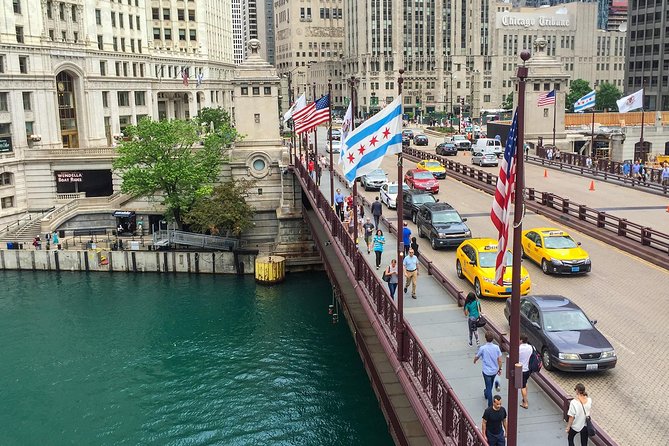
The route includes a view of the Michigan Avenue, or DuSable, Bridge. This is an important point in the walk because it connects the riverfront setting with the avenue beyond it.
A bridge view also helps you understand the area spatially. Instead of seeing Michigan Avenue as an isolated shopping strip, you see how it relates to the Chicago River and the city’s larger street plan. The guide’s role here is to add the background that a quick photograph cannot provide.
Because this is a viewing stop rather than a listed interior visit, do not expect an extended bridge tour. Its value is the setting, the sightline, and the explanation of how the avenue fits into Chicago.
More walking tours in Chicago:
- Chicago: Gangsters and Ghosts Walking Tour
★ 5.0 · 7,155 reviews - Chicago Favorites Ultimate Food and Walking Tour
★ 5.0 · 1,962 reviews - Chicago: Gangsters and Ghosts Guided Walking Tour
★ 4.7 · 1,697 reviews - Chicago in a Day: Food, History & Architecture Walking Tour
★ 5.0 · 1,153 reviews
The Starbucks Reserve Roastery and changing Michigan Avenue
The Starbucks Reserve Roastery is another stop along the route. It brings the tour into the present-day commercial life of Michigan Avenue and shows how the street continues to change.
This stop may appeal to you if you enjoy seeing how major brands use historic or prominent urban settings. It also gives the walk some variety. You are not looking only at office towers and older monuments. You are seeing a modern retail destination placed within a street known for both commerce and architecture.
The tour does not include food or drinks, so any visit inside for coffee or refreshments would be at your own expense. Treat the stop as part of the architectural and street-level story, not as a tasting break.
The Wrigley Building, a landmark worth slowing down for
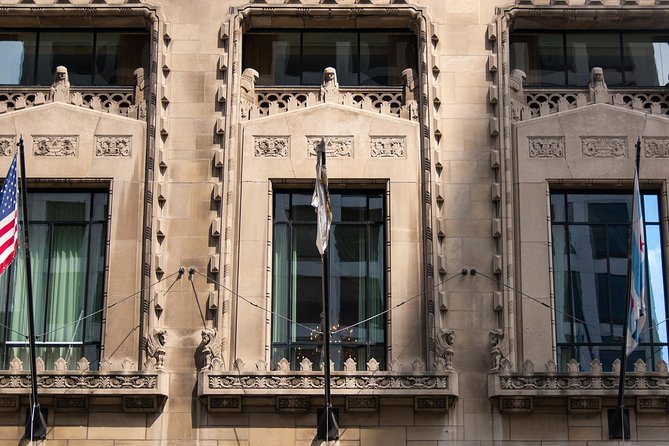
The Wrigley Building is one of the clearest highlights on the route. The guide discusses the building as part of the avenue’s architectural story, giving you more than a name and a photo opportunity.
This is the sort of stop where a guide adds real value. A striking façade is easy to recognize, but the details around its design and place in Chicago’s development are harder to pick up on your own. You can pause, look closely, and then hear why the building matters.
The Wrigley Building is also a good example of the tour’s balance. You are seeing an established Chicago landmark, but you are doing so from an active city street rather than from behind a museum barrier. That makes the experience feel connected to daily life.
The InterContinental Chicago and the Women’s Athletic Club
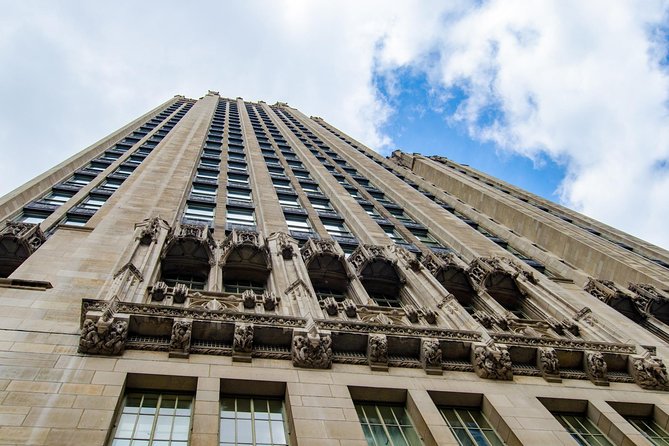
The InterContinental Chicago adds a hotel landmark to the route. The guide includes its history and architecture within the wider discussion of Michigan Avenue, giving you a chance to compare it with the office, retail, and residential buildings nearby.
The Women’s Athletic Club provides another useful contrast. It is easy to overlook buildings that do not fit the most familiar postcard view of Chicago. Including it broadens the walk beyond the biggest towers and most heavily photographed façades.
These stops are especially helpful if you want the guide to point out lesser-known details. You may already recognize the Wrigley Building, but you might not notice the significance of a club or hotel building while walking alone.
The tour does not promise access to every interior. Building interiors featured along the route can change because of weekend or holiday schedules, unexpected closures, or other conditions. Plan on seeing the exteriors and hearing the explanation, with interior access treated as subject to change.
Burberry and the retail face of Michigan Avenue
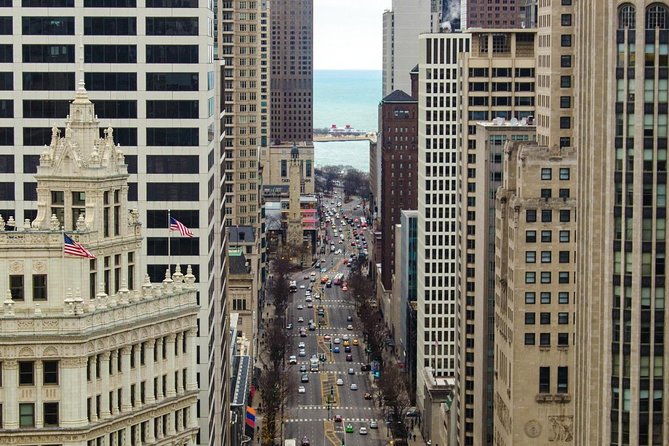
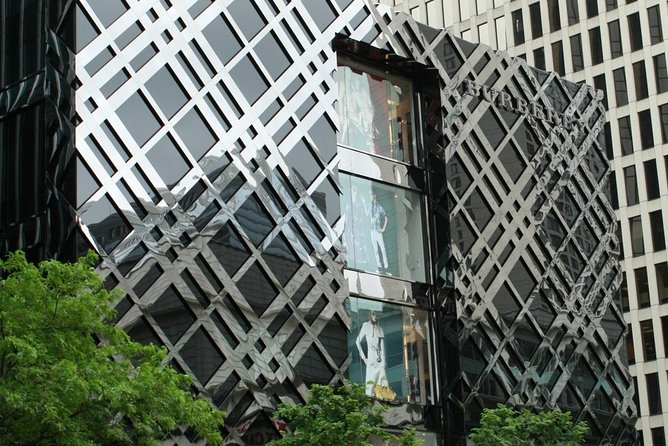
The Burberry store represents the avenue’s luxury shopping identity. It may seem less historic than a major tower or bridge, but it belongs in the story of what Michigan Avenue is today.
This stop helps show the full character of the Magnificent Mile. The street is not only a collection of old buildings. It is also a high-end retail corridor whose storefronts, hotels, and brand names shape the way the area feels.
For shoppers, this section is a useful orientation. You can learn where the retail action is while also receiving some architectural context. For visitors who are less interested in shopping, the guide helps keep these commercial stops tied to the street’s wider history.
875 N Michigan Avenue, formerly the John Hancock Center
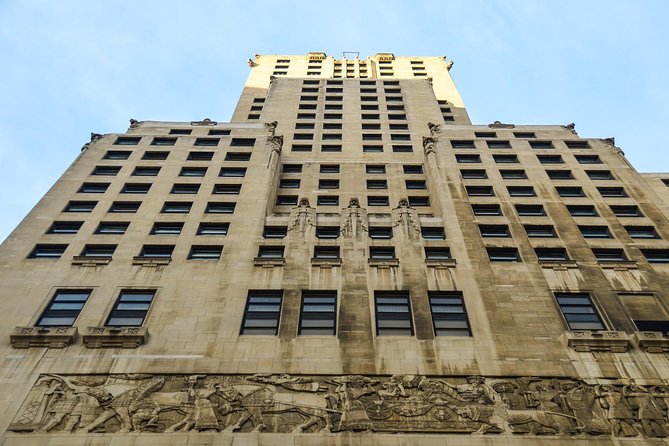
The building now known as 875 N Michigan Avenue, formerly the John Hancock Center, is one of the route’s major architectural sights. Its height and familiar profile give the walk a strong vertical moment after the lower-level storefronts and historic façades.
The guide discusses notable buildings along the avenue, and this is one of the places where the scale of Chicago becomes clear. You are standing at street level, looking up at a building that has helped define the city’s skyline for decades.
The change in name is also useful context. The tour identifies the building by its current name and its former name, which helps you match what you hear with the names used in guidebooks, maps, and older photographs.
Do not assume that the tour includes entry to the tower or an observation deck. The supplied details describe viewing the building as part of the walking route, not an admission visit inside.
The newly renovated Tribune Tower
The Tribune Tower is another major stop, and its recent renovation gives the guide an opportunity to discuss how landmark buildings find new uses over time.
This is an important idea for any Chicago architecture walk. Buildings are not frozen museum pieces. They can be restored, renovated, and adapted while keeping the features that make them recognizable. The Tribune Tower lets you consider that tension between preservation and modern use.
The route’s mix of older landmarks, renovated buildings, retail sites, and modern city life is one of its strengths. You get a more accurate picture of Chicago than you would from a list of famous façades alone.
What the guide adds to the experience
The tour includes narration by a professional, certified guide. A good guide is particularly useful on a walk like this because the subject is all around you, but the important details are not always obvious.
Tim is one guide associated with this experience, and the supplied information describes him as friendly, fun, and well informed. You should not assume he will lead every departure, but his approach gives you a sense of the tone to expect: approachable explanations, plenty of local background, and a walk that does not feel stiff.
The strongest praise focuses on the guide’s clear knowledge, friendly manner, and ability to make the history enjoyable. That fits the small-group format. With no more than 10 people, the guide can keep the conversation direct and give the walk a more personal rhythm.
You should also expect plenty of information in a relatively short time. The tour lasts 90 minutes, so it cannot cover every detail of every building. Think of it as a sharp introduction that gives you a framework for exploring more on your own.
Timing, comfort, and practical limits
The walk is listed as approximately one hour and 30 minutes. That is long enough to feel worthwhile but short enough to fit around other Chicago plans.
Wear comfortable shoes. The experience is entirely centered on walking and outdoor viewing, even though the Chicago Architecture Center galleries are included. Weather conditions are not specified, so check the forecast and dress for a city walk.
Food and drinks are not included. There is also no luggage storage, stroller storage, or coat check. Keep your belongings manageable and avoid arriving with bags you need to leave somewhere.
Service animals are allowed, and the tour is near public transportation. Most people can participate, but the provided information does not give detailed guidance about step-free routes or seating. If you need specific mobility arrangements, confirm them before booking.
Pets are not allowed, aside from permitted service animals.
The tour is booked an average of 17 days in advance, which suggests that planning ahead is sensible, especially if you have fixed dates. You can cancel for a full refund up to 24 hours before the start time. Changes or cancellations inside that 24-hour window are not accepted for a refund.
Who will get the most from this $35 walk
I would choose this tour if you are visiting Chicago for the first time, enjoy architecture, or want more substance than a self-guided stroll. It is also a smart choice if you prefer a short activity that leaves the rest of the day open.
Families and mixed-interest groups may like the format because the route includes famous buildings, shopping streets, hotels, clubs, and modern retail. Architecture fans will appreciate the building-by-building focus, while casual visitors can simply enjoy the city views and stories.
You may want to skip it if you dislike guided walks, already know the Magnificent Mile well, or want extended time inside the buildings. The tour is primarily an outdoor overview, and interior access can change without notice.
Should you book the Magnificent Mile walking tour?
Book it if you want the Magnificent Mile to become more than a shopping address. The combination of a 10-person limit, a certified guide, a focused 90-minute route, and Chicago Architecture Center admission gives the $35 price solid value.
I would book it early, wear good walking shoes, and allow extra time for the galleries. Choose it for context, clear explanations, and a closer look at buildings such as the Wrigley Building, Tribune Tower, and 875 N Michigan Avenue. Skip it only if you want a completely independent walk or guaranteed interior access.
FAQ
How long does the Magnificent Mile walking tour last?
The tour lasts approximately one hour and 30 minutes.
Where does the tour begin and end?
It begins at the Chicago Architecture Center, 111 E Wacker Drive, Chicago, Illinois 60601. The activity ends back at the same meeting point.
What buildings and sights are included?
The route includes views of the Michigan Avenue DuSable Bridge, Starbucks Reserve Roastery, Wrigley Building, InterContinental Chicago, Burberry on Michigan Avenue, 875 N Michigan Avenue, the Women’s Athletic Club, and the renovated Tribune Tower.
Is admission to the Chicago Architecture Center included?
Yes. Admission to the galleries of the Chicago Architecture Center is included in the tour price.
How many people can join the tour?
The tour has a maximum of 10 travelers.
Can I cancel for a full refund?
Yes. You must cancel at least 24 hours before the experience start time for a full refund. Cancellations or changes made less than 24 hours before the start time are not accepted for a refund.
Recently added around Chicago
- Travel between Chicago O’Hare and Madison★ 4.5 · 4 reviews
- Volo Auto Museum: Admission Ticket★ 4.5 · 55 reviews
- Holiday Walking Tour: Underground Chicago via the Pedway★ 5.0 · 27 reviews
- Workers Cottages of Oldtown Triangle Walking Tour★ 5.0 · 45 reviews
- Verse Immersive Holographic Theater in Chicago★ 4.5 · 28 reviews
- Vito’s Vault Chicago finest dinner theatre speakeasy★ 5.0 · 14 reviews
- Delicious Donuts & Sweet Treats: West Loop Walking Tour★ 5.0 · 47 reviews
- Traveling Spoon Chicago-Style Deep Dish Pizza Private Online Cooking Class★ 5.0 · 4 reviews
Chicago Walking Tours, compared.


Chicago Favorites Ultimate Food and Walking Tour
Read our review →
Chicago in a Day: Food, History & Architecture Walking Tour
Read our review →
Chicago’s Secret Interiors Architectural Walking Tour
Read our review →


Browse the lists this tour appears in